Can You Use Exterior Paint in a Bathroom? No, Here’s Why
No, you should not use exterior paint in a bathroom. Exterior paint is loaded with extra resin and pigment so it can survive sun, rain, and temperature swings outdoors — and that same heavy-duty formula carries higher levels of volatile organic compounds (VOCs) than an interior paint does. A bathroom is one of the worst rooms in the house to off-gas those compounds: it’s small, enclosed, and has far less air exchange than an exterior wall does.
There’s a second problem beyond air quality. Exterior paint is built to form a hard, mostly closed film that keeps rain out. Inside a bathroom, that same film traps shower humidity inside the wall instead of letting it escape, which is exactly the setup that leads to peeling, bubbling, and mold growing where you can’t see it.
Below, we’ll walk through why exterior paint struggles indoors, what actually happens if you use it anyway, and which paint to buy instead so your bathroom walls hold up for years instead of months.
Understanding Bathroom Paint Needs
Best Mold-Resistant Bathroom Paint
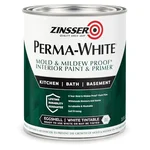 |
Zinsser PERMA-WHITE Mold & Mildew-Proof Interior Paint – $14.19 This is the interior alternative the rest of this guide is built around — a paint made specifically to handle bathroom humidity instead of fighting it.
|
Bathrooms behave nothing like the rest of your house when it comes to paint. Every shower dumps steam into a small, sealed room, and that steam condenses on the nearest cool surface — your wall. That repeated condense-and-dry cycle wears out an ordinary paint film far faster than it would fail anywhere else in the home.
Paint that isn’t built for this cycle fails one of two ways: it lets moisture sit long enough for mildew to take hold, or it seals so tightly that moisture gets trapped behind the film and pushes it off the wall from underneath. Bathroom-rated paint is formulated to avoid both at once, which is why it costs a bit more than a generic interior paint.
Why Moisture Matters
A hot shower can push bathroom humidity well past 90% for several minutes, and without a working exhaust fan that humidity can linger for an hour or more. Ordinary wall paint isn’t engineered for that kind of repeated soaking, and over time it shows: chalky texture, small bubbles near the ceiling line, or a dull haze that cleaning won’t remove.
Mold and mildew are opportunists — they don’t need standing water, just consistent humidity and a food source, and the organic binders in ordinary paint are enough to feed them. That’s why bathroom-specific paints add a mildewcide directly into the formula instead of relying on the topcoat alone.
Paint Durability and Longevity
Bathrooms also take more physical abuse than most rooms: towel snags, water splashes near the sink, cleaning sprays, and kids leaning wet hands against the wall. The paint needs to shrug off scrubbing without burnishing or losing color, which is a different kind of toughness than what exterior paint is built for.
Exterior paint is engineered to survive UV rays, driving rain, and freeze-thaw cycles on a wall exposed to open air. That’s a real kind of durability, but not the kind a bathroom needs — a bathroom wall never sees sunlight or wind, it sees repeated humidity spikes in a sealed room, which calls for a scrubbable, breathable interior formula instead. Skimping here is usually a false economy: a paint that isn’t rated for the room can start failing within a year, meaning you’re repainting sooner than you’d expect.
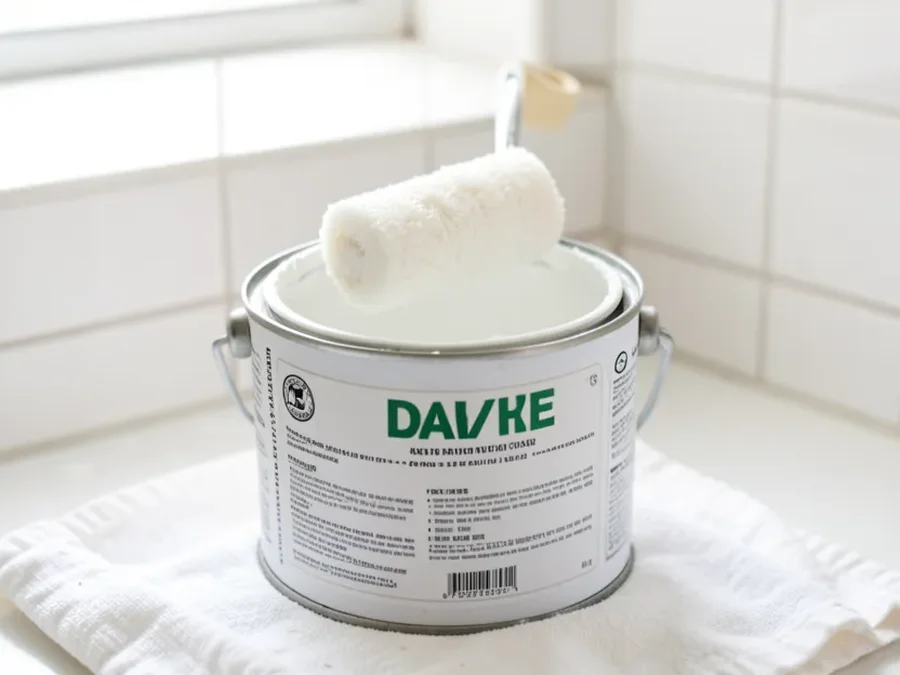
Can You Use Exterior Paint in a Bathroom? The Real Answer
Exterior paint is built to withstand harsh weather — rain, sun, and temperature extremes — so at a glance it seems like it should easily out-tough a bathroom’s humidity. It doesn’t work that way. Bathrooms have specific problems related to trapped moisture and indoor air quality that exterior formulas simply weren’t designed to solve.
Why It Seems Like a Good Idea
The logic is understandable: exterior paint is marketed as waterproof and resistant to fading and cracking, so it’s easy to assume that toughness carries over to a wet indoor room. It’s also common to want to use up a leftover can rather than buy something new — the label already says “weatherproof,” which sounds like exactly what a bathroom needs.
The catch is that “weatherproof” means resistance to rain hitting a wall from the outside, not resistance to humidity building up inside a sealed room. Those are two different jobs, and a paint optimized for one is often poorly suited to the other.
Why It Actually Fails Indoors
The biggest issue is breathability. Exterior paint is designed to form a hard, largely closed film that keeps outdoor rain from soaking into siding. Applied inside a bathroom, that same closed film blocks moisture vapor from escaping through the wall — so instead of drying out between showers, the wall stays damp underneath the paint. That trapped moisture is what leads to blistering, peeling from the inside out, and mold growing in a spot you can’t see until the paint already looks ruined.
There’s also a real air-quality difference. Exterior paints are formulated with more resin and pigment to survive weathering, which generally means a higher VOC content than an interior formula. The EPA notes that indoor VOC concentrations are consistently higher than outdoor levels, with freshly applied paint among the biggest contributors — readings climb during application and stay elevated while it cures. A small, mostly windowless room has nowhere for that off-gassing to go. Running the exhaust fan helps clear fumes faster, but it reduces exposure, it doesn’t eliminate it.
If you’re weighing exterior paint against interior paint for any indoor room, not just a bathroom, the same VOC gap is the reason mixing exterior paint into an interior batch isn’t recommended either — diluting it doesn’t remove the chemicals that make it unsuitable for enclosed spaces.
Mold and Mildew: Different Environments, Different Formulas
Exterior paints do resist mildew, but the outdoor kind — the algae film that grows on siding and fences from sun exposure and rain. That’s a different organism in a different environment than the mold that grows in a warm, dark, high-humidity bathroom corner. Interior bathroom paints are formulated with mildewcides chosen specifically for the strains that thrive in steamy, low-airflow indoor spaces, so exterior paint’s mildew resistance — while real — consistently underperforms a paint built for the job.
The Best Paint Choices for Bathrooms
Given those risks, a specialized interior bathroom paint is the right call almost every time. These paints are built to handle moisture, resist mold and mildew, and hold up to regular scrubbing without breaking down.
Choosing Interior Paints
Look for a label that specifically says “bathroom paint” or “kitchen and bath paint.” These formulas add mildewcides and are built washable and scrubbable, so soap scum and water spots wipe away without damaging the finish.
Sheen matters as much as the formula. Satin or semi-gloss are the standard bathroom recommendations because they’re more durable and easier to wipe clean than flat, and the extra sheen reflects light, helping a small bathroom feel brighter.
Understanding Paint Finishes
The sheen of a paint is how much light it reflects off the surface, and it’s a real factor in how well a finish holds up in a bathroom.
- Matte/Flat: Hides wall imperfections well, but is the least durable and hardest to clean. Skip it for bathroom walls.
- Eggshell/Satin: A soft, low-sheen glow that’s noticeably more durable and washable than flat — a solid, popular choice for bathrooms.
- Semi-Gloss: Visible shine, very durable, easy to scrub. The go-to sheen for most bathrooms.
- Gloss/High-Gloss: The most washable option, but the high shine shows every imperfection — usually reserved for trim and doors rather than full walls.
For most bathrooms, satin and semi-gloss cover the sweet spot between durability, cleanability, and appearance — satin if you want a softer look, semi-gloss if you want maximum protection.
Waterproof vs. Water-Resistant Paints
No paint is truly “waterproof” the way a plastic sheet is — some formulas are just far more resistant to water penetration than others, and the distinction matters for a bathroom wall.
- Water-Resistant: Handles humidity and wipes clean while still letting some moisture vapor pass through the film. Most interior bathroom paints fall here, and that permeability is what keeps the wall healthy long-term.
- Waterproof: True waterproof coatings are usually sealants or membranes, not standard paint, creating an absolute barrier against water. Applied directly over drywall without proper prep, they can trap moisture inside the wall instead of keeping it out.
For most bathroom walls, a quality interior paint labeled water-resistant and formulated for bathrooms is the right call — it handles typical humidity and splashes while still letting the wall breathe.
Special Additives for Bathrooms
What actually separates a bathroom paint from a generic interior paint is what’s mixed into the can before it ever reaches the wall.
- Mold and Mildew Inhibitors: Chosen to kill or block the specific spores that thrive in warm, damp indoor air, not the algae strains an exterior mildewcide targets.
- Scrubbability Enhancers: Harden the paint film so it can be scrubbed clean without stripping the color underneath.
- Moisture Vapor Permeability Control: Keeps the paint water-resistant on the surface while still letting some vapor escape the wall — the balance that prevents the trapped-condensation failure exterior paint is prone to indoors.
The Painting Process for Bathrooms
Buying the right paint only solves half the problem — prep and application matter just as much for a finish that actually lasts in a humid room.
Surface Preparation is Key
- Clean the Walls: Wash with mild soap and water, paying close attention to corners and grout lines where mildew builds up. Rinse and let dry completely.
- Repair Imperfections: Fill holes and cracks with spackle, then sand smooth once dry.
- Sand Glossy Surfaces: Lightly scuff any existing glossy paint so the new coat has something to grip, then wipe away the dust.
- Prime the Walls: Use a moisture-resistant primer, especially over a dark existing color or bare drywall — it seals the surface, blocks stains, and gives the topcoat a uniform base.
Applying the Paint
- Use Quality Tools: Roller for the open wall, brush for cutting in around trim and corners — good tools give a smoother, more even finish.
- Apply Thin Coats: Two or three thin coats dry more evenly and hold up longer than one thick coat. Let each coat dry fully first.
- Ventilate the Whole Time: Run the exhaust fan and open a window during painting and afterward. Treat this as harm reduction, not a green light — ventilation lowers VOC exposure, it doesn’t make an unsuitable paint suitable.
- Cut In Carefully: Brush along the ceiling line, trim, and corners, working slowly for clean edges.
Drying and Curing Times
Drying and curing aren’t the same thing, and mixing them up is a common reason a fresh bathroom paint job fails early.
- Drying Time: How long the surface takes to feel dry to the touch — usually a few hours, and the point at which it’s safe to add another coat.
- Curing Time: How long the paint takes to reach full hardness — several days to a few weeks depending on the product, and still vulnerable to damage during that window.
Hold off on heavy showers and scrubbing until the paint has fully cured — most labels recommend waiting at least a week before regular use, and 24 hours minimum before the first shower. Check the manufacturer’s label; it varies by product.
What Actually Happens If You Use Exterior Paint Anyway
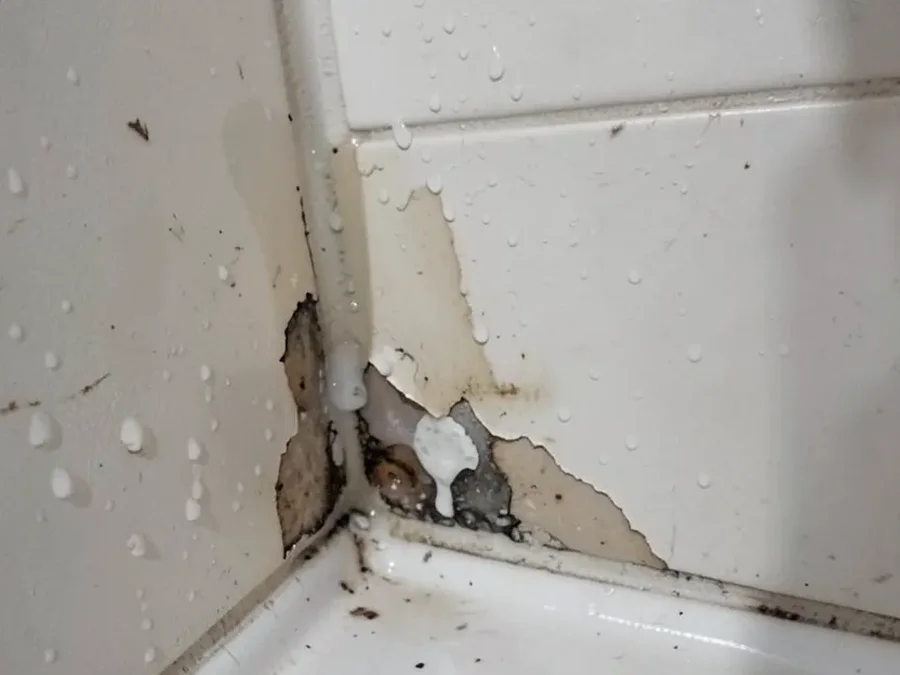
It’s worth being specific about the failure pattern, because exterior paint in a bathroom often doesn’t fail right away — that’s part of what makes it tempting. The first coat can look fine for weeks or months while the problem builds slowly underneath the surface: since the film won’t let moisture vapor escape, humidity from showers accumulates behind the paint instead of passing through it, until the wall material underneath stays damp enough for mold to start growing where it’s invisible from the room.
The paint usually shows the damage only after that hidden moisture has built up enough to push the film away from the wall — small bubbles first, then peeling, often starting in the corners nearest the shower. By that point the fix isn’t a quick touch-up: it means stripping the failed paint, treating whatever mold has developed, letting the wall dry out fully, and repainting with a proper bathroom-rated product — more time and money than buying the right paint would have cost the first time.
| Paint Type | Typical Bathroom Lifespan | Why |
|---|---|---|
| Standard interior paint (not bath-rated) | 1–3 years | No built-in mildewcide; average film hardness |
| Exterior paint used indoors | Unpredictable, often under 2 years | Can look fine at first, then fail suddenly once trapped moisture builds up behind the film |
| Interior paint labeled for bathrooms | 5–10+ years | Built-in mildewcide, controlled vapor permeability, scrubbable finish |
These are general ranges, not guarantees — actual lifespan depends on ventilation, wall prep, and how much daily moisture the room sees. But the pattern holds: paint designed to breathe with bathroom humidity consistently outlasts paint designed to block weather from the outside.
Common Bathroom Painting Mistakes
- Not cleaning the walls properly. Leftover soap scum keeps paint from adhering, leading to early peeling.
- Skipping primer. It seals the surface and helps the topcoat stick, which matters more in a humid room than anywhere else.
- Using the wrong sheen. Matte absorbs moisture and resists cleaning — a poor fit for bathroom walls.
- Not allowing full curing time. Steam and scrubbing before the paint fully cures invites moisture damage.
- Poor ventilation. Slows drying, traps fumes, and creates the exact conditions mold needs to take hold.
Frequently Asked Questions
Question: Can you use exterior paint in a bathroom?
Answer: It’s not recommended. Exterior paint isn’t formulated for indoor humidity and mold, and its harder, less breathable film can trap moisture inside the wall instead of letting it escape.
Question: Is it unsafe to use exterior paint indoors because of VOCs?
Answer: Exterior paints generally carry more VOCs than interior formulas, and the EPA notes indoor VOC levels run consistently higher than outdoors, spiking further during and after painting. In a small, enclosed bathroom, that off-gassing is more concentrated. Ventilation reduces exposure but doesn’t eliminate it — a lower-VOC interior paint is the safer choice.
Question: What type of paint is best for bathrooms?
Answer: A high-quality interior paint labeled for kitchens and bathrooms. These add moisture resistance, mildew inhibitors, and a scrubbable finish that ordinary interior paint doesn’t have.
Question: Should I use a high-gloss finish in my bathroom?
Answer: High-gloss is very durable and easy to clean, but shows wall imperfections more than lower sheens. Satin or semi-gloss usually strikes a better balance for full walls.
Question: How long does bathroom paint last?
Answer: With proper prep, a specialized interior bathroom paint typically lasts 5 to 10 years or more. Standard interior paint without a mildewcide often needs repainting within 1 to 3 years.
Question: Does exterior paint prevent mold?
Answer: It resists outdoor mildew, a different organism than bathroom mold. It isn’t formulated with the mildewcides interior bathroom paints use, so it underperforms a paint built for indoor humidity.
Summary
Using exterior paint in a bathroom is a no. It’s tough against outdoor weather, but that toughness works against it indoors — its closed film traps humidity inside the wall, and its higher VOC content is a bigger problem in a small, enclosed room than outside.
An interior paint formulated for bathrooms handles moisture, resists mildew, stays breathable, and cleans up easily. Prep the walls well, ventilate while you work, and use a paint made for the room you’re actually painting.
Sponsored / affiliate links. As an Amazon Associate I earn from qualifying purchases. I may earn additional commission from eligible campaigns.