Can You Use Regular Wood Screws for Structural Support? No
No — regular wood screws (the case-hardened screws sold for cabinets, trim, and general assembly) aren’t rated for structural, load-bearing connections like ledger boards, joist hangers, or framing. They’re hardened to resist stripping when driven, which makes them brittle: under a sudden shear load, they tend to snap rather than bend. Structural screws are made from a different steel with published shear and withdrawal ratings specifically for these connections. Here’s the actual difference and when each one belongs.
Why Regular Wood Screws Fail Under Load
Best For Ledger & Framing Connections
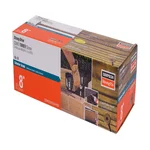 |
Simpson Strong-Tie SDWS Timber Screws, 8″ (50-pack) – $64.98 This is the exact category of fastener that replaces a lag screw or through-bolt at code-regulated connections like ledger boards and multi-ply beams.
|
A standard wood screw (sometimes called a production screw or drive screw) is heat-treated to be hard enough that the driver bit doesn’t strip the head and the threads don’t wear down driving into wood. That same hardness makes the steel brittle under a sideways (shear) load — instead of bending or deforming under stress the way a softer bolt or a purpose-built structural screw does, a case-hardened wood screw can snap cleanly. In a shelf bracket or cabinet, that’s a minor risk. In a deck ledger board, a joist hanger, or a load-bearing connection, a snapped fastener under lateral load is a genuine failure point.
Deck ledger-board attachment is the connection inspectors watch most closely for exactly this reason — it’s one of the most well-documented failure points in deck collapses, and most residential building codes require lag screws, through-bolts, or code-recognized structural screws at that connection, not general-purpose wood screws.
Wood Screws vs. Structural Screws
| Regular Wood Screws | Structural Screws | |
|---|---|---|
| Steel treatment | Case-hardened, brittle under shock loads | Alloy steel engineered for shear strength |
| Thread design | Wide, coarse threads for grip in soft material | Deep, aggressive threads for high withdrawal resistance |
| Code recognition | Not evaluated for structural loads | ICC-ES evaluated with published load ratings (ESR number) |
| Typical use | Cabinets, trim, general assembly | Ledger boards, multi-ply beams, joist hangers, framing |
Where Regular Wood Screws Are Fine
None of this means wood screws are bad fasteners — they’re the right choice for the vast majority of general woodworking and furniture work, where the connection isn’t carrying a structural load:
- Cabinet face frames and boxes
- Trim, molding, and non-load-bearing shelving
- Furniture joinery, typically alongside glue
- Attaching hardware like hinges and drawer slides
The distinction that matters is whether the connection is carrying and transferring building loads (structural) or just holding parts of an assembly together where the main stresses are handled by the assembly’s overall design (non-structural).
When You Need a Structural Screw
- Deck ledger board attachment: The connection between a deck and the house structure. Almost always requires lag screws, through-bolts, or ICC-ES rated structural screws per code.
- Multi-ply beams: Fastening two or more boards together to act as a single structural beam.
- Joist hangers and framing connectors: Manufacturers specify exact fastener types and lengths for their hangers — using the wrong screw can void the hanger’s rated capacity even if the hanger itself is correct.
- Post-to-beam and structural framing connections: Any connection an engineer or building code treats as load-bearing.
How to Tell What You’re Holding
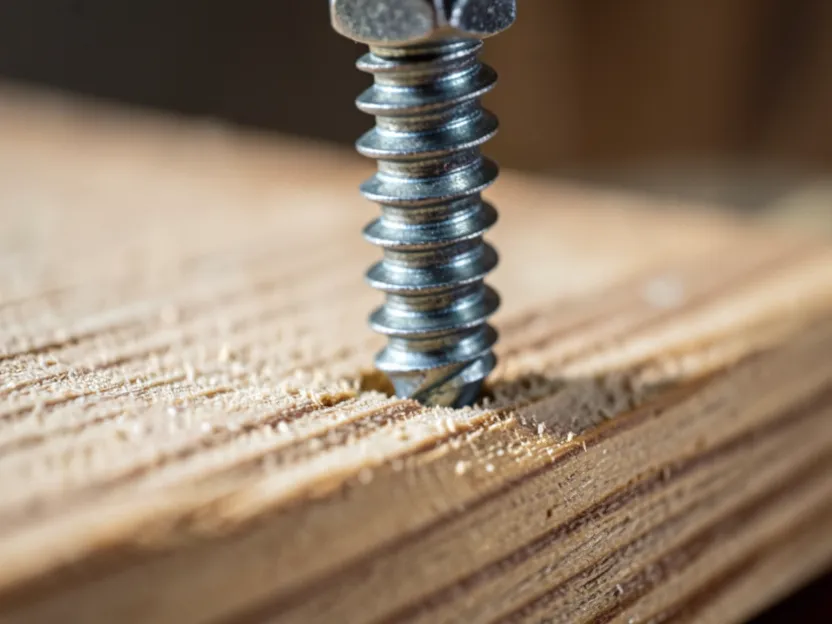
- Check the head: Most structural screws use a large washer head or hex head designed to seat against wood without a separate washer. General wood screws typically have a flat or bugle head.
- Check the packaging: Structural screws are sold with an ICC-ES evaluation report number (an ESR number) printed on the box — that’s the code-recognition documentation. General wood screw boxes don’t carry one.
- Check the thread: Structural screws typically have a more aggressive, deeper thread pattern designed to maximize withdrawal resistance, versus the finer or wider general-purpose threads on standard wood screws.
Best Practices
- When in doubt, treat it as structural: If the connection is holding up weight beyond the piece itself, size the fastener to the job rather than assuming what’s in the drawer will do.
- Follow the manufacturer’s fastener spec: For hangers, brackets, and connectors, use the exact screw type and length the manufacturer lists — substituting a similar-looking screw can void the connector’s rated capacity.
- Check your local code: Fastener requirements for decks and structural framing are set by the International Residential Code as adopted (and sometimes amended) locally. When a project is permitted, the inspector will check this.
- Choose the right corrosion rating outdoors: Exterior structural screws need a coating rated for the wood treatment you’re fastening into (especially with modern ACQ-treated lumber, which is more corrosive to standard coatings).
Frequently Asked Questions
Can wood screws support heavy structures?
No. Regular wood screws are case-hardened and brittle under shear loads, so they aren’t rated for heavy structural connections. Use structural screws, lag screws, or through-bolts for load-bearing work instead.
Are wood screws suitable for building frames?
Not for the structural connections in a frame. Framing connections that transfer building loads need structural screws or bolts with published load ratings, not general-purpose wood screws.
Do wood screws work for outdoor projects?
For non-structural outdoor work, yes, as long as you use an exterior-rated (galvanized or stainless) wood screw to resist corrosion. For structural outdoor connections like a deck ledger, you still need a structural-rated fastener regardless of corrosion resistance.
Can wood screws be replaced with structural screws?
Yes, and for any load-bearing connection, that’s the correct direction to go. Structural screws cost more per piece but carry published shear and withdrawal ratings that general wood screws simply don’t have.
Regular wood screws are the right choice for the overwhelming majority of woodworking and furniture projects. The line to watch for is structural load: the moment a connection is holding up weight beyond the piece itself, whether that’s a deck ledger, a multi-ply beam, or a framing connector, step up to a structural screw, lag screw, or through-bolt rated for the job. It’s a small cost difference for a connection you don’t want to find out was undersized after the fact.
Sponsored / affiliate links. As an Amazon Associate I earn from qualifying purchases. I may earn additional commission from eligible campaigns.