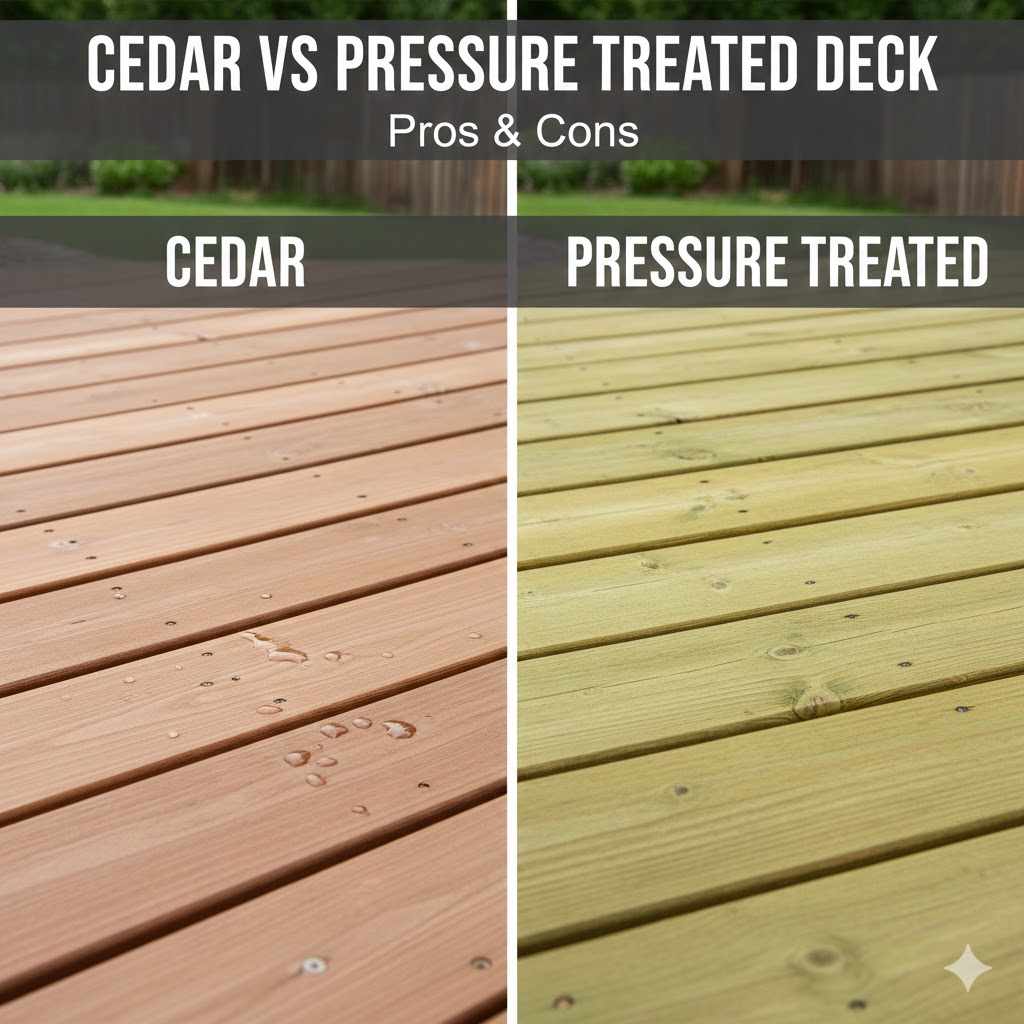
Cedar vs Pressure Treated Deck: Pros & Cons
Deciding on the right material for your deck can feel like a puzzle, especially when you’re just starting out. You might hear terms like cedar and pressure-treated wood and wonder which one is the best choice for your backyard. It’s totally normal to find the differences a little confusing!
This guide breaks down the Cedar vs Pressure Treated Deck: Pros & Cons simply. We’ll walk through everything step-by-step so you can feel confident about your deck project. Get ready to learn the key differences and make an informed decision.
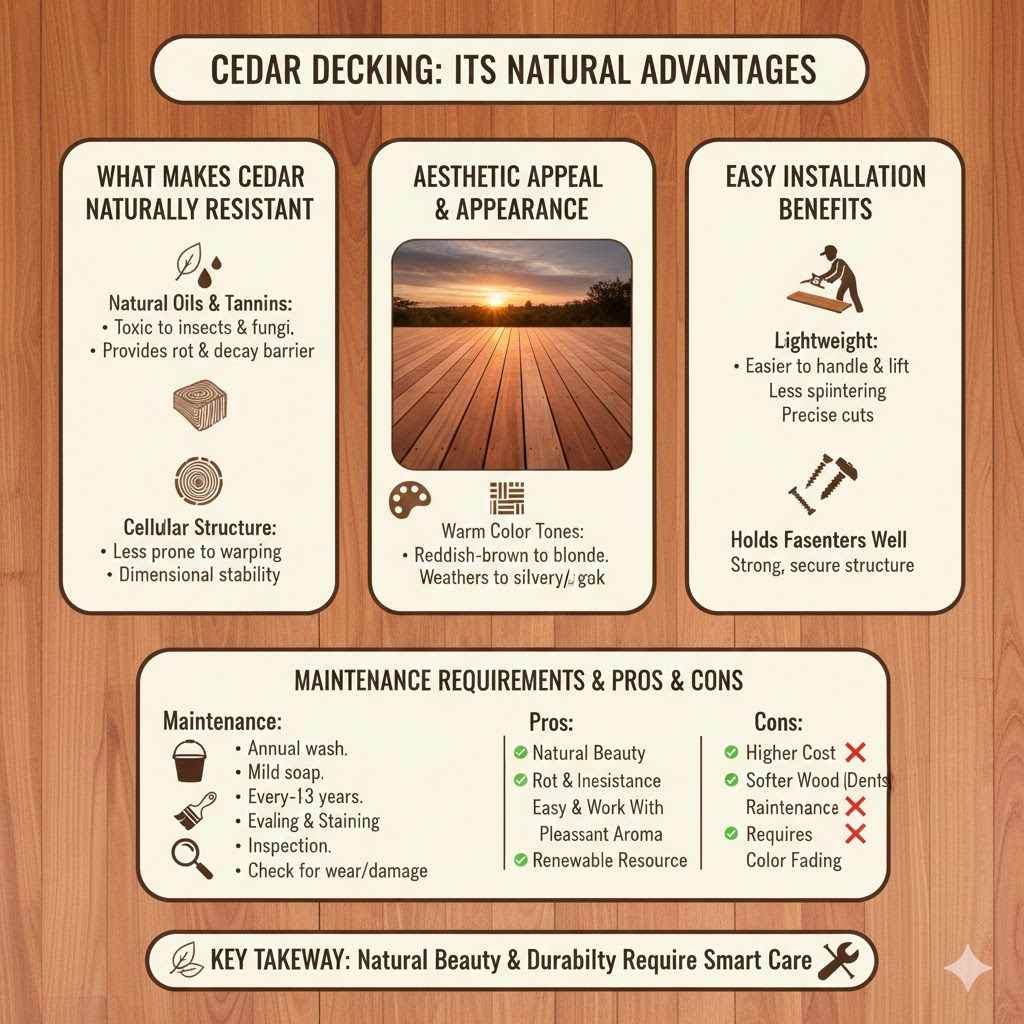
Cedar Decking Its Natural Advantages
Cedar decking is a popular choice for many homeowners because of its natural beauty and inherent properties. This softwood, often from Western Red Cedar trees, is known for its rich color and pleasing aroma. Unlike many other wood types, cedar contains natural oils and extractives that make it resistant to decay, rot, and insect infestations.
This means you often get a beautiful, long-lasting deck without the need for harsh chemical treatments. Cedar is also relatively lightweight and easy to work with, which can simplify the building process. Its natural appeal provides a warm, inviting look that many people find very attractive for outdoor living spaces.
What Makes Cedar Naturally Resistant
The secret to cedar’s durability lies in its natural composition. It contains compounds called extractives, which are essentially natural oils and tannins. These compounds serve as a defense mechanism for the tree, protecting it from insects and fungi.
When used as decking, these same extractives provide a barrier against rot and decay, significantly extending the lifespan of the wood. This natural resistance is one of cedar’s biggest selling points, as it means less maintenance and fewer worries about structural integrity due to environmental factors.
These natural oils also contribute to cedar’s distinctive aroma, often described as pleasant and woodsy. While not a structural benefit, it adds to the overall sensory experience of having a cedar deck. The wood’s cellular structure is also less prone to warping and splitting compared to some other wood species.
This stability ensures that your deck boards will remain relatively flat and straight over time, maintaining their aesthetic appeal and structural soundness.
Cedar’s Aesthetic Appeal and Appearance
When people think of a classic, beautiful wooden deck, they often picture cedar. Its natural reddish-brown to warm blonde tones are visually striking and can complement a wide range of home styles. The wood grain is typically straight and fine, giving it a smooth and refined look.
Over time, cedar will naturally weather to a silvery-gray color if left untreated, which many people find equally attractive. If you prefer to maintain its original rich color, regular cleaning and sealing can help preserve its appearance.
The natural warmth of cedar adds a sense of luxury and natural elegance to any outdoor space. It feels good underfoot and looks inviting, making it a great choice for entertaining or simply relaxing outdoors. The consistency of its color and grain also makes for a uniform and pleasing finished product.
Many homeowners choose cedar precisely for this natural beauty, valuing its organic charm over the manufactured look of other materials.
Working With Cedar Easy Installation Benefits
Cedar is known for being easier to work with than many other lumber types. It’s relatively lightweight, which makes handling the boards during installation less physically demanding. This can be a significant advantage, especially for DIY enthusiasts.
The wood also cuts cleanly and doesn’t tend to splinter as much as harder woods, which makes for more precise cuts and a neater finish. This ease of use can translate into faster installation times, saving both labor costs and personal effort.
Because cedar is dimensionally stable, meaning it doesn’t warp or twist as much as some other woods, it’s more forgiving during installation. Boards tend to stay straighter, which simplifies the process of creating a level and even deck surface. This stability also means that fasteners, like screws and nails, hold well in cedar without splitting the wood, contributing to a stronger, more secure deck structure.
Maintenance Requirements for Cedar Decks
While cedar offers natural resistance, it still requires some maintenance to keep it looking its best and to maximize its lifespan. Regular cleaning is essential to remove dirt, mildew, and debris that can accumulate on the surface. Sweeping and occasional washing with a deck cleaner are usually sufficient.
- Cleaning: At least once or twice a year, wash your cedar deck to remove surface grime. This prevents dirt from being ground into the wood and causing permanent stains or encouraging mold growth. A mild detergent or a specialized wood cleaner can be used.
- Sealing and Staining: To preserve its natural color and add an extra layer of protection against UV rays and moisture, you should apply a sealant or stain. Most manufacturers recommend resealing cedar every 1-3 years, depending on the product used and your climate. Stains can also provide UV protection and add color if you wish to enhance or change the wood’s natural hue.
- Inspection: Periodically check for any loose boards, popped nails, or signs of wear. Addressing minor issues promptly can prevent them from becoming larger, more costly problems down the line.
The frequency of maintenance can vary based on your local climate and the amount of sun and rain your deck receives. Decks exposed to harsh weather conditions might need more frequent attention. However, compared to decks that require constant chemical treatments or are prone to rapid decay, cedar’s maintenance is generally considered manageable and geared more towards preserving aesthetics.
Pros of Cedar Decking
- Natural Beauty: Rich color and attractive grain.
- Natural Resistance: Resists rot, decay, and insect damage due to natural oils.
- Easy to Work With: Lightweight, cuts cleanly, less prone to splintering.
- Dimensionally Stable: Less likely to warp, twist, or crack.
- Pleasant Aroma: Offers a natural, pleasant scent.
- Environmentally Friendly: Renewable resource.
Cons of Cedar Decking
- Higher Cost: Generally more expensive than pressure-treated lumber.
- Softer Wood: Can be more prone to dents and scratches than harder woods.
- Maintenance Required: Needs regular cleaning and sealing to maintain appearance and longevity.
- Color Fading: Will weather to gray if not treated.
- Availability: Can be harder to find in some regions.
Pressure Treated Lumber The Budget-Friendly Choice
Pressure-treated lumber is a very common material for decks and outdoor structures, primarily because it’s cost-effective and widely available. This wood has been treated with chemicals under pressure to resist rot, decay, and insect attacks. The process forces preservatives deep into the wood fibers, making it durable for outdoor use.
This treatment makes it a practical choice for areas where exposure to moisture is a concern, such as ground contact or regions with high humidity. Its affordability makes it accessible for a wide range of projects and budgets, allowing more people to build outdoor decks.
The chemicals used in pressure treatment can vary, but they are designed to protect the wood from biological degradation. This means a pressure-treated deck can last for many years, often outperforming untreated wood in harsh conditions. While it might not have the same natural aesthetic appeal as cedar, its durability and price point make it a strong contender for many deck building projects.
The material is also readily available at most lumber yards, simplifying the procurement process.
The Pressure Treatment Process Explained
Pressure treating wood involves a specialized industrial process designed to infuse chemical preservatives deep into the wood’s cellular structure. The wood is first placed into a large, sealed steel cylinder called a retort. Air is removed from the retort and the wood cells, creating a vacuum.
Then, a chemical solution, typically containing copper-based compounds and other fungicides and insecticides, is introduced into the cylinder under pressure. This pressure forces the preservatives into every part of the wood.
Once the cylinder is full and pressurized, the solution is drained, and a final vacuum may be applied to remove excess liquid from the wood’s surface. This process ensures that the preservatives are distributed evenly and deeply, providing maximum protection against rot, fungi, and insects. The effectiveness of the treatment depends on the type of wood, the desired level of protection, and the specific treatment schedule used by the manufacturer.
This thorough impregnation is what gives pressure-treated lumber its long-lasting durability.
Common Preservatives and Their Role
The preservatives used in pressure-treated lumber are crucial for its longevity and resistance to decay. Historically, Chromated Copper Arsenate (CCA) was widely used, but concerns about arsenic led to its phase-out for residential use in the early 2000s. Today, the most common preservatives for residential applications are alkaline copper quaternary (ACQ), copper azole (CA), and micronized copper quaternary (MCQ).
- ACQ (Alkaline Copper Quaternary): This is one of the most prevalent treatments. It uses copper as the primary fungicide and a quaternary ammonium compound as the insecticide. ACQ is effective against a broad spectrum of wood-destroying organisms and is considered safer than older treatments for residential use.
- CA (Copper Azole): Similar to ACQ, this treatment also relies on copper for fungicidal protection but uses an azole compound for insecticidal properties. CA treatments are known for their effectiveness and can sometimes be less corrosive to fasteners than ACQ.
- MCQ (Micronized Copper Quaternary): This treatment uses tiny particles of copper that are dispersed in water. The particles are then forced into the wood under pressure. MCQ treatments are also very effective and are often considered more environmentally friendly due to the reduced use of some chemicals.
These preservatives work by making the wood toxic to the organisms that cause decay and insect damage. The copper compounds disrupt the enzymes that fungi need to survive, while the organic components of the quaternary or azole compounds inhibit insect activity. The depth and uniformity of the treatment are key to its effectiveness.
It’s important to note that while these treatments protect the wood, they are designed to be safe for normal use in outdoor structures. Proper handling and disposal guidelines should always be followed.
Appearance and Workability of Treated Lumber
Pressure-treated lumber typically has a greenish tint when freshly treated, although newer treatments are often clearer or have a brown hue to resemble natural wood. Over time, it weathers to a gray color, similar to untreated wood. The appearance is generally less refined than cedar, with more noticeable knots and a coarser grain.
Some people find the greenish tint unappealing, and it can be challenging to stain evenly until the wood has dried sufficiently after treatment.
In terms of workability, pressure-treated lumber is generally a bit harder and heavier than cedar. It can be more prone to splintering, especially if cut with dull blades. However, it is still readily workable with standard woodworking tools.
The moisture content of treated lumber can also vary, and it’s often recommended to let it dry out for a few weeks or months before staining or painting to ensure proper adhesion and prevent issues like peeling or blistering.
Durability and Longevity of Treated Decks
The primary advantage of pressure-treated lumber is its exceptional durability and longevity, especially in outdoor environments. The chemical treatment makes it highly resistant to rot, decay, and insect infestation, which are common culprits for deck failure in untreated wood. This resistance allows pressure-treated decks to withstand exposure to rain, humidity, and pests for many years, often lasting 15 to 25 years or even longer with proper maintenance.
This long lifespan is a significant benefit for homeowners looking for a cost-effective solution that doesn’t require frequent
Maintenance for Pressure Treated Decks
While pressure-treated lumber is highly resistant to rot and insects, it still requires regular maintenance to preserve its appearance and structural integrity. The wood can dry out over time, leading to cracking, splintering, and warping, especially if not properly sealed. Proper cleaning and sealing are key to extending the life and enhancing the look of a pressure-treated deck.
- Cleaning: Similar to cedar, regular cleaning is necessary to remove dirt, mold, and mildew. Use a deck cleaner designed for treated wood. Avoid using high-pressure washers, as they can damage the wood fibers.
- Sealing and Staining: After the wood has dried sufficiently (which can take several weeks to months after installation), applying a water-repellent sealant or a stain is highly recommended. This helps prevent excessive moisture absorption, reduces the risk of cracking and splintering, and protects against UV damage that can cause graying. Most manufacturers recommend resealing every 1-3 years.
- Inspection: Periodically inspect the deck for loose boards, protruding nails or screws, and any signs of significant cracking or splitting. Promptly address any issues to ensure safety and structural soundness.
The frequency of sealing can depend on the climate and the specific product used. In areas with extreme weather, more frequent applications may be needed. However, the protection offered by sealing is crucial for maintaining the wood’s appearance and preventing deterioration beyond the inherent resistance provided by the treatment.
Pros of Pressure Treated Decking
- Cost-Effective: Significantly less expensive than cedar.
- Widely Available: Easy to find at most lumber yards and home improvement stores.
- Highly Durable: Excellent resistance to rot, decay, and insect infestation.
- Long Lifespan: Can last 15-25 years or more.
- Resistant to Moisture: Suitable for ground contact and humid environments.
- Versatile: Can be used for a wide range of outdoor projects.
Cons of Pressure Treated Decking
- Appearance: Often has a greenish tint and a less refined look compared to cedar.
- Workability: Can be harder to work with and prone to splintering.
- Chemicals: Contains chemical preservatives, though modern treatments are safer for residential use.
- Drying Time: May require significant drying time before staining or painting.
- Environmental Concerns: Older treatments had more significant environmental impact, though modern treatments are improved.
Comparing Cedar vs Pressure Treated Deck Pros & Cons
When you’re weighing your options for a new deck, understanding the direct comparison between cedar and pressure-treated lumber is key. Both materials have their strengths and weaknesses, and the “better” choice often depends on your priorities, budget, and desired aesthetic. This section breaks down the core differences so you can make an informed decision.
It’s a common dilemma for homeowners, and we’ll help you simplify it.
Cost Analysis A Clear Financial Picture
The most significant difference many homeowners notice immediately is the price. Cedar is a premium wood, and its cost reflects its natural beauty and resistance. Pressure-treated lumber is designed for affordability, making it a budget-friendly option for many.
| Feature | Cedar Decking | Pressure Treated Decking |
|---|---|---|
| Initial Material Cost | Higher (e.g., $5-$10 per linear foot for decking boards) | Lower (e.g., $2-$5 per linear foot for decking boards) |
| Installation Cost | Can be slightly lower due to ease of working | May be slightly higher due to wood weight and potential splintering |
| Maintenance Costs | Ongoing costs for sealants/stains (e.g., $50-$200 annually) | Ongoing costs for sealants/stains (e.g., $50-$200 annually) |
| Lifespan Cost (over 20 years) | Higher initial investment, potentially lower replacement costs if well-maintained | Lower initial investment, potential for earlier replacement depending on maintenance and climate |
As the table shows, the upfront cost for cedar is substantially higher. However, over the lifespan of the deck, the total cost can become more comparable if cedar is well-maintained. Pressure-treated lumber offers a lower barrier to entry, making it more accessible for those on a tighter budget.
The long-term savings for pressure-treated wood come from its inherent durability against rot and insects, reducing the need for frequent repairs or early replacement compared to untreated wood. However, its susceptibility to weathering like cracking and splintering necessitates consistent sealing to maintain its structural integrity and appearance.
Durability and Lifespan A Long-Term View
Both cedar and pressure-treated lumber are durable choices for decks, but their durability comes from different sources. Cedar’s durability is natural, stemming from its inherent oils. Pressure-treated lumber’s durability is engineered through chemical treatment.
This fundamental difference impacts their performance in various conditions.
Cedar has a natural resistance to rot and insects, making it a good choice for areas with moderate exposure to moisture. Its natural oils help protect it from decay. However, it is a softer wood and can be more susceptible to dents and scratches from everyday use.
Over time, if not properly sealed, UV exposure can cause it to weather to a silvery-gray and potentially lead to surface checking (small cracks).
Pressure-treated lumber, on the other hand, is designed for extreme durability against decay and insects, making it ideal for environments with high moisture or direct ground contact. The chemical treatment penetrates deep into the wood, offering robust protection. While it is generally harder than cedar, it can still be prone to warping, cracking, and splintering if it dries out too quickly or is exposed to extreme weather without protection.
The chemicals can also be corrosive to certain types of fasteners over time, so using appropriate hardware is essential.
The lifespan of a well-maintained cedar deck can range from 15 to 25 years. A properly maintained pressure-treated deck can often achieve a similar or even longer lifespan, sometimes exceeding 25 years, due to the chemical protection against biological decomposition. Ultimately, the longevity of either deck material heavily relies on consistent maintenance, including regular cleaning, sealing, and prompt repair of any damage.
Aesthetic Appeal Comparing Looks and Feel
The visual appeal of a deck can greatly influence your enjoyment of your outdoor space. Cedar is widely praised for its natural beauty. It typically features a rich, warm reddish-brown to blonde hue with a fine, straight grain.
This natural color and pattern provide an elegant and inviting look that many homeowners desire for their decks, patios, and outdoor living areas.
Cedar can be left to weather naturally to a pleasing silvery-gray, or it can be stained to enhance its original color or achieve a different look. Its surface is generally smoother than pressure-treated wood, offering a comfortable feel underfoot. The natural aroma of cedar also adds to its sensory appeal, creating a pleasant outdoor ambiance.
Many consider cedar to be the superior choice for those prioritizing natural beauty and a high-end appearance.
Pressure-treated lumber, while functional and durable, often lacks the refined aesthetic of cedar. It typically has a more rustic appearance, with a coarser grain and a greenish or brownish tint from the treatment process. While it can be stained, achieving a uniform, rich color can be more challenging, especially until the wood has adequately dried.
Over time, like cedar, it weathers to a gray color. For homeowners where the deck’s visual impact is paramount, cedar is often the preferred option. However, for those who are more focused on functionality and durability over high-end aesthetics, pressure-treated wood can still create a pleasant outdoor space with the right finishing touches.
Maintenance Demands What’s Required
When it comes to maintenance, both cedar and pressure-treated decks require attention, but the focus can differ. Cedar, being a softer wood with natural oils, requires maintenance primarily to preserve its color and prevent surface damage. Pressure-treated wood requires maintenance to prevent it from drying out excessively, cracking, and splintering, in addition to cleaning.
Cedar decks benefit from regular cleaning to remove dirt and mildew. Applying a water-repellent sealant or stain every one to three years is recommended to protect the wood from UV rays and moisture, helping to maintain its color and prevent premature weathering. If left untreated, cedar will naturally turn gray, which is a desired look for some, but can also indicate increased susceptibility to surface checking if not properly cared for.
Pressure-treated decks also need regular cleaning to remove surface contaminants. After the initial drying period, applying a good quality water-repellent sealant or stain is crucial. This helps the wood retain its moisture content, preventing it from becoming too dry and brittle, which can lead to cracking and splintering.
Sealing also protects against UV damage. Reapplication is typically recommended every one to three years, similar to cedar, but the goal is slightly different: to maintain the wood’s integrity and prevent physical degradation rather than just preserving color. Both types of decks will benefit from periodic inspections for loose fasteners or structural issues.
Environmental Considerations and Safety
Environmental and safety considerations are important factors for many homeowners. Cedar is a natural, renewable resource. Its resistance to decay and insects is inherent, meaning it doesn’t rely on chemical treatments for its basic protective qualities.
This makes it an attractive option for those seeking more natural and sustainable building materials. Cedar’s production process generally has a lower environmental impact compared to the chemical treatment of lumber.
Pressure-treated lumber, while a durable and long-lasting product, involves the use of chemical preservatives. Modern treatments like ACQ, CA, and MCQ are considered safer for residential use than older CCA treatments. However, concerns can still exist regarding the chemicals leaching into the soil or water, particularly in sensitive environments.
Proper disposal of treated wood is also important to prevent potential environmental contamination. For most typical deck installations, the risks associated with modern treated lumber are considered minimal, but it’s a factor to consider for those with specific environmental concerns.
When working with pressure-treated lumber, it’s always advisable to wear gloves and a mask, especially when cutting the wood, as fine sawdust containing preservatives can be released. Washing hands thoroughly after handling is also recommended. While the chemicals are bonded within the wood structure, taking precautions during installation and use ensures minimal exposure.
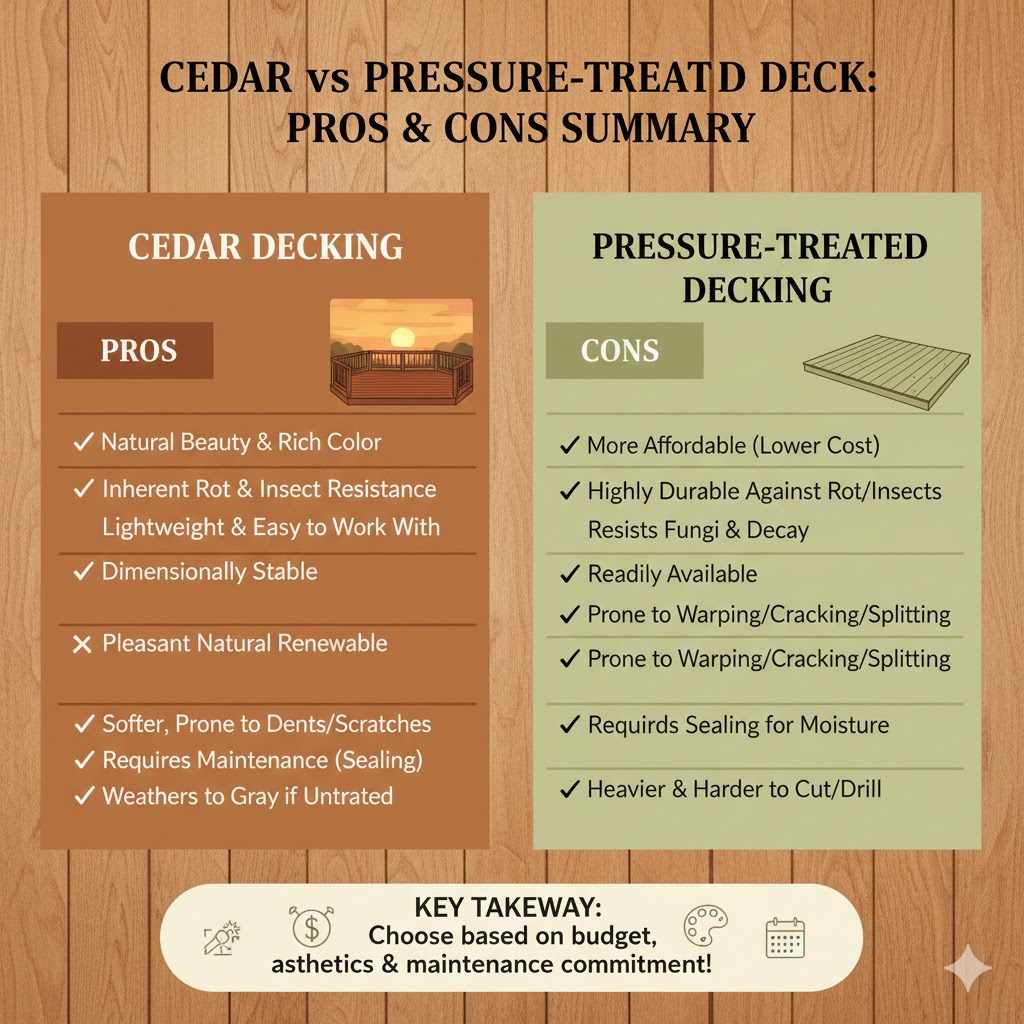
Cedar vs Pressure Treated Deck: Pros & Cons Summary
Choosing between cedar and pressure-treated lumber for your deck involves balancing several factors. You’ve learned about cedar’s natural beauty and resistance, its ease of use, and its need for ongoing aesthetic maintenance. You also understand pressure-treated lumber’s cost-effectiveness, robust protection against decay and insects, and its requirement for moisture management.
The decision really comes down to what matters most to you. If natural aesthetics and a premium look are your top priorities, and your budget allows, cedar is an excellent choice. If budget is a primary concern, and you need a highly durable material that can withstand harsh conditions, pressure-treated lumber is a very practical and reliable option.
Both can result in a beautiful and functional deck with proper care. Consider your climate, your home’s style, and how much time you’re willing to dedicate to maintenance to make the best choice for your outdoor space.
Frequently Asked Questions
Question: Which wood is more durable cedar or pressure treated
Answer: Both are durable, but pressure-treated wood generally offers superior resistance to rot and insects due to chemical treatment, making it potentially last longer in harsh conditions. Cedar’s durability is natural but it’s a softer wood and can be more prone to dents and weathering.
Question: Is cedar wood more expensive than pressure treated wood
Answer: Yes, cedar wood is typically more expensive upfront than pressure-treated lumber. The cost difference can be significant, making pressure-treated wood a more budget-friendly option for many.
Question: Which deck material requires less maintenance cedar or pressure treated
Answer: Both require regular maintenance. Cedar needs sealing to maintain its appearance and protect against UV damage, while pressure-treated wood needs sealing to prevent drying out, cracking, and splintering. The type of maintenance differs, but the frequency can be similar.
Question: Can cedar decks be used for ground contact
Answer: No, cedar decks are generally not recommended for direct ground contact. Their natural resistance is not as robust as the chemical treatment in pressure-treated lumber, and prolonged contact with soil can lead to rot.
Question: Are modern pressure treated woods safe for decks
Answer: Yes, modern pressure-treated woods use safer chemical preservatives like ACQ, CA, and MCQ, which are considered safe for residential use in decks and other outdoor structures. Always follow handling guidelines.
Summary
Choosing between cedar and pressure-treated lumber involves weighing upfront cost against long-term aesthetics and maintenance. Cedar offers natural beauty and resistance but costs more. Pressure-treated wood is budget-friendly and highly resistant to decay and insects.
Both require regular sealing and cleaning to ensure longevity and appearance. Your decision should align with your budget, desired look, and tolerance for maintenance tasks.