Cedar Wood and Water: Is It Truly Waterproof?
Many people wonder about Cedar Wood and Water: Is It Truly Waterproof? It can seem tricky, especially if you’re new to woodworking or outdoor projects. You want to know if cedar can handle rain or dampness without problems. This guide makes it easy.
We’ll break down exactly what you need to know, step by step, so you can feel confident about your choices. Get ready to learn how cedar behaves with water.
Cedar Wood And Water Is It Truly Waterproof
This section explores the fundamental relationship between cedar wood and water. We’ll look at why this question is so common and what factors influence how well cedar resists moisture. Understanding these basics is key to making informed decisions for any project involving cedar and potential water exposure.
We’ll cover the natural properties of cedar that give it some water resistance.
Natural Water Resistance of Cedar
Cedar wood naturally possesses qualities that make it more resistant to water and decay than many other types of wood. This resistance comes from oils and extractives found within the wood itself. These natural compounds act as a protective barrier, helping to repel water and deter insects and fungi that can cause rot.
These oils, often called cedar phenols, are not uniformly distributed throughout the wood. They are more concentrated in certain parts of the tree and can change over time. The specific species of cedar also plays a big role in its overall water resistance.
Some types of cedar are known for being significantly more durable in wet conditions than others.
For instance, Western Red Cedar is famous for its excellent stability and resistance to moisture. This makes it a popular choice for outdoor applications like decks, fences, and roofing. Its natural oils help prevent it from absorbing too much water, which in turn reduces swelling and shrinking.
This stability is crucial for the longevity of outdoor structures.
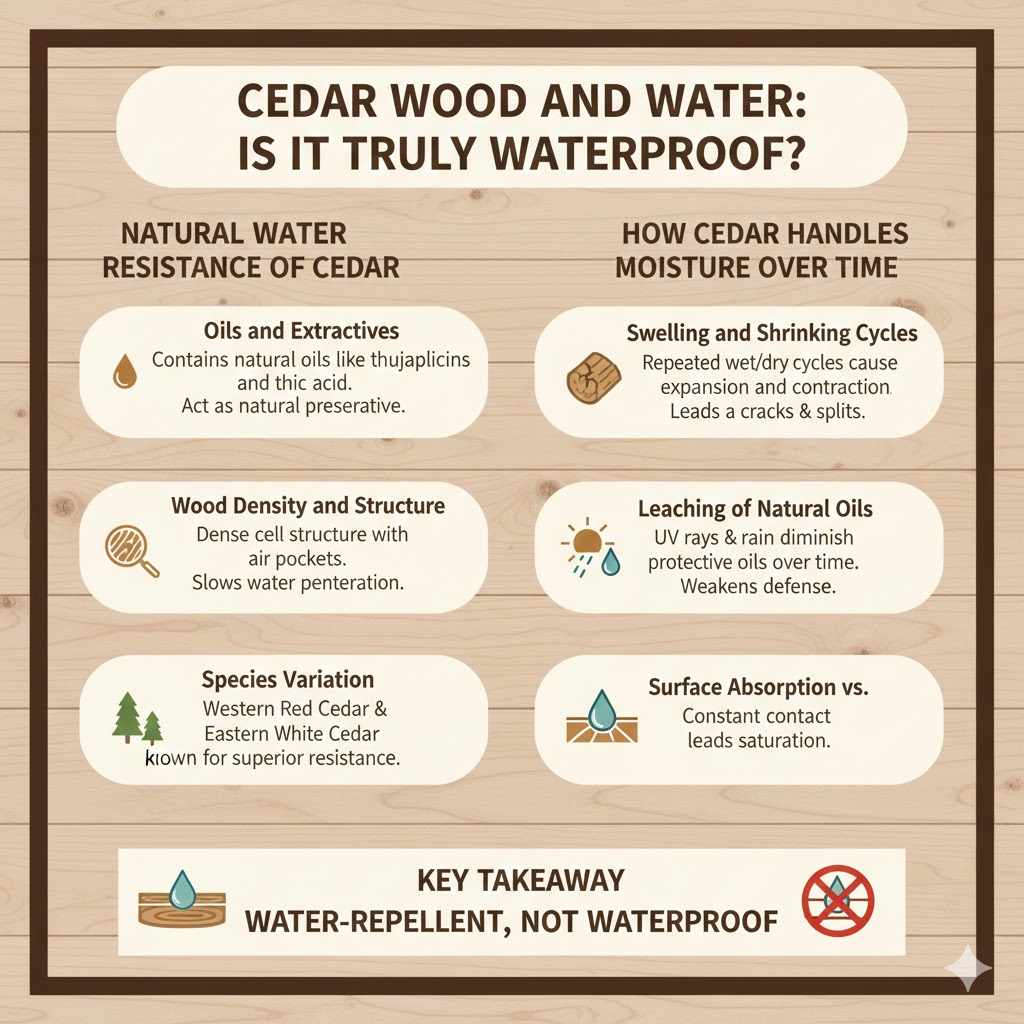
- Oils and Extractives Cedar contains natural oils, like thujaplicins and thujic acid, that are toxic to fungi and insects. These compounds are key to its durability in wet environments. They act as a natural preservative, helping the wood resist rot and decay that often results from prolonged water exposure.
- Wood Density and Structure The cell structure of cedar wood is relatively dense and contains natural air pockets. This structure makes it harder for water to penetrate deep into the wood. Compared to softer woods, cedar’s tighter grain can slow down water absorption.
- Species Variation Not all cedars are created equal when it comes to water resistance. Western Red Cedar and Eastern White Cedar are known for superior moisture resistance. Other cedar varieties might have less of these protective oils, making them less suitable for constant wet exposure.
The presence of these natural defenses means that cedar, in its untreated state, can perform quite well in many situations where it comes into contact with water. However, this doesn’t automatically mean it’s completely waterproof. There’s a limit to how much moisture it can handle before degradation begins.
How Cedar Handles Moisture Over Time
When cedar wood is exposed to water, it doesn’t absorb it like a sponge. Instead, it absorbs moisture more slowly, and its natural oils help to a degree. This means that cedar is water-repellent, not waterproof.
There’s a significant difference between repelling water and being completely impermeable to it.
Over time, especially with repeated wetting and drying cycles, the natural oils in the cedar can begin to break down. This breakdown is accelerated by UV rays from the sun and by constant saturation. As these protective compounds diminish, the wood becomes more susceptible to moisture penetration.
When cedar absorbs too much water and then dries out, it can swell and shrink. This expansion and contraction can lead to warping, cracking, and splitting, especially if the wood is not properly sealed or maintained. These physical changes compromise the wood’s integrity and appearance.
This is a common challenge for many wood types, but cedar’s natural properties do offer a head start.
The rate at which cedar absorbs water also depends on the condition of its surface. If the wood is smooth and has its natural oils intact, it will absorb water slower than if it has been weathered, sanded heavily, or had its surface oils removed. This is why maintaining a protective finish is often recommended, even for cedar.
- Swelling and Shrinking Cycles Repeated cycles of cedar wood getting wet and then drying out cause it to expand and contract. This movement can stress the wood fibers, leading to cracks and splits over time. It’s similar to how some materials crack in extreme weather.
- Leaching of Natural Oils The protective oils within cedar are not permanent. Exposure to sunlight, rain, and air can cause these oils to leach out over months and years. As the oils decrease, the wood’s natural defense against decay and water damage weakens.
- Surface Absorption vs. Permeation Cedar primarily absorbs moisture through its surface. The natural oils and density slow down how deep the water can penetrate. However, if left in constant contact with water, even cedar will eventually become saturated.
So, while cedar is a great choice for many outdoor applications due to its natural resistance, it is not a magical material that will never be affected by water. Its performance is a balance of its natural properties and the conditions it endures.
Understanding Cedar’s Water Resistance Limitations
It’s important to understand that “waterproof” is a very strong term. Very few natural materials, especially wood, can be truly waterproof without artificial treatment. Cedar wood, while naturally resistant, is not inherently waterproof.
This section clarifies what “water-repellent” means in the context of cedar and where its limits lie.
Cedar Wood Is Water Repellent Not Waterproof
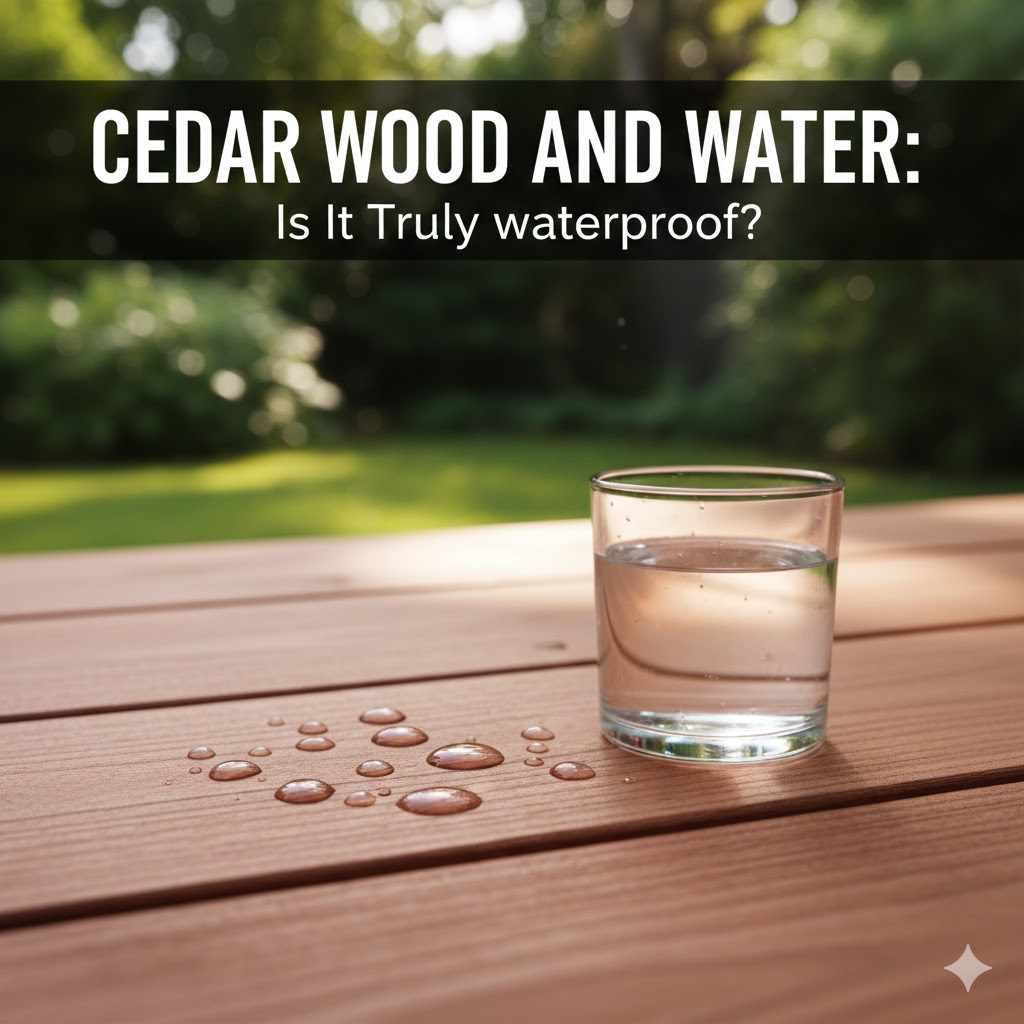
The key distinction here is between being water-repellent and being waterproof. Cedar wood is highly water-repellent. This means it can resist water penetration to a significant degree, especially when it’s new and its natural oils are abundant.
It will shed water rather than absorb it quickly.
Waterproof, on the other hand, implies that a material is completely impervious to water. Nothing can pass through it, no matter how long it’s exposed. Wood, with its fibrous structure, is naturally porous to some extent.
Water molecules, under pressure or prolonged contact, can eventually find their way into the wood cells.
Think of a good quality raincoat. It’s water-repellent, meaning rain beads up and rolls off. However, if you stand in a downpour for hours, some moisture might eventually seep through.
Cedar is similar in its natural state. It offers excellent protection for a good amount of time, but not indefinitely against constant submersion or extreme conditions.
The natural oils in cedar create a barrier that slows down water absorption. This delay is what gives cedar its reputation for durability in outdoor settings. However, if cedar is constantly submerged in water, like a dock that’s always underwater, or exposed to persistent dampness without drying out, its natural defenses will eventually be overwhelmed.
- The Difference Explained Water-repellent materials resist water’s tendency to spread or soak in. Waterproof materials prevent water from passing through them entirely. Cedar’s natural oils help it bead water, making it repellent.
- Natural Porosity of Wood All wood has microscopic pores and channels. Water can enter these channels. Cedar’s structure makes it harder for water to enter and move freely compared to other woods, but it’s not completely sealed.
- Performance in Different Conditions Cedar performs very well in situations with intermittent water exposure, like rain showers. It struggles more in environments of constant submersion or very high humidity for extended periods without airflow.
Therefore, when considering cedar for projects, it’s essential to set realistic expectations. It’s a superior natural material for resisting water damage compared to many others, but it’s not a foolproof solution for all water-related challenges.
Factors Affecting Cedar’s Water Performance
Several factors influence how well cedar wood performs when exposed to water. These include the specific species of cedar, how it’s cut and treated, and the environmental conditions it faces. Understanding these elements helps in predicting and managing cedar’s behavior with moisture.
The species of cedar is a primary determinant. Western Red Cedar, for example, is known for its exceptional durability and natural resistance to decay and moisture. This is due to higher concentrations of extractives.
Eastern White Cedar is also quite resistant, though perhaps slightly less so than Western Red Cedar in some respects.
The way the wood is prepared and finished also plays a crucial role. Untreated, unfinished cedar will have its natural resistances. However, applying a high-quality sealant or stain can significantly enhance its water repellency and prolong its life in wet environments.
These finishes create an additional barrier.
Environmental conditions are equally important. Cedar exposed to direct sunlight and wind will dry out more quickly, which can be beneficial in preventing prolonged saturation. Conversely, cedar in a shaded, damp, and poorly ventilated area will retain moisture longer, increasing the risk of decay and structural issues.
- Species of Cedar Different cedar species have varying levels of natural oils and extractives, directly impacting their water resistance. Western Red Cedar is generally superior to other types for water-exposed applications.
- Wood Finish and Treatment Applying sealants, stains, or finishes designed for exterior wood can greatly improve cedar’s ability to repel water. These coatings add an extra protective layer against moisture absorption.
- Environmental Exposure Factors like sunlight, wind, humidity, and temperature fluctuations affect how quickly cedar dries. Constant dampness without adequate drying time is detrimental, regardless of the wood type.
- Installation and Drainage Proper installation that allows for water drainage away from the wood is critical. Good airflow around cedar structures also helps them dry out effectively after getting wet.
By considering these factors, one can make more informed choices about using cedar in projects that will encounter water, ensuring the best possible performance and longevity.
When Is Cedar Wood Suitable For Water Exposure
Given that cedar is water-repellent rather than waterproof, it excels in specific applications where intermittent or moderate water exposure is expected. This section will highlight the best uses for cedar in such conditions and provide examples of successful projects.
Ideal Outdoor Applications for Cedar
Cedar’s natural resistance to rot, decay, and insects makes it an excellent choice for many outdoor projects. Its ability to withstand weather changes without significant damage is a major advantage. When used correctly, cedar structures can last for many years.
One of the most common and successful uses for cedar is in decking. Decks are exposed to rain, snow, and sunlight. Cedar’s natural oils and stable structure allow it to handle these conditions better than many other woods.
It resists warping and cracking, and its surface temperature is often more comfortable in the sun than composite materials.
Fencing is another area where cedar shines. Cedar fences are aesthetically pleasing and naturally resistant to the elements. They don’t require as much maintenance as other wood types to prevent rot and insect damage.
The wood’s pleasant aroma is also a bonus.
Cedar shingles and shakes for roofing are also a classic application. They offer both beauty and durability, naturally repelling water and providing good insulation. While they require some maintenance, their lifespan is impressive.
Other uses include outdoor furniture, pergolas, gazebos, and exterior cladding.
- Decking and Patios Cedar’s resistance to decay and insect attack makes it a prime material for outdoor decks. It can withstand regular exposure to rain and sun, provided it’s properly maintained.
- Fencing and Gates Cedar offers a natural beauty and excellent durability for fences. It holds up well against moisture and UV rays, reducing the need for frequent repairs or replacements.
- Outdoor Furniture Cedar is a popular choice for patio furniture due to its natural weather resistance and pleasant aroma. It can be left unfinished or sealed for added protection.
- Siding and Cladding Cedar siding provides an attractive and durable exterior finish. It helps protect the building from moisture and adds aesthetic appeal.
- Gazebos and Pergolas These structures often experience direct exposure to the elements. Cedar’s natural properties make it a suitable material for building beautiful and long-lasting outdoor features.
The success of cedar in these applications relies on understanding its properties and ensuring that the design and installation allow for proper drainage and airflow.
Real-Life Examples of Cedar in Wet Environments
Across the globe, cedar has been used in structures that regularly encounter significant moisture, demonstrating its viability. These examples highlight the long-term performance of cedar when applied appropriately.
Consider the traditional saunas found in Nordic countries. These structures are designed to withstand high levels of humidity and frequent temperature changes. Cedar wood is often the preferred material for sauna interiors due to its pleasant scent, low heat conductivity, and natural resistance to moisture and mildew.
Another common example is boat docks and boardwalks. Many of these structures are built from cedar because it can withstand prolonged contact with water, salt air, and sunlight. While they do require regular inspection and maintenance, cedar planks often last for decades in these challenging marine environments.
Even in coastal regions with heavy rainfall, cedar homes and structures have shown remarkable resilience. The natural oils in the wood help protect it from the constant dampness and the corrosive effects of salt spray. The key is often a combination of the right cedar species and proper building practices.
These real-world applications prove that cedar can perform exceptionally well, even when faced with considerable water exposure, as long as the conditions are managed to prevent constant saturation and allow for drying.
- Traditional Saunas Many saunas use cedar for interior paneling. The high humidity and heat create a challenging environment, but cedar’s natural oils help it resist mold and decay, while its low thermal conductivity makes it comfortable to touch.
- Marine Structures Docks, piers, and boardwalks are often constructed from cedar. These structures are constantly in contact with water and salt. Cedar’s durability in these conditions is well-established, though regular maintenance is still recommended.
- Exterior Cladding in Rainy Climates In regions with significant rainfall, cedar siding is a popular choice. Its water-repellent nature helps protect the building’s structure from moisture damage, and it weathers beautifully over time.
- Outdoor Furniture Collections High-quality outdoor furniture is frequently made from cedar. This furniture is left outside year-round, exposed to rain, sun, and snow, yet it maintains its integrity and appearance for many years.
These examples underscore the fact that while cedar is not waterproof, its superior water-repellent qualities make it highly suitable for many applications where water contact is unavoidable.
Enhancing Cedar’s Water Resistance Further
While cedar’s natural properties are impressive, there are ways to further improve its ability to withstand water. This section will detail methods of sealing and treating cedar wood to maximize its longevity and performance in damp conditions.
Sealing and Finishing Cedar Wood
Applying a sealant or finish to cedar wood is one of the most effective ways to enhance its water resistance. These products create a barrier that prevents water from penetrating the wood, reducing swelling, shrinking, and potential decay.
There are various types of finishes available. Oil-based sealants penetrate the wood and nourish it, enhancing its natural appearance while providing protection. Water-based sealants form a protective film on the surface of the wood, offering excellent water repellency.
Stains often contain pigments that add color and UV protection, alongside water repellency.
When choosing a finish, it’s crucial to select one designed for exterior use. These products are formulated to withstand the rigors of outdoor exposure, including UV radiation, temperature fluctuations, and moisture. Always follow the manufacturer’s instructions for application to ensure the best results.
Proper preparation of the wood surface is also key. The wood should be clean, dry, and free from dirt, mold, or old finishes before applying a new sealant or stain. This ensures optimal adhesion and maximum protective benefit.
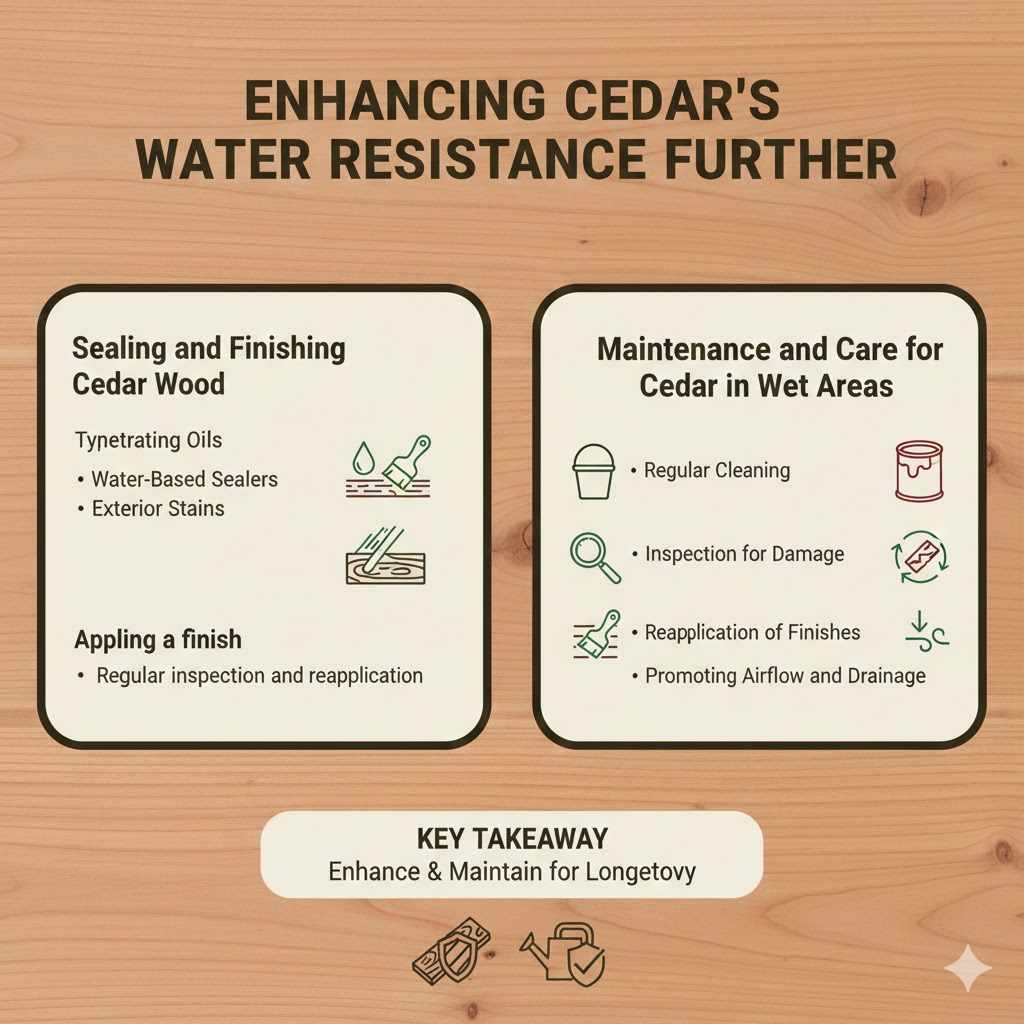
- Types of Finishes Options include penetrating oils, water-based sealers, and exterior stains. Each offers a different level of protection and aesthetic.
- Penetrating Oils These soak into the wood, enhancing its natural color and providing deep protection. They nourish the wood and help maintain its flexibility.
- Water-Based Sealers They create a protective layer on the surface, effectively blocking water entry. They are often easy to clean up and come in clear or tinted versions.
- Exterior Stains Stains can add color and UV protection to the wood while also providing water repellency. They come in various opacities from semi-transparent to solid.
Applying a finish is not a one-time task. Most exterior finishes will need reapplication every few years to maintain their protective qualities. Regular inspection and reapplication are essential for long-term durability.
Maintenance and Care for Cedar in Wet Areas
Even with its natural resistance and protective finishes, cedar wood requires ongoing maintenance to perform at its best, especially in wet environments. Proper care can significantly extend the life of cedar projects.
Regular cleaning is important. Remove dirt, leaves, and other debris that can trap moisture against the wood. A gentle cleaning solution and a soft brush are usually sufficient.
Avoid using harsh chemicals or power washers, as these can damage the wood fibers and protective finishes.
Inspect your cedar projects periodically for signs of wear or damage. Look for any areas where the finish has worn off, where cracks are appearing, or where mold or mildew might be starting to grow. Early detection allows for timely repairs before significant problems develop.
Reapply protective finishes as needed. The frequency of reapplication will depend on the type of finish used, the amount of exposure to the elements, and the specific climate. A good rule of thumb is to reapply a sealant or stain every two to three years, or whenever water no longer beads up on the surface.
Ensure good drainage and airflow around cedar structures. Remove any landscaping or obstructions that prevent water from running off and air from circulating. This helps the wood dry out naturally and prevents moisture from accumulating.
- Regular Cleaning Sweep or hose down cedar surfaces regularly to remove dirt and debris. Use mild soap and water for tougher grime.
- Inspection for Damage Periodically check for cracks, splits, mold, or areas where the finish is peeling. Address any issues promptly.
- Reapplication of Finishes Follow manufacturer recommendations for reapplication schedules for sealants, stains, or oils. This is crucial for sustained protection.
- Promoting Airflow and Drainage Ensure water can easily drain away from the wood and that air can circulate freely around it to aid in drying.
By following these maintenance tips, you can ensure your cedar wood structures remain beautiful and durable, even when exposed to water.
Frequently Asked Questions
Question: Can I use cedar wood for outdoor furniture that will be left outside all year?
Answer: Yes, cedar wood is an excellent choice for outdoor furniture that will remain outside year-round. Its natural resistance to rot, decay, and insects, along with its ability to repel water to a good degree, makes it very durable. For even better longevity and to maintain its appearance, consider applying a protective sealant or stain designed for outdoor wood.
Question: Does cedar wood rot when it’s constantly wet?
Answer: While cedar wood is highly water-repellent and resistant to rot, it is not completely immune to decay if it is constantly wet and cannot dry out. Prolonged, continuous saturation without periods of drying can eventually overwhelm its natural defenses, leading to rot. Proper installation that allows for drainage and airflow is key.
Question: Is cedar better than pine for outdoor use where water is involved?
Answer: Yes, cedar wood is generally much better than pine for outdoor use where water is involved. Pine is much more susceptible to rot, decay, and insect damage when exposed to moisture. Cedar’s natural oils and denser structure provide significantly superior protection against water and the elements.
Question: Do I need to seal cedar wood if I want it to last a long time outdoors?
Answer: While cedar will last a long time outdoors on its own due to its natural properties, sealing it will significantly enhance its longevity and help maintain its appearance. A good quality exterior sealant or stain creates an extra barrier against moisture, UV rays, and wear, prolonging its life and reducing the need for repairs.
Question: Will cedar wood warp or split if it gets wet?
Answer: Cedar wood can warp or split if it undergoes repeated cycles of getting very wet and then drying out rapidly. This is due to the wood expanding and contracting. However, cedar is more stable than many other woods.
Proper sealing and maintenance, along with avoiding constant saturation, can greatly minimize the risk of warping and splitting.
Conclusion
Cedar wood is a fantastic material for projects exposed to water. It’s not truly waterproof, but its natural water-repellent qualities are impressive. With proper care and finishes, cedar stands up well to rain and moisture for many years.
Choose cedar for its beauty and durability in outdoor settings.