Cheap Engineered Wood Flooring: What to Check Before You Buy
Cheap engineered wood flooring runs about $2–$5 per square foot for materials (vs. $5–$16 for solid hardwood), but “cheap” only pays off if the wear layer is thick enough to survive at least one refinish. Look for a wear layer of at least 2mm and an AC3+ rating before price.
Engineered wood is built from a thin layer of real hardwood veneer bonded on top of a plywood or high-density fiberboard (HDF) core. That construction is what makes it cheaper and more dimensionally stable than solid wood — but on the lowest-priced products, it’s also where corners get cut. Here’s what actually matters when you’re shopping by price.
What Actually Makes Engineered Flooring “Cheap”
Best Engineered Floor Repair Pick
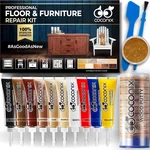 |
Coconix Laminate Flooring & Wood Furniture Repair Kit Because a thin-veneer budget floor usually can’t be sanded, a scratch or chip has to be filled and color-matched instead — this kit is built for exactly that.
|
Compare more engineered floor installation options
 Option 1 Gorilla Wood Glue, 8oz
|
 Option 2 DAP Dynaflex 230 Sealant, Clear
|
 Option 3 Minwax Wipe-On Poly, Satin, 1 Pint
|
As an Amazon Associate we earn from qualifying purchases.
Three things drive the price down, and only one of them is a real trade-off worth worrying about:
- Thin wear layer (the real concern): a 0.6mm–1mm veneer can’t be sanded and refinished at all — scratch through it and you’re replacing the plank. A 2mm+ wear layer can usually take one light refinish.
- HDF core instead of plywood (usually fine): HDF is denser and often more dimensionally stable than cheap plywood cores, so this isn’t automatically a downgrade.
- Basic finish/fewer species options (cosmetic): budget lines stick to oak and a handful of stain colors instead of exotic species — a style limitation, not a durability one.
Cost Comparison
| Flooring Type | Material Cost/sq ft | Refinishable? |
|---|---|---|
| Budget engineered wood | $2 – $5 | Rarely (thin veneer) |
| Mid-range engineered wood | $5 – $10 | Once, sometimes twice |
| Solid hardwood (3/4″) | $5 – $16 | 4–6 times |
| Laminate (not real wood) | $1 – $5 | Never (no wood veneer) |
Note the difference between engineered wood and laminate: laminate is a photographic wood-look layer over fiberboard with no real wood in the wear surface at all. If a “cheap wood flooring” listing doesn’t specify a hardwood veneer thickness, it’s probably laminate, not engineered wood.
Installation Methods
Engineered wood installs three ways, and budget products are usually made for the easiest one:
- Floating (click-lock): planks snap together and float over an underlayment, no nails or glue. Fastest DIY option and what most budget engineered flooring is designed for.
- Glue-down: planks are adhered directly to the subfloor with flooring adhesive. More labor, but a more solid underfoot feel and works well over concrete.
- Nail-down: similar to solid hardwood installation, used less often on engineered products but possible on thicker cores.
Getting The Installation Right
Whichever method you use, a few basics matter more on budget flooring than premium: acclimate the planks in the room for 48-72 hours before installing (cheap cores move more with humidity changes), leave a 1/4-1/2 inch expansion gap around the room’s perimeter, and use a proper underlayment with a moisture barrier if you’re installing over concrete.
What To Check Before Buying Cheap Engineered Flooring
- Wear layer thickness: look for the spec explicitly — 2mm or more gives you at least one refinish option.
- AC rating: AC3 is the minimum for residential traffic; AC1-2 is really meant for light/occasional use rooms.
- Core material: HDF (high-density fiberboard) resists moisture better than cheap plywood cores at the same price point.
- Real reviews, not just star rating: search reviews for “warped,” “gapping,” or “peeling” specifically — these are the recurring complaints on bottom-tier listings.
Frequently Asked Questions
What Are The Benefits Of Engineered Wood Flooring?
Engineered wood flooring offers real hardwood on the surface at a lower cost than solid wood, with a multi-layer construction that’s more dimensionally stable in humidity swings than solid hardwood. It installs faster (especially click-lock floating floors) and works over subfloors solid hardwood can’t, like some concrete slabs.
Is Cheap Engineered Wood Flooring Actually Real Wood?
Yes, if it’s genuinely “engineered wood” — it has a real hardwood veneer on top of a plywood or HDF core. Laminate flooring, which is often confused with it, uses a printed photographic layer instead of real wood and should be priced and evaluated differently.
Can You Refinish Cheap Engineered Wood Flooring?
It depends entirely on the wear layer thickness. A veneer under 1mm generally can’t be sanded at all. A 2mm or thicker wear layer can usually handle one light refinish, though never as many cycles as solid 3/4-inch hardwood.
Conclusion
Cheap engineered wood flooring can be a genuinely good value — but “cheap” should mean a lower price for the features you need, not a thinner wear layer you didn’t check for. Confirm the veneer thickness and AC rating before comparing prices, acclimate the planks properly, and budget for basic repair supplies since a thin-veneer floor gets patched rather than refinished.
Sponsored / affiliate links. As an Amazon Associate I earn from qualifying purchases. I may earn additional commission from eligible campaigns.