Chop Saw vs. Miter Saw: The Real Difference and How to Choose
A chop saw and a miter saw are not the same tool. A chop saw only cuts straight down at 90 degrees and is usually built around an abrasive or metal-cutting blade, while a miter saw pivots its head left and right (and on compound models, tilts too) to cut angles in wood, trim, and molding. If you are shopping for wood and trim work, the tool you actually want in almost every case is a miter saw, not a true chop saw.
Chop Saw vs. Miter Saw: What Actually Differs
Best All-Around Miter Saw Pick
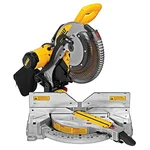 |
DEWALT DWS716 12-Inch Double-Bevel Compound Miter Saw – $349 A double-bevel compound miter saw covers the crosscuts, miters, and bevels this guide walks through without flipping the board over.
|
The confusion exists because both tools share the same basic silhouette: a circular blade mounted on a spring-loaded arm that pivots down onto a fence-backed table. The difference is in what that arm is allowed to do. A dedicated chop saw locks its head so it only travels straight down, producing a single 90-degree cut every time. That rigidity is a feature, not a shortcoming – it is exactly what you want when you are cutting rebar, angle iron, or EMT conduit with an abrasive wheel, since a wobble at high RPM on metal is a real safety hazard.
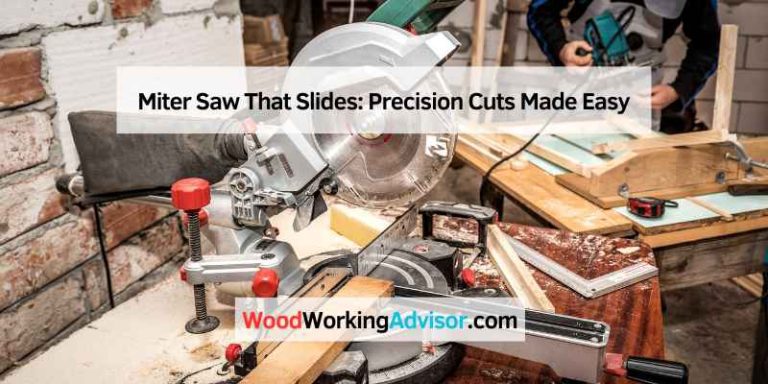
A miter saw’s head rotates on the base, typically 45 to 60 degrees in each direction, and locks at common stops like 22.5 and 45 degrees for picture frames and crown molding returns. A compound miter saw adds a second pivot that tilts the entire blade assembly, so it can bevel and miter in the same cut, which is what a crown molding corner actually needs. A sliding compound miter saw bolts the whole head to a pair of rails, letting it travel forward and back so a 10-inch blade can still cross-cut a 12- or 14-inch-wide board instead of being limited to roughly its own blade diameter.
Blade and Motor Differences
Wood-cutting miter saws almost always run a carbide-tipped blade between 60 and 100 teeth for clean crosscuts in trim and hardwood. Metal-cutting chop saws typically spin a reinforced abrasive wheel or, on newer cordless models, a cold-saw carbide blade designed for slow, high-torque cuts through steel. Swapping a wood blade onto a chop saw built for abrasive wheels (or vice versa) is a real way to destroy a blade or throw material, so match the tool to the material, not just the shape.
When a Chop Saw Is Actually the Right Call
A true chop saw earns its keep on job sites and in metal shops. It’s the standard choice for cutting structural steel, rebar, chain-link fence framework, and threaded rod, where you need a fast, repeatable 90-degree cut and don’t need any angle flexibility at all. Contractors doing steel stud framing for commercial drywall often keep a 14-inch chop saw around specifically because it can bite through gauge steel a wood-rated miter saw’s blade and gearing were never designed for.
When a Miter Saw Wins Instead
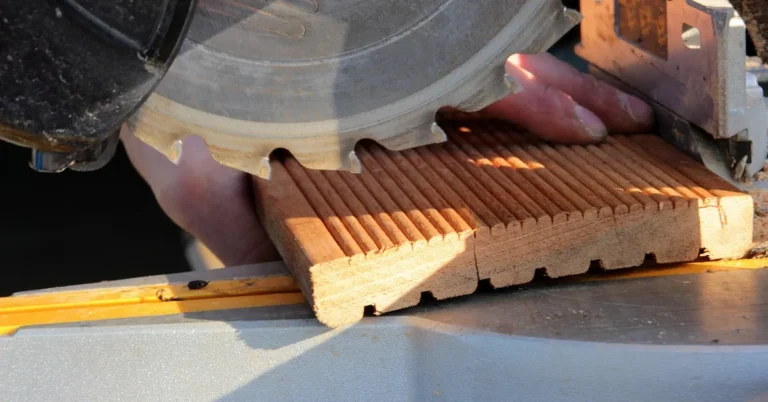
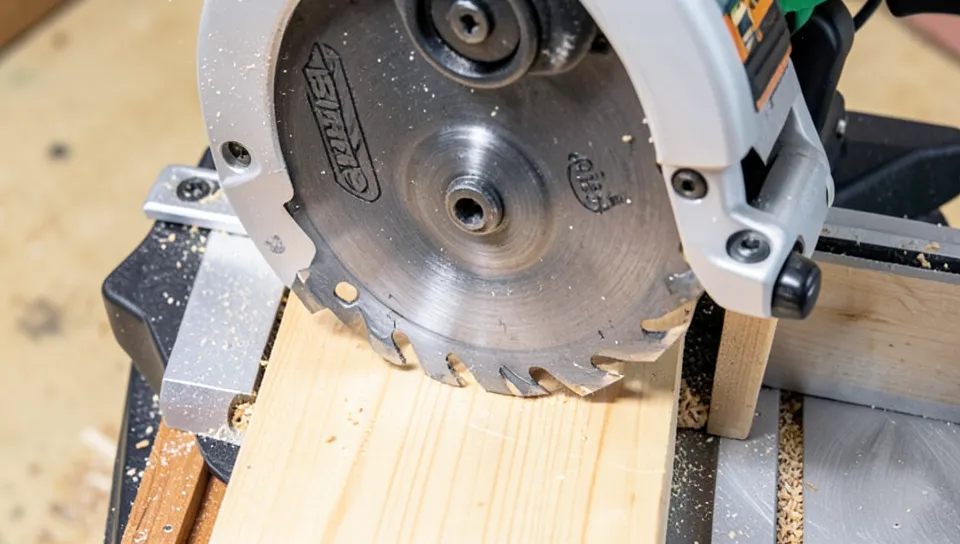
For woodworking, cabinetry, deck framing, baseboard, crown molding, and picture frames, a compound or sliding compound miter saw is the correct tool in nearly every situation. The angle flexibility a chop saw deliberately lacks is the entire point of trim carpentry, where a single wall corner is rarely a perfect 90 degrees and needs a test cut and a small angle adjustment to close cleanly.
Choosing the Right Miter Saw for Your Shop
Blade Size
Most woodworking miter saws come in 10-inch or 12-inch sizes. A 10-inch saw is lighter, cheaper, and spins a bit faster, and it’s plenty for baseboard, door casing, and furniture-scale stock. A 12-inch saw adds crosscut capacity for wider boards and thicker deck lumber, at the cost of a heavier head and a pricier blade to replace later.
Single Bevel vs. Double Bevel
A single-bevel saw tilts one direction only, so cutting a compound angle that goes the other way means flipping the board face-down, which also flips your layout marks and can leave a slightly rougher cut on the show face. A double-bevel saw tilts both directions from the same setup, which matters most if you’re running crown molding or window trim solo and can’t afford to re-measure every flipped piece.
Sliding vs. Non-Sliding
If you regularly cross-cut boards wider than about 6 to 8 inches, a sliding compound miter saw is worth the extra size and cost. If most of your cuts are on 1-by and 2-by trim stock, a non-sliding compound saw is lighter, more portable, and usually $100 to $150 cheaper for a comparable brand and motor.
What a Decent Miter Saw Actually Costs
Entry-level 10-inch compound miter saws from brands like Skil or Craftsman generally run $100 to $160. Mid-range 12-inch double-bevel saws from DEWALT, Makita, and Bosch sit in the $300 to $450 range and are the sweet spot for a serious hobbyist or a working trim carpenter. Sliding compound saws with a laser guide or an LED cut-line shadow, like DEWALT’s DWS780, typically land between $550 and $700. On the metal-cutting side, a genuine 14-inch abrasive chop saw from Milwaukee or Metabo HPT usually costs $150 to $250, notably less than a comparable wood miter saw because it has far fewer moving parts.
Setup, Calibration, and Safety
Before your first real cut, square the blade to the fence with a reliable square, not just the saw’s built-in stop – factory miter and bevel indicators are frequently off by half a degree or more out of the box, which is enough to leave a visible gap on a picture frame corner. Make a test cut on scrap at your target angle and check it with a protractor or a speed square before committing to your workpiece.
Always clamp or firmly hold material against the fence, keep hands at least a few inches from the blade path, and let the blade come to a complete stop before lifting the head back up. Both chop saws and miter saws can throw material or kick back if the workpiece isn’t secured, so wear safety glasses and hearing protection every time, and add a dust mask when cutting MDF or treated lumber where the dust itself is worth avoiding.
Frequently Asked Questions
Is a chop saw the same as a miter saw?
No. A chop saw only cuts straight 90-degree cuts and is typically built for metal with an abrasive wheel, while a miter saw pivots and often tilts to cut angles in wood and trim.
Can a miter saw be used as a chop saw?
Yes, for straight 90-degree wood cuts a miter saw works fine as a chop saw. It should not be used to cut metal unless it’s specifically rated for it, since the blade, gearing, and speed are built for wood.
What size miter saw should a beginner buy?
A 10-inch compound miter saw covers most trim, furniture, and DIY cutting needs at a lower price and lighter weight than a 12-inch model, and it’s the size most beginner woodworking courses recommend starting with.
Do I need a sliding miter saw?
Only if you regularly cross-cut boards wider than about 6 to 8 inches. For standard trim and 1-by stock, a non-sliding compound miter saw is lighter, more affordable, and easier to transport.
Bottom Line
If your work is wood, trim, or furniture, buy a compound (or sliding compound) miter saw, not a chop saw – the angle flexibility is the whole reason the tool exists. Save the true chop saw for metal cutting, where its rigid 90-degree-only design and abrasive or cold-saw blade are actually built for the job.
Sponsored / affiliate links. As an Amazon Associate I earn from qualifying purchases. I may earn additional commission from eligible campaigns.