Sliding Miter Saw vs. Miter Saw: The Real Difference (and Which to Buy)
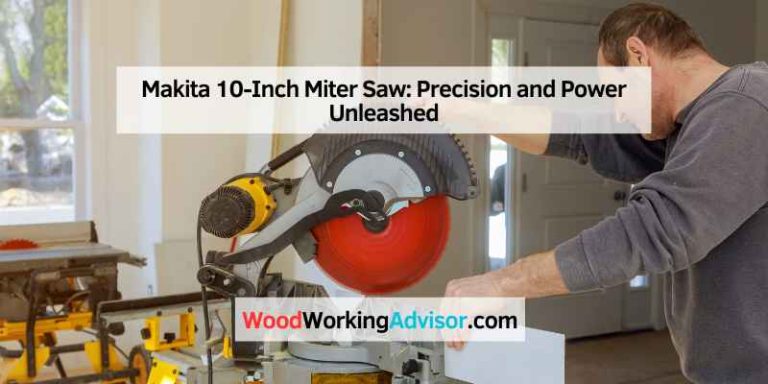
A sliding miter saw and a standard (fixed-head) miter saw both cut angles the same way — what changes is how the blade travels through the material. A fixed-head saw only pivots straight down, so its reach is capped by the blade’s radius. A sliding saw rides forward and back on rails, so the blade travels through the board front-to-back as well as down, which is why a 10-inch slider can often out-cut a fixed-head 12-inch saw on wide stock. Here’s what that mechanical difference actually changes in daily use: cutting capacity, cost, shop space, blade wear, and which one is worth buying for your projects.
How a Sliding Miter Saw Actually Works
Best Compact Pick If You Don’t Need a Slider
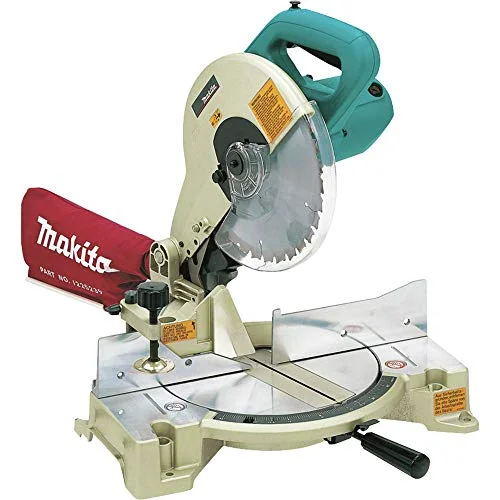 |
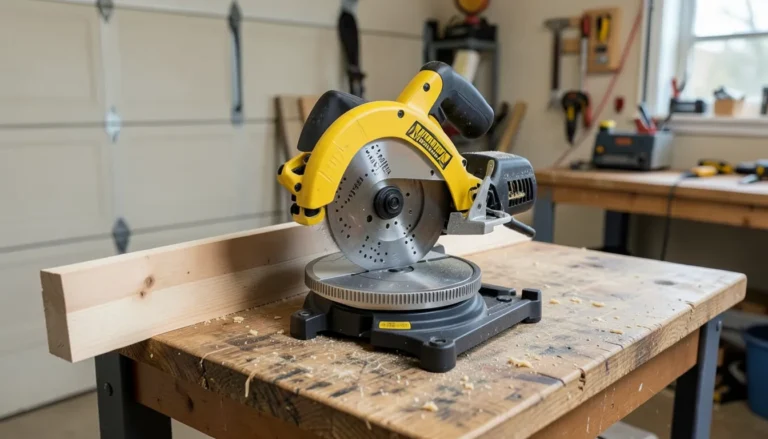
Makita LS1040 10″ Compound Miter Saw – $369.00 No rails, no bulky footprint — if most of what you cut is trim, molding, and framing lumber under about 6 inches wide, this fixed-head saw does the job for less money and less bench space than a slider.
|
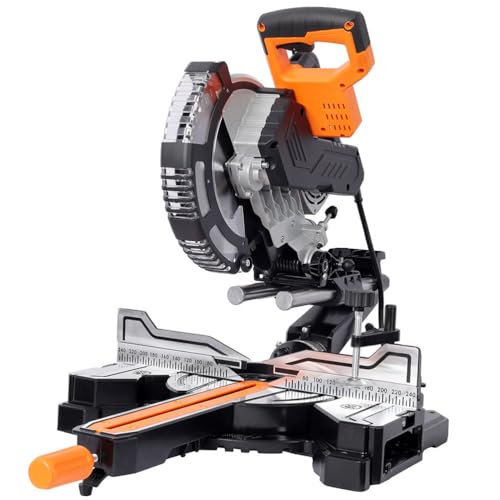
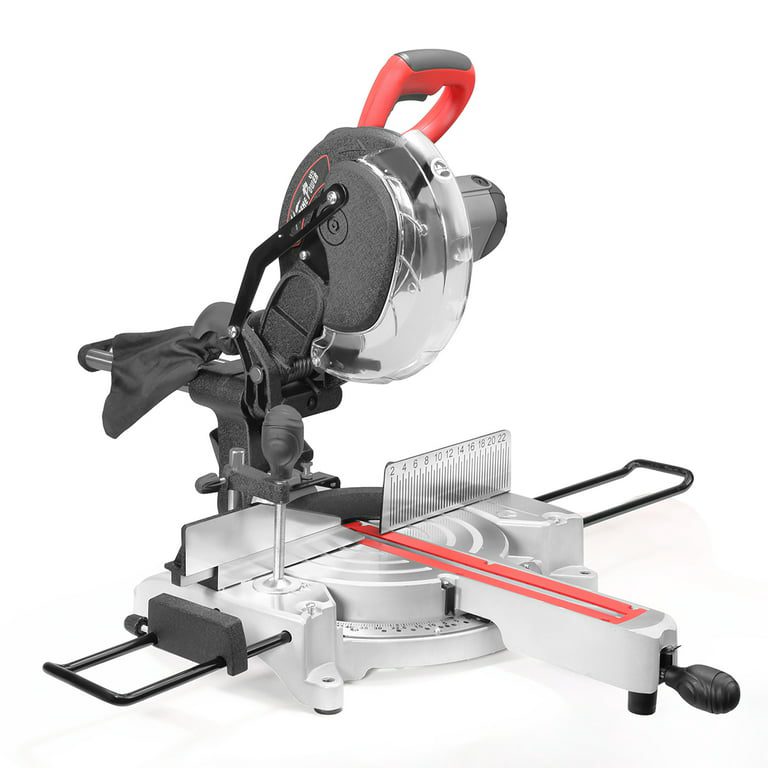
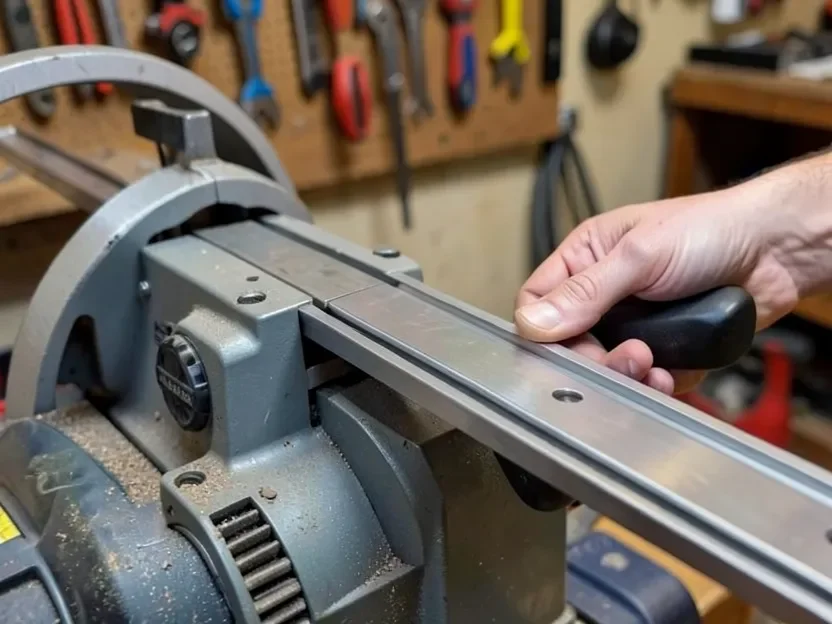
A fixed-head saw’s blade hinges down from a single pivot point directly above the table, so its maximum vertical and horizontal reach is set by the blade’s diameter minus the arbor and guard hardware. A sliding saw adds two steel rails behind the motor head — the whole cutting assembly rolls forward, plunges down, and pulls back through the board in one motion instead of just chopping straight down. That extra travel is the entire reason a 10-inch slider can match or beat the cutting width of a fixed-head 12-inch saw while using a smaller, cheaper blade.
Cutting Capacity: The Real Reason People Buy a Slider
Capacity is where the two saws stop being interchangeable. A typical fixed-head 10-inch saw crosscuts a flat board up to roughly 5 to 6 inches wide at 90 degrees, which covers most trim, baseboard, and standard 2×6 framing lumber. A sliding 10-inch saw with the same blade size can usually handle a 12-to-14-inch-wide board because the rail travel does the extra work the blade radius can’t. That gap matters most for wide crown molding cut on the flat, deep baseboard, and anything close to a 2×12. If you only occasionally hit that limit, a flip-cut can get a fixed-head saw through slightly oversized stock without buying a slider at all — it just costs you an extra step per cut instead of a smooth pass-through.
Blade size changes the numbers too, independent of sliding or not. Our 10-inch vs. 12-inch crosscut comparison breaks down exactly how much capacity a bigger blade buys you if a slider still isn’t enough saw for what you’re cutting.
Cost and Shop Space: What You Give Up for the Slide
Sliding saws cost more — typically $150 to $300 more than a comparable fixed-head model in the same blade size — because of the added rail hardware and the larger motor most manufacturers pair with it. The bigger issue for a lot of home shops is clearance, not price. A fixed-head saw only needs a few inches of space behind it. A sliding saw needs room for the rails to travel their full length behind the fence, which on most 10-inch and 12-inch sliders runs close to 20 inches or more of open space behind the table, and some dual-bevel 12-inch models need close to 30 inches when the head is tilted. That’s the detail that trips people up after buying: a slider pushed flush against a shop wall or a pegboard often can’t extend fully, which quietly caps its real-world capacity below the spec sheet number. Check your specific model’s rear clearance requirement, not just its blade size, before deciding where it lives in your shop.
Blade Wear and Cut Quality
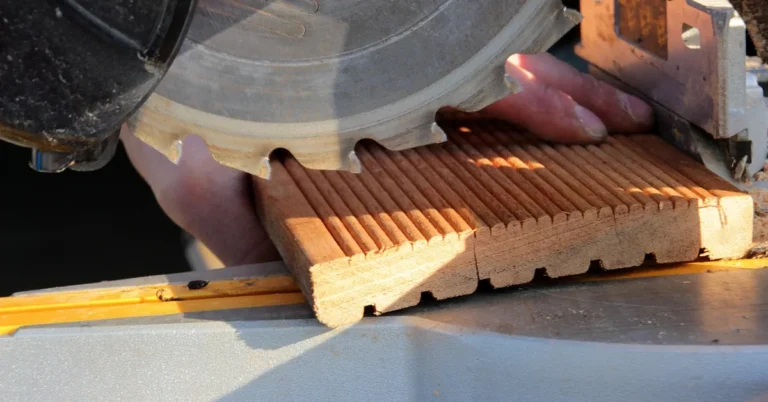
A fixed-head saw plunges the full width of the blade into the material at once on anything near its capacity limit, which loads the motor and the teeth harder and tends to leave more tear-out on the back face of the cut. A sliding saw enters the material more like a slicing motion, feeding the blade through gradually instead of dropping the whole diameter in at once. That lighter, more gradual bite is generally accepted to put less strain on the blade and motor over time and to leave a cleaner edge on wide or dense stock, though good technique and a sharp blade matter more than the saw type for any single cut. It’s a secondary reason to lean toward a slider if you’re cutting hardwood or dense laminated stock regularly, not just a capacity argument.
Maintenance: The Part Most Buying Guides Skip
A fixed-head saw has almost nothing to maintain beyond keeping the blade sharp and the pivot hinge free of dust. A sliding saw’s rails need periodic attention — sawdust and pitch build up on the rail surface and in the linear bearings, and if they’re not wiped down and lightly lubricated every so often, the slide can start to feel gritty or develop play that shows up as a slightly wavy cut on long boards. It’s a five-minute job with a rag and a dry lubricant made for tool rails, not sewing-machine oil, which attracts more dust than it repels. It’s a small maintenance cost, but it’s ongoing in a way a fixed-head saw simply doesn’t have.
When a Standard Miter Saw Is the Better Choice
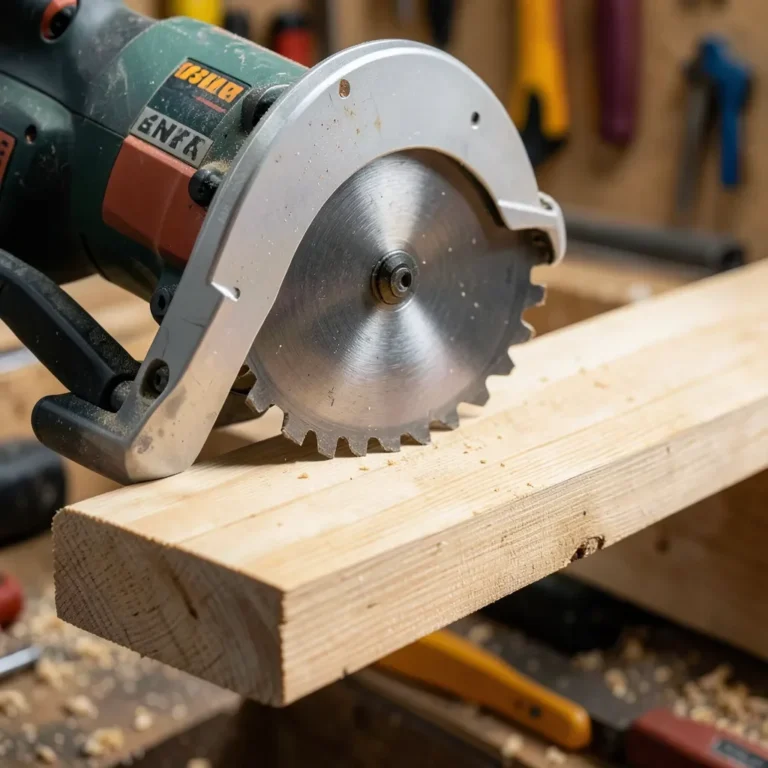
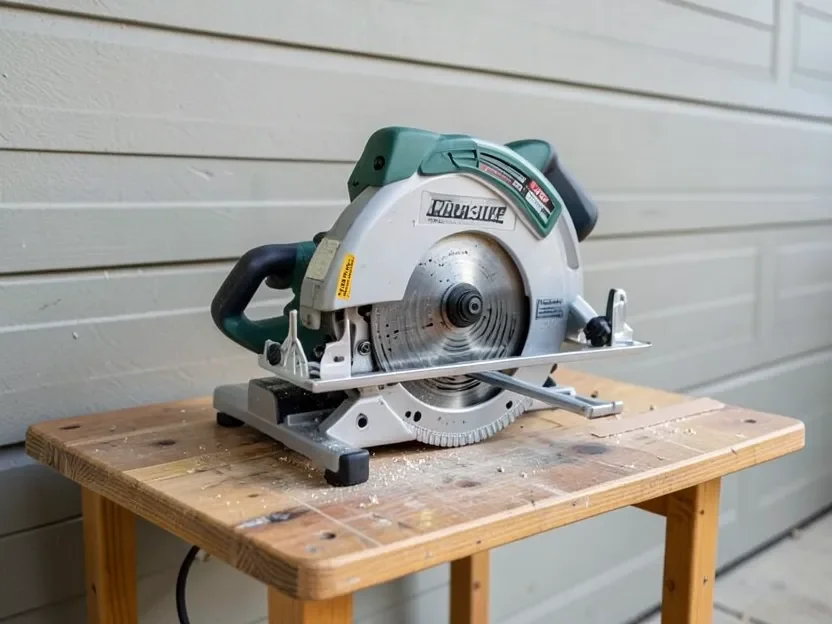
A fixed-head saw is the better buy if most of your cutting is trim, casing, picture frames, or shelving under about 6 inches wide, and you’d rather save the money and the bench space. It’s lighter, easier to move between job sites, and there’s no rail system to keep clean. If you’re weighing bevel type as well as sliding, our single-bevel vs. dual-bevel comparison covers the other big spec decision that comes up alongside this one. And if a miter saw isn’t even in the budget yet, a circular saw can rough out angled cuts in the meantime — see how to cut angles with a circular saw for the technique.
Sliding vs. Fixed-Head at a Glance
| Factor | Fixed-Head Miter Saw | Sliding Miter Saw |
|---|---|---|
| Typical 10″ crosscut width | ~5″–6″ | ~12″–14″ |
| Typical price premium | Baseline | +$150–$300 |
| Rear clearance needed | A few inches | ~20″+ (up to 30″ on some 12″ models) |
| Ongoing maintenance | Minimal (blade only) | Rails need periodic cleaning/lubrication |
| Best for | Trim, molding, framing under ~6″ | Wide crown, deep baseboard, 2×10/2×12 |
Bottom Line: Which One Should You Buy
If you’re honest with yourself about what you actually cut, this decision is usually simple. Look back at the last 20 cuts you made or would realistically make on a home project — if none of them come close to a 6-inch-wide board, the fixed-head saw is the better $369 to spend, and you’ll have more bench space and less to maintain for it. If even a handful of those cuts are wide crown molding, deep baseboard, or dimensional lumber like a 2×10 or 2×12, the sliding saw pays for itself the first time you don’t have to flip-cut or reach for a circular saw instead. Professional trim carpenters who work mostly with narrow stock day to day often stick with fixed-head saws for exactly this reason — less weight to haul between job sites and one less moving system to keep clean. Deck builders and finish carpenters who regularly handle wide framing lumber or crown almost always carry a slider. Buy for the job you actually do most often, not the widest board you might someday need to cut.
Frequently Asked Questions
What is the difference between a sliding miter saw and a standard miter saw?
A standard (fixed-head) miter saw only pivots straight down, so its cutting width is set by the blade’s radius. A sliding miter saw rides forward and back on rails, letting the blade travel through the material front-to-back as well as down, which lets it cut noticeably wider boards with the same size blade.
Do I need a sliding miter saw for trim work?
Usually not. Most trim, casing, and baseboard work falls within a fixed-head saw’s crosscut capacity of roughly 5 to 6 inches. A sliding saw is worth the extra cost mainly if you regularly cut wide crown molding, deep baseboard, or boards close to 2×10/2×12 size.
How much room do you need behind a sliding miter saw?
Most 10-inch and 12-inch sliders need roughly 20 inches or more of open space behind the fence for the rails to travel their full length, and some dual-bevel 12-inch models need close to 30 inches when the head is tilted. Pushing the saw flush against a wall or pegboard can prevent the rails from extending fully and cap the saw’s real-world cutting capacity.
Does a sliding miter saw need more maintenance than a standard miter saw?
Yes, slightly. The sliding rails collect sawdust and pitch and need periodic wiping down and a light coat of dry lubricant to stay smooth. Skipping this can make the slide feel gritty or introduce play that shows up as a slightly wavy cut on long boards. A fixed-head saw has no rails to maintain beyond keeping the blade sharp.
Sponsored / affiliate links. As an Amazon Associate I earn from qualifying purchases. I may earn additional commission from eligible campaigns.