Trex Composite Decking Reviews: Lines, Warranty Fine Print, Flaws
Trex is capped composite decking sold in 25-, 35- and 50-year warranty tiers, and the warranty is the part most buyers misread. The payout is full only for the first 10 years, no labor is ever covered, and a stain claim fails unless the spot was washed within one week. This review compares the Enhance, Select, Transcend, Transcend Lineage and Signature lines using Trex’s own warranty text and product pages, and it does not rely on invented owner stories.
Because this page sits next to our other Trex guides, it sticks to what the paperwork says. For board colors see Trex decking colors compared, for pricing see Trex vs wood cost, and for rival brands see composite decking brands compared.
Trex Stains and the One-Week Cleaning Rule
Best Composite Stain Remover Pick
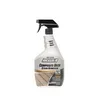 |
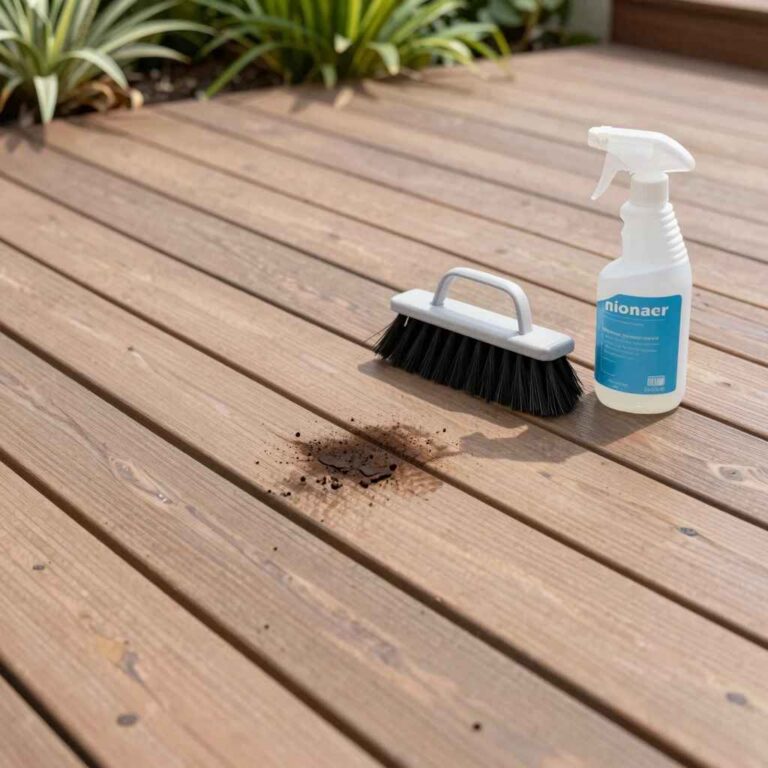
Rust-Oleum RockSolid Composite Deck Stain Remover, 32 oz (about $12.79) A spray-on remover made for composite decks, useful for the grease, oil and cooking stains that fall outside Trex’s soap-and-water cleaning rule.
|
As an Amazon Associate we earn from qualifying purchases.
Staining is the most common complaint about composite decking, and Trex’s warranty explains why so many claims get denied. In the Trex decking, fascia and cladding limited warranty, the stain clause covers two things: spills of food and beverages (ketchup, mustard, salad oil, tea, wine, coffee, soda and similar), and mold and mildew that occur naturally. Both are covered only if you remove them with soap and water within one week of the spill or of the first appearance of the mold.
The same document says Trex “does not warrant that the Product is stain-proof.” Stains from dirt, grease, oil, paint, solvents, metallic rust, biocides, fungicides, plant food, cement and colored chalk are listed as not covered. Wet leaves are not on the covered list at all, so a claim for leaf stains would be an argument rather than a right. If you are weighing a staining problem, our guide to removing rust stains from composite decking covers the one stain category the warranty rules out by name.
How a stain claim actually works
- Wash the affected area with soap and water within one week of exposure. Keep the date and a photo.
- If it still looks unsatisfactory, have the area professionally cleaned at your own expense.
- If it is still unsatisfactory, file the claim within 30 days after the professional cleaning.
- Mail Trex a written description, photographs, proof of purchase and proof that you did steps 1 and 2.
Even a successful claim ends in replacement boards or a refund of the purchase price of the affected product, not a paid-for repair.
Trex Lines Compared: Enhance, Select, Transcend, Lineage and Signature
Trex describes its lines as Good, Better and Best, and all of them share the same 95% recycled content (reclaimed sawdust and plastic film). The differences are shell design, color depth, heat behavior, scratch resistance and warranty length.
| Line | Trex tier | Residential warranty | What Trex highlights |
|---|---|---|---|
| Enhance | Good | 25 years | Lightest composite boards (scalloped profile); lowest scratch rating (1 of 5 stars); heat-mitigating in 5 colors |
| Select | Better | 35 years | Curveable boards, curated colors, mono and multi-tonal options |
| Transcend | Best | 50 years | Deep wood grain, multi-tonal color, curveable, resistant to scuffs and scratches |
| Transcend Lineage | Best | 50 years | Linear grain with streaking; heat-mitigating technology, billed as Trex’s coolest decking |
| Signature | Luxury | 50 years | Photorealistic woodgrain; 5 of 5 stars for scratch resistance, the most scratch-resistant board |
The scratch-star ladder is the useful detail. Trex states that scratch resistance rises as you move up the lines, from 1 star on Enhance to 5 stars on Signature. If your complaint list starts with dog nails, patio chairs or dark colors that show every mark, that ladder matters more than the warranty number. Trex also sells Refuge, an ignition-resistant PVC line with a 50-year warranty; for PVC versus composite see PVC decking vs Trex. Pricing varies by region and dealer, so get a local quote rather than trusting a national per-square-foot figure.
What the Trex Warranty Really Pays Out
The headline number is the warranty length, but the payout shrinks as the deck ages. Under the warranty, a valid structural claim in years 1 through 10 is settled with full replacement of the defective volume or a refund of the product price. From year 11 on, Trex may replace or refund only the percentage in the table below.
| Year of claim | 50-year line | 35-year line | 25-year line |
|---|---|---|---|
| 11 to 13 | 90% | 80% | 80% |
| 14 | 90% | 80% | 60% |
| 17 | 70% | 60% | 40% |
| 20 | 70% | 40% | 20% |
| 23 to 25 | 50% | 20% | 10% |
| 26 to 28 | 50% | 20% | not covered |
| 30 to 35 | 30% | 10% | not covered |
| 40 | 20% | not covered | not covered |
| 43 to 50 | 10% | not covered | not covered |
Here is what that means in practice. Suppose a Transcend deck (50-year) has a qualifying defect in year 20 and the affected product originally cost $1,000. Trex could replace or refund 70% of it, about $700, and you would still pay for removing the old boards and installing the new ones because the warranty excludes labor, removal and freight. This is an illustration of the table, not a quote of any real claim. It is also why the marketing line “lasts 50 years” and the legal line “50-year limited warranty” are not the same promise.
- Fade: boards should not fade by more than 5 Delta E units in the first 25 years, then no more than 15 Delta E units for the rest of the term. Trex adds that no material is fade-proof.
- Transfer: a residential warranty can be transferred once, within five years of the original purchase.
- Commercial use: decking warranties drop to 10 years for any non-residential installation.
- Document scope: the 2023 warranty text we read lists Transcend, Select and Enhance. Trex’s product pages list Lineage and Signature at 50 years, so confirm the exact document for those lines before you buy.
Heat, Scratches and Fading: What Trex Says About Them
Trex is more candid about heat than most buyers expect. Its FAQ says Trex decking will get hot in direct sun on hot days, that darker colors get hotter, and that boards can soften at temperatures as low as 176 degrees F. Transcend Lineage and five Enhance colors carry heat-mitigating technology, which helps but does not make a south-facing deck cool. For measured numbers against real wood, see does composite decking get hotter than wood. Separately, the warranty excludes damage from heat sources above 275 degrees F, which is worth remembering before placing a grill or fire pit on the boards (that application is our inference, not wording from Trex).
Scratching works the same way. Trex says none of its products is scratch-proof, and the warranty lists ordinary wear and tear as an exclusion, so a scratched Enhance board is a purchase decision, not a defect. On fading, Trex notes that early-generation uncapped composites typically faded to a lighter color within 12 to 16 weeks of installation. That is the history behind the “Trex fades” reputation, and the capped lines sold today are covered by the Delta E terms above.
Installation Specs That Protect Your Warranty
The warranty excludes problems caused by improper installation, “including but not limited to improper gapping.” Trex’s guidance, taken from its installation guide and its joist spacing guide, is the baseline to follow:
| Item | Trex guidance |
|---|---|
| Joist spacing, standard | No more than 16 inches on center |
| Joist spacing, diagonal boards | 12 inches on center |
| Existing wood deck framed at 24 inches | Add one joist between each pair of existing joists |
| Side-to-side board gap | Minimum 3/16 inch |
| End-to-end gap, warmer than 40 degrees F | 1/8 inch |
| End-to-end gap, colder than 40 degrees F | 3/16 inch |
| Gap where boards meet a wall | 1/4 to 1/2 inch, depending on temperature |
Wider joist spacing than Trex allows is a way to sag the deck and to lose the warranty at the same time. A warm-weather install with tight end gaps is the other classic mistake, because boards expand in heat and close the gap. Which fastener you use also changes the side gap (Hideaway clips set 1/4 inch, screwed boards use 3/16 inch), which our Trex fastener guide covers.

Which Trex Line Should You Choose?
- Tight budget, low-traffic deck: Enhance has the shortest warranty (25 years) and the lowest scratch rating, but it is the entry price into capped composite.
- Most family decks: Select adds 10 warranty years over Enhance and curveable boards. Compare it against Transcend for scratch resistance before settling.
- Pets, kids and furniture traffic: Transcend or Signature, because Trex rates scratch resistance higher as you move up.
- Sun-baked deck: look at Transcend Lineage first, or a lighter color in Enhance, since both use heat-mitigating technology.
- Weighing Trex against rivals: see Wolf vs Trex for a warranty fact-check, or composite decking reviews for brand-neutral owner complaints.
Frequently Asked Questions
How long is the Trex decking warranty?
Trex’s limited residential warranty runs 25 years for Enhance, 35 years for Select, and 50 years for Transcend, Transcend Lineage and Signature. Years 1 to 10 are full replacement or refund of the defective material, and from year 11 the payout is prorated. Labor, removal and freight are never covered.
Does Trex decking stain?
It resists permanent staining from food and beverage spills and from naturally occurring mold and mildew, but only if you wash the spot with soap and water within one week. Trex states that the product is not stain-proof, and stains from dirt, grease, oil, paint, rust and chemicals are excluded.
Is Trex decking really made from recycled material?
Trex says its boards are made from 95% recycled materials, specifically reclaimed sawdust and plastic film. The recycled content is the same across the lines; what changes between Enhance, Select, Transcend and Signature is the shell, color, grain and scratch resistance.
What is the difference between Trex Enhance, Select, and Transcend?
They are Trex’s Good, Better and Best tiers. Enhance has a 25-year warranty, a lighter scalloped board and the lowest scratch rating. Select has a 35-year warranty and curveable boards. Transcend has a 50-year warranty and is rated more resistant to scuffs and scratches. Signature adds the top scratch rating and a photorealistic grain.
Does the Trex warranty cover installation labor?
No. The warranty states that Trex is not responsible for the cost of removing defective boards or installing replacements, including labor and freight. Trex’s remedy is to replace the affected boards or refund the purchase price of the affected product.
Does Trex decking get hot in the sun?
Yes. Trex says its decking gets hot in direct sun on hot days, darker colors get hotter, and boards can soften at temperatures as low as 176 degrees F. Transcend Lineage and five Enhance colors use heat-mitigating technology, which lowers surface temperature but does not remove the effect.
Sources
- Trex Decking, Fascia and Cladding Limited Warranty (2023)
- Trex decking product lines
- Trex FAQs
- Trex on natural weathering
- Trex joist spacing guide
Sponsored / affiliate links. As an Amazon Associate I earn from qualifying purchases. I may earn additional commission from eligible campaigns.
 SuperStructuring Plugs for Decking - 1/4" Trex Composite Decking Wood Plugs, Weather-Resistant, UV Protection, Hole Covers for Outdoor Home Improvement & Repair - Enhance Naturals Foggy Wharf, 100-PcSuperStructuring Plugs for Decking - 1/4" Trex Composite Decking Wood Plugs, Weather-Resistant, UV Protection, Hole Covers for Outdoor Home Improvement & Repair - Transcend Tiki Torch, 100-Pc