Da Vs Fn Finish Nails: The Ultimate, Critical Difference
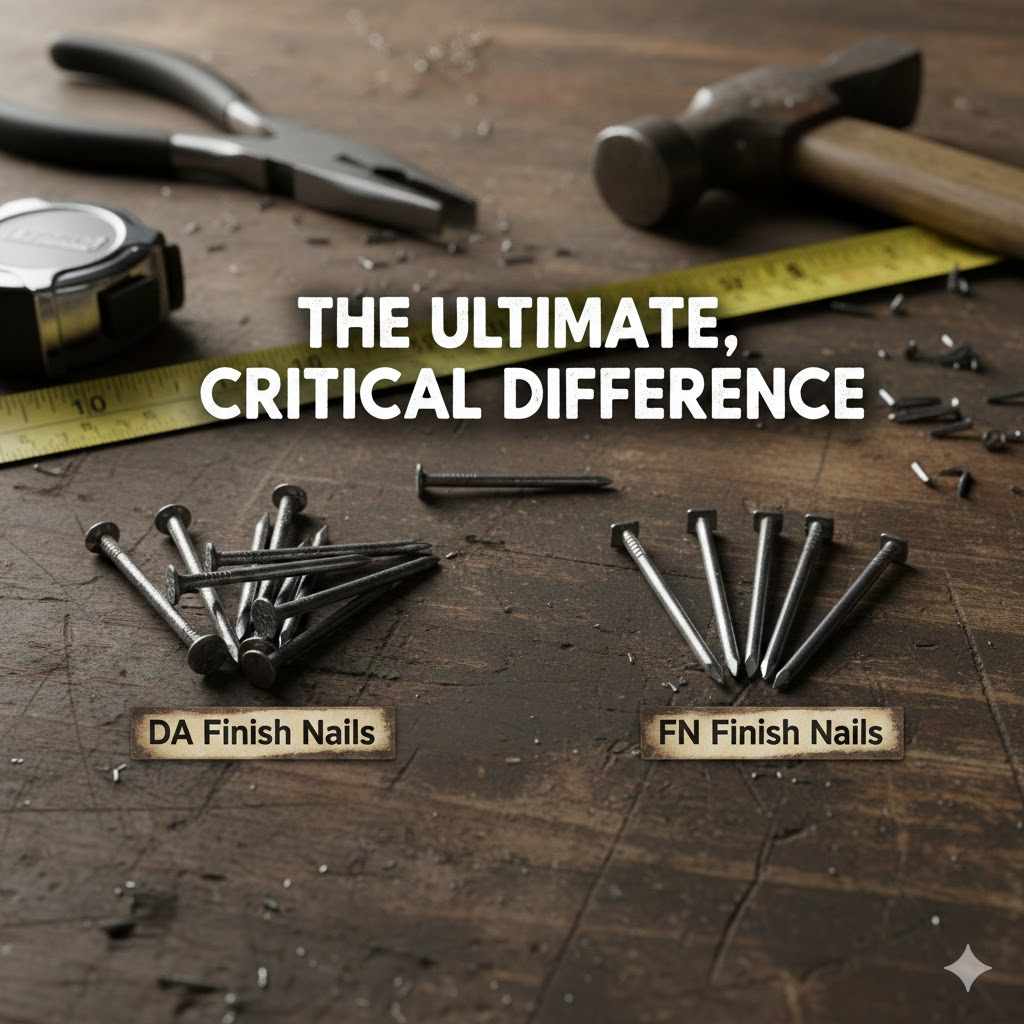
The critical difference between DA and FN finish nails is their angle and head shape. DA nails have a 34-degree angle and a round head, while FN nails have a 25-degree angle and a rectangular head. They are not interchangeable and require specific nail guns designed for their unique style.
Hello, fellow makers! Md Meraj here, your guide in the workshop. Have you ever stood in the hardware aisle, staring at boxes of finish nails labeled “DA” and “FN,” feeling completely confused? You’re not alone! It’s a classic head-scratcher for many DIYers. Picking the wrong one can stop your project dead in its tracks. But don’t worry, I’m here to clear it all up for you. We’ll break down exactly what these letters mean, why it matters so much, and how to choose the right nail every single time. Let’s get you back to building with confidence.
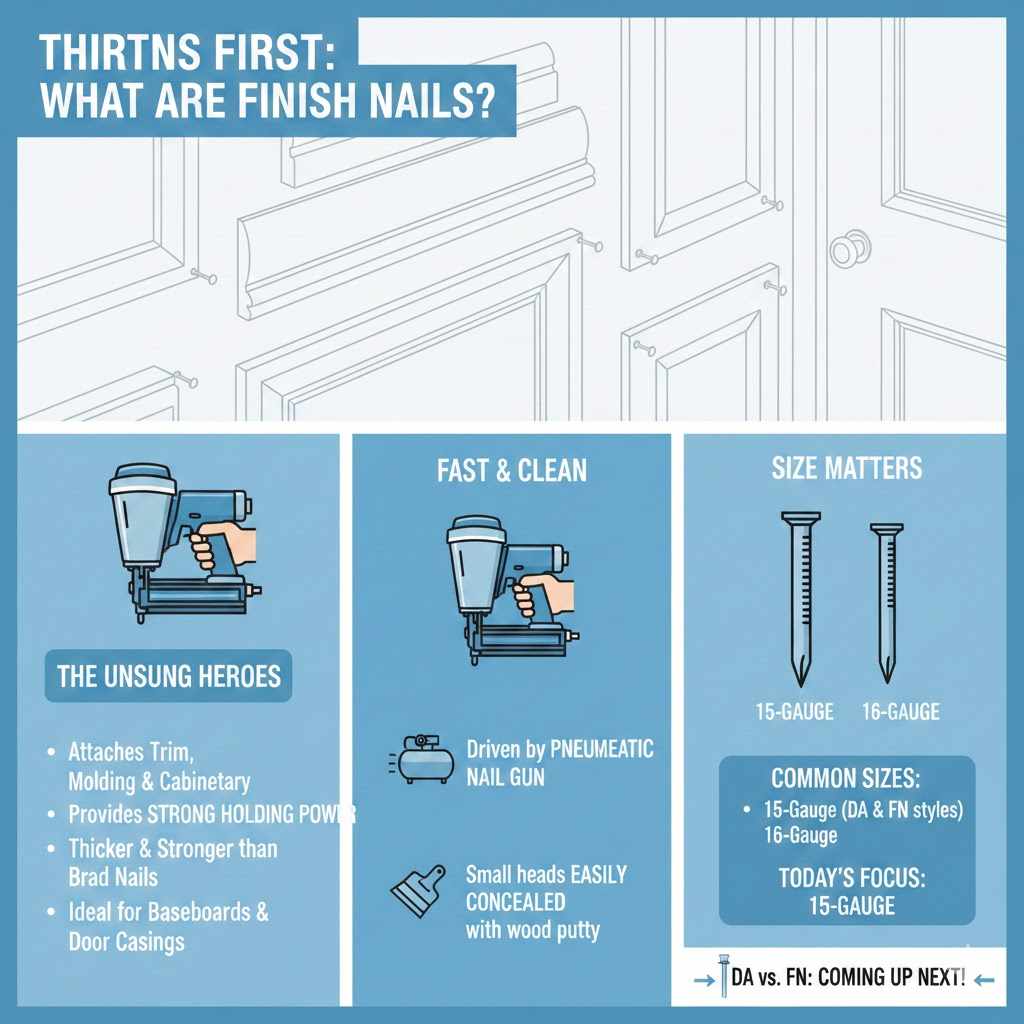
First Things First: What Are Finish Nails?
Before we dive into the DA versus FN debate, let’s talk about what finish nails are. Think of them as the unsung heroes of trim work. They are a type of nail used for attaching trim, molding, and cabinetry—the final “finishing” touches of a project. They are thicker and stronger than smaller brad nails, giving them excellent holding power for heavier pieces like baseboards and door casings.
Finish nails are designed to be driven by a pneumatic nail gun, which makes installation fast and easy. Once you drive them into the wood, their small heads can be easily covered with wood putty for a clean, professional look. They typically come in 15-gauge and 16-gauge sizes. For our discussion today, we’re focusing on the very common 15-gauge size, which is where you’ll find the DA and FN styles.
Decoding the Names: What Do “DA” and “FN” Actually Stand For?
The names “DA” and “FN” can seem like a secret code, but the history is quite simple. Understanding where these names come from is the first step to remembering the difference.
- DA Style: The “DA” designation was created by a tool company called Senco. It refers to a specific style of 33 or 34-degree angled finish nail that they pioneered. The “D” shape of the nail strip is often cited as the origin of the name, and the “A” just followed in the model series. Over time, other brands started making nailers and nails compatible with this popular DA style.
- FN Style: The “FN” name is more straightforward. It simply stands for “Finish Nail.” This style features a 25-degree angle and is sometimes called the “Bostitch style” because of that company’s role in popularizing it.
The key takeaway is this: DA and FN are not brands; they are styles of nails. Think of them like different types of phone chargers—an iPhone charger and an Android charger might both charge phones, but they certainly aren’t interchangeable. The same logic applies here.
The 3 Critical Differences You MUST Know
Okay, let’s get to the heart of the matter. The differences between DA and FN nails are small but incredibly important. They affect the tool you use, the way the nail holds, and how you work in tight spaces.
1. Angle of Collation (The Nail Strip Angle)
The most significant difference is the angle at which the nails are collated, or held together in a strip. This angle matches the angle of the magazine on the nail gun.
- DA Nails: These have a steeper angle, typically 34 degrees (sometimes listed as 33 degrees).
- FN Nails: These have a shallower angle of 25 degrees.
Why does this matter? The angle of your nailer’s magazine determines its ability to get into tight corners. A 34-degree DA nailer has a more pointed, angled nose, making it slightly better for reaching into awkward spots when installing crown molding or other tricky trim. The 25-degree FN nailer has a longer magazine, which can sometimes be trickier to maneuver in confined spaces.
2. Nail Head Shape
If you look closely at the individual nails, you’ll notice another major difference: the shape of the head.
- DA Nails: Have a full round head. This provides a larger surface area, which translates to slightly better holding power. The nail pushes the wood fibers apart and the round head helps lock it in place securely.
- FN Nails: Have a rectangular head (sometimes called a clipped head, though it’s not truly clipped). This smaller, more discreet head is a bit easier to countersink and leaves a smaller hole to fill with putty.
So, there’s a trade-off. Do you want the superior holding power of the DA nail’s round head, or the cleaner, less noticeable finish of the FN nail’s rectangular head? The choice often depends on the specific application, which we’ll cover in a bit.
3. Tool Compatibility (The Most Important Rule!)
This is the golden rule, the one thing you must not forget: DA nails and FN nails are NOT cross-compatible.
- A DA style nailer will ONLY accept DA style nails.
- An FN style nailer will ONLY accept FN style nails.
Attempting to load the wrong type of nail into your gun will cause it to jam, misfire, or not work at all. It can even damage your tool. Always check your nail gun itself—it will almost always have the compatible nail style (DA or FN) printed on the magazine or body of the tool. Before you buy a box of nails, double-check that they match your specific nailer.
DA vs. FN: A Head-to-Head Comparison Table
Sometimes, seeing it all laid out in a simple chart is the best way to understand. Here is a quick reference table to help you visualize the differences.
| Feature | DA Finish Nails | FN Finish Nails |
|---|---|---|
| Angle | 33° to 34° | 25° |
| Head Shape | Full Round Head | Rectangular Head |
| Common Gauge | 15-Gauge | 15-Gauge |
| Primary Benefit | Slightly stronger holding power | Smaller hole, cleaner finish |
| Tool Maneuverability | Excellent for tight corners | Good, but the magazine is slightly longer |
| Tool Compatibility | Requires a DA style nailer | Requires an FN style nailer |
A Closer Look: When to Use DA Finish Nails
With their full round head and excellent holding power, DA nails are a fantastic all-around choice for heavier materials and applications where strength is a top priority.
Pros of DA Nails:
- Excellent Holding Power: The round head grips wood fibers firmly, making it ideal for securing heavy trim that might want to pull away over time.
- Better in Corners: The steep 34-degree angle of DA nailers makes it easier to position the tool in tight spots, like inside corners of crown molding.
- Wide Availability: DA-style nails and tools are extremely common and easy to find at most hardware stores.
Cons of DA Nails:
- Larger Entry Hole: The round head creates a slightly larger, more noticeable hole that requires more putty to conceal perfectly.
Best Projects for DA Finish Nails:
- Installing Baseboards: Especially thick or hardwood baseboards that need to be pulled tight against an uneven wall.
- Attaching Door and Window Casings: These are high-traffic areas that benefit from the extra strength.
- Securing Crown Molding: The holding power is great for heavy molding, and the angled nailer is a huge help during installation.
- Building Stair Treads and Risers: These components must be rock-solid, and DA nails provide the necessary grip.
A Closer Look: When to Use FN Finish Nails
FN nails are the go-to choice when a delicate touch and a minimal footprint are more important than maximum holding power. Their design is all about creating a clean, professional finish.
Pros of FN Nails:
- Cleaner Finish: The rectangular head leaves a smaller, less conspicuous hole that is very easy to fill and hide.
- Reduced Wood Splitting: The smaller head shape is slightly less likely to split delicate or thin pieces of wood.
- Great for Fine Woodworking: Preferred by many cabinetmakers and furniture builders for its subtle appearance.
Cons of FN Nails:
- Slightly Less Holding Power: While still very strong, the smaller head doesn’t provide the same level of grip as a round DA nail head.
- Longer Nailer Magazine: The 25-degree angle means the tool’s magazine is longer, which can be a minor inconvenience in very tight spaces.
Best Projects for FN Finish Nails:
- Cabinet and Furniture Assembly: Perfect for attaching face frames, decorative molding, and trim pieces where appearance is critical.
- Installing Delicate Trim: Ideal for thin or narrow pieces of molding that might be prone to splitting.
- Attaching Chair Rails and Wainscoting: These applications require good strength but also benefit from a nearly invisible fastener.
- hardwood flooring (Top Nailing): For securing the first and last rows of hardwood flooring near walls, where the holes will be covered by baseboards.
How to Choose the Right Nail for YOUR Project
So, the big question remains: which one should you buy? If you’re starting from scratch and haven’t bought a nail gun yet, you have a choice to make. Here’s a simple guide to help you decide:
- For General Home DIY (Baseboards, Door Trim): A DA style nailer is often the most versatile choice. Its combination of holding power and maneuverability is perfect for the most common trim jobs around the house.
- For Fine Woodworking (Cabinets, Furniture): An FN style nailer is often preferred. The clean finish it provides is a huge advantage when you’re aiming for flawless results on high-end projects.
- If You Already Own a Nailer: This is the easiest scenario! Simply check the tool itself. The manufacturer will have the nail style (DA or FN) and compatible nail lengths printed directly on the nail gun’s magazine. Buy the nails that match your tool, and you’re good to go.
Honestly, for most DIY projects, either system will serve you well. The differences in holding power and hole size are quite small. The most important thing is to ensure that the nails you buy match the tool you own. As the Woodworking School at The University of Rio Grande emphasizes, using the right tool and fastener for the job is a cornerstone of both safety and quality craftsmanship.
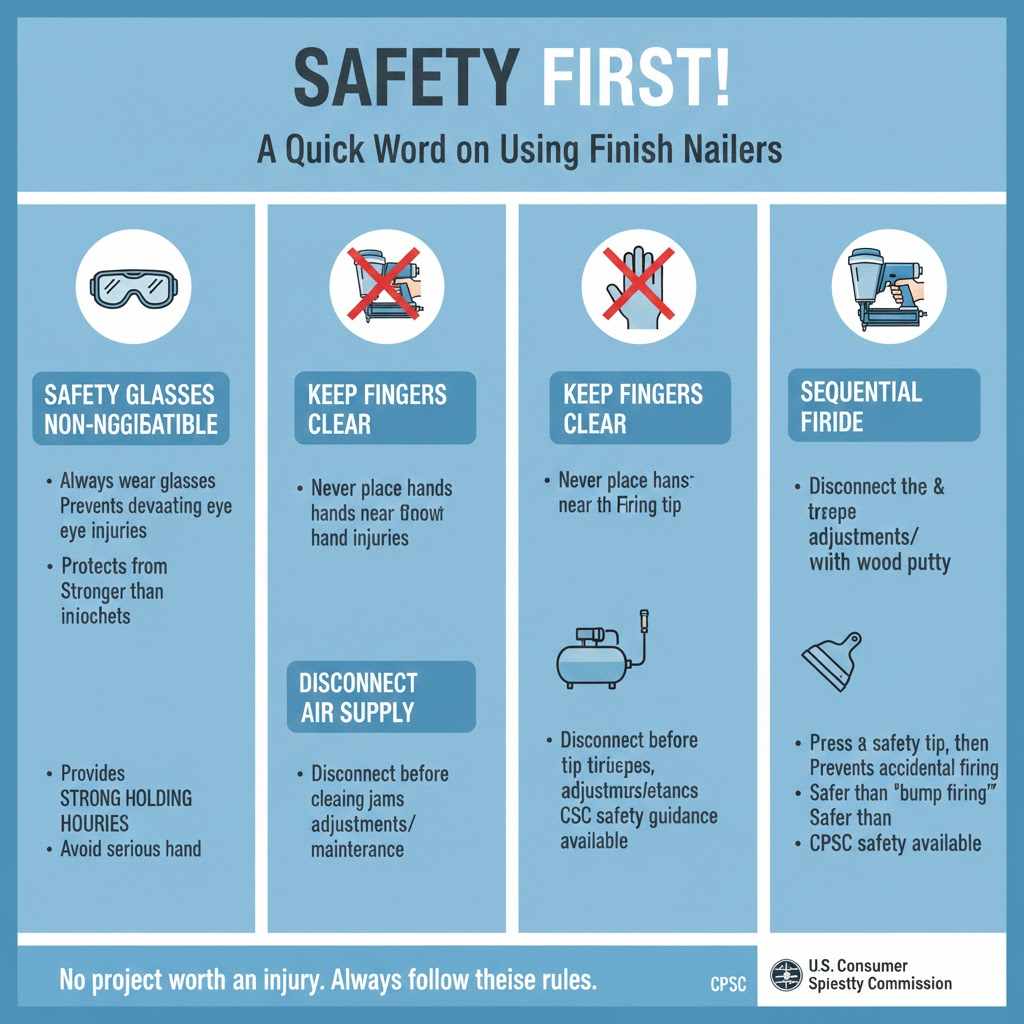
A Quick Word on Safety
No project is worth an injury. Using a pneumatic finish nailer is fun and efficient, but it’s a powerful tool that deserves respect. Always follow these basic safety rules:
- Wear Safety Glasses: This is non-negotiable. A nail ricochet is rare but can be devastating.
- Keep Your Fingers Clear: Never place your hand or fingers near the firing tip of the nailer.
- Disconnect the Air Supply: Always disconnect the tool from the air compressor before attempting to clear a jam, make adjustments, or perform maintenance.
- Use the Sequential Firing Mode: Most nailers have two modes. The sequential mode requires you to press the safety tip against the wood first and then pull the trigger. This prevents accidental firing and is much safer than “bump firing.” The U.S. Consumer Product Safety Commission offers excellent guidance on nail gun safety for residential construction.
Frequently Asked Questions (FAQ)
1. Can I use DA nails in an FN nailer or vice versa?
Absolutely not. This is the most important rule. The different angles and head shapes mean they are completely incompatible. Using the wrong nails will cause jams and can potentially damage your nail gun. Always match the nail style (DA or FN) to the nailer.
2. Which nail leaves a smaller hole, DA or FN?
FN nails leave a smaller, cleaner hole. Their rectangular head is less conspicuous and easier to fill with wood putty compared to the full round head of a DA nail.
3. Are 15-gauge DA and 15-gauge FN nails the same thickness?
Yes. The “gauge” refers to the diameter (thickness) of the nail’s shank. A 15-gauge DA nail and a 15-gauge FN nail have the exact same thickness. The difference lies in their collation angle and head shape, not their gauge.
4. What does “gauge” mean when talking about nails?
Gauge is a measurement of a wire’s thickness. When it comes to nails, a lower gauge number means a thicker nail. For example, a 15-gauge nail is thicker and stronger than an 18-gauge brad nail, while a 12-gauge nail is even thicker.
5. Do I always need to fill the nail holes?
For a professional, finished look, yes. After nailing your trim, go back with a small amount of wood putty or filler that matches your wood or paint color. Press it into the nail hole, let it dry, and then lightly sand it smooth. This small step makes a huge difference in the final quality of your project.
6. Why is the angle of the nailer so important?
The angle of the nailer’s magazine affects its physical shape. A steeper angle (like the 34-degree DA nailer) allows the nose of the tool to be more compact and pointed, which helps you get into tight inside corners more easily. A shallower angle (like the 25-degree FN nailer) results in a longer magazine.
7. Is one type of nail truly better than the other?
No, one is not universally “better” than the other. They are simply different tools for slightly different jobs. DA nails excel in strength and accessibility in corners, making them great for general construction and trim. FN nails excel in creating a fine finish with minimal marking, making them a favorite for cabinetmaking and delicate work.
Conclusion: The Right Choice is the Informed Choice
So there you have it! The great mystery of DA vs. FN finish nails is solved. It all comes down to two key factors: the angle of the nail strip and the shape of the nail’s head. Remember, a 34-degree DA nail has a round head for holding power, while a 25-degree FN nail has a rectangular head for a cleaner finish.
The most critical takeaway for any DIYer is to ensure your nails match your nailer. Check your tool, buy the corresponding style, and you’ll avoid frustration and get back to what matters—building beautiful things. Now you can walk into that hardware store with confidence, grab the right box of nails, and finish your project like a pro.
Happy building!