PU Finish vs Laminate: Which Lasts Longer on Cabinets and Panels?
PU finish and laminate are not two versions of the same thing, and that is why most comparisons between them go wrong. Polyurethane is a liquid coating you brush, wipe or spray onto real wood or a wood-based panel, where it cures into a clear film. Laminate is a factory-made surface layer, either high-pressure laminate (HPL) or melamine, that is glued or thermally fused onto a panel before it ever reaches your shop. For cabinets, doors and panels, this guide sorts out which one lasts longer, how each one actually fails, and which to choose for the job in front of you.
PU Finish vs Laminate: The Short Answer
Best Water-Based PU Topcoat Pick
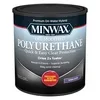 |
Minwax Water Based Oil-Modified Polyurethane, Clear Satin, 1 Quart If you are choosing the PU side of this comparison for cabinet doors, tabletops or panels, a water-based topcoat is the easiest one to brush on indoors and clean up.
|
On a flat surface that takes daily abuse, like a countertop or a shelf face, laminate usually resists scratching, staining and heat better than a polyurethane film does. On anything you want to repair, recolor or blend with solid wood, polyurethane wins, because a worn finish can be scuff-sanded and recoated while laminate can only be replaced. Most cabinet builds end up using both: laminate or melamine for the boxes and shelves, and a finished wood or painted door on the front.
| PU finish on wood or plywood | HPL laminate | Melamine (low-pressure laminate) | |
|---|---|---|---|
| What it is | Liquid coating that cures into a clear film | Resin-soaked paper layers pressed into a hard sheet, then bonded to a substrate | Decorative paper resin-fused onto particleboard or MDF at the factory |
| Rough thickness of the protective layer | A few thousandths of an inch per coat, so several coats are usual | About 1/32 to 1/16 inch for the whole sheet | A thin paper-and-resin skin on the panel face |
| Scratch and abrasion | Moderate; deep scratches reach bare wood | High for the surface | Moderate; softer than HPL |
| Heat from a hot pan | Can mark or soften; use trivets | Better than PU, but not a trivet substitute | Moderate; edges and seams are the risk |
| Water and spills | Good on the face, weak if the film is breached | Face is water-resistant; seams and edges let water in | Face is water-resistant; exposed core swells |
| Repair | Sand and recoat, spot repair possible | Filler or replacement; cannot be refinished | Filler or replacement; cannot be refinished |
| Edges | Finish wraps around solid wood edges naturally | Needs a banding or a matching self-edge | Needs edge banding |
Why “Which Is More Durable?” Is the Wrong First Question
Two myths keep showing up around this topic, and both push people toward the wrong material.
Myth one: polyurethane forms a thick armor over the wood. It does not. Each coat cures to a very thin film, which is why most product labels call for multiple coats. The film protects against spills and light wear, but it moves with the wood underneath. A polyurethane top over soft pine will still dent, because the finish is only as hard as the surface supporting it. Choosing a hard hardwood or a stable, flat plywood core makes a bigger difference than switching to a tougher topcoat.
Myth two: laminate is waterproof. The face layer resists water well, but the panel under it is usually particleboard or MDF, and that core swells permanently once water reaches it through a seam, a cut edge or a chip. Laminate fails at its joints long before its surface wears out. If moisture is a concern, our guide on whether melamine is waterproof explains where the water-resistance stops.
So the fair comparison is not coating against sheet. It is: what does the whole assembly (surface, core, edges and joints) do after a few years of use? That is what the next sections compare.
How Each One Fails, and What You Can Do About It
Where polyurethane gives out
- Surface scratches: Light scratches sit in the film and can often be scuffed and recoated. Scratches that reach the wood show as pale lines and need sanding back and refinishing that section.
- Heat and moisture marks: A hot mug or a wet glass left overnight can leave a cloudy ring in the film. Light rings sometimes fade as the finish dries out; deep ones need refinishing.
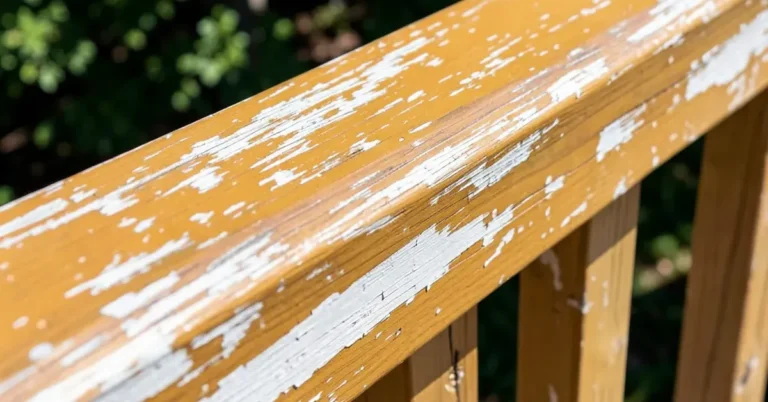
- Peeling: Polyurethane peels when it was applied over a glossy, waxy or oily surface without scuff sanding first, not because the product itself was faulty. Proper prep is most of the durability.
- Yellowing: Solvent-based (oil) polyurethane warms toward amber over time, which is more noticeable on white and light woods. Water-based products stay clearer.
Where laminate gives out
- Edge chipping: A hard knock on a corner can chip the face layer and expose the darker core underneath, and there is no invisible fix.
- Swelling near water: Sink cutouts, dishwasher edges and the bottoms of base cabinets are the usual trouble spots once caulk or banding fails.
- Lifting seams and edge banding: Steam and heat from a kettle or dishwasher can soften the adhesive along an edge. If you are matching banding to a finished wood face, see our notes on whether edge banding can be stained.
- No refinishing: Once the decorative layer is worn through, the only option is replacement.
Cabinets, Doors and Panels: Which One to Use Where
Matching the material to the part matters more than picking a winner overall.
| Part | Better choice | Why |
|---|---|---|
| Cabinet boxes and shelves | Melamine or laminate-faced panels | Flat, stable and factory-finished, so there is no finishing step and no brush marks. See melamine cabinets versus wood for the full trade-offs. |
| Cabinet doors (framed or solid) | PU finish or paint over real wood or MDF | A finish can be touched up when a door gets dinged, and the profile can be routed rather than glued up from sheet. |
| Countertops in a busy kitchen | HPL laminate | A hard, continuous face that shrugs off daily wear, provided the seams and sink cutout are sealed. |
| Dining and coffee tabletops | PU finish over hardwood | Can be resanded and recoated in place, which laminate cannot. |
| Closet and garage shelving | Melamine | Cheap, flat and quick. Keep it dry. |
| Door faces and wall panels | Either; choose by moisture and touch-up needs | Laminate suits flat slab doors. PU suits stained wood grain. |
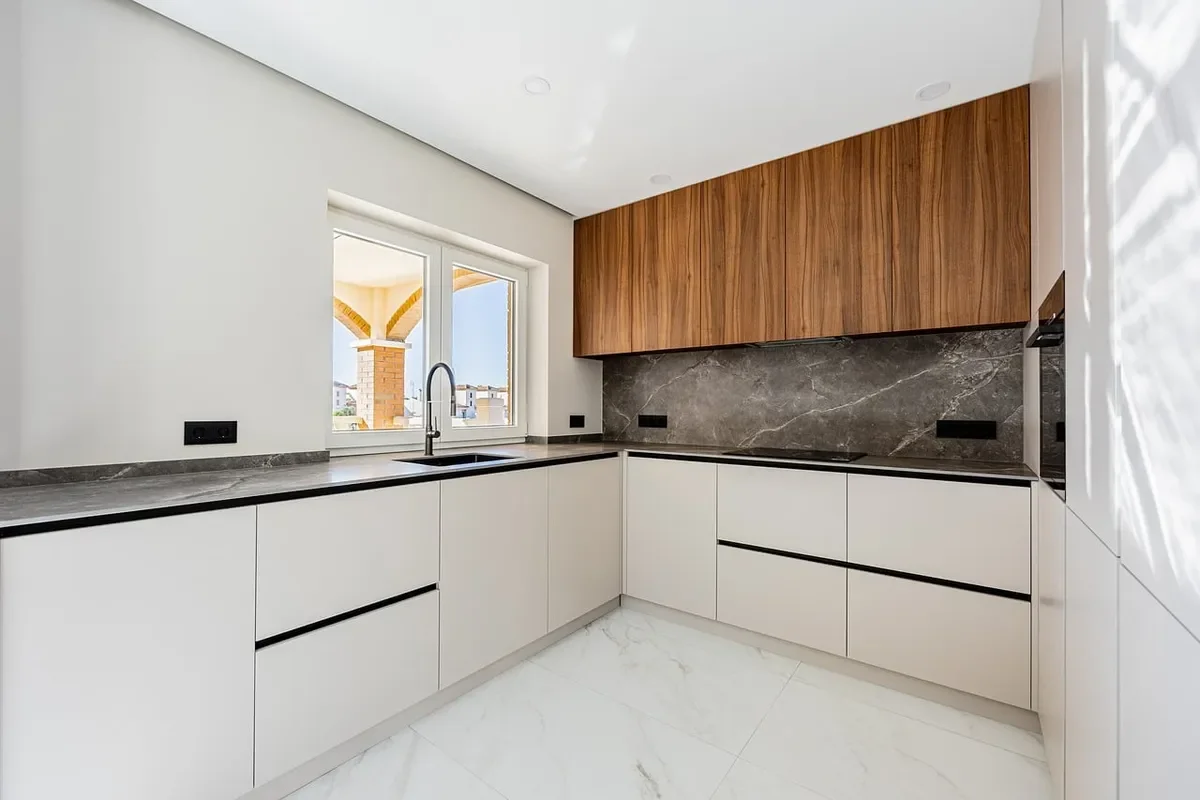
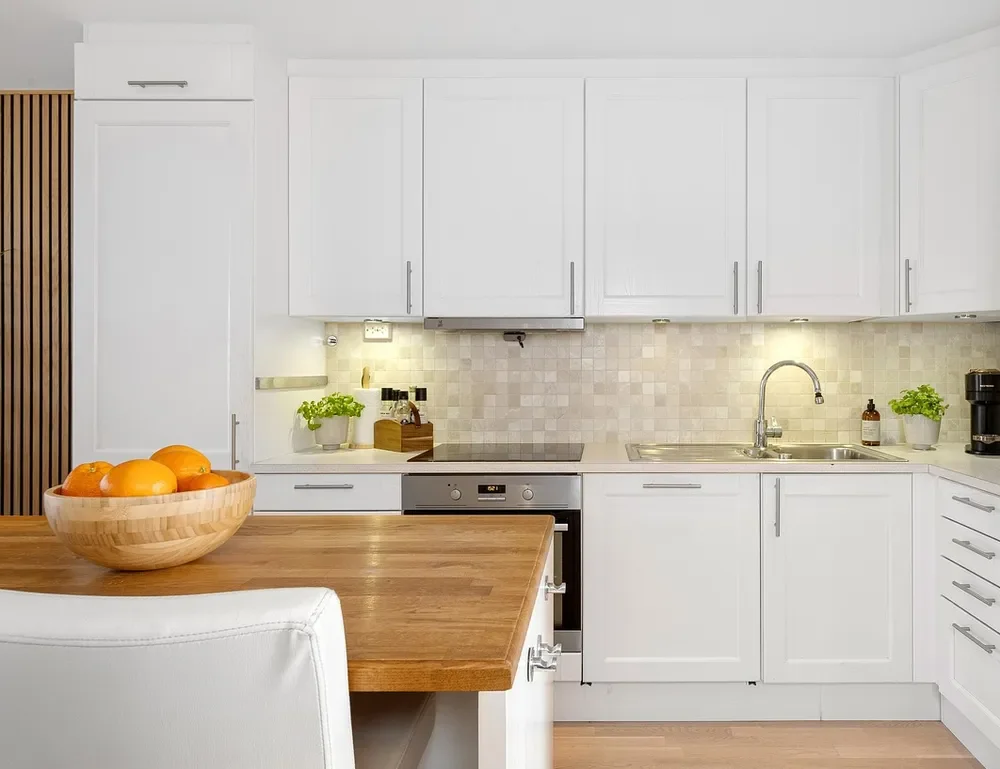
Flat slab fronts are commonly built from laminate or veneer, while framed doors, like the ones below, are often finished wood or MDF.
Can You Put PU Finish Over Laminate?
Usually not with good results. Laminate and melamine have a smooth, sealed face that gives a brushed-on coating very little to grip, so polyurethane applied straight on tends to peel or scratch off in sheets. The workable route is to scuff the face, apply a bonding primer made for slick surfaces, then use paint or a compatible topcoat, and even then the durability will not match the original factory face. For the full picture on that question, our page on wood finish on laminate covers what bonds and what does not.
Working Safely With Each Material
- Ventilation: Oil-based polyurethane gives off strong solvent vapors during application and cure. Open windows, use a fan to move air out, and wear an organic vapor respirator if you are in a closed space.
- Oily rags: Rags soaked in oil-based finish can heat up as the finish cures and can catch fire without a flame. Lay them flat outdoors to dry fully, or store them submerged in water in a sealed metal container until disposal.
- Two-part systems: Catalyzed (two-component) polyurethane products can contain isocyanates. Those need proper respiratory protection as specified on the safety data sheet, which is beyond a basic dust mask.
- Cutting laminate: Use carbide blades and eye protection, and expect fine dust from the core. If you are cutting a countertop yourself, see our steps for cutting laminate countertop with a jigsaw.
How to Choose Between PU Finish and Laminate
- If you want to repair or recolor later, choose real wood with a PU finish.
- If the surface takes daily scrubbing, hot dishes and spills, choose HPL, and seal every cut edge.
- If the part sits in a dry room and cost matters most, choose melamine.
- If you love visible wood grain, choose wood with a finish rather than a printed laminate pattern. If you are refinishing existing furniture, our guide to refinishing wood furniture walks through the prep.
Frequently Asked Questions
Is PU finish more durable than laminate?
For surface wear on a flat, busy surface, HPL laminate generally outlasts a polyurethane film. Polyurethane wins on repairability, since a worn area can be sanded and recoated, while laminate has to be replaced once damaged.
Can laminate be refinished with polyurethane?
Not reliably. The sealed face gives polyurethane little to grip, so it often peels. A bonding primer and paint or a compatible topcoat is the better route, and it will still not match the original factory surface.
Which is better for kitchen cabinet doors?
Real wood or MDF doors with a PU or painted finish are easier to touch up and can have profiled edges. Laminate or melamine slab doors are more affordable and easy to wipe, but chips and lifted edges are hard to repair invisibly.
Is polyurethane waterproof?
It is water-resistant on the face while the film is intact, but it is not a permanent waterproof barrier. A scratch through the film, an unsealed edge or standing water can let moisture reach the wood underneath.
Which handles heat better, PU finish or laminate?
Both can be damaged by a hot pan, so use a trivet on either one. Manufacturers usually rate HPL as more heat-tolerant than a polyurethane film, but check the specific product data sheet.
Bottom Line
Treat this as a job-by-job decision. Laminate is the tougher, lower-maintenance face for flat, high-use, mostly dry surfaces, and melamine is the budget version of the same idea. Polyurethane on real wood is the better pick when repairability, visible grain and shaped edges matter. Where a project has both a workhorse surface and a showpiece surface, use each material where it is strongest.
Sponsored / affiliate links. As an Amazon Associate I earn from qualifying purchases. I may earn additional commission from eligible campaigns.