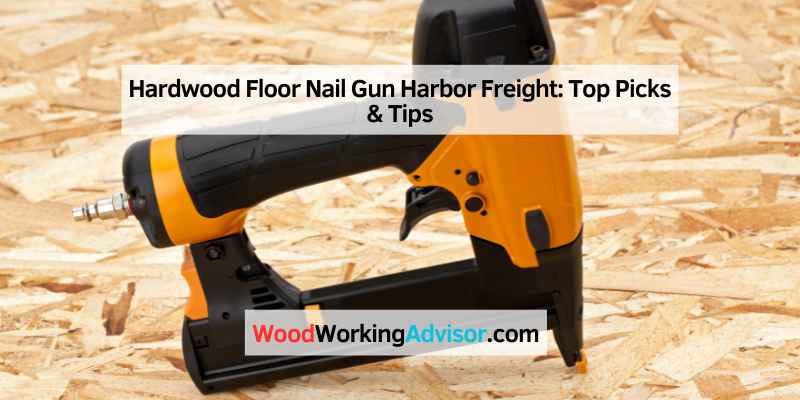
Harbor Freight Hardwood Floor Nail Gun: Specs, Price & Review
Harbor Freight sells one current hardwood floor nail gun: the BANKS 2-in-1 Flooring Air Nailer/Stapler (item #64268), $159.99, running 70–90 PSI shop air. It only fires 16-gauge L-cleat nails or 15.5-gauge staples — the wrong gauge simply won’t seat. This guide covers exact specs, what real installers report after using it, and three name-brand Amazon alternatives if a store trip isn’t practical.
Quick Answer
Harbor Freight’s current hardwood floor nail gun is the BANKS 2-in-1 Flooring Air Nailer/Stapler, item #64268, $159.99. It runs on 70–90 PSI shop air and drives either 16-gauge L-cleat nails (1-1/2″ to 2″) or 15.5-gauge flooring staples (1″ to 2″) with no tool changeover. Older Harbor Freight stores sold the same style of nailer under the Central Pneumatic brand as model 97586.
What Nail Gun Does Harbor Freight Sell for Hardwood Floors?
Best Amazon Flooring Nailer Alternative
NuMax SFL618 3-in-1 Flooring Nailer/Stapler
Same 15.5-gauge staple and 16-gauge L-cleat nail spec as Harbor Freight’s model, ships straight to your door.
- Best for: Matching Harbor Freight’s exact fastener spec without a store trip
- Why we picked it: Nearly identical 2″ flooring nailer/stapler format at a comparable price
- Main drawback: A few dollars more than Harbor Freight’s in-store price once shipping is factored in
Compare more flooring nailer options
 Option 1 3PLUS 2-in-1 Nailer/Stapler
|
 Option 2 Bostitch Pneumatic Flooring Nailer/Stapler
|
 Option 3 Metabo HPT N5010AC
|
As an Amazon Associate we earn from qualifying purchases.
Harbor Freight currently sells a single dedicated hardwood flooring nail gun: the BANKS 2-in-1 Flooring Air Nailer/Stapler, item #64268. It’s a mallet-actuated pneumatic tool — you strike a top plate with the included mallet to drive each fastener, rather than pulling a trigger — and it switches between L-cleat nails and floor staples with no base-plate swap required.
| Spec | BANKS 2-in-1 (Item #64268) |
|---|---|
| Price | $159.99 |
| Working pressure | 70–90 PSI |
| Air consumption | 0.9 CFM @ 90 PSI |
| Nail type | 16-gauge L-cleat, 1-1/2″–2″ long |
| Staple type | 15.5-gauge, 1″–2″ long |
| Magazine capacity | 100 cleat nails or 80 staples |
| Weight | 11.1 lbs |
| Warranty | 90 days |
If a Harbor Freight employee or an older thread mentions the “Central Pneumatic” flooring nailer instead of BANKS, they’re talking about the same style of tool under a discontinued Harbor Freight house brand — see the FAQ below for how the naming changed.
Is the Harbor Freight Flooring Nailer Actually Good?
Independent forum threads — not Harbor Freight marketing — give the clearest read on real-world performance. On Sawmill Creek Woodworking Community, one installer reported laying roughly 1,400 sq. ft. of hardwood with an earlier Harbor Freight flooring nailer bought for around $100, with no jams or misfires across the whole job. On The Garage Journal and ContractorTalk forums, another user put over 4,000 cleats through the older Central Pneumatic 97586 model without a single misfire.
“The Harbor Freight and Bostitch models are almost identical in design — the handle curve is slightly different, but the performance is exactly the same.”
Not every report is glowing: a few installers mention needing to align the nose block before the nailer seats cleats correctly out of the box, and at least one user described recurring jams that only cleared up with regular oiling before each use. The consensus across threads: fine for a one-time or occasional DIY room, but pros running thousands of square feet a month still lean toward Bostitch or Powernail for long-term durability.
Cleat Nails vs. Staples: Which Should You Use?
Cleat nails hold better over decades of seasonal wood movement — their barbed, L-shaped profile resists the floor creaking or shifting that shows up in high-humidity climates. Staples install a little faster and work fine for solid wood flooring in stable, climate-controlled interiors, but they generally offer less long-term holding power than cleats. If you’re unsure which fastener your specific boards call for, our guide to nail sizing for 3/4-inch hardwood flooring breaks down length and gauge by board thickness.
How the Harbor Freight Nailer Compares to Bostitch and Powernail
Harbor Freight’s own product listing positions the $159.99 BANKS 2-in-1 against a comparable Bostitch flooring nailer priced at $279 — and a real-time Amazon listing for a Bostitch pneumatic flooring nailer currently confirms $269.99, in the same range. Powernail’s cleat-focused nailers run considerably higher; forum threads on Fine Homebuilding and ContractorTalk consistently put them in the $400–$500+ range. The gauge and fastener spec matter more than the badge on the tool: our 16-gauge vs. 18-gauge nailer comparison explains why flooring cleats specifically need the heavier 16-gauge, unlike trim brad nailers.
| Nailer | Price | Best For |
|---|---|---|
| Harbor Freight BANKS 2-in-1 (#64268) | $159.99 | Occasional DIY jobs, budget builds |
| Bostitch Pneumatic Flooring Nailer | $269.99 (Amazon) | Frequent use, longer name-brand warranty |
| Powernail cleat nailers | ~$400–$500+ (forum-reported) | Daily pro use, cleat-only preference |
How to Use the Harbor Freight Flooring Nailer
The BANKS 2-in-1 is mallet-actuated, not trigger-fired, which changes the technique slightly from a standard finish nailer. Our full guide to nailing hardwood flooring covers board layout and racking; these five steps are specific to running this nailer correctly once boards are in place.
- Connect the air supply: Attach a 1/4″ quick-connect fitting to a compressor set at 70–90 PSI before loading any fasteners.
- Load the correct fastener: Drop in 16-gauge L-cleat nails (1-1/2″ to 2″) or 15.5-gauge flooring staples (1″ to 2″) — never mix types in the same magazine.
- Position the base plate: Set it against the tongue of the board, angled the same way on every pass.
- Strike the mallet actuator: Hit the top plate firmly — one strike per fastener, not repeated pumping.
- Check the first few boards: Pull one nail on an early row to confirm depth and angle before nailing the rest of the room.
Maintenance and Troubleshooting
Disconnect the air supply before any cleaning. Wipe down the body, clear the air vents and exhaust ports with compressed air, empty leftover fasteners from the magazine, and add a few drops of pneumatic tool oil to the air inlet before storing.
- Nail jams: Check the magazine and nail path for obstructions; confirm fasteners are loaded in the correct orientation.
- Misfires or inconsistent depth: Check your compressor’s actual output against the 70–90 PSI spec — undersized compressors are the most common cause.
- Air leaks: Inspect hose connections and the quick-connect fitting; replace worn O-rings.
Safety Considerations
Read the instruction manual before first use, and never point a loaded nailer at anyone. The mallet-actuation design still fires a fastener with enough force to cause a serious injury.
| Protective Gear | Why It Matters |
|---|---|
| Safety glasses | Protects eyes from kicked-back debris or a misfired fastener |
| Ear protection | Mallet strikes and compressor noise add up over a full room |
| Work gloves | Improves grip on the nailer body during repeated strikes |
| Knee pads | Most of this job is done kneeling on a hard subfloor |
Renting vs. Buying: Is It Worth It for a DIYer?
At $159.99, Harbor Freight’s nailer beats most multi-day flooring nailer rental rates if you’re doing more than one room, and forum reports suggest it holds up fine for a single house’s worth of hardwood. If you’re only nailing one small closet or a hallway, renting from a local tool-rental counter may still cost less than buying outright. Either way, if this is your first hardwood install, read our DIY hardwood installation guide before choosing a nailer, and see our complete wood flooring guide for everything else the job involves, from underlayment to finish.
Frequently Asked Questions
What Kind of Nail Is Best for Hardwood Floors?
Cleat nails, not staples, hold better long-term — their barbed L-shaped profile resists floor movement and creaking, especially in humid climates. Harbor Freight’s 2-in-1 flooring nailer fires 16-gauge L-cleat nails between 1-1/2″ and 2″ long, sized to your board thickness. Staples install faster but generally hold less firmly over decades of seasonal wood movement.
Can You Use a Nail Gun on Hardwood Floors?
Yes — pneumatic flooring nailers are the standard tool for blind-nailing tongue-and-groove hardwood, driving a fastener through the tongue at roughly a 45-degree angle so it’s hidden by the next board. A hand nail set works too, but takes far longer on anything larger than a closet. Any 2-in-1 or 3-in-1 flooring nailer, including Harbor Freight’s, is built specifically for this job.
What Size Nail Gun Does Harbor Freight’s Model Use?
Harbor Freight’s BANKS 2-in-1 (item #64268) is built for 16-gauge L-cleat nails, 1-1/2″ to 2″ long, or 15.5-gauge flooring staples, 1″ to 2″ long — match the length to your flooring thickness, not the subfloor. It’s a single fixed-gauge tool with no interchangeable base plates, unlike some 3-in-1 models from other brands.
How Much PSI Should a Hardwood Floor Nailer Have?
Harbor Freight lists a 70 to 90 PSI working pressure for its flooring nailer, with air consumption around 0.9 CFM at 90 PSI. Running below 70 PSI risks underdriven, proud nails; running well above 90 PSI can overdrive cleats and split the tongue. Check your specific compressor’s output before starting a room.
Does Harbor Freight Still Sell the Old 97586 Flooring Nailer?
No — the Central Pneumatic model 97586 that many DIYers and forum posters reference has been replaced by the BANKS 2-in-1 Flooring Air Nailer/Stapler, item #64268. The tool concept (mallet-actuated, dual cleat/staple capability) is the same; only the house-brand name and item number have changed over the years.
Is the Harbor Freight Flooring Nailer as Good as Bostitch or Powernail?
For occasional DIY use, forum consensus on Garage Journal and ContractorTalk is that it performs close to a Bostitch MIIIFN out of the box, since the designs are near-identical. For daily professional use across thousands of square feet, tradespeople still lean toward Bostitch or Powernail for long-term durability and parts support — Harbor Freight’s own listing backs a 90-day warranty versus the longer coverage most name brands offer.
Conclusion
For a one-time or occasional hardwood installation, Harbor Freight’s $159.99 BANKS 2-in-1 Flooring Air Nailer/Stapler does the job that forum reports back up: hundreds to low thousands of square feet with few complaints, provided you match the fastener gauge to your boards and keep the compressor in its 70–90 PSI range. For daily professional use, the extra cost of a Bostitch or Powernail buys longer-term durability and better parts support.
Sponsored / affiliate links. As an Amazon Associate I earn from qualifying purchases. I may earn additional commission from eligible campaigns.