Is Zinsser Shellac Dewaxed: No, Only Their SealCoat Version Is
Zinsser’s regular Bulls Eye shellac — the Clear and Amber cans — still contains natural wax, but Zinsser SealCoat is dewaxed: a 2-lb cut with zero wax or stearates. Using the waxy version under oil-based polyurethane, lacquer, or epoxy causes fish-eyeing and adhesion failure. This guide covers how to read Zinsser’s can labels, when SealCoat’s dewaxed formula actually matters, and how to fix a topcoat that has already failed.
Zinsser Shellac Products: Waxed vs. Dewaxed
Best Dewaxed Zinsser Pick
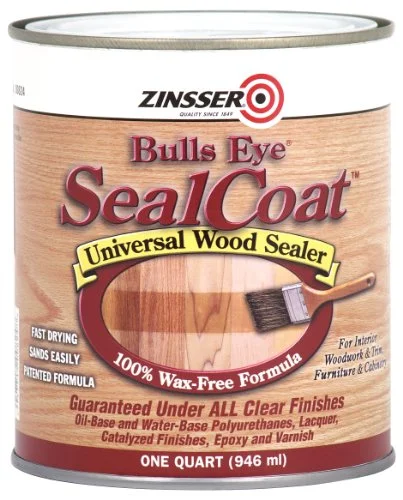 |
Zinsser Bulls Eye SealCoat Universal Sanding Sealer (1 Qt) – $36.23 This is the specific dewaxed Zinsser product this guide keeps pointing to — a 2-lb cut of 100% wax-free shellac, not the waxed Clear or Amber Bulls Eye cans sitting next to it on the shelf.
|
Zinsser sells shellac under three names on the same shelf: Bulls Eye Clear, Bulls Eye Amber, and SealCoat. Only SealCoat is dewaxed — the Clear and Amber cans keep the natural wax from the lac insect secretion, which can block adhesion when a second finish goes over it.
What Is Shellac?
Shellac is a natural resin secreted by the lac insect on trees in Southeast Asia and Thailand. The raw secretion is processed into dry flakes or ready-mixed liquid shellac, sold either “waxed” (as harvested) or “dewaxed” (wax removed by filtering). It dries fast, sands easily, and forms a clear, hard coat used on furniture, musical instruments, and as a sealer under other finishes.
- Natural origin: harvested from lac insect resin, not a petroleum product.
- Versatile: works over most stains and dyes, and under most other finishes when dewaxed.
- Fast-drying: a thin coat is dry to the touch in minutes, not hours.
- Easy to apply: brushed, sprayed, or wiped on with a pad.
Waxed vs. Dewaxed: Why It Matters for Adhesion
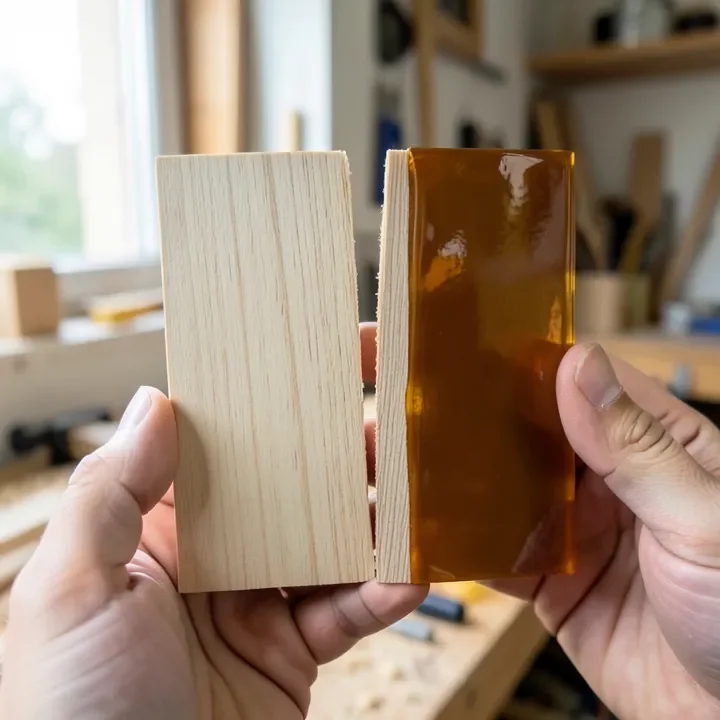
Waxed shellac contains roughly 3-5% natural wax by weight, left over from the lac insect secretion. That wax interferes with how well later coats bond to it. Dewaxed shellac has that wax filtered out during processing, which is what gives it a stronger bond for layering and a clearer, less cloudy appearance.
- Waxed shellac: contains natural wax; fine as a final coat, risky as a base coat under other finishes.
- Dewaxed shellac: wax filtered out; bonds reliably under oil-based poly, lacquer, catalyzed finishes, and epoxy.
- Adhesion: dewaxed shellac is the safer universal base coat when you don’t yet know what topcoat you’ll use.
Why Dewaxing Matters in Practice
Wax in shellac stops other finishes from gripping the surface, which shows up as fish-eyeing — small craters where a topcoat pulls away instead of laying flat. Two real scenarios:
- Restoring a table and planning a varnish topcoat: waxed shellac underneath risks the varnish not gripping evenly, leaving dull or peeling patches.
- Spraying a guitar body: any wax residue under lacquer causes visible finish defects that show under a glossy clearcoat, so dewaxed shellac is the standard choice for instrument finishing.
Identifying Dewaxed Zinsser Products
Zinsser doesn’t hide which products are dewaxed — it’s on the can, just not always in the way you’d expect.
Understanding Zinsser’s Product Labels
Look for the word “SealCoat” or “dewaxed” printed on the can. If neither word appears — as on the Clear and Amber Bulls Eye cans — assume the product contains wax. The back label also lists compatible topcoats; a dewaxed product will explicitly list oil-based polyurethane and catalyzed finishes as compatible.
- Product name: “SealCoat” is Zinsser’s only dewaxed shellac product name.
- Front label: dewaxed products state it directly, usually near the product name.
- Back label: lists which topcoats the product is “guaranteed compatible” with.
- Manufacturer site: Rust-Oleum’s Zinsser product pages list wax content for every SKU.
Popular Zinsser Shellac Products and Their Wax Content
Zinsser’s three main shellac products, and where each one stands on wax content:
| Product | Wax Content | Best Used For |
|---|---|---|
| Bulls Eye SealCoat | Dewaxed (2-lb cut) | Sanding sealer, base coat under any clear finish |
| Bulls Eye Clear | Waxed (3-lb cut) | Single-coat furniture finish, sealing knots |
| Bulls Eye Amber | Waxed (3-lb cut) | Warm-tone final coat, not recommended under poly |
📊 Zinsser SealCoat is a 2-lb cut of 100% dewaxed shellac that dries to the touch in about 10 minutes and is ready to sand or recoat in roughly 40 minutes. Source: Rust-Oleum/Zinsser BEY-07 Technical Data Sheet
How to Confirm If a Shellac Product Is Dewaxed
If the can doesn’t say either way, check the manufacturer’s technical data sheet online — it lists wax content for every SKU by product code. Zinsser customer support can also confirm by product code if you have an older can with a faded label.
- Check the label first: “SealCoat” or “dewaxed” printed on the can settles it immediately.
- Pull the technical data sheet: Rust-Oleum publishes wax content by product code online.
- Contact Zinsser directly: for older, unmarked cans with a faded label.
The Impact of Dewaxed Shellac on Your Projects
Choosing dewaxed shellac changes what you can safely put on top of it later, not how the shellac itself looks when it’s the only coat.
Advantages of Using Dewaxed Shellac
Dewaxed shellac bonds reliably with whatever goes over it — oil-based poly, water-based poly, lacquer, or catalyzed finish — because there’s no wax layer blocking adhesion. It also reads slightly clearer than the waxed versions, since wax content adds a faint cloudiness.
- Universal compatibility: bonds under nearly any topcoat, which is why Zinsser calls SealCoat “universal.”
- Clarity: slightly less cloudy than waxed shellac, though the difference is subtle on darker woods.
- Fewer defects: lower risk of fish-eyeing when a second coat goes on.
When to Choose Dewaxed Shellac
Reach for dewaxed shellac whenever you plan to apply a second, different finish on top — oil-based poly, lacquer, or epoxy — or when you’re not sure yet what topcoat you’ll use. Waxed shellac is fine when it’s the only coat the project will ever get, like a quick single-coat finish on a decorative box.
Comparing Waxed vs. Dewaxed Shellac in Common Scenarios
A side-by-side look at where each version actually performs better:
| Feature | Waxed Shellac | Dewaxed Shellac |
|---|---|---|
| Adhesion under other finishes | Unreliable | Guaranteed compatible |
| Clarity | Slightly cloudy | Higher clarity |
| Best use | Single-coat, decorative projects | Base coat, multi-coat systems, instrument finishing |
“Bulls Eye SealCoat bonds tenaciously to virtually any bare wood or finished surface, dries very quickly, and sands smooth with the greatest of ease.”
How to Apply Dewaxed Shellac
Dewaxed shellac is forgiving to apply, but surface prep is what actually determines whether the finish bonds well.
Surface Preparation
Sand the wood to a smooth, even surface, then remove all dust with a tack cloth before applying anything. Any leftover dust, old finish, or wax residue on the surface will show up as texture under the shellac.
- Sand: sand to the correct grit for your wood species before finishing.
- Clean: wipe with a tack cloth to remove sanding dust.
- Inspect: check for leftover old finish or wax before coating.
- Test: always try the full finish schedule on scrap first.
Application Methods
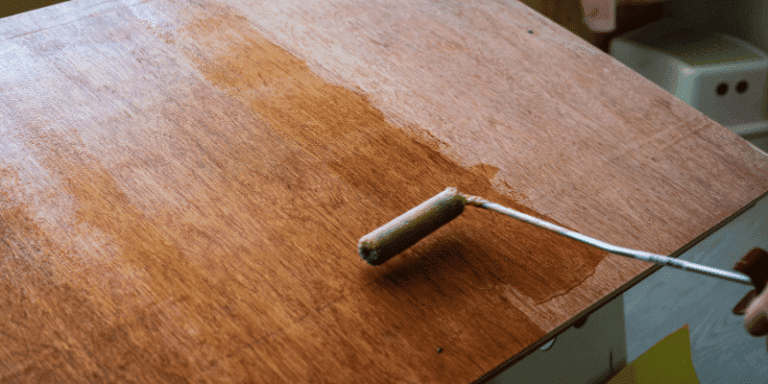
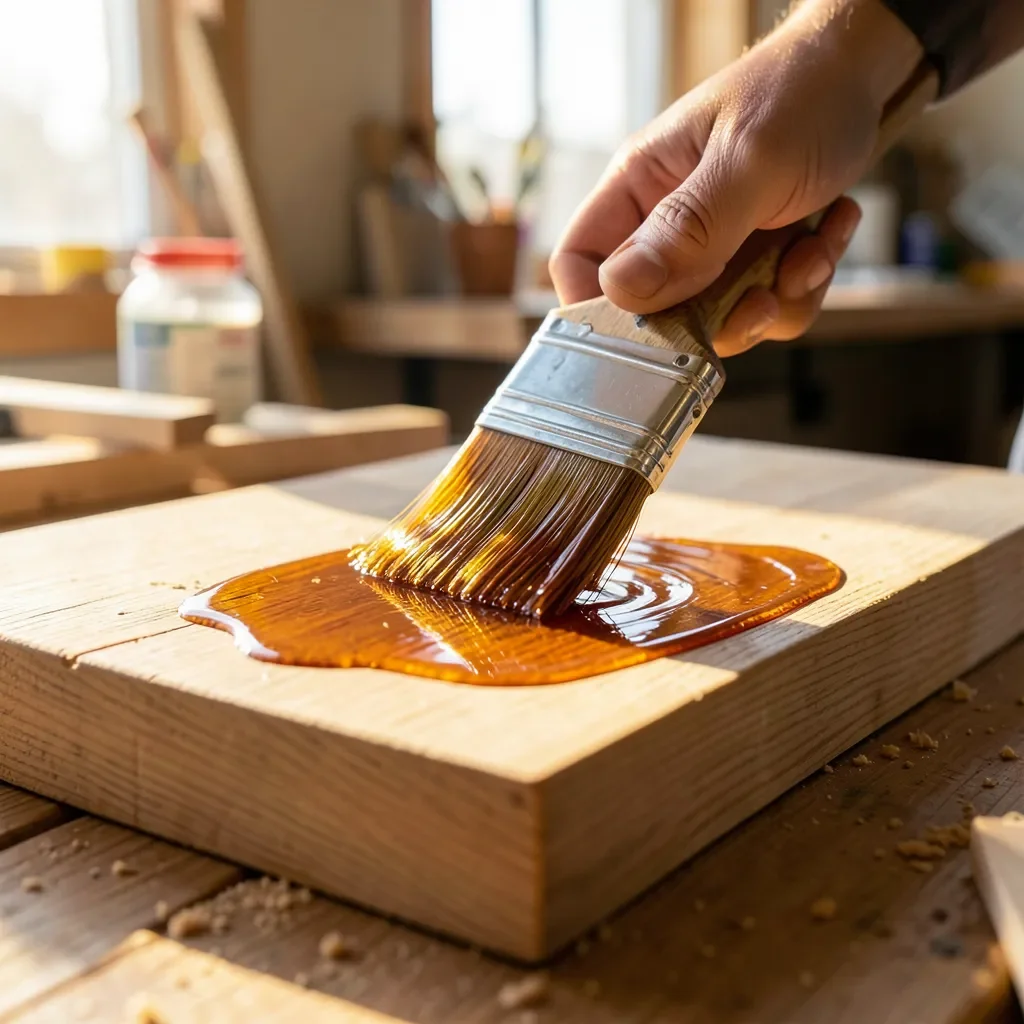
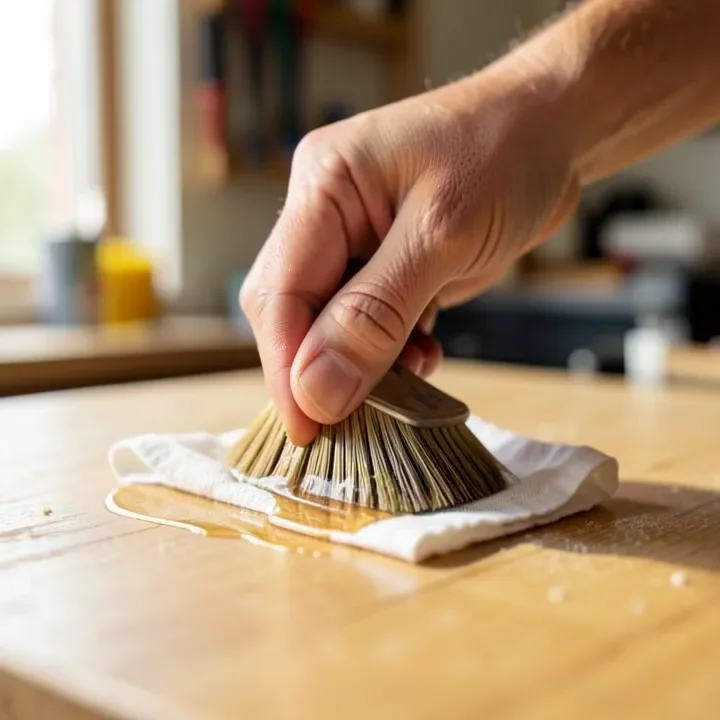
Brushing, spraying, and wiping (French-polish style, with a pad) all work with dewaxed shellac. Brushing is simplest for small projects; wiping gives the thinnest, most even coats; spraying is fastest for large flat surfaces.
- Brushing: use a natural-bristle brush and apply thin, even coats — thick coats trap brush marks.
- Spraying: thin per label directions and use light, overlapping passes for a smooth film.
- Wiping: load a folded cloth pad and apply in one direction for a French-polish-style finish.
- Recoat timing: SealCoat is typically ready to sand or recoat in about 40 minutes — check the label for your specific product.
Troubleshooting Common Issues
Fish-eyeing usually means wax contamination — either from waxed shellac underneath or wax residue left on the surface from an old finish or furniture polish. A finish that stays tacky is often applied too thick or in high humidity; let it dry longer between coats and sand lightly before recoating.
Frequently Asked Questions
Is all Zinsser shellac dewaxed?
No. Only Zinsser SealCoat is dewaxed. The Clear and Amber Bulls Eye shellac cans still contain natural wax from the lac insect secretion, which can block adhesion of later coats.
How can I tell if a Zinsser shellac product is dewaxed?
Check the can for the word “SealCoat” or “dewaxed” printed directly on the label. Zinsser’s regular Clear and Amber Bulls Eye shellac cans carry neither word, which means they contain wax.
What is Zinsser SealCoat best used for?
SealCoat’s 2-lb cut, wax-free formula works as a sanding sealer and barrier coat before oil-based polyurethane, lacquer, catalyzed finishes, or epoxy — situations where waxed shellac would cause adhesion failure.
Can I use waxed Zinsser shellac as a base coat?
You can, but only if the topcoat going over it is also shellac or a fully compatible finish. Wax in the base coat can cause oil-based polyurethane or water-based finishes to fish-eye or peel.
How long before Zinsser SealCoat can be sanded or recoated?
SealCoat dries to the touch in about 10 minutes and is ready to sand or recoat in roughly 40 minutes, according to Zinsser’s technical data sheet.
Final Thoughts
Zinsser’s Clear and Amber Bulls Eye shellac still contain wax; SealCoat is the only dewaxed option, and the label tells you which is which. Use dewaxed shellac whenever a different finish goes on top, check the can before you buy, and test your finish schedule on scrap wood first.
Sponsored / affiliate links. As an Amazon Associate I earn from qualifying purchases. I may earn additional commission from eligible campaigns.