Decking With Fire Pit Ideas: Cozy Outdoor Retreats
Putting a fire pit on a wood deck is popular, and it can be done safely – but the decision that matters most isn’t decor, it’s fuel type and fire-resistant separation between the flame and the deck boards. Get those two things right and everything else (seating, lighting, layout) is just design preference. Get them wrong and you’re looking at scorched boards at best and a real structure fire at worst. Here’s how to plan a deck fire pit that’s actually safe, plus the layout and comfort ideas that make it a space people want to use.
Fuel Type: The Decision That Actually Matters
Not every fire pit belongs on a wood deck, and the fuel type is what separates a safe setup from a genuinely risky one.
| Fire Pit Type | Deck Suitability | Why |
|---|---|---|
| Portable propane fire pit | High | Controlled, enclosed flame, minimal sparks – still needs a protective mat and a stable, level base |
| Propane fire table | High | Same controlled-flame profile as a portable propane pit, in furniture form |
| Gel or ethanol fire pit | Good | Clean-burning, fewer sparks and lower heat than wood, but still hot enough to need a mat |
| Portable wood-burning fire pit | Moderate, with real caution | Produces the most sparks and embers – needs a heavy-duty fire-resistant barrier, a spark screen, and constant supervision |
| Built-in masonry fire pit/fireplace | Not suitable for a typical deck | Requires structural engineering for the added weight and heat – this is a professional installation, not a DIY add-on to an existing deck |
If minimizing risk is the priority, propane wins: it’s the most commonly recommended option for deck use specifically because it eliminates the two biggest wood-deck fire hazards – airborne embers and unpredictable flame height.
Best Protection For Any Fire Pit On A Deck
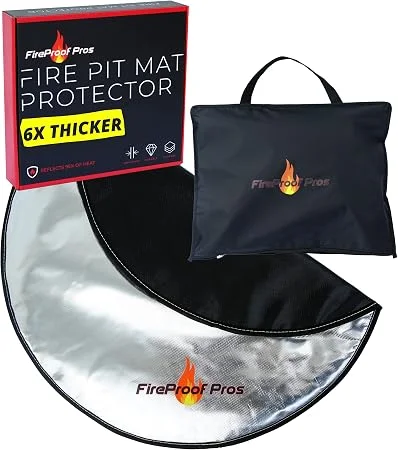 |
Fireproof Pros 36″ Fire Pit Protector for Deck or Patio – $39.99 A triple-layer heat-resistant mat that goes under any fire pit type – the single non-negotiable safety item this guide keeps coming back to, regardless of which fuel type you choose.
|
Deck Material Considerations
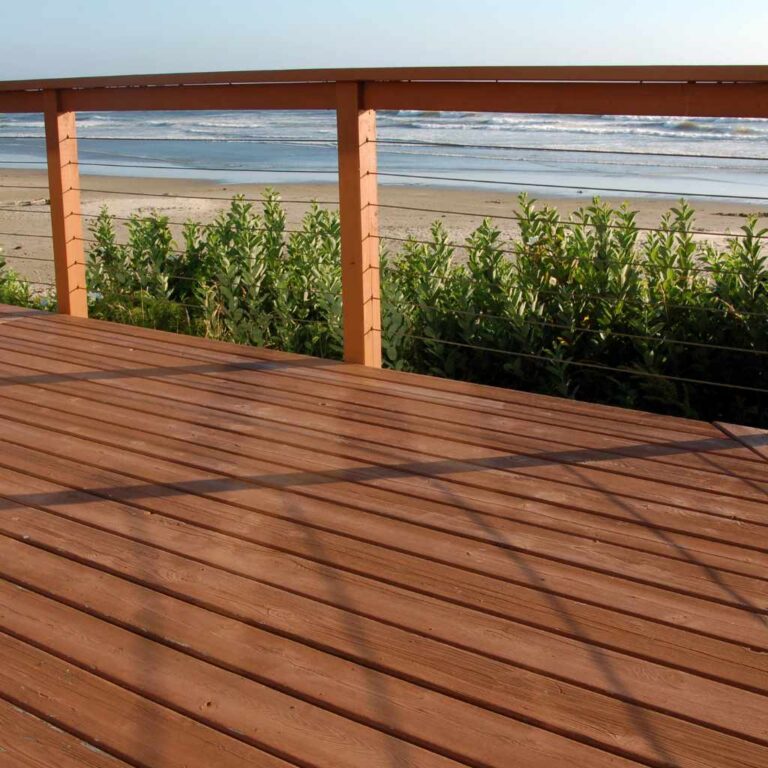
Wood decking (cedar, redwood, or pressure-treated pine) is combustible – a fire-resistant mat is mandatory, not optional, regardless of fuel type. Composite decking resists rot and insects and needs no staining, but many composite formulations can still scorch or discolor from sustained radiant heat, so the same mat requirement applies. Neither material makes a deck inherently “fire pit safe” on its own – the barrier between the fire pit and the deck surface is what actually does the protecting, not the decking material itself.
Clearance and Placement
- Distance from the house and railings: keep at least 10 feet of clearance from the structure and any combustible railings or overhangs.
- Overhead clearance: check for overhanging branches, umbrellas, or a pergola roof directly above the fire pit’s flame path.
- Wind exposure: a deck that catches consistent wind carries embers farther from a wood-burning pit – factor this into placement even more than for gas.
- Local code: some municipalities and HOAs restrict or ban open wood-burning fire pits on decks entirely – check local fire code before buying, not after.
Essential Safety Equipment
- A fire-resistant mat or pad sized larger than the fire pit’s base, on every deck installation regardless of fuel type.
- A spark screen for any wood-burning pit – this is the single biggest ember-control measure available.
- A fire extinguisher rated for the fuel type in use, kept within arm’s reach, not stored inside.
- A metal or stone fire pit body – never plastic or unrated materials, which can melt, warp, or ignite.
Seating, Lighting, and Layout
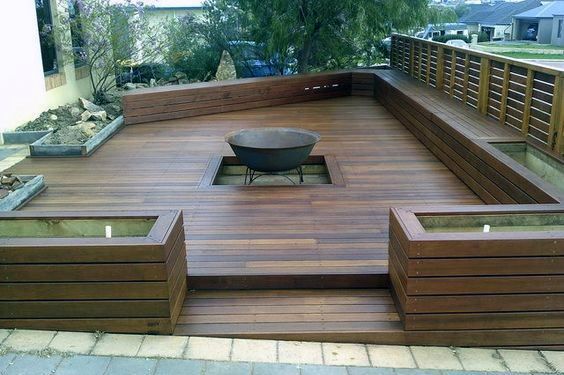
Once the safety setup is settled, the rest is genuinely just design preference. Built-in benches around the fire pit save space and can include hidden storage underneath; portable chairs give more flexibility to reconfigure for different gatherings but need clear, obstruction-free pathways for foot traffic. For lighting, warm-toned string lights or low-voltage path lights complement a fire pit’s ambiance without competing with it – skip bright white or blue-toned bulbs, which visually fight the warm flame color. On a smaller deck, center the fire pit and arrange seating in a tight radius around it; on a larger deck, zone the fire pit area separately from a dining or lounge area using a rug or a change in furniture grouping to signal the boundary.
Conclusion
A deck fire pit comes down to two decisions that actually affect safety – fuel type and the fire-resistant barrier underneath it – and everything else is design. Propane and gel/ethanol options carry the least risk on wood or composite decking; a wood-burning pit is workable but demands a heavier barrier, a spark screen, and real vigilance. Get the safety layer right first, then build the seating and lighting around it.
Frequently Asked Questions
How do I safely install a fire pit on decking?
Choose a fire pit fuel type appropriate for deck use (propane and gel/ethanol carry the least risk), place a fire-resistant mat sized larger than the pit’s base underneath it, maintain at least 10 feet of clearance from the house and railings, and check local fire code before installation.
What are the best materials for decking with a fire pit?
Both wood (cedar, redwood, pressure-treated pine) and composite decking can host a fire pit safely with a proper fire-resistant mat underneath. Neither material is inherently fire pit safe on its own – the protective barrier between the pit and the deck surface is what actually matters.
Can a fire pit damage my deck?
Yes, if it’s used without a fire-resistant mat. Radiant heat can scorch or discolor deck boards (wood or composite) over repeated use, and a wood-burning pit without a spark screen can drop embers that burn or char the surface. A properly sized mat prevents both.
What types of fire pits are most deck-friendly?
Propane and natural gas fire pits are generally the most deck-friendly, since they produce a controlled flame with minimal sparks or embers. Gel and ethanol fire pits are a close second. Wood-burning fire pits are workable but need the most safety equipment and supervision.
Sponsored / affiliate links. As an Amazon Associate I earn from qualifying purchases. I may earn additional commission from eligible campaigns.