Wood Deck Texture: Grain vs. Grooved vs. Smooth Boards
Wood deck texture is the surface pattern of a decking board — the physical feel underfoot, not its color or species. Three types cover almost every deck: natural or raised wood grain on solid lumber, grooved (ribbed) boards with parallel channels cut or molded into the surface, and smooth composite boards with a wood-grain pattern embossed on top. Each affects slip resistance, cleaning, and looks differently, and the marketing behind grooved and embossed texture doesn’t always match independent testing.
Quick answer: Wood deck texture is a board’s surface pattern — natural wood grain, grooved/ribbed channels, or smooth composite embossing. Independent trade-body testing has found no consistent evidence that grooved or heavily textured boards are less slippery than smooth ones; moisture, algae, and drainage matter far more than the surface pattern itself.
What Is Wood Deck Texture, Exactly?


Wood deck texture is the tactile surface pattern of a deck board, created either naturally through wood grain and weathering or intentionally through grooving, wire-brushing, or composite embossing. It is a separate property from a board’s color, species, or stain — texture is what you feel underfoot, not what you see from ten feet away.
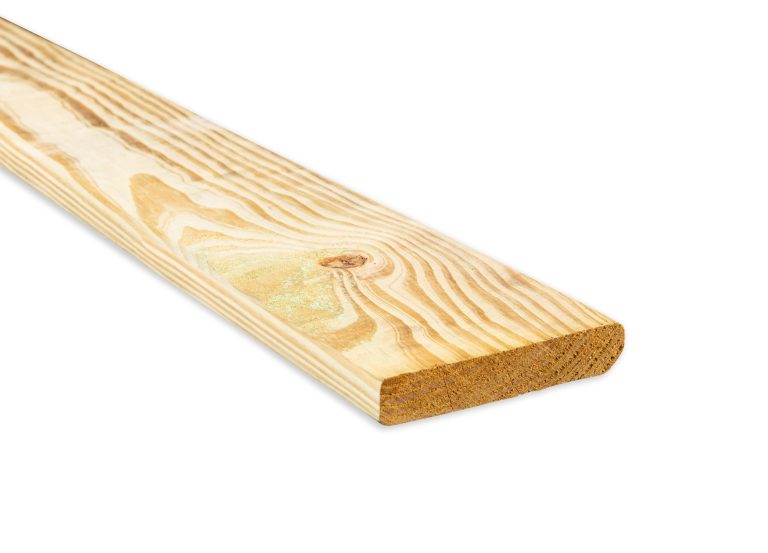
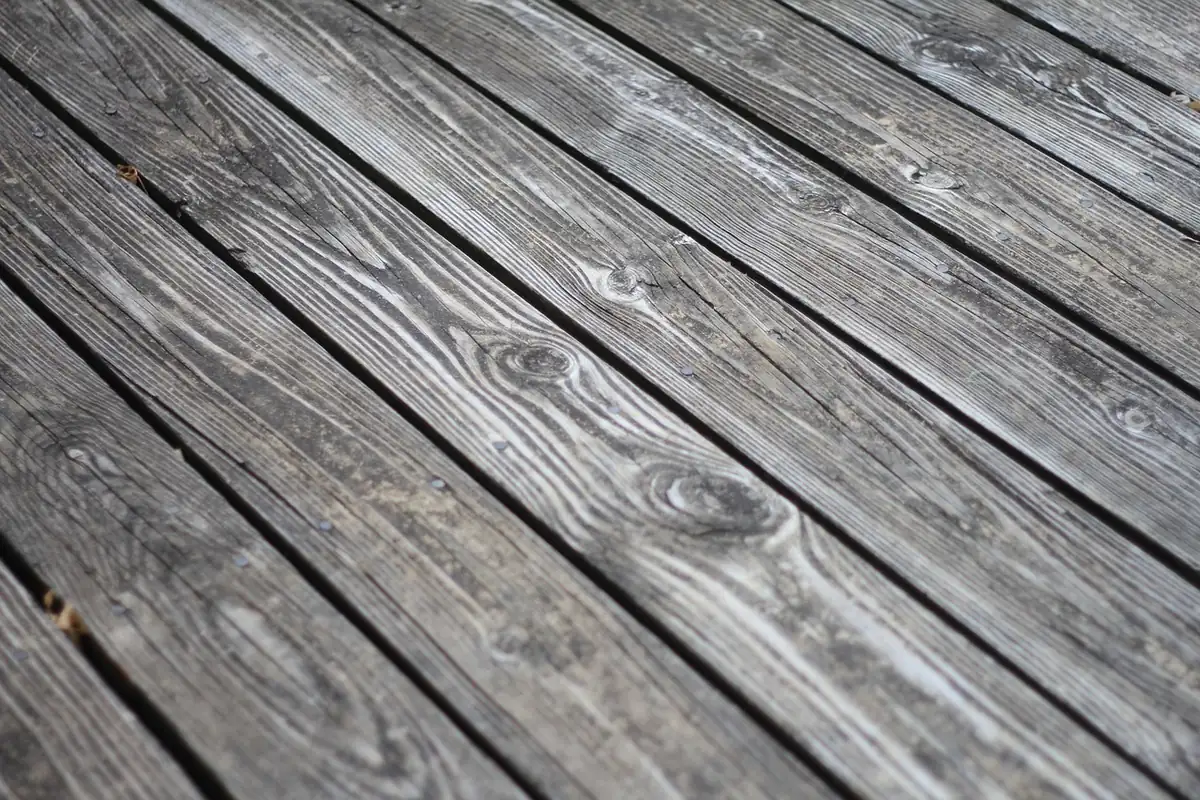
- Natural wood grain: the raised grain lines and pores on real lumber — cedar, pressure-treated pine, or a hardwood like ipe — that stand out more as the board weathers and the softer earlywood wears faster than the hard latewood.
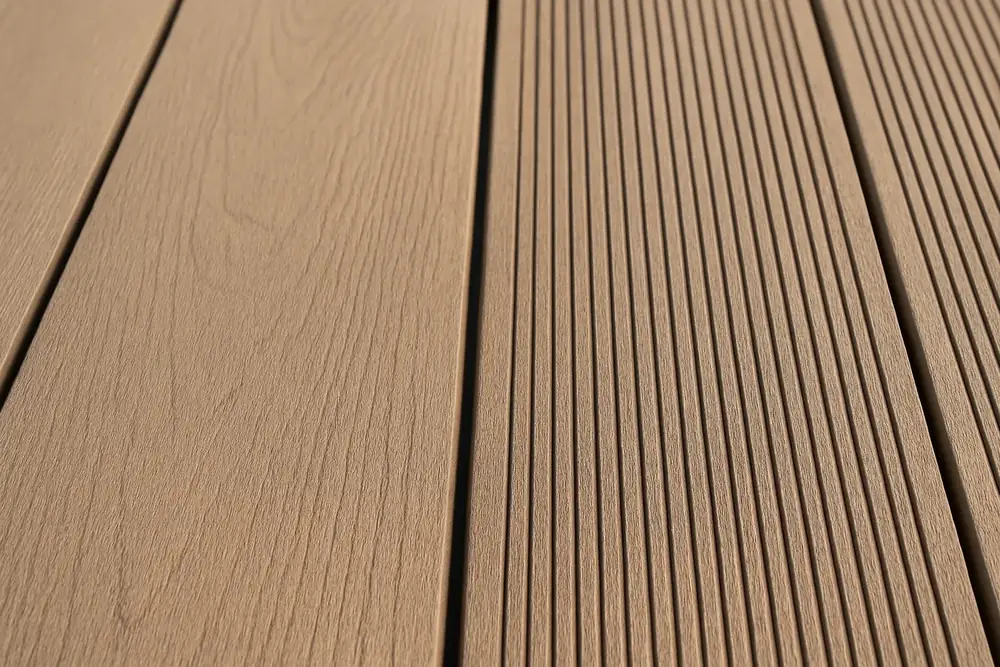
- Grooved (ribbed) boards: parallel channels roughly 1/8 to 3/16 inch wide, cut into solid lumber or molded into composite, running the length of the board. Found on both real wood and composite decking.
- Smooth or embossed composite: a wood-grain pattern pressed into a wood-plastic composite (WPC) board’s surface during manufacturing — a decorative texture with no actual wood fiber exposed at the surface.
Does a Grooved or Textured Deck Surface Actually Reduce Slipping?
No independent trade body has found consistent evidence that grooved or textured decking is less slippery than smooth decking when wet. The UK’s Timber Decking Association (TDCA) states that smooth boards, installed correctly, offer traction equal to or better than grooved boards, because moisture and algae growth — not surface pattern — cause most slips.
Composite manufacturers frequently market embossed wood-grain texture as a traction feature, and grooved boards are often sold under an “anti-slip” label. According to the TDCA’s own FAQ on grooved timber decking, a groove is not designed as a slip-resistance measure at all — its real function is aiding water runoff, and only when installed with enough fall and in fairly short board lengths. In a flat, poorly drained installation, grooves that run the wrong way trap water and algae instead of shedding it, which can make a “textured” board slipperier than a plain one, not safer.
If your existing deck is already slippery when wet, texture type isn’t the fix — cleaning, drainage, and surface treatment are. Our full slip-proofing guide for a wet, slippery deck covers the cleaning, coating, and traction-strip options in detail; this article is about choosing texture up front, not curing a slippery deck you already have. Composite owners specifically weighing a smooth, embossed board should also check how Trex decking performs when wet before assuming embossed texture solves the problem on its own.
Grooved vs. Smooth Deck Boards: Which Should You Choose?
Grooved boards aid water runoff on a properly sloped deck but trap dirt, algae, and moisture if the grooves face the wrong direction; smooth boards clean faster and dry quicker but show a flatter, less pronounced wood-look pattern. Neither wins outright — slope, climate, and how much upkeep you’re willing to do decide it, not the texture claim on the packaging.
| Attribute | Grooved / Ribbed Boards | Smooth / Plain Boards |
|---|---|---|
| Water runoff | Channels water off the board with enough slope and short runs | Sheds water across the full width, nothing to clog |
| Algae/moss risk | Higher if grooves trap standing water or face the wrong way | Lower — dries faster with no channels to hold moisture |
| Cleaning | Dirt and pollen collect in the grooves, needs a stiff brush | Sweeps and pressure-washes faster |
| Installation | Must be oriented correctly for drainage to work | No orientation to get wrong |
| Slip resistance | No proven advantage over smooth (per TDCA) | Equal or better when installed and drained correctly |
| Visual texture | More pronounced wood-look pattern and shadow lines | Flatter, quieter appearance |
Many composite lines sell reversible boards — grooved on one face, smooth on the other — so the choice isn’t always permanent at purchase. If low maintenance is the priority, install smooth-face up; if you want the deeper wood-look shadow lines and your deck has real drainage slope, grooved-face up works, provided the grooves run downhill, not across the slope.
What Gives Composite Decking Its Wood-Grain Texture?
Composite decking gets its wood-grain texture from heated embossing rollers that press a wood-grain pattern into the extruded wood-plastic composite (WPC) board before it cools. The pattern is decorative — it replicates real lumber’s look and adds some surface grip, but it isn’t actual wood grain, only a molded surface texture.
Composite boards start as a mix of wood fiber, recycled plastic, pigment, and UV inhibitors, heated and extruded into a board profile. According to MoistureShield’s explanation of what composite decking is made of, the embossing step happens while the extruded board is still warm, so the roller pattern sets permanently into the surface as it cools — it isn’t a coating that can wear through to bare material underneath the way a painted texture could.
Composite boards go through most of their color change in the first three to six months after installation, fading and muting slightly from their as-installed shade before leveling off; this is a normal surface-oxidation process, not a defect, and it doesn’t affect structural strength. Textured and grooved boards tend to hide that early fade visually better than a flat, smooth board of the same color, because the shadow lines in the pattern break up the color shift.
Why Is My New Wood Deck Rough or Splintery?
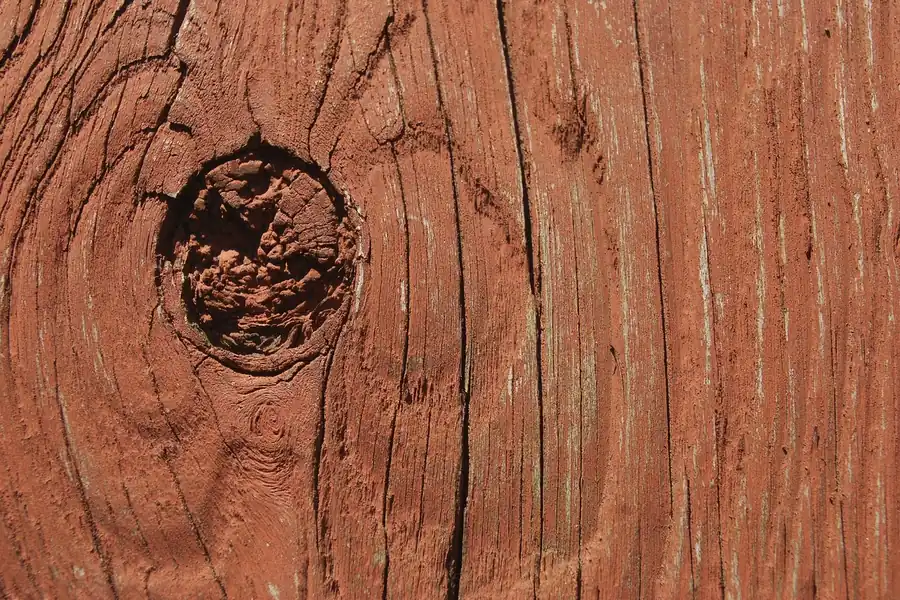
A new wood deck feels rough or splintery because the saw-milling process leaves torn, raised wood fibers standing proud of the board’s surface — most noticeable on pressure-treated pine and rough-sawn cedar. Sun and moisture cycling lifts the grain further over the first year, which is the same raised-fiber texture that eventually needs sanding down — see our guide on preventing and removing deck splinters for the full grit progression.
- Let a new pressure-treated deck dry out first — six to twelve weeks in most climates — before sanding or sealing, since the wood needs to release manufacturing moisture before it will hold a finish.
- Sand with 80-grit sandpaper on a random-orbital sander, working with the grain, to cut off raised fibers and splinters rather than just polish over them.
- Follow with 120-grit to smooth the sanded surface without thinning the board more than necessary.
- Vacuum or blow off the sanding dust before applying any stain or sealer — dust left in the grain shows as a haze once sealed over.
- Reseal within a few days of sanding, since bare, freshly sanded wood absorbs moisture and starts re-raising grain quickly without a protective coat.
Deck contractors reach for 80-grit before 120-grit specifically because jumping straight to a fine grit only polishes the raised fibers flat instead of cutting them off — the splinters come back within a season if the coarse pass is skipped. For anything larger than a small section, a rented upright floor sander clears a full deck far faster than a handheld random-orbital sander alone.
Does Deck Board Texture Affect Price or Maintenance?
Grooved and heavily embossed composite boards commonly cost more than the same product line’s flat, smooth boards, since grooving or a deeper emboss pattern adds an extra tooling step in manufacturing — always compare per-linear-foot pricing within the same board line rather than assuming texture is free. Maintenance runs the other way: textured surfaces take longer to clean because dirt, pollen, and algae settle into the pattern, while smooth boards wipe down and pressure-wash in less time.
Real wood carries its own texture-maintenance link regardless of grain pattern — any solid-wood deck needs periodic sanding and resealing as the surface weathers, which composite decking never needs since its texture is molded in rather than grown. That single difference is often the deciding factor between real wood and composite long before texture preference even comes up. For a full breakdown of what a wood deck actually runs by material, size, and region, see our wood deck cost guide.
How Do You Choose the Right Deck Texture When Buying or Building?
Choose smooth boards if low maintenance and fast cleaning matter most, grooved boards if your deck has genuine drainage slope and you want a deeper wood-look shadow line, and natural wood grain if you’re building with solid lumber and plan to sand and reseal on a normal maintenance cycle. Texture is a secondary decision that sits inside the bigger wood-versus-composite choice, not a replacement for it.
If you haven’t settled the larger material question yet, start with our full wood vs. composite decking comparison, which covers durability, cost, and environmental impact — texture is one input into that decision, not the whole answer. Once you’ve picked a species or composite line, our guide to choosing between a deck stain and a sealer covers how to protect the texture you land on.
Frequently Asked Questions About Wood Deck Texture
Is grooved decking less slippery than smooth decking?
No. The Timber Decking Association has found no consistent evidence that grooved boards outperform smooth boards for slip resistance. Grooves are designed to aid water runoff, not traction, and can trap water and become slipperier than smooth boards if installed facing the wrong direction.
Does composite decking texture fade over time?
Yes. Composite boards go through most of their color change in the first three to six months after installation before leveling off. The embossed texture pattern itself doesn’t wear away, since it’s set into the material during manufacturing rather than applied as a surface coating.
Can you change or resurface the texture of an existing deck?
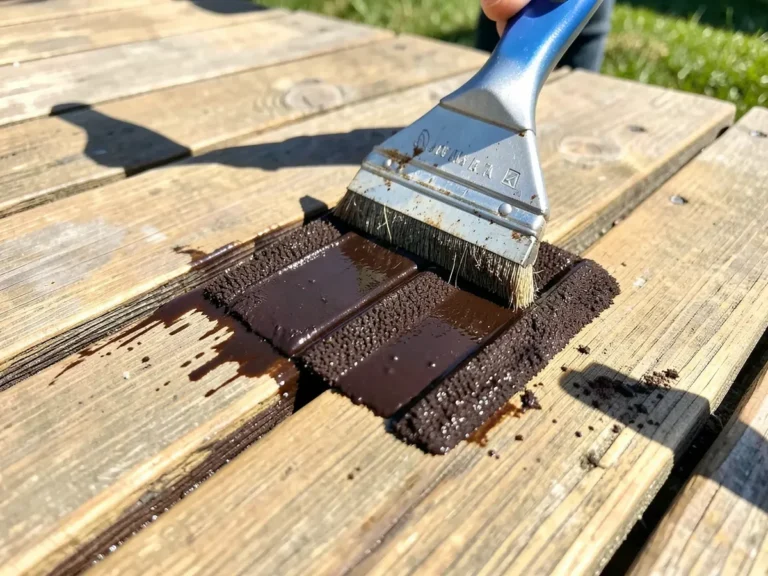
On real wood, yes — sanding, wire-brushing, or a textured resurfacing coating can change surface texture. On composite decking, no — the emboss pattern is permanent, though many composite boards are reversible, so flipping to the opposite face changes grooved to smooth or vice versa.
Do deck board grooves trap water and algae?
They can. Grooves installed without enough slope, or running the wrong direction relative to drainage, hold standing water and grow algae faster than a flat board, which dries and sheds water across its full surface with nothing to collect in.
Why is my new wood deck rough or splintery?
New wood decking feels rough because saw-milling leaves raised, torn fibers on the surface, which sun and moisture cycling lift further over the first year. Sanding with 80-grit followed by 120-grit sandpaper, then resealing, removes the splinters and restores a smooth surface.
Is real wood grain texture better than composite embossed texture?
Neither is universally better — real wood grain ages, weathers, and needs periodic sanding but offers a texture that changes character over time; composite embossed texture stays visually consistent for decades but is a fixed, molded pattern that never develops the way real grain does.
Texture is easy to confuse with a related but separate topic: if you’re finishing interior furniture rather than an outdoor deck, our guide to wood finish texture covers sheen and surface feel on cabinetry and tabletops, which follows different rules than an exposed, weather-facing deck board.
Sponsored / affiliate links. As an Amazon Associate I earn from qualifying purchases. I may earn additional commission from eligible campaigns.
 SuperStructuring Plugs for Decking - 1/4" Trex Composite Decking Wood Plugs, Weather-Resistant, UV Protection, Hole Covers for Outdoor Home Improvement & Repair - Enhance Naturals Foggy Wharf, 100-PcSuperStructuring Plugs for Decking - 1/4" Trex Composite Decking Wood Plugs, Weather-Resistant, UV Protection, Hole Covers for Outdoor Home Improvement & Repair - Transcend Tiki Torch, 100-Pc