16-Foot Decking Boards: Sizes, Material Prices & How Many You Need
A 16-foot decking board is not just “a long board” — it is the one standard length that lines up cleanly with the way most residential decks are actually framed. Joists are almost always spaced 16 inches on-center, and 16 feet works out to exactly 192 inches, or 12 full joist bays. That means a 16-foot board’s factory-cut end lands squarely on a joist instead of overhanging into open air, which is exactly the kind of detail that gets skipped in most “decking boards” articles. Below is what that length actually costs by material, how many boards a typical deck needs, and how to fasten them so the spacing stays even.
Why 16 Feet Is a Deliberate Length, Not a Random One
Framing lumber and joist layouts are built around 16-inch on-center spacing in the overwhelming majority of U.S. residential decks (24-inch spacing shows up on some composite-rated substructures, but 16 inches is the default IRC-friendly layout). Multiply 16 inches by 12 joist bays and you get exactly 192 inches — 16 feet. A board cut to that length terminates right on top of a joist. A 14-foot or 18-foot board, by contrast, almost always ends mid-span between joists, which means either an unsupported overhang (a code and safety problem at a board end) or a field cut that wastes material and leaves a rough edge you have to cap or trim.
That is the real reason 16-foot boards are the length most manufacturers stock heavily for both wood and composite decking: it is the longest common length that still lands cleanly on a joist without needing custom framing.
Best Fastener Pick for 16-Ft Deck Boards
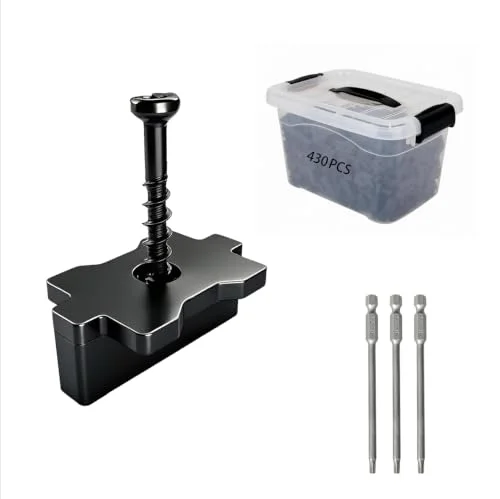 |
Stvyar 430-Piece Hidden Deck Fasteners (Composite/PT Boards) – $36.99 A 16-foot board crosses 12 joist bays, so it needs roughly double the fasteners of an 8-foot board — this 430-piece kit is sized to cover about 200 sq. ft. in one order instead of running out mid-deck.
|
16-Foot Board Prices by Material
Prices below are current big-box retail per-board pricing for a standard 2x6x16 profile (actual size roughly 1.5″ x 5.5″), before tax or delivery:
- Pressure-treated Southern yellow pine: $16-20/board at Menards (AC2, #2 Prime), $18-22 at Lowe’s (Severe Weather), $20-24 at Home Depot (WeatherShield). Ground-contact-rated boards run $2-4 more per board than above-ground grade.
- Cedar and redwood: typically 2.5-4x the price of pressure-treated pine per board, but they don’t need the chemical-treatment warnings PT lumber carries and take stain more evenly.
- Composite (Trex, TimberTech, Fiberon): roughly $4-8 per linear foot, which puts a 16-foot composite board at about $64-128 — several times a PT board, offset by a 25-50 year rot/insect warranty versus PT’s 15-25 year practical lifespan with regular resealing.
- PVC (cellular, no wood content): usually priced close to or slightly above mid-tier composite, with the best moisture resistance of the three but the least natural wood-grain texture.
If you’re comparing a specific board size or brand in more depth, we’ve broken pricing down further in two dedicated guides: 2x6x16 pressure-treated board pricing by retailer and 16-foot Trex composite cost breakdown. This guide stays material-agnostic so you can compare all four options side by side before drilling into one.
2×6 vs. 5/4×6: Which Profile Comes in 16-Foot Lengths
Decking boards show up in two common thicknesses: full 2x (actual 1.5-inch thickness) and 5/4 (actual about 1-inch thickness, sometimes called “five-quarter”). Both are widely available in 16-foot lengths, but they aren’t interchangeable on the same joist spacing. A 5/4 board is rated for 16-inch on-center joists at most, and some manufacturers still call for tighter 12-inch spacing on 5/4 composite to prevent sagging between joists. A full 2x board can span 16-inch or even 24-inch on-center spacing depending on species and grade. If your existing joists are already 16 inches on-center (the spacing that makes a 16-foot board line up in the first place), either profile works; if you’re framing new joists at 24 inches to save on lumber, you need full 2x boards, not 5/4.
How Many 16-Foot Boards a Typical Deck Needs
For a standard 5.5-inch-wide board run perpendicular to a 16-foot-deep deck, each board covers about 5.5 inches of deck width once you include a 1/4-inch to 3/8-inch expansion gap between boards (composite needs the gap; PT can run slightly tighter since it shrinks as it dries). That works out to roughly 2.1 boards per linear foot of deck width. A 12-foot-wide, 16-foot-deep deck (192 sq. ft.) needs about 25-26 sixteen-foot boards for the field, plus 10-15% extra for picture-frame borders, angled cuts, or waste — so ordering 28-30 boards for that footprint is a safer real-world number than the bare math suggests.
Board Layout Patterns and the 16-Foot Waste Factor
A straight, perpendicular layout is where 16-foot boards waste the least material, since each board runs the full depth of a 16-foot-deep deck with no field cut at all. Diagonal patterns (45-degree herringbone or picture-frame borders) cut into that advantage: every board gets trimmed at an angle at both ends, and the offcuts are usually too short to reuse elsewhere on the same deck. Budget 15-20% extra material for a diagonal layout versus the 10-15% used in the straight-run estimate above. A picture-frame border (a perimeter board running the opposite direction from the field) adds a modest amount of extra material but doesn’t multiply waste the way a full diagonal field does, since only the border boards need angled corner cuts.
For a concrete comparison: the 12-foot by 16-foot deck from the section above (about 26 field boards) costs roughly $520 in pressure-treated pine at $20/board, versus roughly $2,340 in mid-tier composite at $90/board — boards only, before fasteners, joists, or labor. That 4.5x gap in board cost is the number that usually decides which material a budget-conscious DIYer picks, even though composite wins on lifetime cost once you factor in 15+ years of PT resealing.
Fastening a 16-Foot Board Without It Bowing
The longer the board, the more it can cup or bow between fastening points if you skip a joist. Every 16-foot board should be fastened at all 13 joist crossings (the 12 bays plus both end joists) — skipping even one middle joist on a long board is the most common cause of a soft, springy spot that shows up months after installation. Face-screwing with coated deck screws works for pressure-treated wood, but composite and PVC boards are almost always installed with hidden clip fasteners instead, both for appearance and because face screws in composite can crack the capstock over time as the board expands and contracts with temperature.
Maintenance and Lifespan by Material
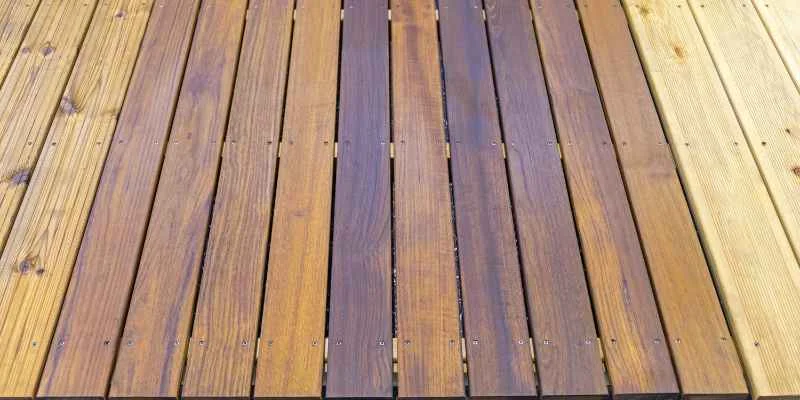
Pressure-treated boards need a fresh coat of water-repellent sealer or stain every one to three years, more often in direct southern-exposure sun, and typically last 15-25 years before individual boards need replacing. Cedar and redwood weather to a silver-gray patina if left unsealed, which some homeowners prefer, but unsealed softwood decking has a shorter service life in wet climates. Composite and PVC need no sealing or staining at all — cleaning with soap and water is the full maintenance routine — and both carry manufacturer warranties in the 25-50 year range against rot, insect damage, and structural failure, though surface fading and scratching are usually excluded from those warranties.
Frequently Asked Questions
What are 16-foot decking boards made from?
The four common materials are pressure-treated pine, cedar or redwood, wood-plastic composite (Trex, TimberTech, Fiberon), and cellular PVC. Pressure-treated pine is the cheapest and most widely stocked; composite and PVC cost more upfront but need no staining or sealing.
How much do 16-foot decking boards cost?
A 2x6x16 pressure-treated board runs about $16-24 depending on retailer and grade. A 16-foot composite board runs roughly $64-128 at $4-8 per linear foot. Cedar and redwood typically fall between the two, at 2.5-4x the price of pressure-treated pine.
Why are 16-foot boards a common length instead of 14 or 18 feet?
Joists are typically spaced 16 inches on-center, and 16 feet equals exactly 192 inches, or 12 joist bays. A 16-foot board’s end lands on a joist instead of overhanging mid-span, which is why it’s stocked more heavily than in-between lengths.
Are 16-foot decking boards suitable for DIY installation?
Yes, but a 16-foot board is heavy and awkward for one person to position alone, especially composite, which is denser than wood. Two people fastening from the center out toward each end keeps the board straight and prevents it from bowing before it’s secured.
Bottom Line
A 16-foot decking board is the length most joist layouts are already built to receive, which is why it dominates shelf space over 14- or 18-foot boards. Pick pressure-treated pine for the lowest upfront cost, cedar or redwood if you want a natural look you’re willing to reseal, or composite/PVC if you’d rather pay more once and skip the yearly maintenance. Whichever material you choose, fasten at every joist along the full 16-foot run — skipping one is the most common cause of a soft spot showing up later.
Sponsored / affiliate links. As an Amazon Associate I earn from qualifying purchases. I may earn additional commission from eligible campaigns.