DeWalt Radial Arm Saw Parts: Real Sources for Blades, Bearings & Brushes
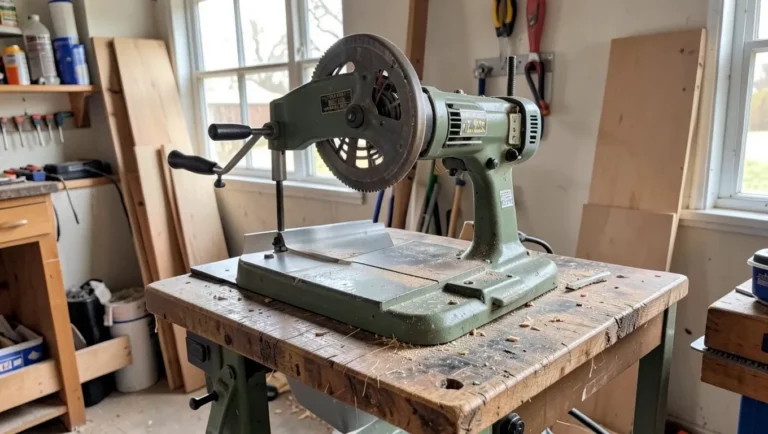
DeWalt stopped selling radial arm saws in the U.S. years ago, which means “genuine DeWalt parts” mostly don’t exist anymore for these machines – what you’re actually shopping for is compatible aftermarket parts that fit the arbor, motor, and arm assembly on your specific model.
That’s not bad news. Radial arm saws were built to last, and the parts that actually fail – blades, arbor bearings, motor brushes – are simple, standardized components that other manufacturers still make. The trick is knowing which part is causing your problem and buying the right spec, not just anything labeled “for radial arm saws.” Before you order anything, check your DeWalt radial arm saw model plate (usually riveted to the motor housing or column) so you can match arbor size and voltage.
The Blade: The One Part That Isn’t Interchangeable With a Table Saw
Best Blade for Radial Arm & Sliding Miter Saws
 |
Oshlun SBW-100060N 10″ 60T Negative-Hook Blade – $64.05 A properly-ground negative-hook blade is the one part on this list that directly affects safety, not just cut quality.
|
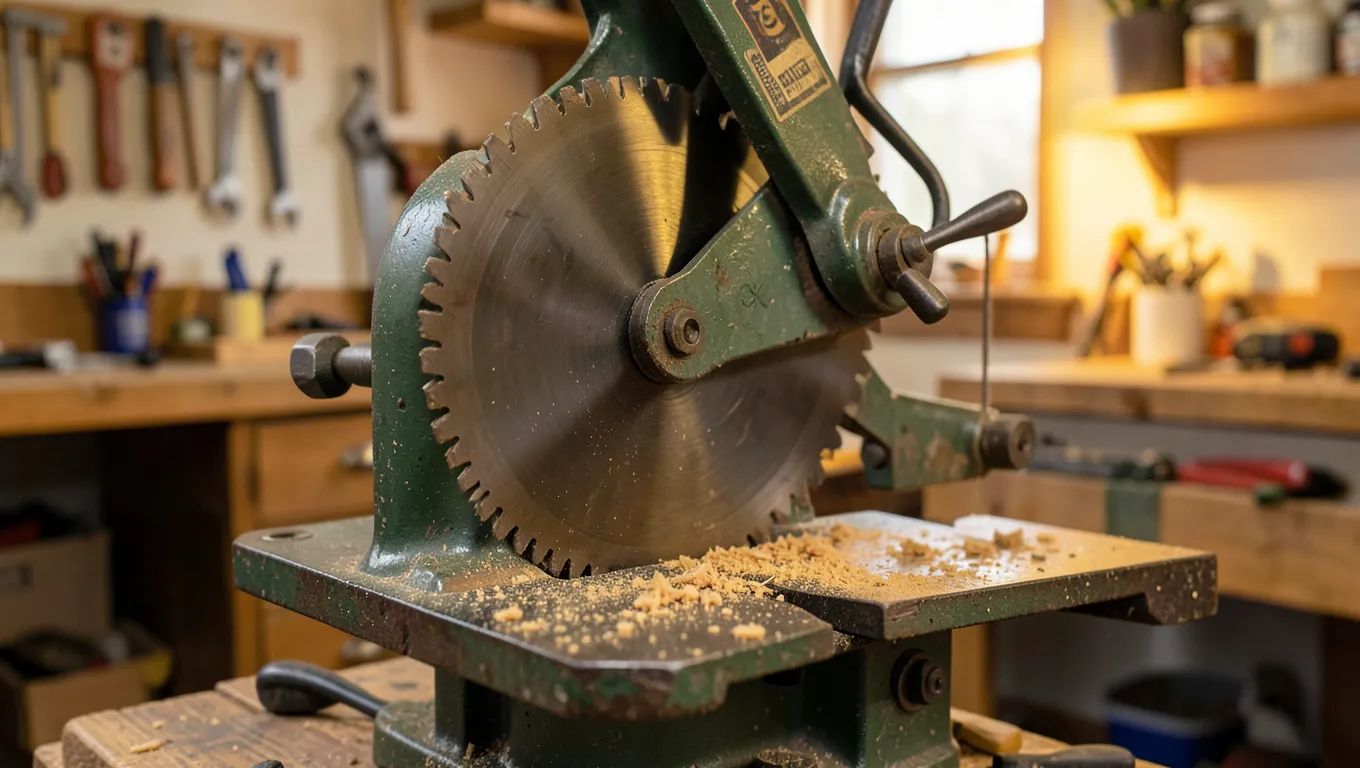
Here’s the detail most parts guides skip: a radial arm saw blade is not the same as a standard table saw blade, even at the same diameter and arbor size. On a radial arm saw, the blade pulls itself toward you as you cut, riding along the arm. A blade with a standard positive hook angle (the kind made for table saws) can self-feed aggressively on that pull-stroke – it wants to climb into the wood and grab, which is how kickback injuries happen on these saws.
The fix is buying a blade ground with a negative hook angle (typically -5°), sold specifically for “radial arm and sliding compound miter saws.” It cuts slower per pass but stays controlled instead of self-feeding. Most 10-inch DeWalt radial arm saws (the DW700-series and the older Powershop/MBF models) use a standard 5/8-inch arbor, so a quality aftermarket negative-hook blade from a brand like Forrest, Oshlun, or Freud will bolt straight on. Match tooth count to the work: 40-60 teeth for general crosscutting, 80 for glass-smooth trim and finish work.
Arbor Bearings and the Yoke: What Causes Wobble
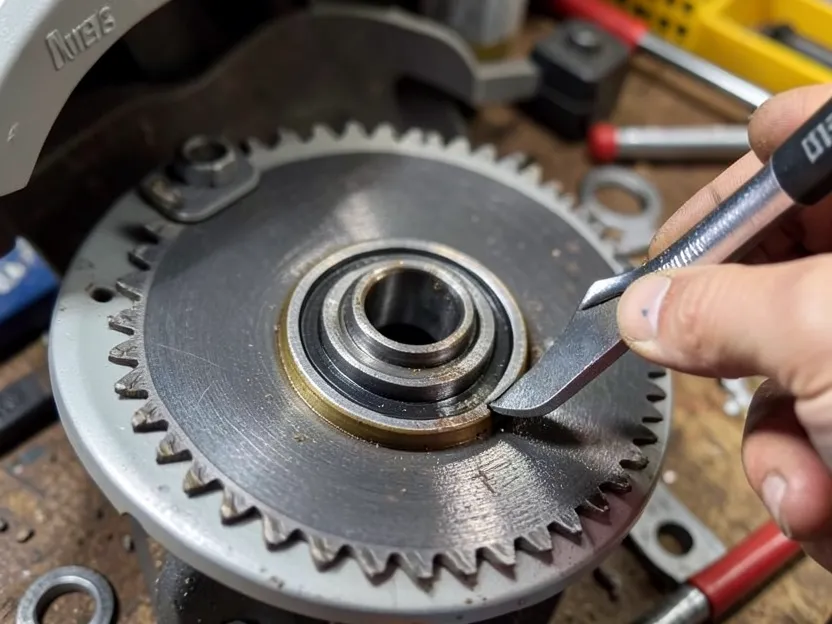
If the blade wobbles or you’re getting a wavy cut face instead of a clean one, the arbor bearings are the usual suspect, not the blade itself. These are sealed ball bearings pressed into the motor’s arbor housing, and after years of sawdust infiltration they dry out and develop play. Bearings are sold by their standard SKF/NSK-style size code (stamped on the bearing itself), so a local bearing supply house can usually cross-reference and supply a replacement for a few dollars – you don’t need a DeWalt-branded part number.
The yoke (the assembly that lets the motor rotate for miter and bevel cuts) is the other common wear point. A loose or worn yoke shows up as a saw that won’t hold a 90° crosscut angle without re-checking it constantly. Tightening the yoke’s locking bolts is a five-minute fix; if the yoke itself has worn slop in the pivot, that’s typically a sign the saw has seen decades of heavy use and a full yoke rebuild kit (sourced through a parts specialist, see below) is worth pricing against just buying a used but tighter machine.
Motor Brushes: The Cheap Part Behind an Expensive-Sounding Problem
If your saw is stalling under load, sparking visibly through the motor housing vents, or losing power intermittently, check the carbon motor brushes before you assume the motor itself is dying. Like every brushed universal motor, the two carbon brushes that transfer current to the spinning armature wear down gradually and eventually lose contact. They’re a $10-15 part, held in by spring-loaded caps on the outside of the motor housing – no disassembly of the saw required to inspect them. If a brush is worn to less than about a quarter-inch of carbon, replace both as a pair even if only one looks short.
Where to Actually Buy Parts for a Discontinued Saw
Since DeWalt itself won’t have DW700-series parts in stock, your realistic sources are: parts specialists like eReplacementParts.com and ToolPartsDirect, which stock cross-referenced bearings, brushes, and switches for older Black & Decker/DeWalt saws by model number; generic industrial bearing and blade suppliers for the standardized components; and older-tool forums (like OWWM.org) where owners of the exact same machine often know which modern part numbers cross-reference. Always search by your saw’s full model number (e.g., DW705, not just “DeWalt radial arm saw”) – parts specs changed between revisions of the same model line.
Safety Checks Before You Put It Back to Work
Before running any newly-repaired radial arm saw, confirm three things: the blade guard’s lower section still swings freely and covers the teeth at rest, the anti-kickback pawls (small spring-loaded fingers behind the blade) move freely and aren’t rusted solid, and the arm’s return spring pulls the carriage back to the column on its own after a cut – a saw that stays wherever you leave it mid-cut is a saw that can walk toward you unexpectedly. None of these are exotic parts, but they’re the ones that actually prevent injuries, and they’re worth checking every time you swap a blade, not just after a repair. A grounded dust collection hookup at the blade guard also cuts down on the sawdust that causes half of these wear problems in the first place.
Frequently Asked Questions
What are the most common DeWalt radial arm saw parts that fail?
Blades wear out or get swapped for the wrong hook angle, arbor bearings dry out and cause blade wobble, and carbon motor brushes wear down and cause stalling or sparking. All three are inexpensive, commonly-stocked parts, not DeWalt-specific components.
How do I replace a DeWalt radial arm saw blade safely?
Unplug the saw first. Lock the arbor (most saws have an arbor-lock button or you can hold the shaft with a wrench on its flat), then loosen the arbor nut – note it’s often reverse-threaded so the blade tightens itself during normal cutting. Swap in a negative-hook blade rated for radial arm/sliding miter use, torque the nut back down, and manually check that the guard still closes over the new blade before plugging back in.
Where can I buy parts for a DeWalt radial arm saw since it’s discontinued?
Parts specialists like eReplacementParts.com and ToolPartsDirect stock cross-referenced components by model number. Blades, bearings, and brushes are also sold generically by brand-agnostic suppliers since they’re standardized parts, not DeWalt-exclusive designs.
How often should I service a DeWalt radial arm saw?
Check blade condition and guard function every time you use it. Inspect motor brushes and arbor bearing play every 6-12 months of regular use, sooner if you’re noticing wobble, stalling, or sparking. Lubricate the column and arm slides per the original manual’s schedule, typically every few months of active use.
Conclusion
A discontinued DeWalt radial arm saw is still a serviceable machine – the parts that actually wear out (blades, bearings, brushes) are standardized enough that any competent supplier can match them by spec instead of by brand name. Get the blade’s hook angle right first, since that’s the one part that affects both cut quality and safety, then work through bearings and brushes only if wobble or stalling shows up.
Sponsored / affiliate links. As an Amazon Associate I earn from qualifying purchases. I may earn additional commission from eligible campaigns.