How Much Does a Replacement Power Tool Battery Cost?
Replacement power tool batteries usually cost about $40 to $150 for common 18V/20V packs, while high-capacity OEM packs can top $200; buy OEM when the tool is worth keeping, and compare battery price against a bare-tool kit when two packs get close. Buying the wrong replacement can waste money, cut runtime, or leave you stuck with a dead platform. This guide breaks down OEM, aftermarket, refurbished, and bare-tool costs, plus the failure signs that tell you which choice makes sense.
Replacement battery cost basics


A replacement battery is more than a plastic case with stored power. Power tool batteries are safety-controlled electronic assemblies, and price rises as capacity, protection circuitry, and platform support increase.
For common cordless tools, the cheapest small packs sit near the bottom of the range, while larger packs for drills, impact drivers, and grinders move upward because they hold more cells, run longer, and need more thermal and electrical protection. A replacement battery can cost nearly as much as a bare drill, impact driver, or grinder.
What you are actually paying
Lithium-ion cells are the core cost of the pack. Higher amp-hour ratings usually mean more stored energy and more cost, because the pack needs more cells or larger cells. That higher capacity also usually means more weight.
On top of the cells, you are paying for the battery management system, rugged housing, terminals, and compliance work. Tool battery packs must survive drops, dust, and repeated installation cycles, so jobsite-grade housings and contacts cost more than a bare cell bundle.
What drives battery price?
The main price drivers are easy to name and hard to ignore: cell count, protection electronics, enclosure quality, and shipping compliance. A pack that can deliver high current for a saw or grinder needs more than a simple voltage match, it needs control over heat, current, and charge limits.
Lithium-ion cells and capacity
Battery capacity is measured in amp-hours. Higher amp-hour packs usually cost more because they contain more energy storage, and that means more materials. The runtime gain is real, but it is not free, and the extra capacity can make the pack bulkier.
High-drain power tools such as drills, impact drivers, and grinders can empty a small pack quickly. A higher Ah pack usually stretches runtime and can reduce how often you swap batteries on a project.
Battery management system and electronics
What does a battery management system do in a power tool battery? It monitors voltage, current, and temperature. The BMS can stop charging or discharging when conditions move outside safe limits, and that shutdown can look like a dead battery even when some cells still hold charge.
That control matters for both safety and lifespan. Cheaper packs may show shorter runtime, inconsistent charging, or unexpected shutdowns, especially under heavy load or heat. A pack that trips early is not always “bad”; it may be protecting itself or signaling imbalance.
Housing, terminals, and jobsite durability
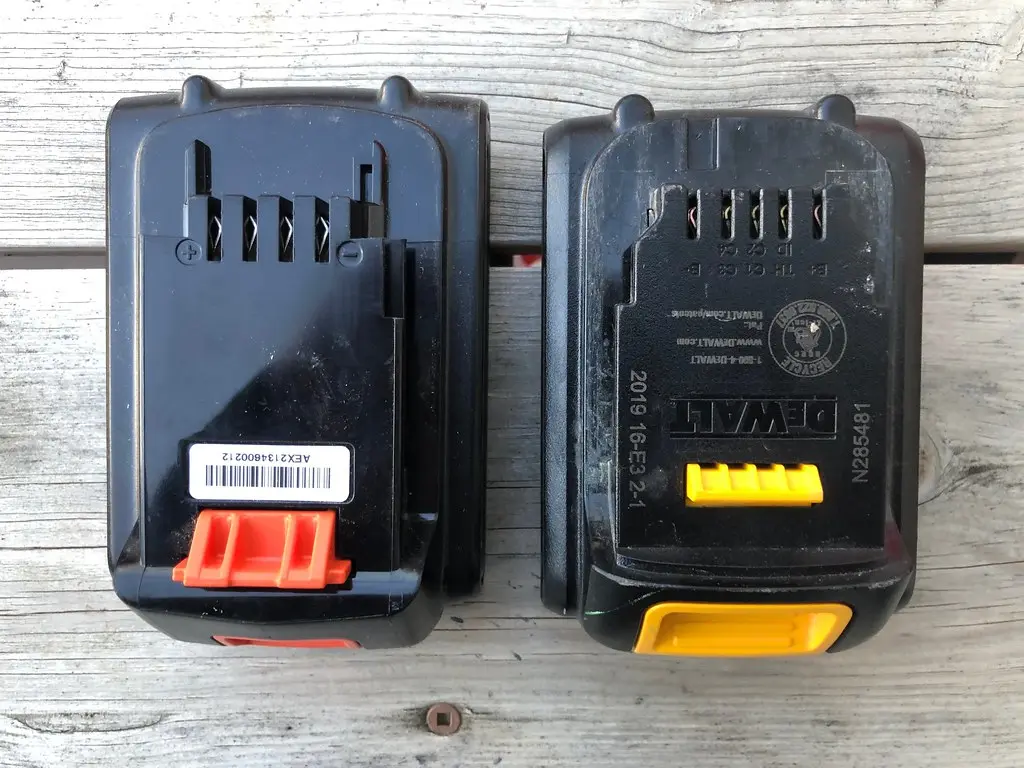
Housing and terminal design affect both cost and reliability. The case shape, latch mechanism, and contact layout all have to line up with the tool, and the battery has to keep that fit after repeated swaps, drops, and dust exposure.
Many packs also include electronic communication between battery, tool, and charger. That communication helps the charger charge correctly and helps the tool manage load and cutoff behavior.
Compliance, labeling, and shipping requirements
Lithium battery compliance and shipping add cost too. UN38.3 is relevant to lithium battery transport testing, and packaging, labeling, and safety documentation can add to the final price. Compliance references may include UL, CE, RoHS, 3C, and MSDS.
Those costs are part of why a pack sold in a sealed retail box costs more than a no-name cell assembly moved through a less controlled channel.
OEM versus aftermarket cost
OEM batteries usually cost more because they are built for a specific platform, charger, and tool family, with tighter fit and communication expectations. Aftermarket packs can be cheaper, but the savings only matter if the pack matches the tool and charger behavior closely enough to avoid nuisance shutdowns or charging faults.
Where OEM batteries cost more
OEM packs often command a premium for platform support, tighter compatibility control, and stronger quality control. Premium brands often price batteries higher because of platform support, and that is part of the cost of staying inside one cordless family.
When aftermarket packs can make sense
Aftermarket replacement batteries can make sense for older tools, backup use, or light-duty work where a lower price matters more than maximum runtime. The tradeoff is consistency. Cheaper packs may show shorter runtime, inconsistent charging, or unexpected shutdowns.
Suppose your 18V drill battery dies and the replacement price is close to a kit that includes a fresh charger and two new batteries. In that case, the kit may be the better buy because it resets the whole charging setup instead of leaving you with one old pack and one new one.
What to check before buying a non-OEM pack
- Match the voltage platform first, then verify the case shape and latch.
- Check the contact layout and any communication pins.
- Confirm charger compatibility, not just tool fit.
- Look for pack ratings that specify protection against overcharge, overheating, and overload.
- Read the shipping and compliance details for the pack, especially if it is mailed separately.
Battery cost table
The table below gives a practical price-by-capacity framework for common cordless platforms. It separates OEM, aftermarket, and replacement decisions so you can compare runtime gain against the cost of stepping up to a bare tool or kit.
| Platform | Voltage | Ah range | OEM price band | Aftermarket price band | Expected runtime impact | Buy-repair threshold |
|---|---|---|---|---|---|---|
| Compact drill/driver | 12V | 2.0 to 4.0 Ah | $35 to $90 | $20 to $55 | Light-duty runtime; best for drills and light fastening | Replace battery if the tool body is in good shape and the pack is under half the cost of a new bare tool |
| Mainstream 18V/20V platform | 18V/20V | 2.0 to 5.0 Ah | $50 to $140 | $25 to $80 | Good all-around runtime for drills, impact drivers, and trim tools | Replace battery if the pack costs clearly less than a bare tool and you already own charger and compatible accessories |
| High-capacity 18V/20V platform | 18V/20V | 5.0 to 8.0 Ah | $90 to $220+ | $45 to $120 | Longer runtime, more weight, better for grinders and longer fastening sessions | If one pack approaches the cost gap to a bare tool kit, compare the kit price before replacing |
| Heavy-duty or specialty platform | 36V and up | 4.0 to 12.0 Ah | $120 to $300+ | $60 to $170 | Long runtime, highest material cost, often used for demanding cutting or grinding | Replace only if the platform is otherwise valuable; otherwise compare against a kit or different tool family |
| Used or refurbished pack | Any matching platform | Varies | Not typical | $15 to $70 | Usually shorter and less predictable; best for low-demand backup use | Buy only when the pack is returnable and the savings are substantial versus a new aftermarket pack |
How do you spot a bad battery?
A dead-looking pack is not always a dead pack. Worn cells, a tripped BMS, or a charger fault can all look similar at the tool end, so the first step is to separate battery symptoms from charging or tool-side problems.
Symptoms of worn cells
Worn cells often show short runtime, sag under load, or a pack that seems full but empties quickly. If the battery charges and then falls flat fast under normal work, the cells may be aging rather than the charger failing.
Signs of BMS shutdown or imbalance
If the pack stops charging, stops discharging, or shuts down when it gets warm or under a heavy load, the BMS may be doing its job. The BMS can stop charging or discharging when conditions move outside safe limits.
A common first-timer mistake is to assume every shutdown means the cells are finished. A BMS can also trigger shutdowns for overload or heat, and cell imbalance can cause the pack to behave badly even when it still has some usable energy.
When the charger or tool is the real problem
How do I know if I need a new battery or just a charger? Start by testing the same pack in another compatible charger, then test a known-good battery in the same tool. If one battery fails on two chargers, the pack is suspect. If two batteries fail in one tool, the tool may be the issue.
Why compatibility matters
How can I tell if a battery is compatible with my tool and charger? Voltage alone is not enough. Case shape, contact layout, latch mechanism, and electronic communication between battery, tool, and charger all matter, and the wrong combination can fit physically but still fail to charge or run.
Case shape and latch fit
Two packs can share the same voltage and still use different shells. If the rails, latch, or base shape differ, the battery may not lock in securely or may wobble enough to interrupt power under load.
Contact layout and communication pins
Some packs need more than power and ground contacts. Extra pins can carry temperature, identification, or communication signals. If those signals do not match the charger or tool, the pack may refuse to charge or the tool may shut down early.
Say your 20V pack slides into a tool from the same brand but a different line. It may still fail because the contact pattern or communication logic is different, even though the voltage matches on paper.
Should you replace the battery or the tool?
Is it cheaper to buy a bare tool than a replacement battery? Often yes, once a high-capacity OEM pack gets close to the price gap between a battery and a bare tool. If the tool body is aging too, a bare-tool swap or full kit can be better value than sinking money into one expensive pack.
When a bare tool is the better buy
Choose the bare tool when the current battery is expensive, the tool itself is worn, or you already have multiple compatible batteries. If the new battery would cost nearly as much as a bare drill, impact driver, or grinder, the tool-only route may deliver more useful value.
When a kit makes more sense
Choose the kit when you need a charger refresh, a second battery, or a platform reset. Kits can be especially useful if the old charger is slow, unreliable, or incompatible with newer pack electronics.
How to judge platform lock-in
Platform compatibility affects replacement cost because once you buy into a battery family, you are often tied to its voltage platform, contact design, and charging logic. That lock-in can work in your favor if you already own several tools, but it can make a single replacement pack feel expensive.
Frequently asked questions
How much does a replacement power tool battery cost?
For common 18V/20V cordless tools, replacement batteries often land around $40 to $150, with higher-capacity OEM packs moving above that. Smaller 12V packs are usually cheaper. The exact price depends on capacity, brand platform, charger compatibility, and whether you buy OEM, aftermarket, or refurbished.
Why are power tool batteries so expensive?
The pack contains lithium-ion cells, a BMS, rugged housing, terminals, and compliance-related costs. The BMS monitors voltage, current, and temperature, and the pack must survive repeated use, charging, and jobsite abuse. Higher capacity means more materials, more weight, and usually a higher price.
Is it cheaper to buy a bare tool than a replacement battery?
Sometimes yes. If a high-capacity OEM battery is close to the price of a bare drill, impact driver, or grinder, the bare tool can be the better value. That is especially true when the current tool is older, worn, or near the end of its useful life.
What affects the price of a cordless tool battery?
Voltage, amp-hour rating, cell quality, BMS complexity, housing durability, and platform-specific compatibility all affect price. Shipping compliance and certification can add cost too. A physically similar pack can still be wrong if the latch, contacts, or communication pins do not match your tool and charger.
How do I know if I need a new battery or just a charger?
Test the pack in another compatible charger, then test a known-good battery in the same charger and tool. If one pack fails across chargers, the battery is suspect. If several batteries fail in one charger or tool, the charger or tool may be the real problem.
Are aftermarket replacement batteries worth it?
They can be, especially for older tools, backup use, or light-duty work. The tradeoff is that cheaper packs may show shorter runtime, inconsistent charging, or unexpected shutdowns. Buy aftermarket only when the pack matches the platform closely and the savings are large enough to justify the risk.
Sponsored / affiliate links. As an Amazon Associate I earn from qualifying purchases. I may earn additional commission from eligible campaigns.