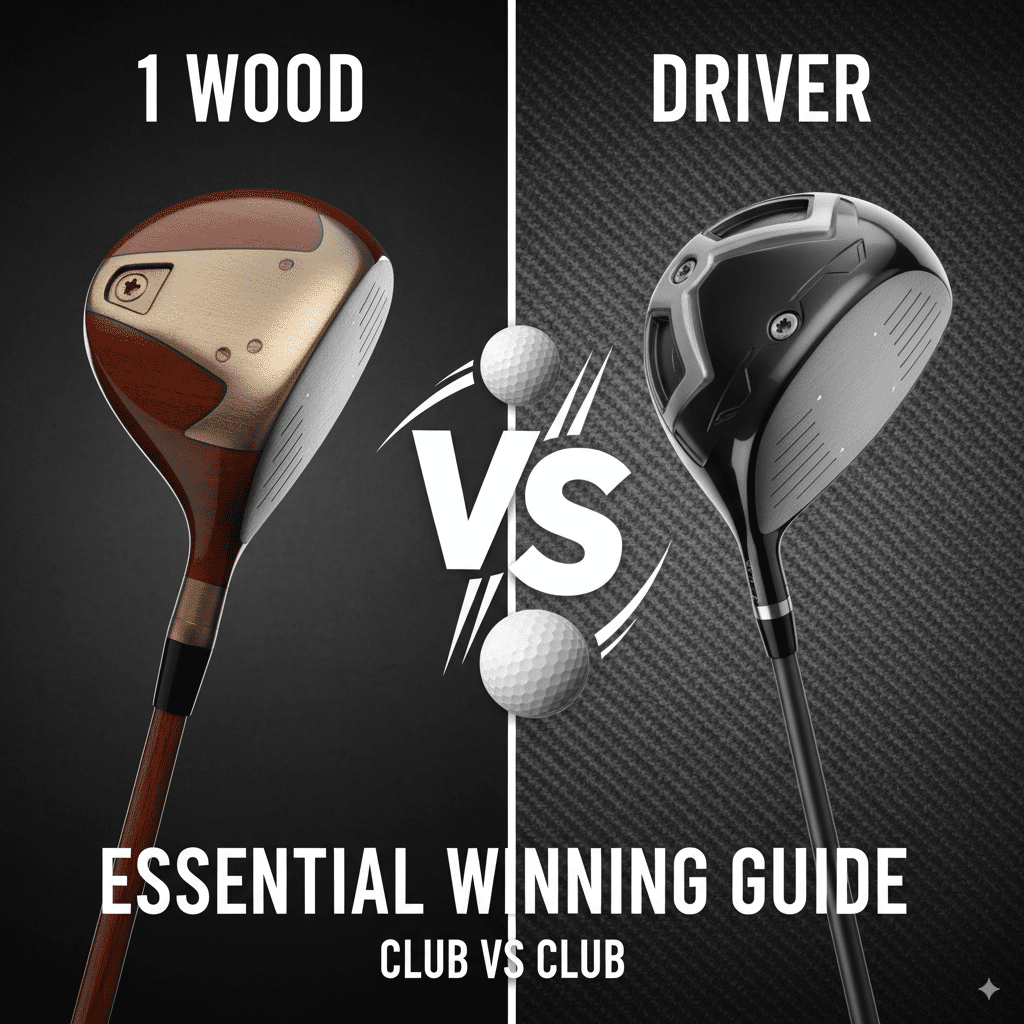
Discover 1 Wood vs Driver: Essential Winning Guide
Learn the key differences between a 1 wood (often called a driver) and other woods in golf. Understand their roles for distance, accuracy, and loft. This guide helps you choose and use them effectively for a better game.
Choosing the right golf club can feel a bit like navigating a maze, especially when you’re just starting. You’ve probably heard terms like “1 wood” and “driver” thrown around, and maybe you’re wondering if they’re the same thing, or if there’s a winning difference. It’s a common point of confusion for many new golfers, leading to frustration on the tee box. Don’t worry! We’re here to clear things up with simple explanations and practical tips. By the end of this guide, you’ll know exactly when to reach for your biggest club and how to make it work for you. Let’s get your game on the right fairway!
Understanding Your Big Stick: The 1 Wood (Driver)
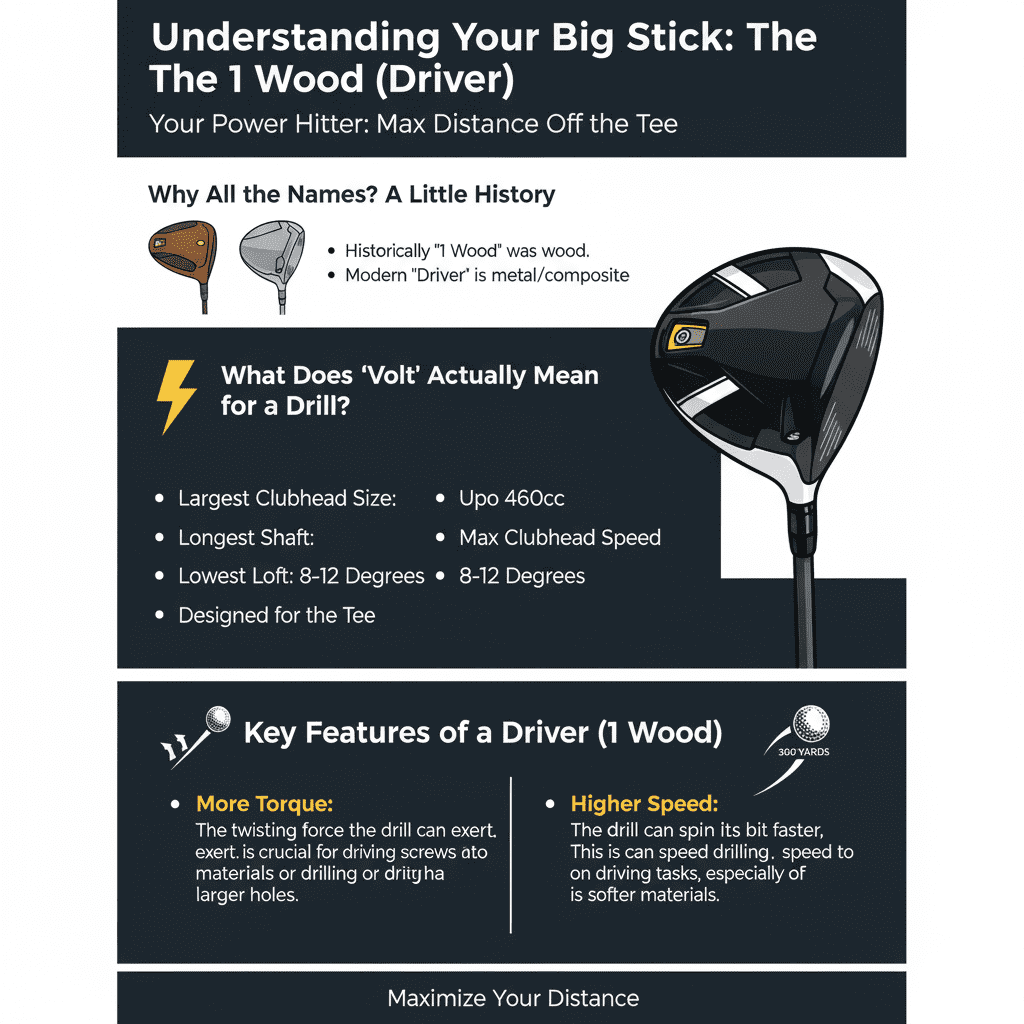
The “1 wood” is, in essence, what most golfers today call a “driver.” It’s the longest and largest club in your bag, designed for one primary purpose: to hit the ball the furthest possible distance off the tee. Think of it as your power hitter. Its head is typically the largest allowed by golf’s rules, often around 460 cubic centimeters, along with the longest shaft. This combination creates the most clubhead speed, translating to more yards down the fairway.
Why All the Names? A Little History
Historically, golf clubs were made of persimmon wood, and the largest club was simply referred to as the “1 wood.” As technology advanced and metal and composite materials replaced traditional wood, the design features changed significantly. While the purpose remained the same – maximum distance – the shape and materials evolved. So, while you might still hear older golfers refer to their driver as a “1 wood,” it’s the same club designed for the same job. The term “driver” became more common as the design moved away from actual wood.
Key Features of a Driver (1 Wood)
Here’s a breakdown of what makes a driver unique:
- Largest Clubhead Size: Typically the maximum allowed (460cc) to maximize forgiveness and the “sweet spot.”
- Longest Shaft: Contributes to higher swing speeds. Standard lengths can vary, but they are generally longer than any other club in your bag.
- Lowest Loft: Drivers usually have the lowest loft angles among all clubs (often ranging from 8 to 12 degrees). This is crucial for launching the ball high and far with minimal backspin.
- Designed for the Tee: It’s primarily used with a tee to elevate the ball for optimal contact and launch conditions.
Beyond the Driver: Other Fairway Woods
While the 1 wood (driver) commands attention for its power, fairway woods play a crucial supporting role. These clubs are designed for versatility, offering a balance between distance and control, and they are excellent for shots from the fairway or off the tee when you need more accuracy than raw distance.
The 3 Wood: Your Versatile Workhorse
The 3 wood is the next largest and longest club in the fairway wood family after the driver. It’s a fantastic club for players who want significant distance but with a bit more control than a driver can offer.
- Slightly Smaller Head: Generally smaller than a driver’s head, making it a little easier to control.
- Shorter Shaft: The shaft is shorter than a driver’s, which contributes to better swing consistency and accuracy.
- Higher Loft: Typically has a loft between 13 and 17 degrees. This higher loft helps launch the ball more easily and with more spin, aiding control.
- Versatile Use: Great for long shots from the fairway, approach shots from the fairway, and from the tee when accuracy is paramount or when the driver feels too difficult to manage.
The 5 Wood: Forgiveness and Approach Shots
The 5 wood is even more forgiving and easier to hit than the 3 wood. It’s a great option for players looking for height and a reliable landing when hitting from the fairway or for those who struggle to get the ball airborne with longer clubs.
- Even Smaller Head: The head is smaller still, promoting confidence.
- Shorter Shaft: Further reduction in shaft length compared to the 3 wood.
- Higher Loft: Typically features lofts between 17 and 21 degrees. This provides a high launch angle and significant stopping power on the green.
- Excellent for Fairways: Ideal for approach shots from the fairway, especially when you need to carry hazards or stop the ball quickly.
Other Fairway Woods (7 Wood, 9 Wood, etc.)
You might also see 7 woods, 9 woods, and even higher numbers. These clubs have progressively shorter shafts and higher lofts, making them increasingly easy to hit repeatedly. They are essentially long irons with a more forgiving clubhead design.
- Shortest Shafts: Easiest to control.
- Highest Lofts: Easiest to get airborne.
- Best for Finesse: Used for specific approach shots where precise distance and a high trajectory are needed, or for players who prefer them over long irons.
1 Wood vs Driver: The Nuance Explained
As we’ve touched upon, the terms “1 wood” and “driver” are largely interchangeable in modern golf. The “1 wood” is the historical designation, while “driver” is the current, descriptive name for the longest club in the bag, designed to “drive” the ball impressive distances. When you look at a set of golf clubs for sale today, you won’t typically find a club simply labeled “1 wood.” Instead, it will be called a “Driver,” often with a specification like “10.5°” (referring to its loft).
The key difference isn’t what club it is, but how it’s designed and used. Every driver is essentially a 1 wood. However, not all clubs meant for distance are drivers. The fairway woods (3, 5, 7, etc.) are also “woods” in nomenclature, but they are not drivers because they are designed with different lofts, shafts, and head sizes for different purposes.
Key Differences in Performance and Usage
| Feature | Driver (1 Wood) | Fairway Woods (3, 5, etc.) |
|---|---|---|
| Primary Purpose | Maximum distance off the tee. | Distance with more control; versatile from fairway and tee. |
| Clubhead Size | Largest (up to 460cc). | Smaller than driver, typically 150-200cc. |
| Shaft Length | Longest (e.g., 45-46 inches). | Shorter than driver (e.g., 43 inches for 3-wood, 42 inches for 5-wood). |
| Loft | Lowest (8-12 degrees common). | Higher (13-17 degrees for 3-wood, 17-21 degrees for 5-wood). |
| Forgiveness | Maximised by size, but difficulty can arise from length/low loft. | Generally more forgiving for shorter swings; higher loft aids launch. |
| Typical Use | Tee shots when maximum distance is desired and accuracy is less critical. | Tee shots for accuracy, long approach shots from the fairway. |
Choosing the Right Club for You: Driver vs. Fairway Wood
The decision between using your driver or a fairway wood often comes down to your skill level, the hole’s layout, and what you feel most confident with.
When to Choose Your Driver (1 Wood)
Long, Wide Fairways: If you have a clear, wide-open path and want to maximize every potential yard.
Short Par 4s: When you’re trying to reach the green or get as close as possible in one shot.
Confidence Swings: If you have a smooth, consistent swing that generates good clubhead speed.
High Handicappers/Beginners (with caution): While it’s the longest club, many beginners find the driver difficult to control. If you consistently slice or hook your driver, or can’t get it airborne easily, consider a 3-wood or even a 5-wood off the tee.
When to Choose a Fairway Wood (3 Wood, 5 Wood)
Tight Fairways: When accuracy is more important than pure distance. A shorter shaft and higher loft generally lead to more control.
Doglegs: If the hole turns sharply and a straight, long drive would put you in trouble, a fairway wood can help shape your shot or simply keep you in play.
Windy Conditions: A 3-wood or 5-wood, with their higher lofts, can be easier to control in strong winds than a driver.
When the Driver Isn’t Working: If you’re struggling with your driver, switching to a 3-wood for a few holes can often help you regain confidence and tempo.
Long Approach Shots: A 3-wood or 5-wood is excellent for reaching par 5 greens in two, or for long carries over hazards from the fairway.
Mastering the Technique: Driver and Fairway Wood Swings
The fundamental swing motion is similar for all clubs, but the setup and execution differ slightly to optimize performance for each club.
Driver Setup and Swing Tips
The driver is designed to be hit on the upswing, which helps create that powerful, long ball flight.
Setup:
- Ball Position: Place the ball forward in your stance, typically off the inside of your lead heel.
- Stance Width: A wider stance provides a stable base.
- Body Tilt: Slightly tilt your shoulders away from the ball. Your lead shoulder should be higher than your trail shoulder. This encourages an upward strike.
- Grip: Hold the club at the end of the longest shaft.
Swing:
- Focus on a smooth, full backswing.
- During the downswing, aim to strike the ball just after your club reaches its lowest point (meeting the ball on the upswing).
- Finish with a balanced, full follow-through, ensuring your weight has transferred to your lead side.
Fairway Wood Setup and Swing Tips
Fairway woods need to be struck more “squarely” or with a slight descending blow compared to the driver, though still with an emphasis on not “scooping” the ball.
Setup:
- Ball Position: Move the ball back slightly in your stance compared to the driver, generally aligned with the midpoint of your stance or just forward of it.
- Stance Width: Slightly narrower than your driver stance.
- Body Tilt: Less tilt than with the driver. Aim for a more level swing plane.
- Grip: Hold where you feel most comfortable and in control – this will be higher up the longer shaft than your driver for many.
Swing:
- Focus on a controlled, powerful rotation of your body.
- Think about hitting “through” the ball rather than “at” it. A slight descending blow is often ideal, especially for the 3-wood.
- Maintain balance throughout the swing and finish with a smooth, complete follow-through.
Loft and its Impact: Getting the Ball Up and Down the Fairway
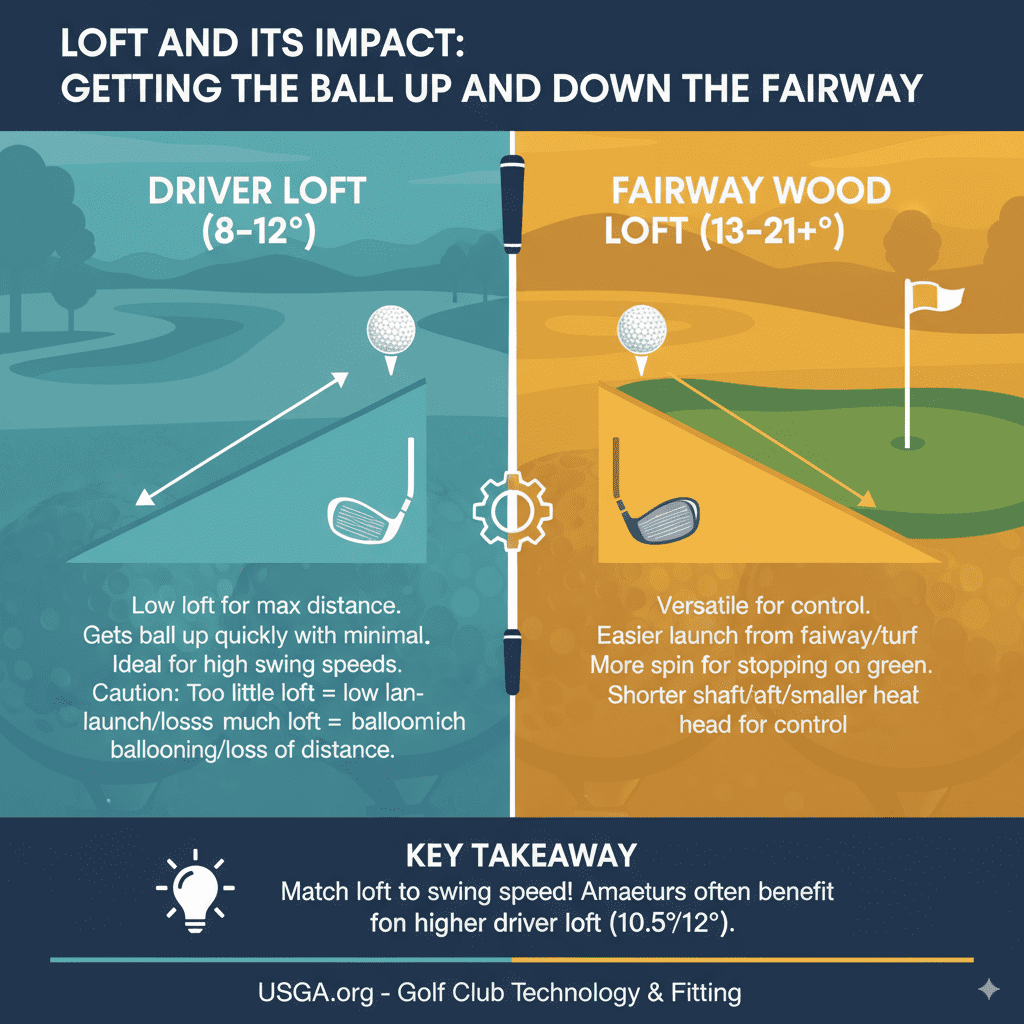
Loft is the angle of the clubface relative to the shaft. It dictates how high the ball will launch into the air and how much spin it will have. This is a crucial differentiator between a driver and fairway woods.
Driver Loft
A driver’s low loft (8-12 degrees) is designed to get the ball up quickly and with minimal spin at very high speeds. This combination creates the furthest possible carry and roll. However, too little loft for a player’s swing speed or tempo can result in the ball launching too low, leading to a loss of distance or hooks. Too much loft can cause a ballooning effect, where the ball loses distance by going too high with excessive spin.
Fairway Wood Loft
The higher loft of fairway woods (13-21+ degrees) is what makes them versatile.
Higher Launch: Easier to get the ball airborne, crucial for shots from the fairway where the ball is sitting on the turf.
More Spin: This increased spin helps to stop the ball more quickly on the green, which is vital for approach shots.
Control: The combination of higher loft, shorter shaft, and smaller head makes them more controllable for many players compared to a driver.
Understanding loft is key to selecting clubs that match your swing. For instance, many amateur golfers benefit from a driver with more loft (like 10.5 or 12 degrees) than a tour professional might use, simply because their swing speeds are lower, and they need help getting the ball airborne.
You can find excellent resources on golf club technology and fitting on sites like the United States Golf Association (USGA), a governing body for golf that sets equipment standards.
Common Mistakes and How to Avoid Them
Beginners often make similar mistakes when dealing with their longest clubs. Knowing these can save you strokes and frustration.
Common Driver Mistakes
Over-swinging: Trying to “murder” the ball rarely works. Focus on smooth, controlled acceleration.
Poor Ball Position/Setup: Not setting up correctly for an upward strike is a common cause of low, weak shots or slices.
Trying to “Lift” the Ball: The swing path should create the upward strike, not a scooping motion.
Treating it Like an Iron: A driver requires a different swing thought than your irons.
Common Fairway Wood Mistakes
“Scooping” the Ball: Trying to lift the ball up, especially from the fairway, often leads to thin hits or tops.
Hitting Down Too Steeply: While you want a slight descending blow, hitting too steeply can cause thinned shots or chunks.
* Improper Lie: Trying to hit a fairway wood from very thick rough can be challenging.
FAQ: Your Burning Questions Answered
Q1: Is a 1 wood the same as a driver?
A1: Yes, in modern golf terminology, the “1 wood” is what we now call the “driver.” It’s the longest and typically largest club in the bag, designed for maximum distance.
Q2: Why is the driver so hard to hit for beginners?
A2: The driver’s long shaft and low loft require a specific swing to achieve consistent contact and an optimal launch angle. Many beginners struggle to generate enough clubhead speed or make solid contact with the longer club.
Q3: How far should a beginner hit a 3 wood compared to a driver?
A3: A 3 wood will generally go shorter than a driver, often by 10-20 yards or more, depending on the golfer’s swing. It offers more control due to its shorter shaft and higher loft.
Q4: Can I use a 3 wood off the tee on every hole?
A4: Absolutely! Many golfers, including professionals, opt for a 3 wood off the tee on holes where accuracy or shaping the shot is more important than maximum distance. It’s a perfectly acceptable and often smart choice.
Q5: How can I tell if I need more or less loft on my driver?
A5: If your drives are consistently launching very low and not carrying far, you might have too little loft or be hitting down on the ball too much. If your drives go very high and then drop quickly with little roll, you might have too much loft or are hitting up too steeply on an already high-lofted club.
Q6: Are fairway woods useful for beginners?
A6: Yes, very much so! A 5 wood or even a 7 wood can be much easier for a beginner to hit consistently from the fairway than long irons. They provide a higher launch and more forgiveness, making them great confidence builders.
Q7: When should I consider getting custom fitted for a driver or fairway wood?
A7: Custom fitting is beneficial for all skill levels, but especially for beginners who are developing their swing. A fitter can help you find the right shaft length, flex, weight, and clubhead loft that best suits your swing mechanics, maximizing your potential for distance and accuracy.