Wood Floor and Cabinet Combinations That Work (With a Pairing Chart)
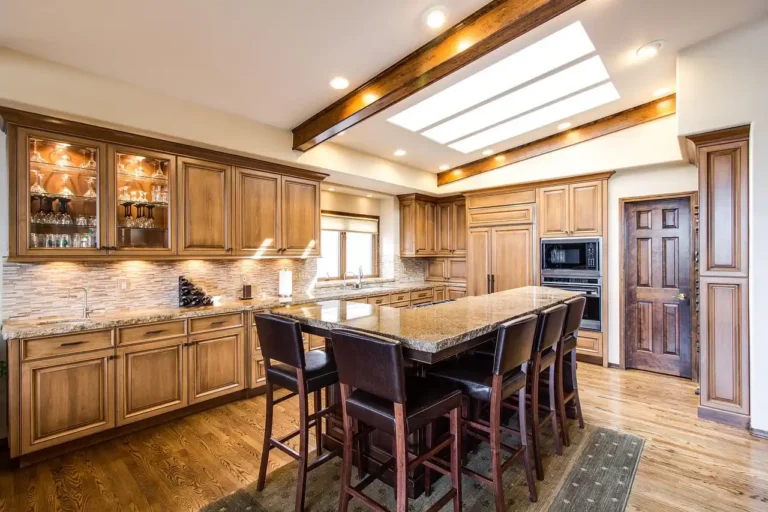
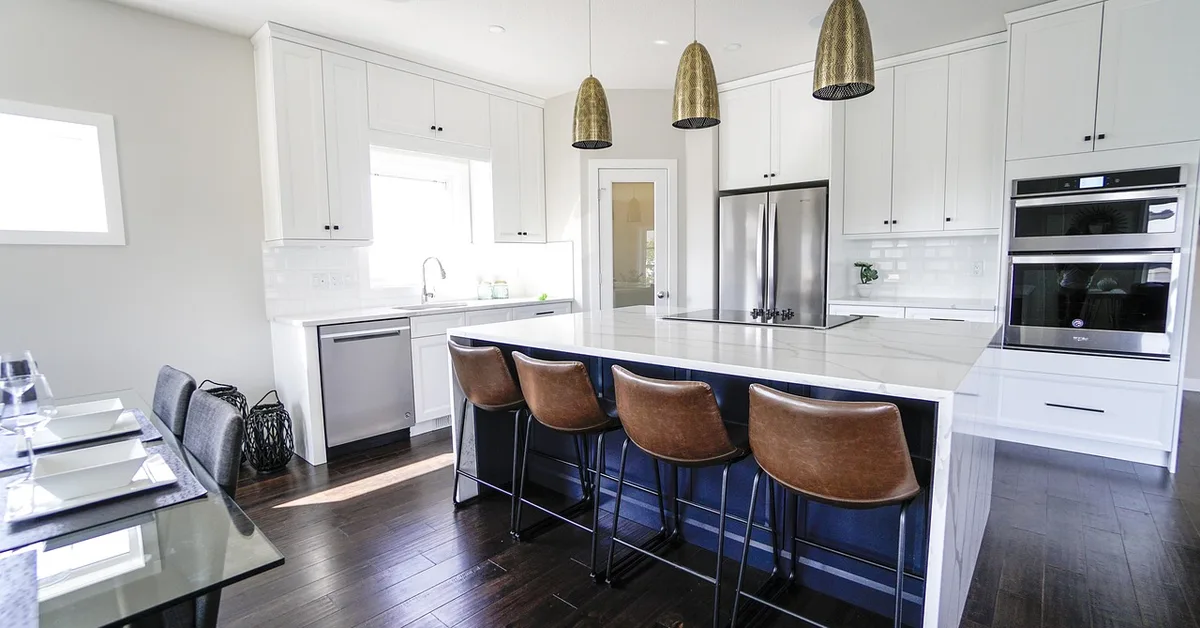
The best wood floor and cabinet combinations are the ones with a clear, deliberate difference in tone: light floors with dark cabinets, dark floors with light or painted cabinets, or a medium floor with white. What rarely works is a near-match, where the floor and cabinets are almost the same color but not quite. This guide explains how to judge undertone, which pairings to start with, how many wood species to use in one room, and a few mistakes to avoid. If your cabinets are honey oak, see our guide to honey oak cabinets with grey wood floors.
The Short Answer: Contrast Beats Matching
Best Touch-Up Marker Pick
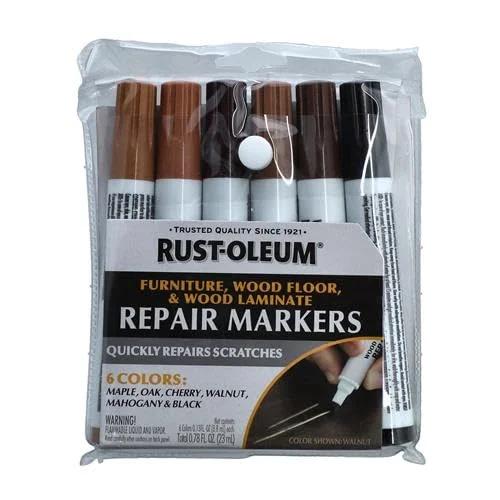 |
Rust-Oleum Wood Stain Repair Marker Kit (6 Colors) – $12.99 Once the floor and cabinets are in, a small scuff on a toe kick or a floor scratch next to a cabinet base is the first thing that breaks a good pairing. This kit covers maple, oak, cherry, walnut, mahogany and black.
|
The common advice to match your floors to your cabinets is a myth worth dropping. Wood is a natural material, so two boards stained to the same name will almost never land on exactly the same shade, and the result looks like an attempt that missed. Designers interviewed by the American Hardwood Information Center put it simply: with dark cabinets, go lighter on the floor, and with light cabinets, go the other way. Their warning is that near-misses do not work, so there needs to be enough difference that it looks intentional.
That gives you three workable strategies. Contrast the value (light against dark). Match the undertone while changing the depth (a warm honey floor under deep walnut cabinets). Or let painted cabinets carry the color and keep the floor as the one visible wood in the room.
Start With Undertone, Not Paint Color
Wood tones fall into warm (yellow, orange, red), cool (gray-brown, ashy) and neutral (tan, wheat) families. The most common clash is a cool-toned floor next to warm cabinets, or the reverse. Before you compare shades, sort each wood by undertone and keep both pieces in the same temperature family. The table lists common domestic species with Janka hardness figures from the standard hardness test. Undertone is a typical description only, since stain and finish move it.
| Species | Janka hardness (lbf) | Typical undertone | Better as |
|---|---|---|---|
| Black cherry | 950 | Red-orange, deepens with light exposure | Cabinets |
| Black walnut | 1,010 | Dark brown, sometimes purple-gray | Cabinets or accent |
| Northern red oak | 1,290 | Warm, pink to orange | Floor |
| White ash | 1,320 | Pale, light tan | Floor or cabinets |
| White oak | 1,360 | Yellow-tan to neutral brown | Floor |
| Hard maple | 1,450 | Creamy, very light | Floor or cabinets |
| Hickory | 1,820 | Strong light and dark variation, warm | Floor |
The hardness column is the part most pairing guides skip, and it changes which wood plays which role. A floor takes dropped pots and chair legs every day, so a harder species such as maple, white oak or hickory is the usual floor choice. Cabinets are not walked on, so softer, richer woods like cherry and walnut earn their place there. That is why walnut cabinets over oak floors is such a common pairing: each species is doing the job it suits.
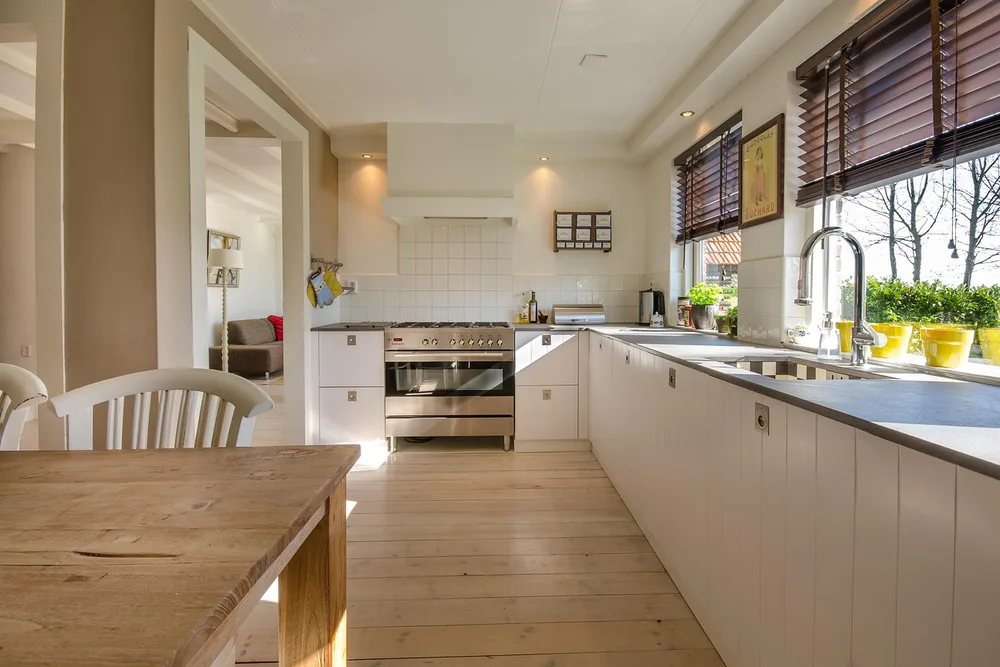
Wood Floor and Cabinet Combinations That Work
Use the chart as a starting point, then check real samples in your own light. Each row follows the contrast-or-undertone logic above.
| Floor | Cabinets | Why it works |
|---|---|---|
| Light oak or maple | Deep walnut or espresso stain | Clear value contrast, and both sit in the warm family |
| Medium white oak | White shaker, painted | Paint lets the grain stay the focus without a wood-tone clash |
| Dark walnut-stained floor | White or soft gray painted | Strong light-dark split, bright room with a grounded floor |
| Hickory with mixed tones | Painted sage or navy | Busy floor, calm cabinets |
| Medium oak | Stained cherry | Both warm, but cherry is clearly deeper, so it reads as a choice |
| Natural maple | Black or charcoal | Modern, high contrast, shows off the pale floor |
| Hand-scraped oak | Smooth, flat-panel maple | Texture contrast: rough floor against clean cabinets |
If the floor is oak and the walls are still undecided, our guide to the best wall colors for oak floors pairs well with this chart.
How Many Wood Species Is Too Many?
Cabinet makers who write about combining woods in kitchens recommend limiting a kitchen to two or three species, because past that the room looks cluttered. A workable plan is one dominant wood (usually the floor), one supporting wood (cabinets or an island) and an optional accent such as a butcher block counter or floating shelves in walnut or white oak.
- Repeat an undertone. If the floor is a warm oak, a warm cherry island ties in. A cool gray-brown island will not.
- Vary grain, not just color. Straight, tight grain on cabinets against a bolder, cathedral-patterned floor separates the two without needing a new stain.
- Contrast the sheen. Glossy cabinets look best against a matte or hand-scraped floor, and the reverse also works.
- Test samples flat on the floor. Lay the cabinet door sample on the floor in the room, not propped upright, because light hits horizontal and vertical surfaces differently.
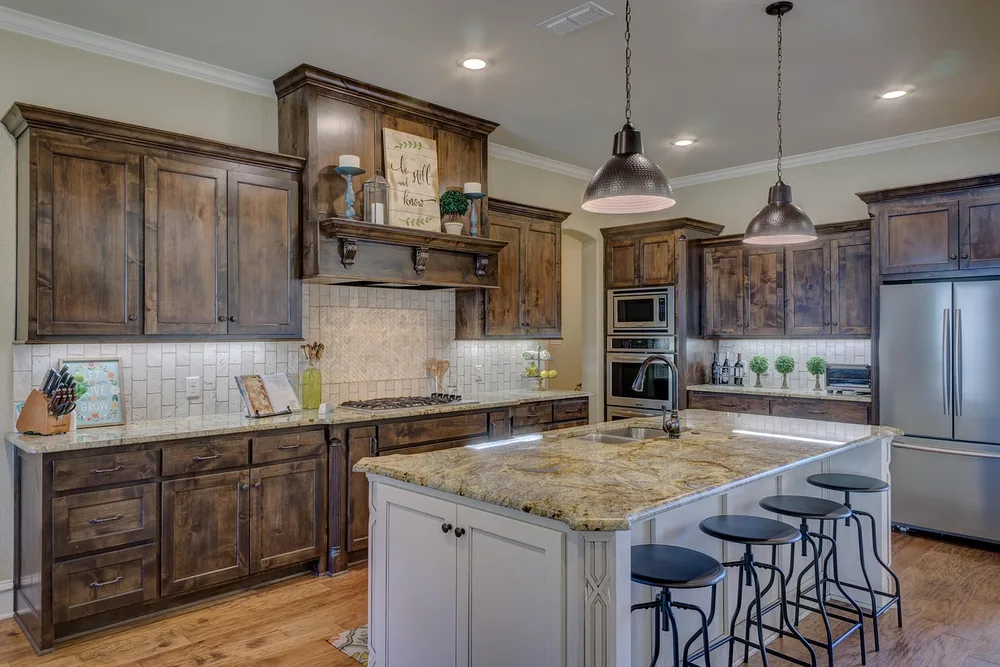
Light Floors, Dark Floors and Small Rooms
Light floors with white or pale cabinets open up a narrow kitchen, which is why that pairing dominates small-space advice. Dark floors with white cabinets give the strongest contrast and stay bright if the walls are light. Dark floors also tend to show dust, pet hair and scratches more readily, and a deep stain does not make the wood any harder. Species hardness is what limits dents, so a dark floor in a softer wood still needs the same care as a pale one.
Dark cabinets over a dark floor is the combination to be careful with. When the two are close in value, the cabinets visually sink into the floor. If you want both dark, use a lighter countertop and backsplash to separate them.
Mistakes to Avoid When Pairing Wood Floors and Cabinets
- Chasing an exact match. A floor that is nearly the cabinet color looks like an error, as the designers quoted above point out.
- Mixing temperatures. Cool gray floors with orange-red cabinets clash, even when the lightness is right.
- Choosing from small chips under store lighting. Take samples home and check them morning and evening.
- Using four or five woods. Stop at two or three species.
- Ignoring the transition. If the kitchen floor continues into the next room, the new cabinet color has to work with both spaces.
Protecting the Pairing: Moisture and Care
Kitchens put wood next to sinks and dishwashers, so moisture control matters as much as color. National Wood Flooring Association guidance, repeated by flooring suppliers, calls for an indoor relative humidity of 30 to 50 percent and a temperature of 60 to 80 degrees Fahrenheit to keep a hardwood floor stable. Wipe spills promptly, use a wood-safe cleaner, and put felt pads under chairs. Our guide on how to care for hardwood floors covers daily upkeep, and the wood flooring guide compares species and installation types.
If you are still deciding on species for either piece, the types of wood guide lists common hardwoods and their typical uses.
Sources: American Hardwood Information Center and DesLaurier for design guidance, and the Janka hardness test for hardness values.
FAQs
What are the best wood floor and cabinet combinations for a small kitchen?
Light floors with light cabinets keep a small kitchen bright, but the pairing still needs a visible step in tone so the two do not blur together. Pale oak or maple floors with white or soft gray cabinets are the safest choice. Dark floors with white cabinets also work, as long as the cabinets and walls stay light.
Should wood floors match wood cabinets?
No. Designers quoted by the American Hardwood Information Center say near-misses do not work, so the safer rule is to make the two clearly different: lighter floors under dark cabinets, or darker floors under light cabinets.
Can I mix different wood species in one kitchen?
Yes, but keep it to two or three species at most. Pick one dominant wood, repeat its undertone in the second, and let different grain patterns or sheens do the separating instead of a slightly different stain.
Do dark wood floors go with dark wood cabinets?
Rarely. When both are dark and close in value, the room loses depth and the cabinets sink into the floor. If you love both dark, separate them with a lighter countertop or backsplash, and keep the undertones in the same temperature family.
Are painted cabinets a good match for wood floors?
Yes. White, cream, soft gray, sage and navy painted cabinets work with most wood floors because the paint removes the wood-tone competition. Check the paint’s undertone against the floor, since a cool gray beside a very orange oak floor can look off.
Sponsored / affiliate links. As an Amazon Associate I earn from qualifying purchases. I may earn additional commission from eligible campaigns.