What Is a Craftsman in Wood Called? 8 Real Trade Titles
A craftsman in wood is most often called a woodworker — but the exact title changes with the job: carpenters build structures on-site, joiners assemble furniture and doors in a shop, and cabinetmakers finish fine cabinetry. Using the wrong title undersells real specialized skill, since a carpenter and a cabinetmaker rarely do the same work. This guide covers 8 real wood-trade titles, what separates a joiner from a carpenter, and where woodcarvers, turners, and luthiers fit in.
Quick Answer
The general term is woodworker. More specific titles include carpenter (builds structures on-site), joiner (assembles furniture and doors in a shop), cabinetmaker (fine cabinetry and storage), woodcarver (sculptural work), turner (lathe-shaped pieces), and sawyer (mills lumber). The right title depends on where someone works and what they actually build.
The 8 Real Titles for a Wood Craftsman
“Craftsman in wood” isn’t an official job title — it’s a general description. The trade itself uses more precise names, and each one signals a different set of skills, tools, and workplaces. The table below lists the eight titles you’ll actually run into, from the broadest term to the most specialized.
| Title | Works Where | What They Make | Key Skill or Tool |
|---|---|---|---|
| Woodworker | Shop or site | Any wooden product (general term) | Broad woodworking skills |
| Carpenter | On-site (construction) | Framing, walls, roofs, doors | Structural, rough-cut building |
| Joiner | Workshop | Furniture, windows, doors | Mortise-and-tenon, dovetail joints |
| Cabinetmaker | Workshop | Cabinets, fine furniture | Tight tolerances, fine finishing |
| Woodcarver | Studio or shop | Sculpture, figures, ornamentation | Chisel and knife carving |
| Turner | Workshop (lathe) | Bowls, spindles, chair legs | Lathe-turning |
| Sawyer | Sawmill | Milled lumber and boards | Operating saws and sawmills |
| Luthier | Workshop | Guitars, violins, stringed instruments | Acoustic precision joinery |
Carpenter vs. Joiner vs. Cabinetmaker: What Actually Separates Them
These three titles get confused most often because the work overlaps. The real dividing line is where the work happens and how much precision it demands, not the wood itself.
Carpenter
A carpenter builds and repairs structures on-site — framing, roofs, floors, and stud walls — usually with rough-cut lumber and a tolerance measured in fractions of an inch, not millimeters. It’s construction work first and woodworking second.
Joiner
A joiner works in a shop, not on-site, and specializes in joining wood into finished pieces — doors, windows, staircases, and furniture — using mortise-and-tenon, dovetail, and tongue-and-groove joints. The piece is built in the shop, then installed later, which is the opposite order from carpentry.
Cabinetmaker
A cabinetmaker is a joiner who specializes even further: cabinets and fine furniture with finished, visible surfaces and tolerances tight enough that a warped door or an uneven reveal is considered a failed piece, not a minor flaw.
In practice, the terms blur — a small shop might call itself “carpentry” while doing joiner-level work — but the underlying split holds: on-site and structural is carpentry, in-shop and joined is joinery, and in-shop and fine-finished is cabinetmaking.
What Do You Call Someone Who Carves or Turns Wood?
Woodcarver
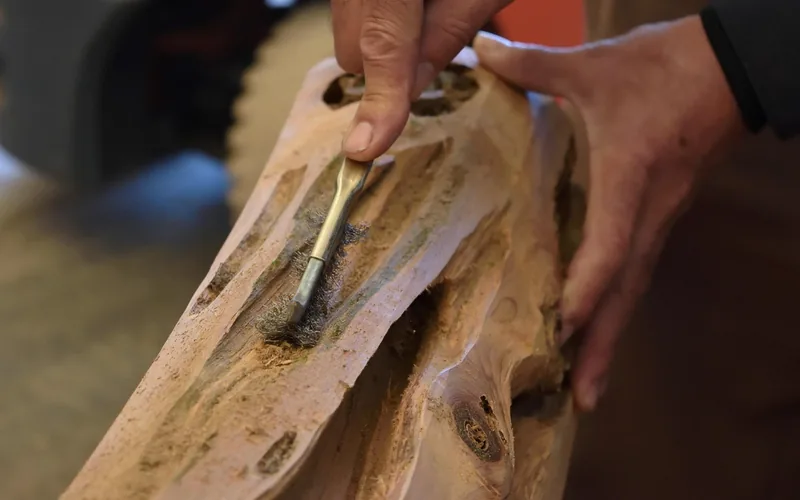
A woodcarver is a craftsman who shapes wood by cutting, rather than joining or turning it — using chisels, gouges, or a knife to produce sculpture, figures, or decorative ornamentation. See this site’s guide on how to carve wood for the actual techniques. Woodcarving is the oldest of these trades and the one least concerned with structural function.
Turner
A turner shapes wood on a spinning lathe to produce round or cylindrical forms — bowls, table legs, chair spindles, and pens. Turning is a subtractive process like carving, but the wood does the moving instead of the tool.
Sawyer
A sawyer operates a sawmill or pit saw to convert logs into usable lumber and boards. It’s the trade every other title on this list depends on, since none of them can start work until the sawyer has milled the raw log.
Luthier
A luthier builds and repairs stringed instruments — guitars, violins, and cellos — and is arguably the most specialized title here, since the joinery has to hold up acoustically, not just structurally.
How Much Do Wood Craftsmen Actually Earn?
Pay varies a lot by specialty, but general woodworkers are a useful baseline. According to the U.S. Bureau of Labor Statistics, the median annual wage for woodworkers was $43,720 in May 2024 — the lowest-paid 10% earned under $31,370, while the highest-paid 10% earned over $59,570. Cabinetmakers and carpenters with structural licensing typically sit above this range; hobbyist-adjacent trades like woodcarving typically sit below it unless the work is custom or fine art.
📊 Median wage for woodworkers: $43,720/year (May 2024) — Source: U.S. Bureau of Labor Statistics, Occupational Outlook Handbook
How Woodworking Craftsmen Learn the Trade
Most woodworking titles above are still learned the traditional way: through an apprenticeship, working under an experienced craftsman on real projects rather than in a classroom. Apprentices start with measuring, cutting, and finishing before moving to full joints and finished pieces — a progression that can take several years to reach journeyman-level work.
Formal training exists too: trade schools and community colleges offer joinery, cabinetmaking, and wood-finishing courses, and many working craftsmen keep adding to that base through workshops or manufacturer-specific certification (finishing products, CNC/CAD software, and lathe safety courses are the most common).
Tools of the Trade
The tools a craftsman uses are usually a giveaway for which title actually fits them. Hand tools — chisels, hand saws, and planes — still define joinery, cabinetmaking, and carving, where control matters more than speed. Power tools like circular saws, routers, and lathes dominate carpentry and turning, where covering more material faster is the priority. Most working craftsmen use both, switching based on the cut, not out of loyalty to one method. For a full rundown of what belongs in each kit, see this site’s woodworking tools and saws guide.
Frequently Asked Questions
What Is the General Name for Someone Who Works With Wood?
The general name is woodworker. More specific titles — carpenter, joiner, cabinetmaker, woodcarver, and turner — describe what kind of wood work someone actually does, from framing houses to carving sculpture.
What Are the Different Types of Woodworking Professionals?
Woodworking professionals include carpenters (on-site structural work), joiners and cabinetmakers (in-shop furniture and cabinetry), woodcarvers (sculptural work), turners (lathe work), sawyers (milling lumber), and luthiers (stringed instruments).
How Does a Wood Artisan Differ From a Carpenter?
A wood artisan is a broad, informal term for anyone skilled at working wood, often with an artistic or decorative focus. A carpenter is a specific, usually licensed trade focused on structural and functional building work, not decorative pieces.
What Is a Person Who Carves Wood Called?
A person who carves wood is called a woodcarver. They shape wood with chisels, gouges, or a knife to create sculpture, figures, or decorative ornamentation, rather than joining or turning it.
What’s the Difference Between a Joiner and a Carpenter?
A joiner works in a shop, building furniture, doors, and windows with precision joints like mortise-and-tenon and dovetail, then installs the finished piece later. A carpenter works on-site, building and repairing structures such as framing, roofs, and floors.
Conclusion
“Craftsman in wood” is accurate as a general description, but woodworker is the closest thing to an actual job title — and carpenter, joiner, cabinetmaker, woodcarver, turner, sawyer, and luthier are the specific trades underneath it. Knowing which one fits tells you exactly what kind of work, tools, and training that person actually has.
Sponsored / affiliate links. As an Amazon Associate I earn from qualifying purchases. I may earn additional commission from eligible campaigns.