Does Burning Wood Create Carbon Monoxide? The Real Answer
Yes – burning wood does create carbon monoxide (CO). It happens every time wood burns, because CO is a normal byproduct of combustion that never runs 100% complete. The real question isn’t whether your wood stove or fireplace makes any CO – it does – it’s whether that CO is venting safely outside or building up somewhere you’re breathing it. That distinction is the difference between a normal, safely-vented fire and a genuine poisoning risk, and it depends almost entirely on how well the fire is burning and how well your chimney or flue is working.
Yes, Burning Wood Produces Carbon Monoxide – Here’s the Chemistry
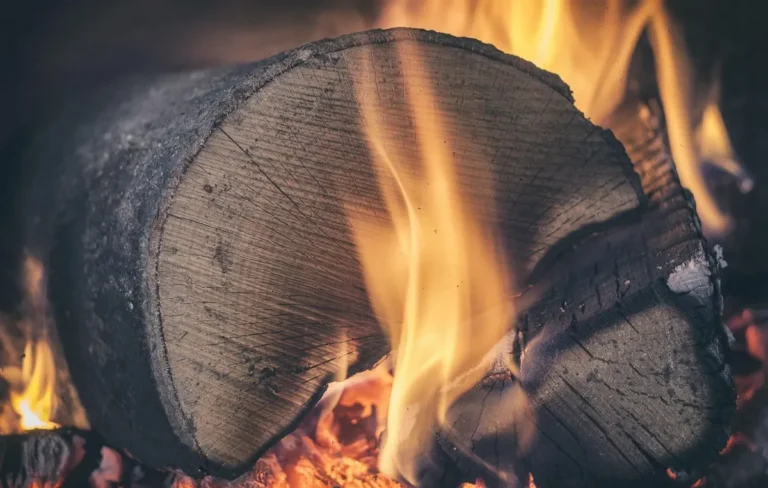
Wood is mostly carbon and hydrogen compounds. When it burns with enough oxygen and high enough heat, that carbon combines fully with oxygen to form carbon dioxide (CO2), a much less dangerous gas. But real fires are never perfectly efficient. Whenever combustion is incomplete – not enough oxygen reaching the flame, a fire that’s smoldering instead of burning hot, or wood that’s damp or unseasoned – some of that carbon only partially oxidizes, forming carbon monoxide instead. Every wood fire produces some CO; a well-built, hot-burning fire in a properly vented stove just produces very little of it, and sends nearly all of it up the flue before it ever reaches your living room.
Recommended Safety Pairing
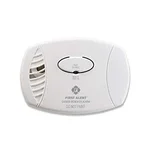 |
First Alert CO605 Plug-In Carbon Monoxide Alarm – $23.99 A UL-listed CO alarm with battery backup is the actual mitigation safety authorities recommend for any home with a wood stove or fireplace.
|
Why Incomplete Combustion Is the Real Culprit
Three things push a fire toward producing more CO: not enough airflow, wood that’s too wet, and an older or poorly designed stove. Starving a fire of air – closing the damper too far, packing the firebox too tight, or burning in a stove with a weak draft – keeps oxygen from reaching the coals, so combustion stays incomplete. Unseasoned wood (anything above roughly 20% moisture content) wastes a lot of the fire’s heat just boiling off water instead of burning cleanly, which has the same effect. And the stove itself matters: EPA-certified stoves built in the last few decades burn wood far more completely than older, uncertified units. University extension research has actually compared the CO output of an older, non-certified wood stove run for several hours to the carbon monoxide a car’s exhaust puts out over roughly a 20-mile drive – a useful reminder that combustion efficiency, not just “burning wood,” drives how much CO gets produced in the first place.
- Seasoned wood only: Burn wood that’s been split and dried for at least 6-12 months, ideally under 20% moisture. Wet wood smolders and produces more smoke and CO for the same amount of heat.
- Keep airflow open: Don’t choke the fire down so far that it smolders rather than burns with a visible, active flame.
- Know your stove’s age: If you’re running an older, non-EPA-certified stove, it’s inherently less efficient and worth having inspected more often.
How Carbon Monoxide Actually Gets Into Your Home
A properly functioning chimney or flue is what keeps the CO your fire produces outside, where it belongs, instead of indoors, where it’s dangerous. Almost every real case of dangerous indoor CO buildup from a wood stove or fireplace traces back to a venting problem rather than the fire itself. A flue clogged with creosote buildup, a chimney blocked by an animal nest or debris, a cracked or separated flue liner, or simply a chimney that isn’t drafting well because it’s too short or poorly sized can all let combustion gases back up into the room instead of venting to the outside. This is exactly why chimney sweeps and stove technicians recommend a professional inspection and cleaning at least once a year for any wood-burning appliance in regular use – it’s the single best way to catch a developing blockage or crack before it becomes a CO hazard.
Recognizing the Symptoms of CO Poisoning
Because CO is colorless and odorless, you cannot rely on your senses to warn you – you genuinely cannot smell it, see it, or taste it, no matter how many times you’ve heard someone say they’d “notice” it. The early symptoms of CO poisoning are often mistaken for a cold or the flu: headache, dizziness, weakness, nausea, vomiting, and chest pain. As exposure continues or gets more concentrated, confusion sets in, followed in severe cases by loss of consciousness and death. People who are asleep or who have been drinking can be overcome before they ever notice symptoms. If a CO alarm goes off, or if people in the house develop these symptoms only while a wood stove or fireplace is burning and feel better once they leave the house, treat it as a real emergency: get everyone (and pets) into fresh air immediately, and call emergency services before anyone goes back inside.
CO Detector Placement: What CPSC and NFPA Actually Recommend
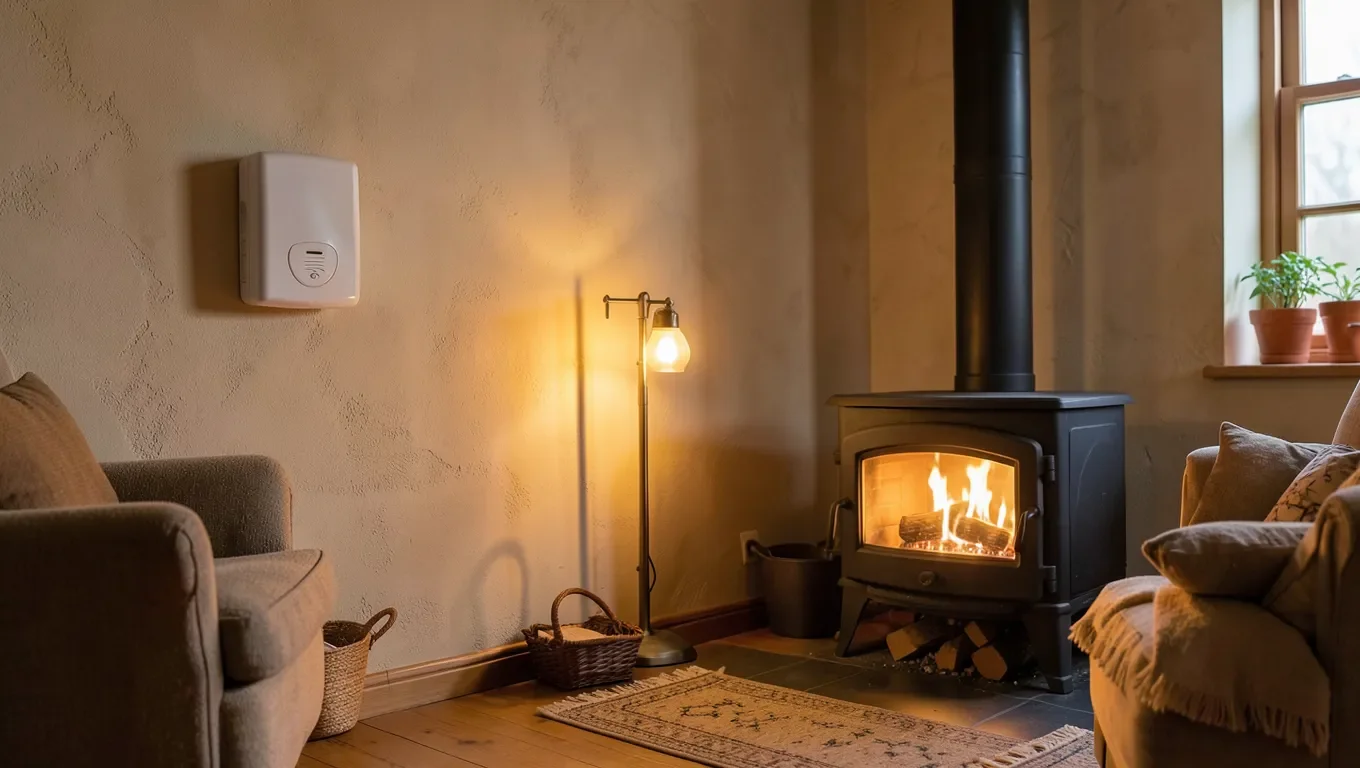
A working carbon monoxide detector is not optional equipment for a home with a wood-burning appliance – it’s the standard, non-negotiable mitigation that safety authorities actually recommend, not just a nice-to-have. The National Fire Protection Association (NFPA) calls for a CO alarm on every level of the home and outside each sleeping area. The Consumer Product Safety Commission (CPSC) adds that if a household is only going to install one, it should go near the sleeping area, since that’s what will actually wake people up. Look for a unit listed to the UL 2034 standard, and have any fuel-burning appliance – not just your wood stove, but furnaces and water heaters too – professionally inspected, since CPSC specifically flags fuel-burning appliances as a common source of CO leaks when they’re not properly maintained.
Fireplaces, Wood Stoves, and Outdoor Fires: Does the Risk Change?
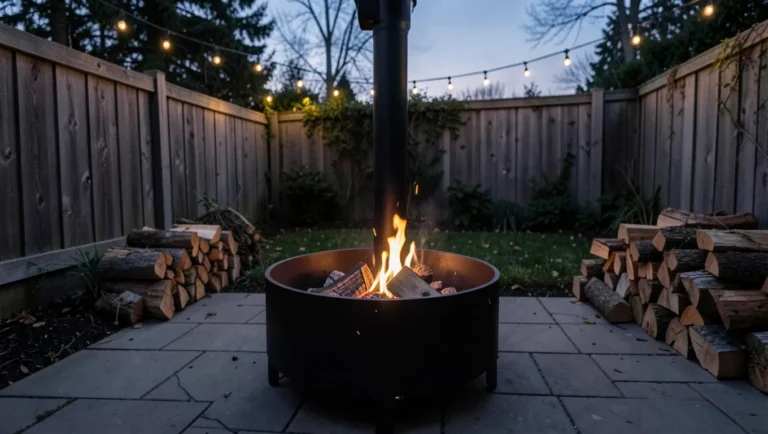
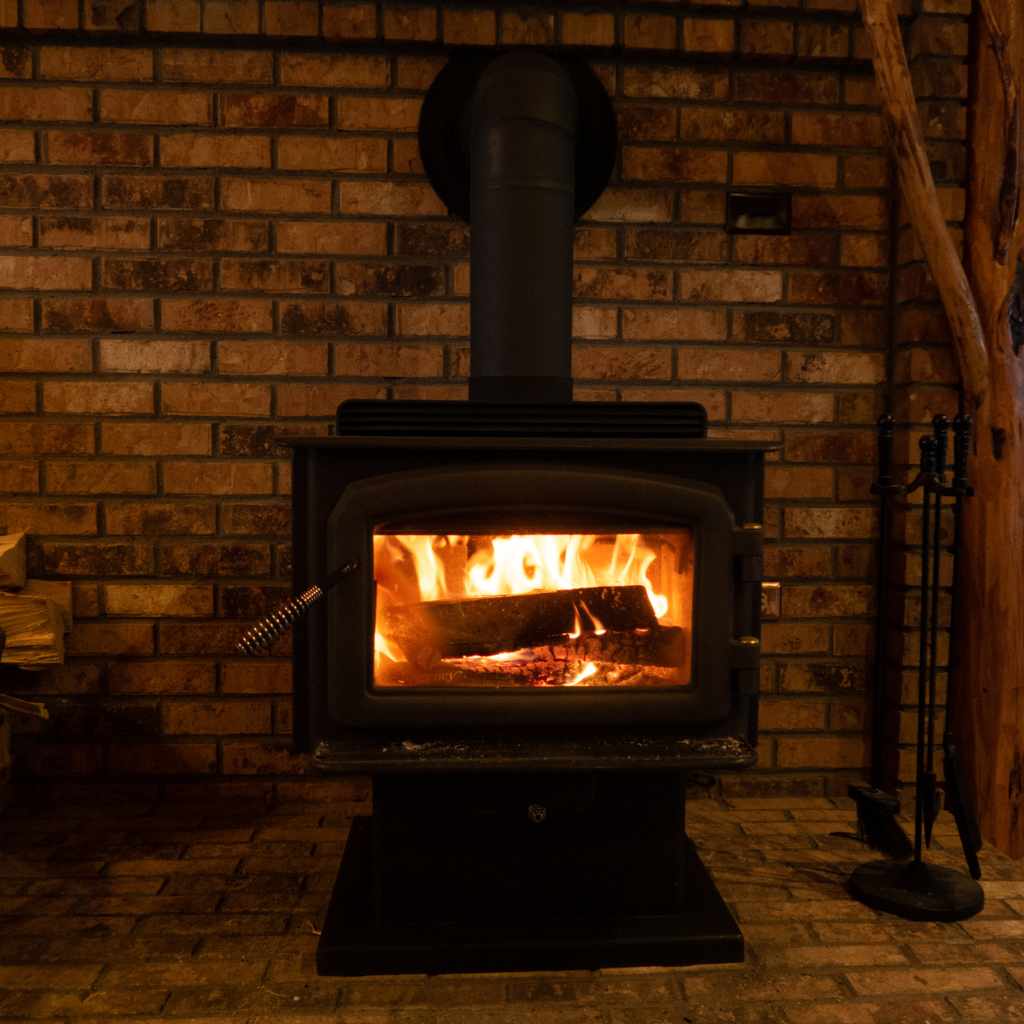
Open masonry fireplaces, enclosed wood stoves, and outdoor fire pits all produce carbon monoxide, but the real-world risk depends on ventilation, not the type of fire. An open fireplace with a properly drafting chimney is generally lower-risk than people assume, because so much combustion air is pulled straight up the open flue – but a fireplace with a damper stuck partly closed, or a gas-log conversion running in an air-tight modern home, can still let CO accumulate. Enclosed wood stoves burn hotter and more efficiently, which usually means less CO produced overall, but that CO has nowhere to go except up a sealed flue, which makes a blockage or crack in that flue more dangerous, not less. Outdoor fires and fire pits are the safest by far because CO disperses into open air rather than a room, but they are not risk-free indoors – never bring a fire pit, charcoal grill, or any wood-burning device meant for outdoor use into a garage, tent, or enclosed porch to “warm up,” a genuine and recurring cause of fatal CO poisoning.
Frequently Asked Questions
Does burning wood always produce carbon monoxide?
Yes. Burning any organic fuel, including wood, produces some carbon monoxide as a byproduct of incomplete combustion. A hot, well-ventilated fire with plenty of oxygen produces much less CO than a smoldering, oxygen-starved one, but you cannot get the amount to zero. That is why venting and detection matter more than trying to eliminate CO production entirely.
Can I smell carbon monoxide from my wood stove or fireplace?
No. Carbon monoxide is colorless and odorless, so you cannot detect it by smell, taste, or sight. Smoke or a burning odor tells you something is off with the fire itself, but its absence does not mean CO levels are safe. A working CO alarm is the only reliable way to know.
What actually causes dangerous CO buildup from a wood stove or fireplace?
In most cases it is a venting problem, not the fire itself. A blocked flue from creosote or an animal nest, a cracked or separated flue liner, a poorly drafting chimney, or a damper left in the wrong position can all let combustion gases back up into the room instead of venting outside. Annual professional chimney inspection is the standard way to catch these before they become a hazard.
Where should I put a carbon monoxide detector if I have a wood stove?
The NFPA recommends a CO alarm on every level of the home and outside each sleeping area, and the CPSC recommends that if you only install one, it should be near the sleeping area so it can wake you. Look for a unit listed to the UL 2034 standard.
What are the symptoms of carbon monoxide poisoning?
Common symptoms include headache, dizziness, weakness, nausea, vomiting, chest pain, and confusion – often described as flu-like. Higher exposure can cause loss of consciousness and death. If a CO alarm sounds or you notice these symptoms while a wood stove or fireplace is burning, get everyone into fresh air immediately and call emergency services before re-entering.
Final Thoughts
So does burning wood create carbon monoxide? Yes, every time, without exception – that’s basic combustion chemistry, not a defect in your stove or fireplace. What actually determines whether that’s dangerous is combustion efficiency (seasoned wood, good airflow, a well-maintained stove) and ventilation (a clear, properly inspected flue carrying that CO outside). Neither of those brings the risk to zero, which is exactly why a UL-listed CO detector near your sleeping area isn’t optional – it’s the one piece of equipment that catches the failure mode you can’t see, smell, or taste yourself. If you’re still working out the venting side of this, our guide on how to vent a wood burner correctly covers the code-compliant setup in detail, and our broader guide to burning wood safely covers the fire-safety side (clearances, creosote, extinguishing) that this article doesn’t.
Sponsored / affiliate links. As an Amazon Associate I earn from qualifying purchases. I may earn additional commission from eligible campaigns.