Does Burning Wood Make It Waterproof? What the Research Shows
Does burning wood make it waterproof? No. Charring the surface can make wood more water-repellent, but it does not seal it, and the best published testing shows the effect is inconsistent. If you want to char a fence board, planter, or sign, do it for the look and treat any water protection as a bonus that still needs a proper finish. Below is what the research found, where water gets in anyway, how to char safely, and what to use if the piece will live outdoors.
Short Answer: Water-Resistant at Best, Not Waterproof
Best Torch for Charring Boards
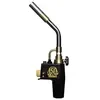 |
Bernzomatic TS8000 Trigger Start Torch, $57.98 A handheld propane torch head with a lockable trigger and an adjustable flame, so you can shut the flame off the moment you stop sweeping across a board. The fuel cylinder is sold separately.
|
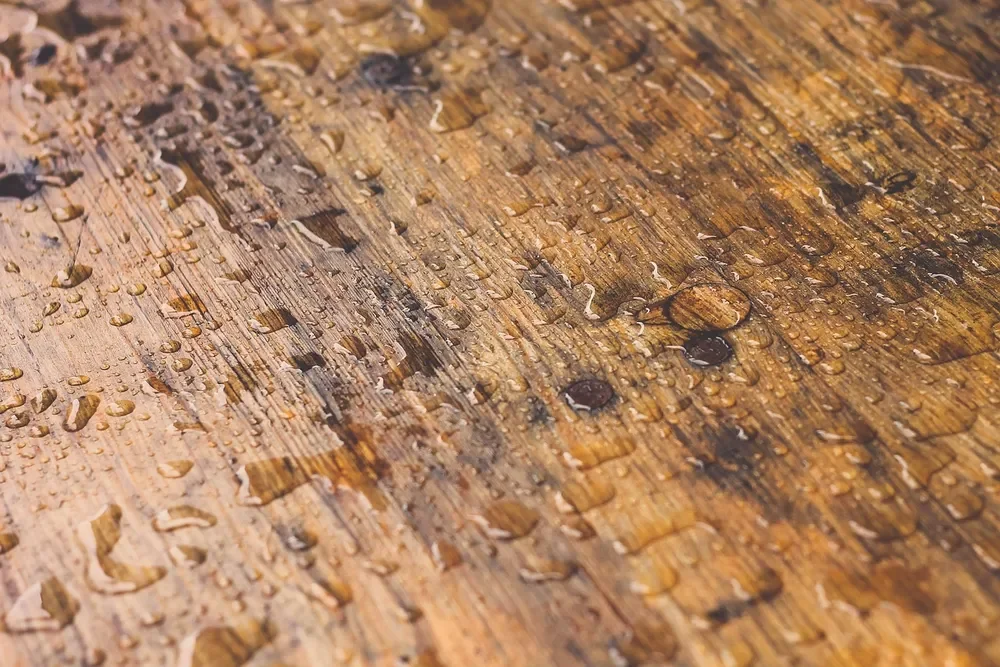
The idea sounds right: a black layer of carbon on the surface should shed water. In practice, char is a thin, brittle crust on top of ordinary wood. Here is the short version of what testing has shown:
- The surface can turn more water-repellent. A review in the journal Forests (Hasburgh, Zelinka, Bishell and Kirker, 2021) summarizes earlier work by Kymalainen and colleagues showing that charring raised the liquid water contact angle, meaning water beads up more on the surface.
- Water uptake results are mixed. The same review notes that Kymalainen found mixed results for how much liquid water charred wood actually took up, while Cermak and colleagues consistently found that charring lowered the rate of liquid water absorption.
- Less moisture from humid air. Charred wood absorbed less moisture at a given relative humidity when no liquid water was involved.
- The treated layer is thin. The yakisugi process is unlikely to modify the whole board, only about 2 to 3 mm of the surface.
Notice the wording: a lower rate of absorption, not no absorption. Waterproof means water cannot get in, and charred wood is not that. The authors of the 2021 study concluded that sugi ban-treated wood should be thought of as primarily increasing the aesthetics of wood rather than improving its durability or flammability.
What the Research Says About Charred Wood and Water
Many articles on this topic repeat the claim that charring “seals the pores.” That is the myth worth correcting. Char is mostly carbon left after heat drives off the other wood components, and it forms a brittle layer that cracks as it cools and weathers. The studies point to a change in the surface chemistry that makes it more water-repellent, not to a sealed skin. Here is how the findings fit together:
| Source | What was tested | What it found |
|---|---|---|
| Kymalainen et al. (as summarized by Hasburgh et al., 2021) | Charred vs. uncharred wood in humid air | Charred wood absorbed less moisture at a given relative humidity without liquid water |
| Kymalainen et al. (same review) | Liquid water contact angle and uptake | Higher contact angle (more hydrophobic surface); mixed results for liquid water uptake |
| Cermak et al. (same review) | Liquid water absorption of charred wood | Consistently lower rate of liquid water absorption |
| Hasburgh et al., Forests 2021 | Several species and variants of commercial sugi ban; cone calorimeter fire tests and soil block decay tests with one white-rot and one brown-rot fungus | No systematic improvement in flammability or durability; some small, species-specific gains (for example cypress) |
Source: Hasburgh, L.E., Zelinka, S.L., Bishell, A.B., Kirker, G.T. “Durability and Fire Performance of Charred Wood Siding (Shou Sugi Ban).” Forests 2021, 12, 1262 (open access). The earlier studies in the table are as that paper describes them; we read the 2021 paper, not the earlier ones.
The point competitors usually miss: even the studies that show a benefit describe the rate of water uptake, not a waterproof barrier, and none of that supports skipping a finish outdoors. For the decay side of the question, see our companion piece on whether burning wood preserves it.
Where Water Gets In Anyway
A charred board can hold off water on its face and still lose the fight. Three weak spots matter more than the char itself:
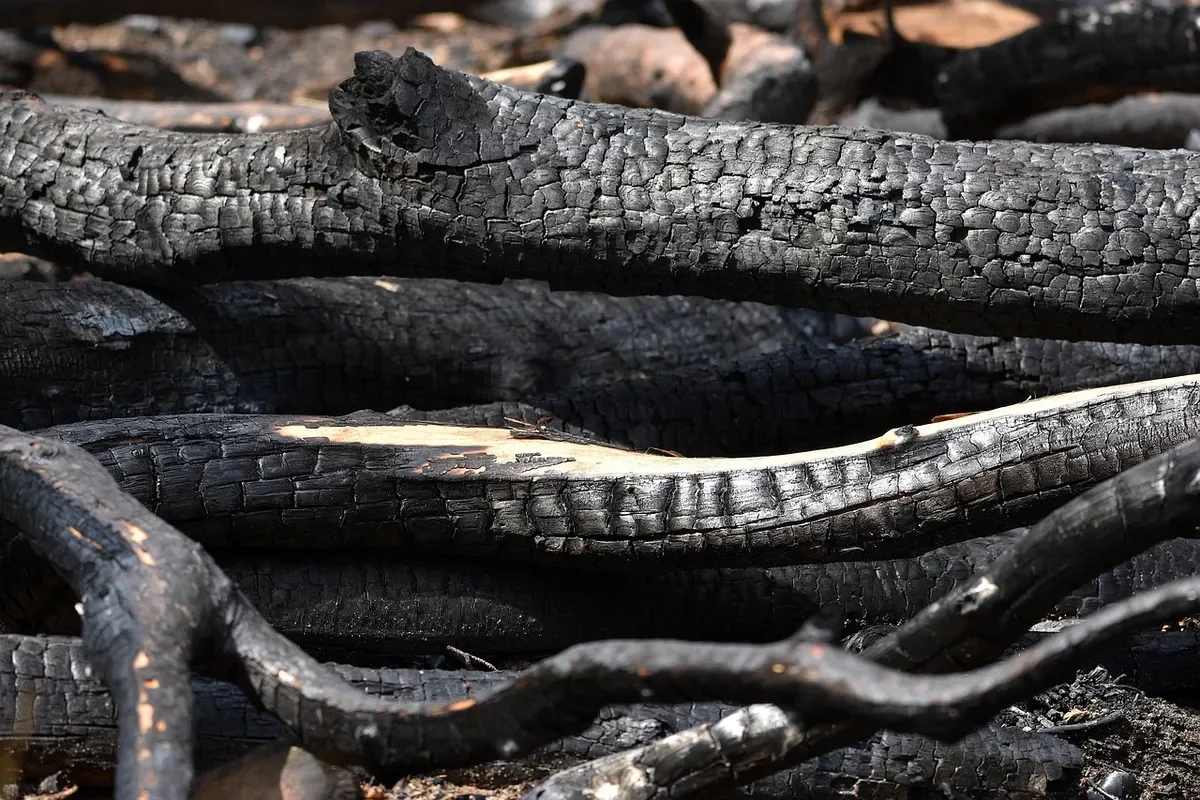
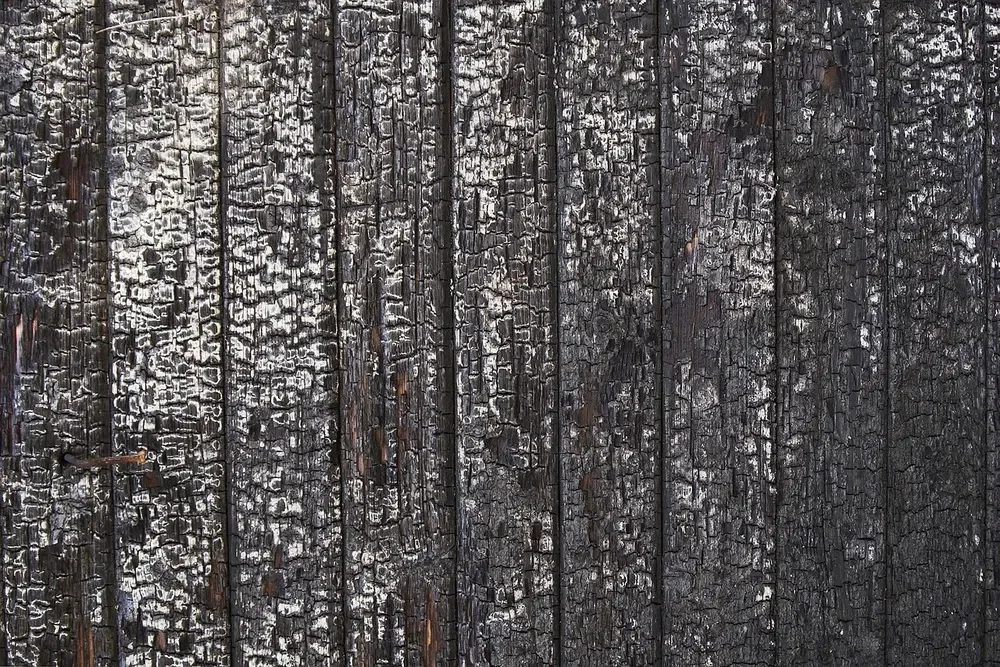
- Cracks in the char. Char forms a checked, alligator-skin pattern like the boards pictured below. Every crack is a path down to raw wood.
- End grain. Cut ends draw water up like straws, and the char on a cut end is thin and easily knocked off.
- Ground and splash contact. Wood that sits in soil or standing water stays wet enough for decay fungi however black the surface is. Our page on how long charred wood lasts in the ground covers what to expect there.
A simple soak test you can run yourself
You do not have to take anyone’s word for it. Cut two offcuts of the same species and size, char one face of one piece, and leave the other bare. Weigh both on a kitchen scale, set them in an inch of water for 24 hours, then blot the surface and weigh again. Compare the gain in grams. This is a home comparison, not a lab result, but it shows whether the char is doing anything on your species, and a second run with the end grain sealed shows how much of the uptake comes through the ends.
How to Char Wood Safely
Charring is open-flame work. Treat it that way from the first minute.
- Work outdoors, on bare dirt, gravel, or concrete, away from dry grass, sawdust, fences, and structures, and not on a windy day.
- Keep water and an extinguisher within reach. A garden hose or a bucket plus a rated fire extinguisher is the minimum.
- Only char plain, untreated, unfinished wood. Do not burn pressure-treated lumber, painted or stained wood, or plywood and other glued panels, because the smoke can contain harmful compounds.
- Wear leather gloves, eye protection, and natural-fiber clothing, tie back long hair, and never point a torch toward yourself or others.
- Quench the wood when done. Wet it down and check it again later, since charred wood can hold a smoldering ember.
For the full technique, see our guides to charring wood furniture and the Japanese shou sugi ban method. If you only want lettering, burning letters with a torch walks through it, and how to seal charred wood covers finishing the surface once it is done.
What to Use If the Piece Will Get Wet
If your goal is real water protection, use a finish made for the job and treat char as a look. The comparison below is qualitative because results depend on the product and the wood:
| Approach | What it does for water | Upkeep |
|---|---|---|
| Charring alone | Slows surface uptake; cracks and end grain stay open | None, but the char weathers and rubs off |
| Charring plus an exterior oil | Keeps the look, adds a water-repellent layer, cuts carbon rub-off | Reapply on the interval the product label gives |
| Film finishes such as exterior varnish or paint | Form a continuous barrier on the surface | Repair when the film cracks or peels |
| Naturally durable species such as cedar | Slower to rot when it does get wet | A finish still extends life |
| Pressure-treated lumber | Protects against decay in its rated exposure | Follow the tag and the maker’s finishing advice |
For outdoor projects, our guides to the best finish for outdoor wood furniture and treating cedar go deeper. Whichever route you take, seal the end grain and design the piece so water drains instead of pooling.
Frequently Asked Questions
Does charring wood make it waterproof?
No. Research on charred wood found it becomes more water-repellent at the surface, but liquid water can still get in through cracks in the char and through end grain. Treat it as water-resistant, and finish it if it will sit in the rain.
Does shou sugi ban need to be sealed?
Not to look good, but most people oil it. A finish helps keep loose carbon from rubbing off on hands and clothes, and an oil finish can be topped up over the years. A US Forest Service study found the sealer on the sugi ban samples it tested had no consistent effect on flammability or decay results, so choose a finish for looks and handling rather than for extra protection.
Is charred wood rot proof?
No. The same research team tested several species of commercial sugi ban against one white-rot and one brown-rot fungus and concluded that charring did not systematically improve durability. Small gains showed up in cypress, but they were small.
How deep does the char go?
Only a thin layer. The researchers note that the yakisugi process is unlikely to modify the whole board, only about 2 to 3 mm of the surface, so the wood underneath is ordinary untreated wood.
Is it safe to char wood indoors?
No. Charring is open-flame work that makes smoke and drops embers. Do it outdoors on bare ground or concrete, away from anything flammable, with water and a fire extinguisher within reach.
Final Thoughts
Burning wood does not make it waterproof. It can make the surface shed water better, and it gives a dramatic look, but the layer is thin, cracked, and inconsistent in the studies we could read. Char for the look, keep the fire safety rules non-negotiable, and finish anything that will see rain.
Sponsored / affiliate links. As an Amazon Associate I earn from qualifying purchases. I may earn additional commission from eligible campaigns.