Does Cedar Warp? Uncover the Truth About Cedar Wood
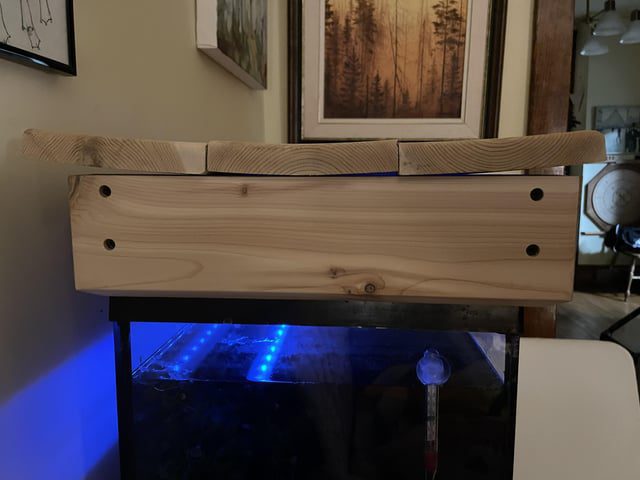
Yes, cedar can warp – it’s just less prone to it than most other softwoods. Cedar’s low density and naturally straight grain make it dimensionally more stable than pine or fir, and that reputation for stability is well earned. But “more resistant” isn’t the same as “warp-proof,” and uneven moisture exposure, poor storage, or thin stock installed without expansion room will still warp a cedar board.
Cedar shows up in a lot of places where dimensional stability actually matters: closet linings and chests (where a warped panel would bind a door or drawer), outdoor fencing and decking (constant exposure to rain and sun), and roof shingles (where warping affects how well the shingles shed water). Its track record in those uses is exactly why it has the reputation it does, even though it isn’t literally immune to the problem.
Why Cedar Resists Warping Better Than Most Wood
Stops End-Grain Warping Before It Starts
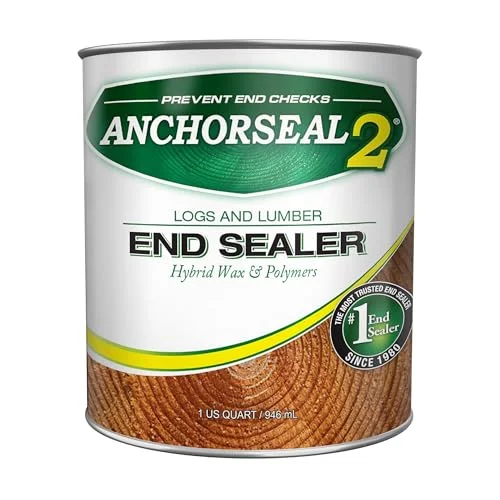 |
Anchorseal 2 Log and Lumber End Grain Sealer Slows the fast end-grain moisture loss that starts most warping and checking, rated to prevent up to 90% of end-checks.
|
Wood warps when moisture leaves or enters unevenly across a board, causing one face or edge to shrink or swell faster than the rest. Cedar’s natural oils slow that moisture exchange compared to woods without them, and its lower density means less internal stress builds up as the board’s moisture content shifts. That combination is why cedar holds up well outdoors as decking, fencing, and siding, where it’s exposed to swings in humidity that would warp many other species faster.
None of that eliminates the underlying physics, though. Wood is hygroscopic – it always exchanges moisture with the surrounding air – and any board, cedar included, will move if one side dries or wets faster than the other. Thinner cedar boards move more than thick ones for the same moisture swing, which is why thin fence pickets and lattice warp more visibly than a thick cedar post cut from the same batch of lumber.
Grain orientation matters too. Flat-sawn cedar (where the growth rings run roughly parallel to the board’s wide face) tends to cup more than quarter-sawn cedar, where the rings run closer to perpendicular through the board’s thickness. Quarter-sawn stock costs more and is harder to find in cedar specifically, but it’s the more dimensionally stable cut when warping resistance matters more than price.
What Actually Causes Cedar to Warp
- Uneven moisture exposure – one face wet, one face dry (a fence board rained on from outside but sealed on the back) is the single most common cause.
- Improper storage – stacking boards flat on damp ground, or leaning them unsupported against a wall, lets gravity and moisture work together to bend the wood over time.
- Installing wood that wasn’t acclimated – cedar brought straight from a cold, damp lumberyard into a dry, heated house will keep shrinking and moving for weeks after installation.
- No room to expand and contract – deck boards or siding fastened with zero gap between them have nowhere to move, so the stress shows up as cupping or bowing instead.
- Thin stock – the thinner the board relative to its width, the more it moves for the same change in moisture content.
How Cedar Compares to Other Woods
Pine, a common comparison since both are softwoods used for similar outdoor projects, warps considerably more than cedar – it has less natural oil content and typically sees faster, less even drying in production, both of which increase warping risk. Oak and maple are denser hardwoods that resist warping well when properly dried and finished, but their higher density means more internal stress builds up if they do take on uneven moisture, and a warped hardwood board can be harder to correct than a warped cedar one. Cedar sits in a favorable middle ground: light enough to move less overall, oily enough to slow moisture exchange, without the higher stress of a denser hardwood.
Redwood is the closest direct comparison, sharing a similar reputation for outdoor stability, natural rot resistance, and a comparable price point in most regions – the two are often interchangeable for decking and fencing, with the final choice usually coming down to local availability and cost rather than a meaningful difference in warp resistance.
Preventing Cedar From Warping
- Let it acclimate before installing – stack cedar in the space (or climate) where it’ll be used for at least a few days, ideally a couple of weeks, before cutting and fastening it permanently.
- Stack it flat with stickers (thin spacer strips) between each layer during storage, off the ground, so air reaches all sides evenly.
- Seal the end grain on cut boards, especially for outdoor lumber and turning stock – end grain loses and absorbs moisture far faster than the face grain, which is why boards so often crack and warp starting from the ends.
- Leave expansion gaps between deck boards, fence pickets, or siding panels rather than butting them tight.
- Finish both faces evenly – sealing or staining only the visible face while leaving the back bare invites exactly the uneven moisture exchange that causes warping.
Fixing Cedar That’s Already Warped
Check a suspect board with a straightedge laid along its length or across its width – any daylight showing under the straightedge confirms a warp and shows roughly how severe it is. For a mild warp, dampening the concave (hollowed) side with water, then clamping the board flat against a rigid surface and letting it dry slowly over several days, often pulls it most of the way back. A warm iron over a damp cloth speeds this along for stubborn spots, but work in short bursts and check often – cedar is soft and scorches or dents easily under too much heat or pressure.
Cupped boards (curved across their width rather than along their length) respond well to this same wet-and-clamp approach applied to the hollow face. A twisted board, where opposite corners lift in different directions, is the hardest type to correct this way and more often needs to be planed flat (losing some thickness in the process) or replaced outright.
Severely warped or cracked boards are usually not worth fighting: ripping the board down to a narrower, straighter piece, or simply replacing it, is often faster and more reliable than repeatedly re-clamping a board that keeps moving back out of shape. Whatever you salvage, seal the newly exposed end grain before putting the board back into service – a freshly cut end is just as vulnerable to the same moisture imbalance that caused the original warp.
Frequently Asked Questions
What causes cedar to warp?
Uneven moisture exposure is the leading cause – one face of the board drying or absorbing water faster than the other. Poor storage, installing unacclimated wood, and leaving no room for the wood to expand and contract all contribute as well.
Can warped cedar be fixed?
Mild warps can often be corrected by dampening the concave side and clamping the board flat while it dries slowly over several days. Severely warped or cracked boards are usually better replaced or ripped down to a straighter, narrower piece than repeatedly re-clamped.
Is cedar more prone to warping than other woods?
No, cedar is generally less prone to warping than other softwoods like pine, thanks to its natural oils and lower density. It’s more resistant, not warp-proof – it will still warp under uneven moisture exposure, poor storage, or improper installation.
Conclusion
Cedar earns its reputation for stability honestly, but it isn’t immune to the same moisture-driven movement that warps any other wood. Acclimating the lumber, storing it properly, sealing exposed end grain, and finishing both faces evenly cover most of what causes warping in the first place – and a mild warp that does show up is usually fixable with patience rather than a reason to scrap the board.
Sponsored / affiliate links. As an Amazon Associate I earn from qualifying purchases. I may earn additional commission from eligible campaigns.