Cedar Gate Ideas: Board-on-Board, Lattice-Top, and Arched Designs
The best cedar gate ideas are board-on-board privacy gates, classic pickets, lattice-top gates and arched-top gates, and the one that lasts is the one built with the right cedar, a braced frame and stainless hardware. Design is the easy part. Most cedar gates fail because the leaf sags, not because the wood rots.
This guide compares seven cedar gate designs, puts real numbers on four cedar species, and covers the sag and fastener problems that most gate-idea pages leave out. If you are still choosing a fence style to hang the gate in, start with wood fence designs compared by cost and privacy.
Cedar Gate Hardware: The Part That Decides How Long It Lasts
Best Cedar Gate Hinge Pick
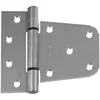 |
National Hardware Extra Heavy Duty Gate Hinge, 3-1/2 in, Stainless Steel A stainless steel T hinge with long leaves that spread a gate’s weight over more of the board, so it will not leave the rust streaks that plain steel hardware can put on cedar.
|
Cedar is one of the better woods for outdoor use, but the wood is not what usually fails. Hardware and sag do. The Wood Database rates western red cedar as durable to very durable against decay, yet it also says the wood dents and scratches very easily because it is soft, and that iron-based fasteners can stain and discolor it, especially in the presence of moisture. On a gate, that combination means two things.
- Use stainless steel or hot-dip galvanized hinges, latches and screws. A plain steel screw in damp cedar can leave a dark streak that a finish will not hide. The same problem shows up in trellises, covered in cedar trellis ideas and the screw mistake that stains them black.
- Choose long strap or T hinges over small butt hinges. Soft cedar holds a screw less firmly than a hardwood, and a long leaf spreads the pull over more fasteners. A short hinge concentrates the gate weight in a few screws that slowly work loose.
None of this means cedar is a poor choice. It means a good cedar gate is a hardware and framing job first and a design job second. Rot is a slow problem here; see how long cedar really lasts outdoors for what to expect from the wood itself.
Which Cedar for a Gate? Four Species Compared by Real Numbers
Not every board sold as cedar is the same wood, and the differences show up in gate performance. This table uses figures published by the Wood Database for each species. Janka hardness is the force in pounds-force needed to embed a steel ball halfway into the wood. Modulus of rupture (MOR) measures bending strength, and modulus of elasticity (MOE) measures stiffness, which is what resists sag.
| Species | Weight at 12% moisture | Janka hardness | Bending strength (MOR) | Stiffness (MOE) | Decay resistance |
|---|---|---|---|---|---|
| Western red cedar | 23 lb/ft3 | 350 lbf | 7,500 psi | 1,110,000 psi | Durable to very durable |
| Alaskan yellow cedar | 31 lb/ft3 | 580 lbf | 11,100 psi | 1,420,000 psi | Durable to very durable |
| Northern white cedar | 22 lb/ft3 | 320 lbf | 6,500 psi | 800,000 psi | Durable to very durable |
| Aromatic (eastern) red cedar | 33 lb/ft3 | 900 lbf | 8,800 psi | 880,000 psi | Excellent |
Myth check: durable does not mean strong
The common claim is that cedar is a tough outdoor wood. The numbers say it is a durable one, which is different. Every cedar in the table resists decay, yet western red cedar has a Janka hardness of only 350 lbf. Rot resistance protects the wood from fungus. It does nothing to stop a soft board from denting, or a wide leaf from drooping.
Compare the two best gate cedars directly. Alaskan yellow cedar is about 28 percent stiffer than western red cedar (1,420,000 versus 1,110,000 psi) and about 48 percent stronger in bending (11,100 versus 7,500 psi). Northern white cedar goes the other way: its stiffness is roughly 28 percent below western red cedar (800,000 psi), and the Wood Database says it is both soft and weak with poor screw-holding, so it is a poor pick for a gate that swings on screwed-on hinges.
Aromatic red cedar is the odd one out. The Wood Database points out that it is more closely related to junipers than to true cedars. It is hard for a cedar (900 lbf) and is described as excellent against decay and insect attack, but it is a knotty wood that is more often used for posts and small items than for a wide gate leaf. For board-foot prices and where each species is sold, see cedar wood cost per board foot and what cedar wood is used for.
7 Cedar Gate Ideas That Work
1. Classic picket gate
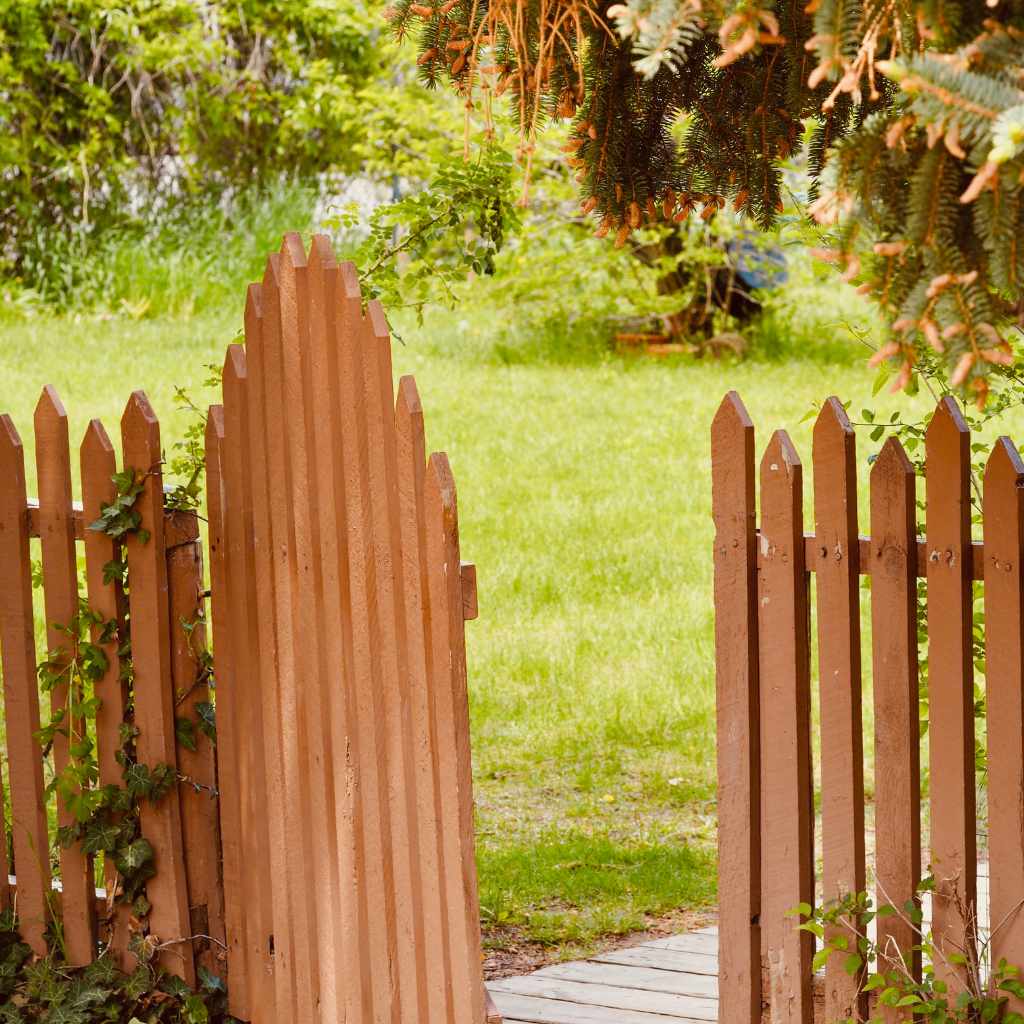
Vertical pickets on two or three horizontal rails is the simplest cedar gate and the lightest, because the gaps between pickets remove wood. It suits a front walk or a garden entrance. Pickets are commonly cut with a pointed, dog-ear or rounded top; see wood fence picket sizes, styles and spacing for how to match the gate to the fence beside it.
2. Board-on-board privacy gate
Two layers of boards are fastened so the second layer covers the gaps in the first, which keeps the view blocked even as the boards shrink. It matches a board-on-board fence and gives the most privacy, but it is also the heaviest single-leaf design here because of the second layer. Check the weight table below before choosing it for a wide opening.
3. Lattice-top gate
A solid lower panel of boards with a lattice or spaced-slat panel above keeps privacy at waist height and lets light and air through the top. The open top also lightens the leaf, so it is a smart compromise when a full privacy gate would sag. Cedar lattice strips are thin, so predrill and use stainless fasteners to avoid splitting.
4. Arched-top gate
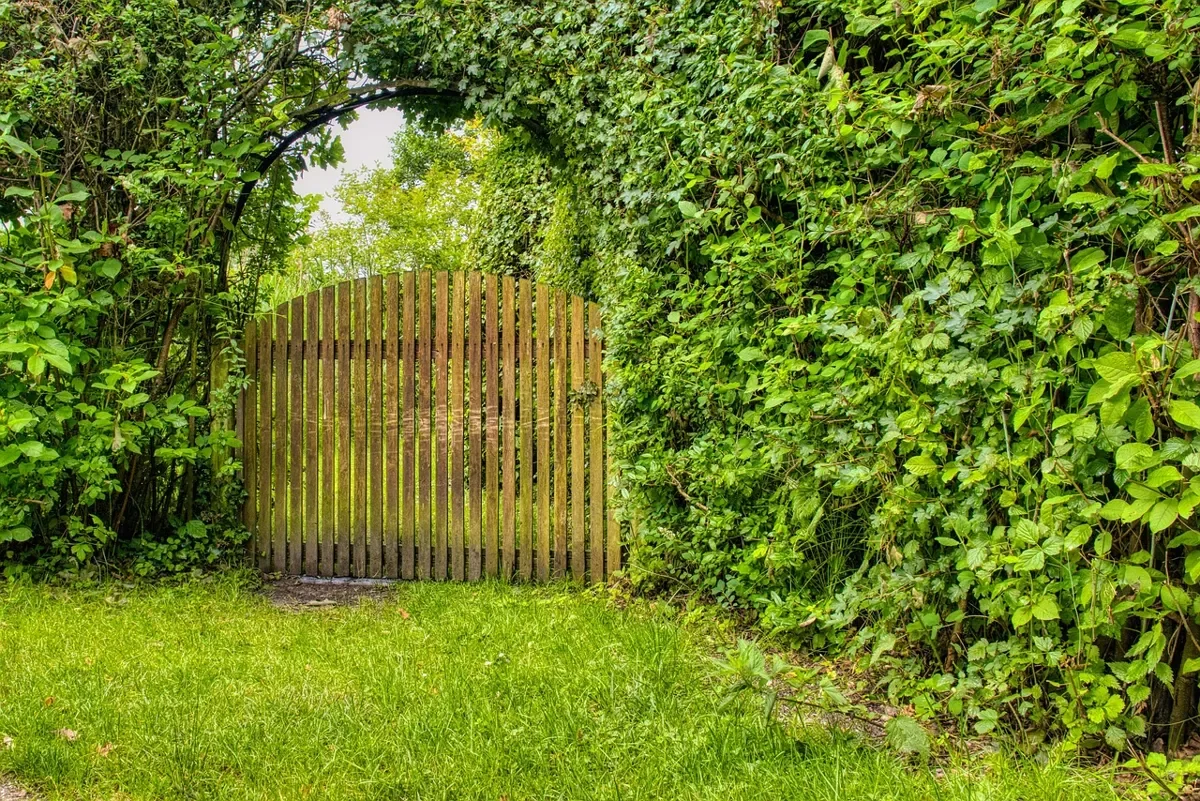
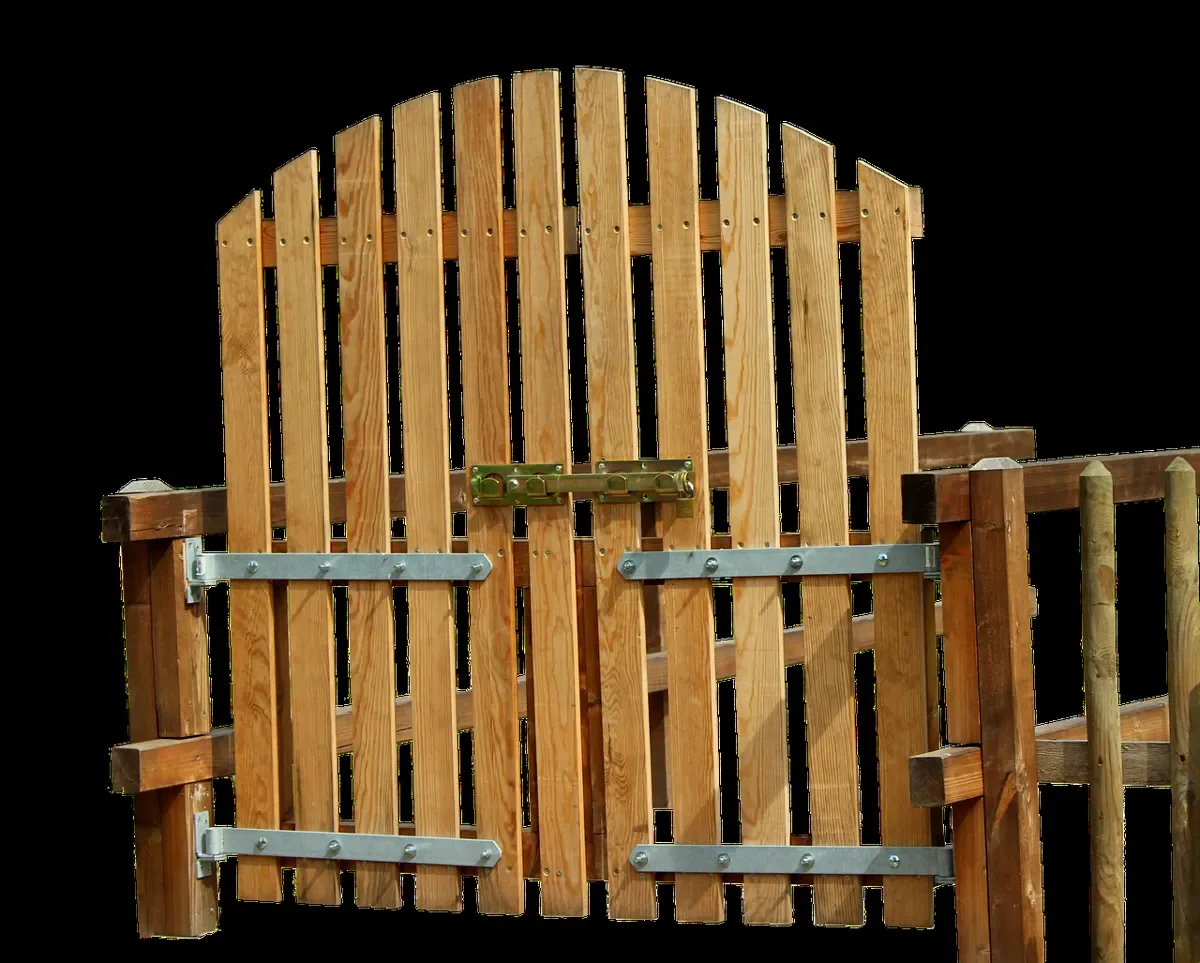
An arch adds a curved top edge to a picket or board gate, and it is the design most people picture when they search for cedar gate ideas. Cut the arch on the pickets or on the top rail, and leave a little extra board length to trim to the curve after assembly. The example below is a picket leaf with a curved top set into a hedge.
5. Horizontal slat gate
Horizontal cedar slats with narrow, even gaps give a modern look. The catch is that horizontal boards make sag visible, because any drop at the latch end tilts every line. Build this style on a rigid, braced frame and keep the leaf narrower than you would for vertical boards.
6. Z-brace farmhouse gate
Vertical boards on a frame with a diagonal brace, sometimes read as a Z shape, is the farmhouse look, and the brace is functional rather than decorative. It is the easiest way to add sag resistance to a wider cedar gate, and it is the design that best matches the fix described below.
7. Double gate for a driveway or side yard
Two leaves meeting in the middle share the load, so each one is narrower and less likely to sag than a single wide leaf. You need a drop rod or latch on one leaf and a firm center stop, and both leaves need the same braced frame. For a mixed look with iron straps or scrollwork, see metal and wood gate ideas for stylish outdoors.
How Heavy Is a Cedar Gate? Calculated Weights
Weight drives hinge choice and sag, and few gate-idea pages state it. The table below is a calculation, not a weighed gate: gate area times a 3/4 inch board thickness times the Wood Database density at 12 percent moisture. It counts one solid layer of boards only, so frame rails, a second board layer for board-on-board, screws and hardware all add to it. A spaced picket gate weighs less.
| Gate size | Area | Western red cedar | Alaskan yellow cedar | Aromatic red cedar |
|---|---|---|---|---|
| 3 x 5 ft | 15 sq ft | 21.6 lb | 29.1 lb | 30.9 lb |
| 3 x 6 ft | 18 sq ft | 25.9 lb | 34.9 lb | 37.1 lb |
| 4 x 6 ft | 24 sq ft | 34.5 lb | 46.5 lb | 49.5 lb |
The takeaway is that species choice alone changes the leaf weight by roughly 40 to 45 percent (34.5 pounds versus 49.5 pounds for a 4 by 6 foot leaf), and the heavier Alaskan yellow cedar also carries the stiffness advantage. If you choose western red cedar to save weight, brace the frame.
How to Stop a Cedar Gate From Sagging
A gate leaf is a lever. Its weight pulls down on the latch end, and the hinges resist by pulling in at the top and pushing out at the bottom. Cedar is soft and low in stiffness, so the screws and frame joints give first. This is a general carpentry approach that works on any wood, but it matters more on cedar.
- Build a square, rigid frame. Join the top and bottom rails to the stiles with exterior-rated glue and screws, and check it is square by measuring both diagonals before you attach any boards.
- Add a diagonal brace. Run it from the bottom corner on the hinge side up to the top corner on the latch side, so the brace is squeezed by the gate weight instead of stretched. A brace that runs the other way does far less.
- Use long strap or T hinges with stainless screws. Fill every hole in the hinge leaf so the load is shared, and predrill to avoid splitting the soft cedar.
- Hang the gate on a solid post. A leaning or loose post defeats a good gate. See the fence post spacing calculator for post spacing guidance.
- Check the latch-side gap each season. A leaf that starts to drag on the ground is telling you the frame or hinges are moving, so tighten the screws and shim before it worsens.
Finishing a Cedar Gate
You can leave cedar bare, and it will weather to a gray tone over time. The Wood Database notes that Alaskan yellow cedar left outdoors weathers to a uniform gray, and gray weathering is the usual result on other cedars too. A finish keeps the warm color, but it does not fix sag or protect against staining from iron fasteners, so treat it as cosmetic care.
- Choosing a product: does cedar stain well explains how cedar takes pigment, and the best fence stain compares clear and semi-transparent options.
- Whether to finish at all: does a cedar fence need to be stained gives a straight answer for fences and gates.
- Water exposure: can cedar wood get wet covers what standing water does to the wood.
Two habits help any cedar gate. Seal the cut ends, because end grain soaks up water fastest, and keep the bottom rail a little above the ground so plants and mulch do not hold moisture against it.
Frequently Asked Questions
What is the best cedar for a gate?
For most gates, western red cedar is the practical choice because it is light, easy to work and rated durable to very durable against decay. Alaskan yellow cedar is about 28 percent stiffer and 48 percent stronger in bending, so it suits a wide gate, but supply is limited and prices run high. Northern white cedar is the lightest option, but it holds screws poorly.
Does a cedar gate need to be stained or sealed?
No, cedar resists decay without a finish, but an unfinished gate will weather to gray and the surface will dent and scratch easily because the wood is soft. A stain or sealer keeps the color and slows surface weathering. Whichever you choose, stainless steel or galvanized hardware matters more for the gate itself, because iron-based fasteners can stain cedar and leave dark marks.
How heavy is a cedar gate?
A 3 by 5 foot gate made from a single layer of 3/4 inch western red cedar boards weighs about 21.6 pounds before framing and hardware, and a 4 by 6 foot gate about 34.5 pounds. These are calculated from the Wood Database density of 23 pounds per cubic foot at 12 percent moisture, so a real gate with frame rails and a second board layer will weigh more.
Why does my cedar gate sag, and how do I fix it?
Cedar is soft and fairly low in stiffness, so a wide gate leaf hangs off the hinge side and drops at the latch corner over time. A diagonal brace that runs from the bottom hinge corner up to the top latch corner holds the frame square, and strap or T hinges that spread the load stop the screws from pulling out of the soft wood.
What hinges and screws should I use on a cedar gate?
Use stainless steel hinges and screws, or hot-dip galvanized hardware, and skip plain steel. The Wood Database notes that iron-based fasteners can stain and discolor western red cedar, especially when it is damp. Long strap or T hinges are kinder to soft cedar than small butt hinges.
Conclusion
Pick the design you like from the seven above, then let the numbers guide the build: western red cedar for a light leaf, Alaskan yellow cedar for a wider one, a diagonal brace on the frame, and stainless steel hardware throughout. Get those right and a cedar gate will hold its shape long after the design stops being the main thing you notice.
Sponsored / affiliate links. As an Amazon Associate I earn from qualifying purchases. I may earn additional commission from eligible campaigns.