Dog Slippers for Wood Floors: Protect and Pamper Paws
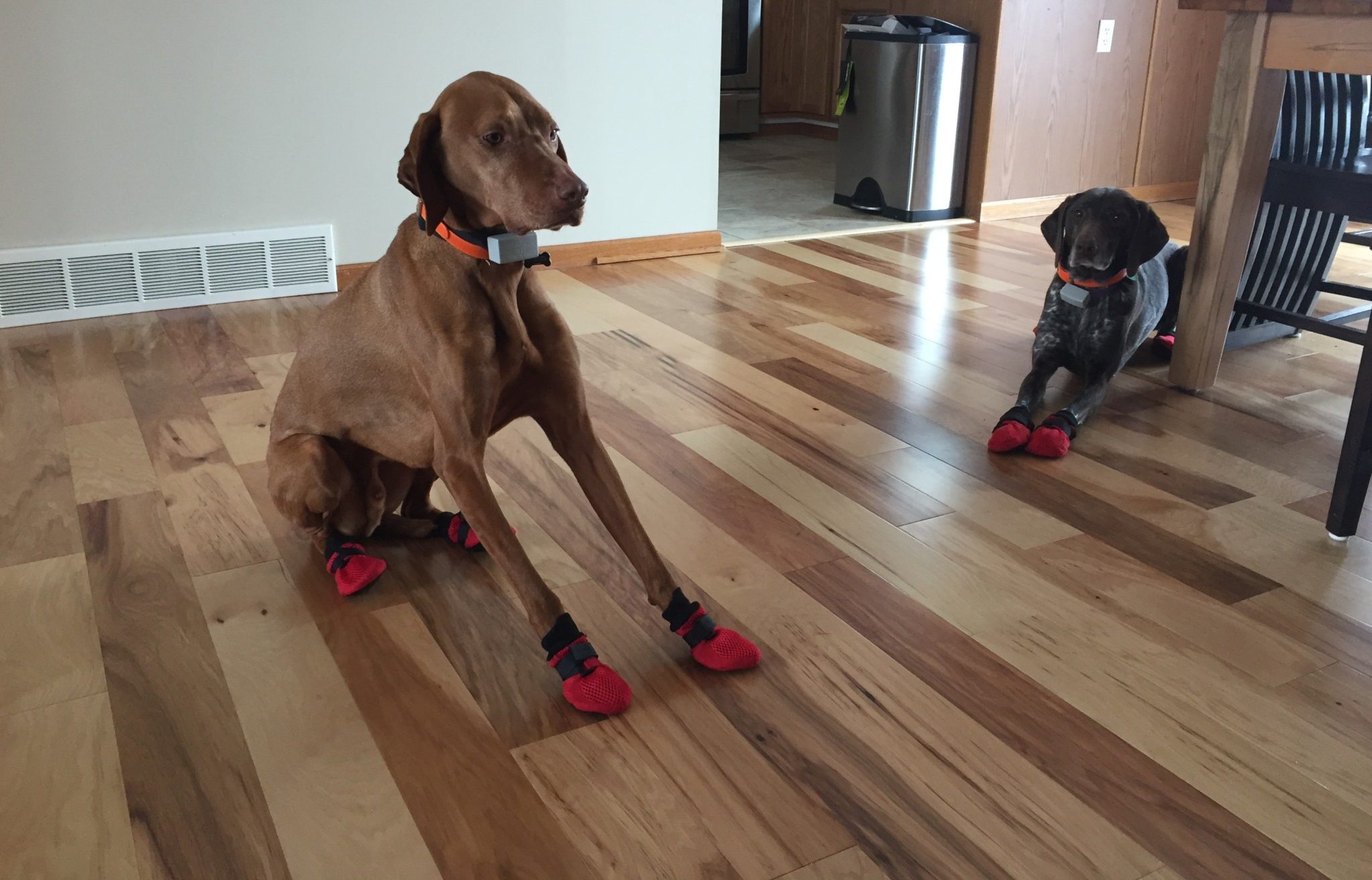
Dog nails scratch and skid on hardwood the same way a person in socks does on tile – and every scramble for traction grinds grit into the finish. Dog booties (often called “dog slippers”) solve both problems: a soft rubber or fabric sole gives the paw grip the bare nail can’t, and the material itself stops nails from contacting the floor at all. Here’s how to pick a pair that actually stays on, works your dog up to wearing them, and keeps them in good shape.
Why Booties Help Both the Dog and the Floor
A dog’s nails are harder than a wood floor’s finish, which is why claws leave fine scratch trails over time, especially on softer finishes or lighter wood species. A well-fitted bootie puts a soft barrier between nail and floor, eliminating that contact entirely. The traction benefit matters just as much: a dog without grip on a slick floor tends to splay its legs and scramble, which is both hard on aging joints and hard on the floor’s finish. A bootie’s textured or rubberized sole restores the grip a bare paw loses on a smooth wood surface, which noticeably helps senior dogs and dogs recovering from leg or hip issues move with more confidence.
Best For A Fast, No-Fuss Fit
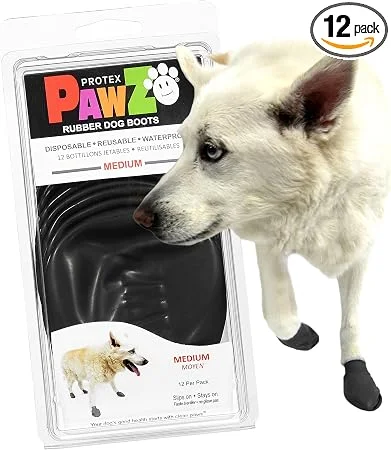 |
PawZ Rubber Dog Boots, Medium, 12-Pack – $21.49 Thin natural-rubber pull-on boots – no straps or velcro to fuss with, which makes them the easiest style to get a reluctant dog used to wearing.
|
For a full side-by-side comparison across more brands, prices, and closure styles (strap, pull-on, or velcro), see our hardwood floor dog booties roundup, which ranks seven options specifically by how well they stay on during normal indoor movement.
Choosing the Right Fit and Material
- Measure before buying. Paw width (not length) is what most sizing charts use – measure the widest part of the paw while your dog is standing and weight-bearing, since paws spread under weight.
- Non-slip sole material. Rubber or a textured rubberized fabric sole is what actually provides floor grip – a smooth fabric sole alone doesn’t solve the traction problem, only the scratch problem.
- Breathable upper. Mesh or breathable fabric uppers keep paws cooler for extended indoor wear than fully sealed rubber.
- Secure closure. An adjustable strap holds better than a pure pull-on for active dogs, though pull-on styles are faster to put on and easier to introduce to a reluctant dog.
Training a Dog to Wear Booties
- Let your dog sniff and investigate the booties first, with no pressure to put them on yet.
- Put one bootie on one paw, reward immediately with a treat, and remove it after a few seconds.
- Repeat with each paw individually over several short sessions rather than trying all four at once on the first try.
- Once all four are on, let your dog stand and take a few steps on a soft surface like carpet before moving to the hardwood floor – most dogs high-step or freeze the first few times, which is normal and resolves with repetition.
- Keep early sessions short and end on a positive note with a treat and praise, gradually increasing wear time over several days.
Maintenance and Care
- Check the sole for wear before each use – a worn-smooth sole loses its grip and defeats the point of wearing booties at all.
- Wipe fabric booties with a damp cloth and mild soap for dirt or stains; hand wash rather than machine wash unless the manufacturer specifically says otherwise.
- Air dry fully before the next use – a dryer’s heat can shrink or warp both fabric and rubber materials.
- Replace booties once the fit loosens or straps stretch out – a loose bootie is a tripping and choking hazard if a dog manages to get it partway off and step on the loose end.
Conclusion
Dog booties genuinely help both your floor and your dog’s confidence on hardwood, but only if they fit correctly, have a real non-slip sole, and your dog has actually been trained to tolerate them. Rushing the introduction is the most common reason booties end up unused in a drawer – short, treat-reinforced sessions over a few days make the difference between a dog that tolerates booties and one that fights them every time.
Frequently Asked Questions
Do dog booties actually prevent scratches on wood floors?
Yes. Booties put a soft barrier between the dog’s nails and the floor, which stops the direct nail-to-wood contact that causes scratch trails. They also improve traction, reducing the scrambling that can grind grit into the finish.
Are dog booties comfortable for pets to wear?
Most dogs adapt within a few short training sessions. Look for a breathable upper and a correct paw-width fit – discomfort usually comes from an ill-fitting bootie (too tight or loose) rather than the concept of wearing them at all.
How do I choose the right size?
Measure the widest part of your dog’s paw while they’re standing and weight-bearing, then check that measurement against the specific brand’s size chart – sizing varies between brands, so don’t assume one brand’s “medium” matches another’s.
Can the same booties be used outdoors?
Some can, but check the specific product – thin pull-on styles meant for indoor floor protection typically aren’t durable enough for regular outdoor wear, while sturdier strap-on boots with thicker soles are usually rated for both.
Sponsored / affiliate links. As an Amazon Associate I earn from qualifying purchases. I may earn additional commission from eligible campaigns.