Dog Suddenly Slipping on Hardwood Floors: Causes and Fixes
When a dog goes from walking normally to sliding across the hardwood floor within a day or two, the fastest explanation usually isn’t your dog at all – it’s the floor. Worn polyurethane finish gets glassy-smooth as it thins out along high-traffic paths, floor cleaners and polishes leave an almost invisible slick film behind, and overgrown nails lift a dog’s paw pads just enough to reduce grip. All three of those causes build up gradually, which is exactly why a genuinely sudden change is worth paying attention to: if the slipping showed up overnight and your dog is also limping, reluctant to stand, or wobbly in the back end, that combination points toward a health issue rather than a slippery floor, and it’s worth a vet visit rather than assuming it’s the flooring. Below are the floor-side causes and fixes first, followed by the signs that mean this isn’t really a flooring problem at all.
Quick Traction Fixes You Can Use Today
If you need an immediate fix while you sort out the underlying cause, a non-slip runner rug down the hallway or across the room your dog crosses most does more for traction than almost anything else – it gives paws something to grip right away, with no waiting for a new floor finish to cure or nails to grow out. Here’s a well-reviewed option built specifically for this:
Best Non-Slip Runner For Dogs
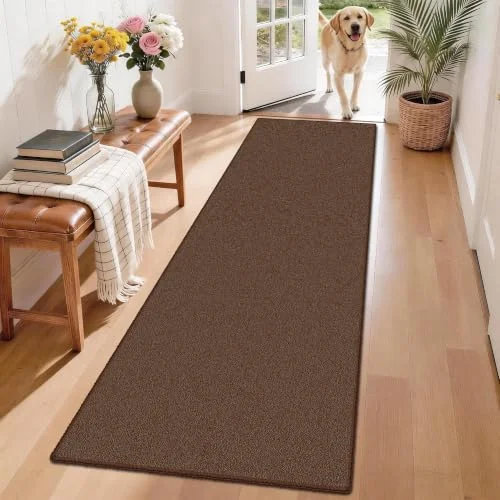 |
TTelephant Waterproof Non-Slip Runner Rug for Dogs – $29.59 A silicone-backed runner built specifically to stop paws from sliding on hardwood – lay it along your dog’s actual walking path for instant traction.
|
Lay it along the exact path your dog actually takes – from the dog bed to the door, or across the kitchen where slipping tends to happen hardest – rather than centered in a room where paws won’t land on it. A silicone or rubber-backed runner will stay put without a separate non-slip pad underneath, which matters on hardwood since some rug pads themselves can trap moisture against the finish.
Why This Happens: The Floor Side
Before assuming it’s your dog, it helps to understand what actually changes on a hardwood floor to make it slicker. Three things do most of the work, and they’re easy to check for yourself.
Worn or Glossy Finish
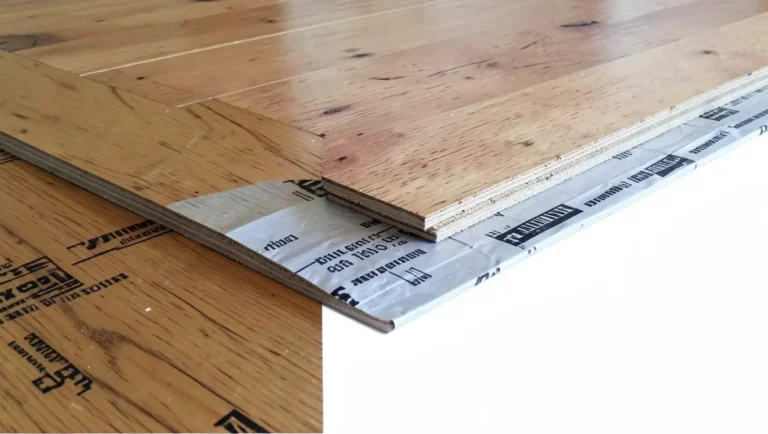
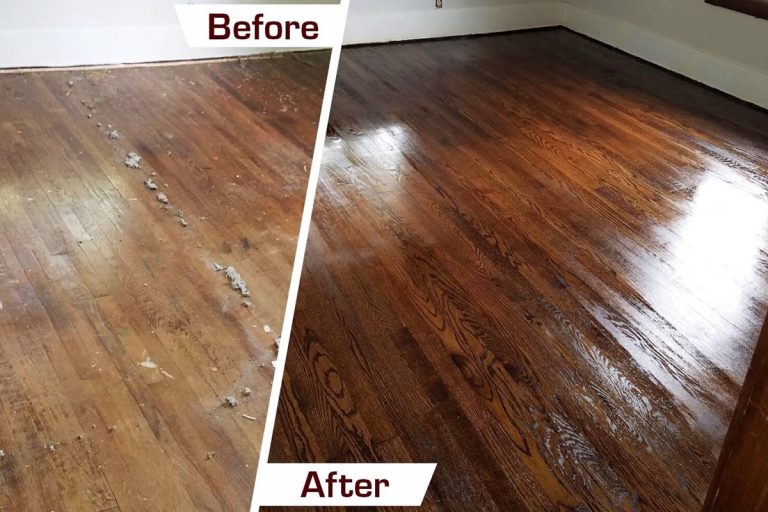
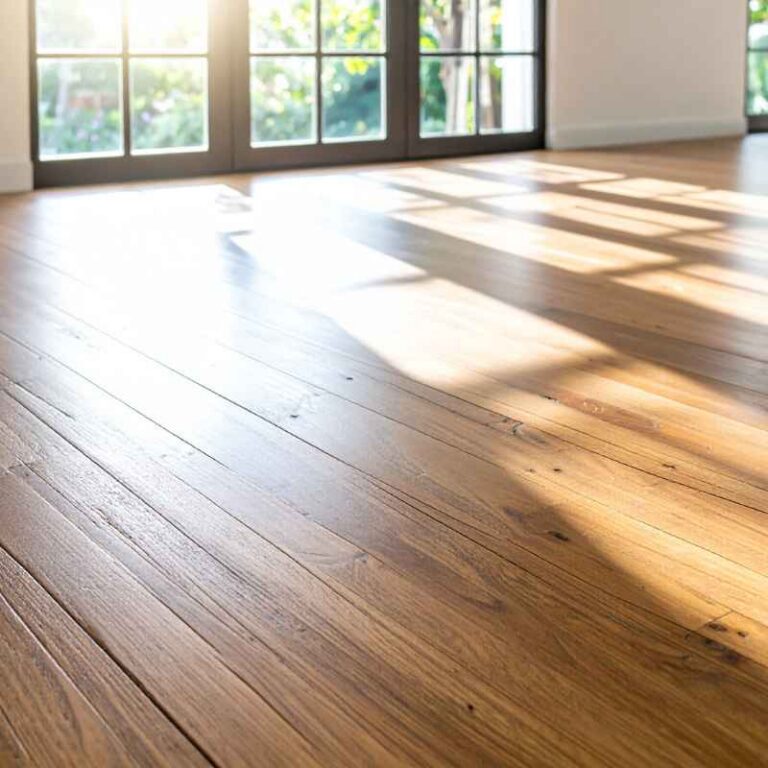
Polyurethane finish has microscopic texture when it’s new, and that texture is most of what gives a paw pad something to grip. As foot traffic (yours and your dog’s) polishes that texture down over months near doorways, in front of food bowls, and along the main walking path, the surface becomes closer to true glass – lower friction, same wood underneath. If your floors were recently refinished or recoated, a high-gloss topcoat can actually feel more slippery than the older, more worn finish it replaced, which is the one case where this cause can feel sudden instead of gradual.
Nail Length and Paw Fur
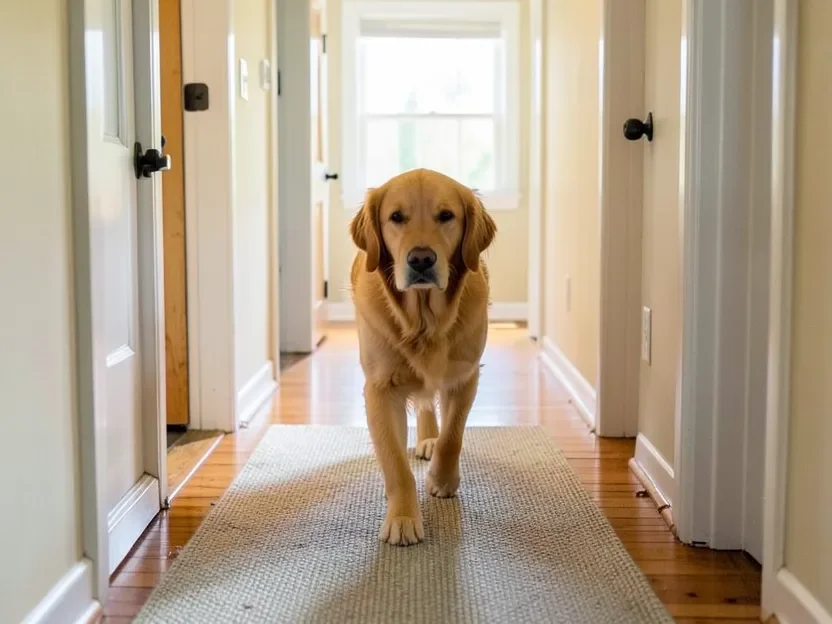
Nails that are too long tip a dog’s toes up off the pad, so the claw – not the soft, grippy part of the paw – is what actually touches the floor. A simple check: have your dog stand still on a hard surface. If you hear the nails click with every step, they’re long enough to be reducing traction. Breeds with fur between the paw pads (Poodles, Doodles, Old English Sheepdogs) have a second version of the same problem – the fur itself covers the grippy part of the pad and needs trimming flush with the pad, not just the nails.
Cleaner and Polish Residue Film
This is the cause most guides skip, and it’s a common one: many all-purpose and “shine-boosting” hardwood cleaners contain silicone or wax-based polymers meant to leave a glossy finish behind. Used once, that’s not a problem. Used weekly for months, those polymers build up into a thin, slick film on top of the real finish – the floor looks shinier and is measurably harder for a paw pad to grip. If your dog’s slipping got noticeably worse after you switched cleaning products, changed your mopping routine, or had the floors professionally polished, this is worth checking before anything else.
Fixing the Floor Itself
Once you know which of the three causes above is driving it, the fixes are straightforward and mostly don’t require refinishing anything.
Non-Slip Rugs and Runners on High-Traffic Paths
Runners with a silicone grip backing (rather than rubber, which can discolor finish over years of contact) anchored along hallways, in front of doors, and around food and water bowls cover the spots where slipping actually happens. You don’t need to carpet the whole room – just the paths your dog walks most.
Matte or Textured Finish Topcoats
If your floors are due for refinishing anyway, ask your flooring contractor for a matte or satin sheen with a texture additive mixed into the topcoat, instead of a high-gloss finish. It still reads as real hardwood and adds meaningfully more grip than gloss without changing the wood species or stain color underneath.
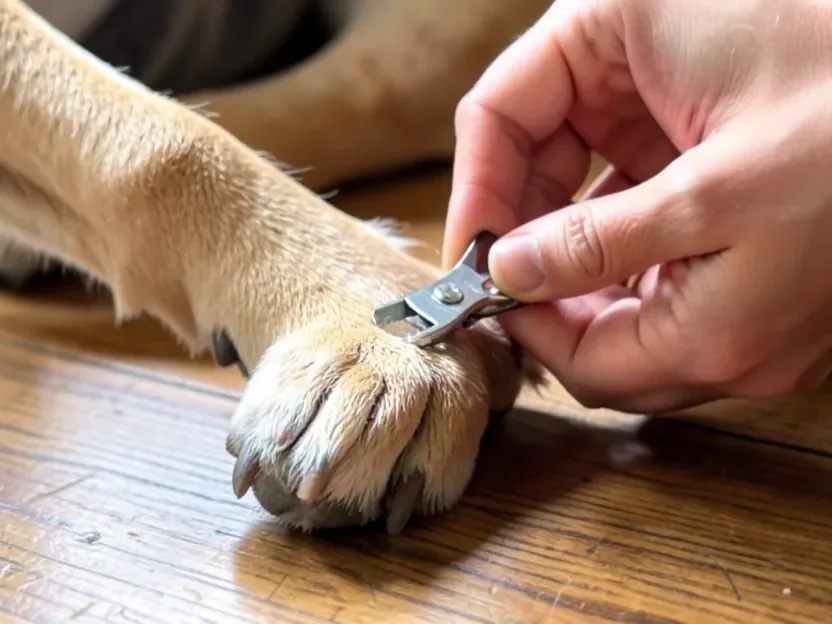
Trim Nails on an Actual Schedule
Most dogs need a nail trim every two to three weeks, more often for dogs that don’t get enough outdoor walking on concrete to wear nails down naturally. Trim a small amount frequently rather than a lot infrequently – it’s easier to avoid the quick (the blood vessel inside the nail) that way, and it keeps the click test from ever coming back.
Traction Socks or Booties for the Transition Period
If your dog needs traction help everywhere in the house right away – not just the hallway a runner covers – grip socks or booties are the faster fix while nails grow out or you sort out the floor finish. Our comparison of dog boots for hardwood floors breaks down sole material, closure design, and real pricing across seven picks if you want that option instead of, or alongside, a floor runner.
When Sudden Slipping Might Not Be the Floor
A floor problem develops gradually – finish wears down over months, nails grow out over weeks. If your dog was walking normally yesterday and is sliding today, or the slipping is happening on carpet and non-slick surfaces too, that pattern doesn’t fit a flooring explanation on its own.
This is worth flagging clearly: if the slipping is truly sudden and paired with any of the following, it’s worth a vet visit rather than assuming it’s the floor.
- Limping or favoring one leg
- Reluctance to stand up, jump, or climb stairs
- Weakness or wobbliness, especially in the back legs
- One side of the body affected more than the other
- Slipping paired with confusion, vomiting, or a head tilt
Sudden hind-limb weakness or loss of coordination in dogs can point to anything from an arthritis flare-up to a slipped disc to a more serious neurological issue, and the range of possible causes is wide enough that guessing from home isn’t useful. This isn’t a diagnosis, and nothing here is a substitute for a vet exam – it’s only meant to help you recognize when “the floor got slippery” isn’t the full explanation, so you call your vet instead of buying a rug and waiting to see if it resolves on its own.
Frequently Asked Questions
Why Is My Dog Suddenly Slipping on Hardwood Floors?
Most of the time it’s the floor, not the dog: a worn or newly-refinished glossy finish, a slick residue film from cleaning or polishing products, or nails that have gotten long enough to lift the paw pad off the surface. If the change happened overnight and your dog also seems weak, reluctant to move, or is limping, treat it as a possible health issue and check with a vet rather than assuming it’s the flooring.
Can Nail Length Really Cause a Dog to Slip?
Yes. Nails that are too long tip the toe upward so the hard claw touches the floor instead of the grippy paw pad. You can check by listening for a clicking sound as your dog walks on a hard surface – if you hear it, the nails are long enough to be cutting into traction, and trimming them (or a professional nail grind) will usually help within days.
Do Floor Cleaners Make Hardwood More Slippery for Dogs?
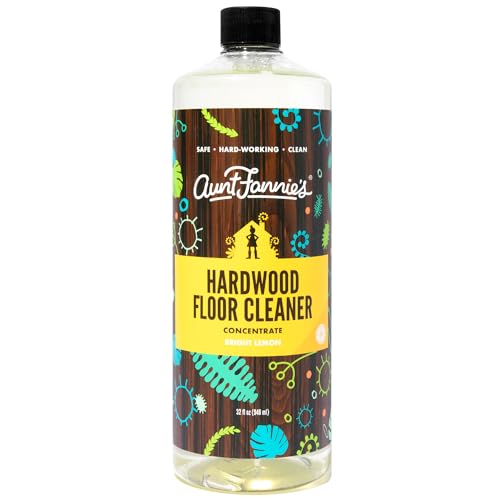
Some do. Cleaners and polishes with silicone or wax additives are designed to add shine, and repeated use builds up a slick film on top of the actual floor finish. A pH-neutral hardwood cleaner without polish or shine additives, and an occasional damp-microfiber pass to strip built-up residue, avoids the problem.
When Should I Take My Slipping Dog to the Vet?
If the slipping came on suddenly (not a gradual worsening over weeks or months) and is paired with limping, reluctance to stand, weakness, one-sided symptoms, or confusion, it’s worth a vet visit. Those signs suggest the cause may be orthopedic or neurological rather than a slick floor, and a vet exam is the only reliable way to tell the difference.
A dog suddenly slipping on hardwood floors is usually a floor problem with a quick fix: a runner rug on the paths they actually walk, nails trimmed on a real schedule, and a cleaning routine that doesn’t leave a slick film behind. But because “sudden” is the key word in that sentence, it’s worth ruling out a real medical cause first – especially if the slipping showed up overnight and your dog seems weak, sore, or unsteady in ways that go beyond just losing their footing on a shiny floor.
Sponsored / affiliate links. As an Amazon Associate I earn from qualifying purchases. I may earn additional commission from eligible campaigns.