Easy Wood Burning Patterns for Beginners: Start With the Right Wood
Pine gets recommended constantly for beginner pyrography, but it is actually one of the harder softwoods to get clean results from – its resin pockets flare up, smoke more, and burn unevenly compared to the surrounding grain. Basswood is the real standard, prized specifically for pyrography because of its fine, tight, even grain and very low resin content, which lets a burned line come out consistent from one end to the other. Start there, and these five patterns, and the results will look far more finished than the same patterns burned into pine.
Wood, Tool, and Tip Basics
Best Starter Kit For New Pyrography Hobbyists
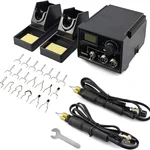 |
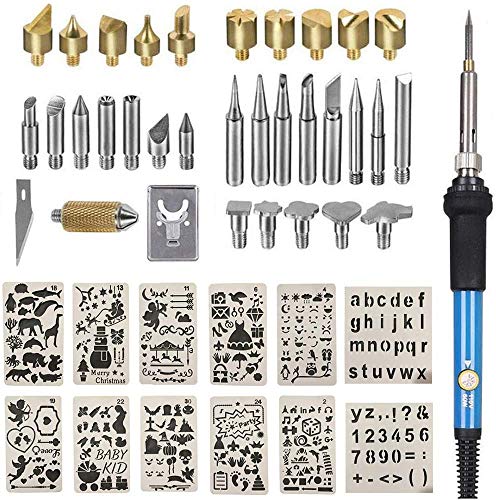
TEKCHIC 60W Wood Burning Kit, 20 Wire Tips – $40 A digital temperature dial and enough interchangeable tips to practice lines, shading, and detail work without buying separate pens for each.
|
Look for basswood craft plaques or birch plywood at a craft store – both take an even burn well. Sand the surface with 220-grit before you start; a smoother surface burns more predictably than one with visible sanding marks. For tools, a wire-tip pen (the nib heats and cools fast, changeable in seconds) is more versatile for a beginner than a solid-tip pen, which holds heat longer and suits large fill areas better once you have some practice. A universal writing or calligraphy tip is the one to start with – it handles both outlines and basic shading. If you want to compare more options before buying, our guide to the best wood burning kits for adults breaks down current picks by price and tip count.
Five Easy Patterns to Start With
1. Straight-Line Practice Grid
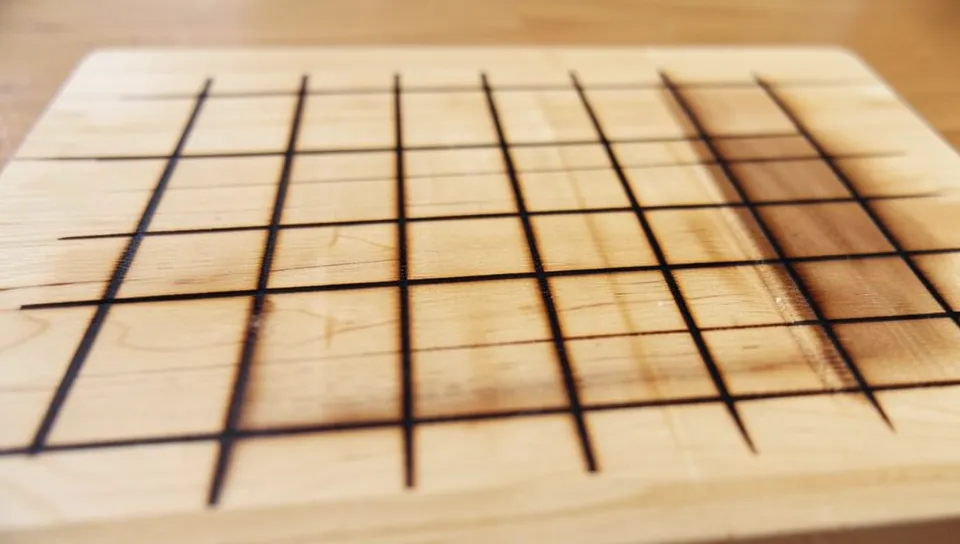
Before burning any actual design, draw a grid of straight lines on a scrap piece and burn along each one at a different speed. This single exercise teaches you more about how speed controls darkness than any pattern will, and it costs you nothing but scrap wood.
2. Simple Leaf Outline
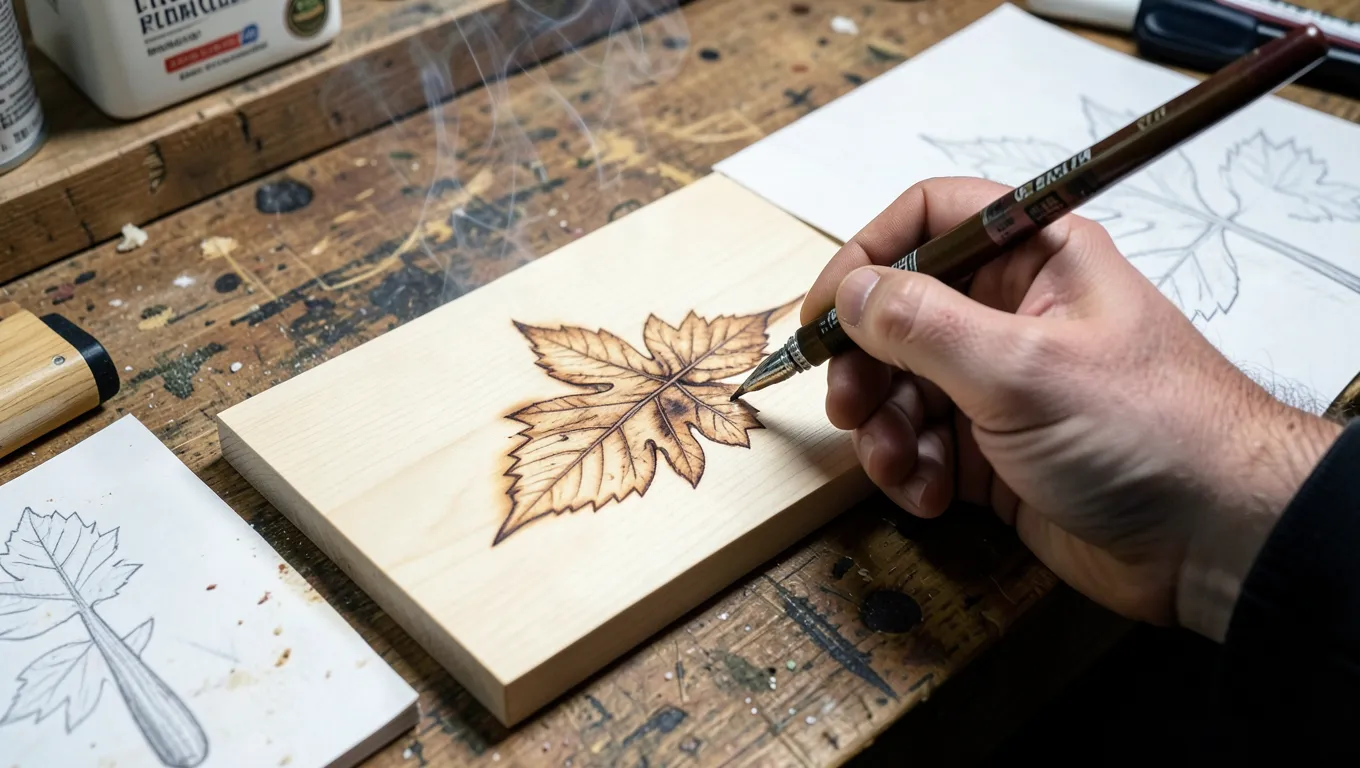
Trace a basic leaf shape, burn the outline first, then add a center vein and two or three side veins. The asymmetry of a leaf is forgiving of small hand-shake, which makes it a good first “real” design.
3. Scalloped Border
A row of connected half-circles around the edge of a coaster or plaque teaches consistent curved strokes, which are harder to control than straight lines. Keep your wrist steady and rotate the workpiece instead of twisting your hand through the curve.
4. Basic Geometric Mandala
Lightly pencil a circle with a compass, mark it into six or eight equal sections, and repeat one simple shape (a petal, a triangle, a dot) in each section. Repetition of a simple element reads as more sophisticated than it is to burn.
5. Monogram Letter
A single large initial in a clean serif or block font, outlined and then filled solid, is one of the most requested first “finished gift” projects for a reason – it looks intentional even with a slightly uneven fill.
Controlling Darkness: Speed, Not Just Heat
New pyrography hobbyists usually reach for the temperature dial to control how dark a line comes out, but stroke speed matters just as much. A slow, steady pass at a moderate temperature burns darker than a fast pass at a higher temperature, and it is far easier to control consistently. Set the temperature once for the tip and wood you are using, then adjust darkness by how fast you move the pen, not by constantly changing the dial mid-project.
Ventilation Matters More Than People Expect
Burning wood releases smoke and fine particulates, and doing it at a desk for an hour without airflow is a real, if often overlooked, indoor air quality issue. Work near an open window or with a small fan pulling air away from your face, and take breaks if you notice a headache or throat irritation building up during a long session.
Frequently Asked Questions
What is the best wood for beginner pyrography?
Basswood is the standard choice because of its fine, even grain and very low resin content, which produces a consistent burn line. Pine is common but its resin pockets can cause smoking and uneven burns.
Why does my wood burning look uneven?
Inconsistent stroke speed is the most common cause, followed by using a resin-heavy wood like pine, where sap pockets burn differently than the surrounding grain. Practice controlling speed on scrap wood before starting a real design.
How do I make my wood burning lines darker?
Slow your stroke speed rather than only increasing the temperature. A slow, steady pass at a moderate temperature gives more control than a fast pass at a high one.
Is wood burning smoke dangerous indoors?
Extended sessions without ventilation can cause headaches or throat irritation from the smoke and particulates. Work near an open window or with a fan pulling air away from your workspace.
Sponsored / affiliate links. As an Amazon Associate I earn from qualifying purchases. I may earn additional commission from eligible campaigns.