Can You Store Firewood Under a Deck?
Yes, if the space stays dry, has open airflow, and stays clear of ignition sources; avoid it if runoff, trapped humidity, or pests can reach the wood. Poor storage can leave logs moldy, infested, or too wet to burn well, and it can also create a fire risk near framing and utilities. This guide explains when under-deck storage is acceptable, when it is risky, and how to set it up so firewood dries instead of trapping moisture.
Choosing the right spot based on airflow and moisture
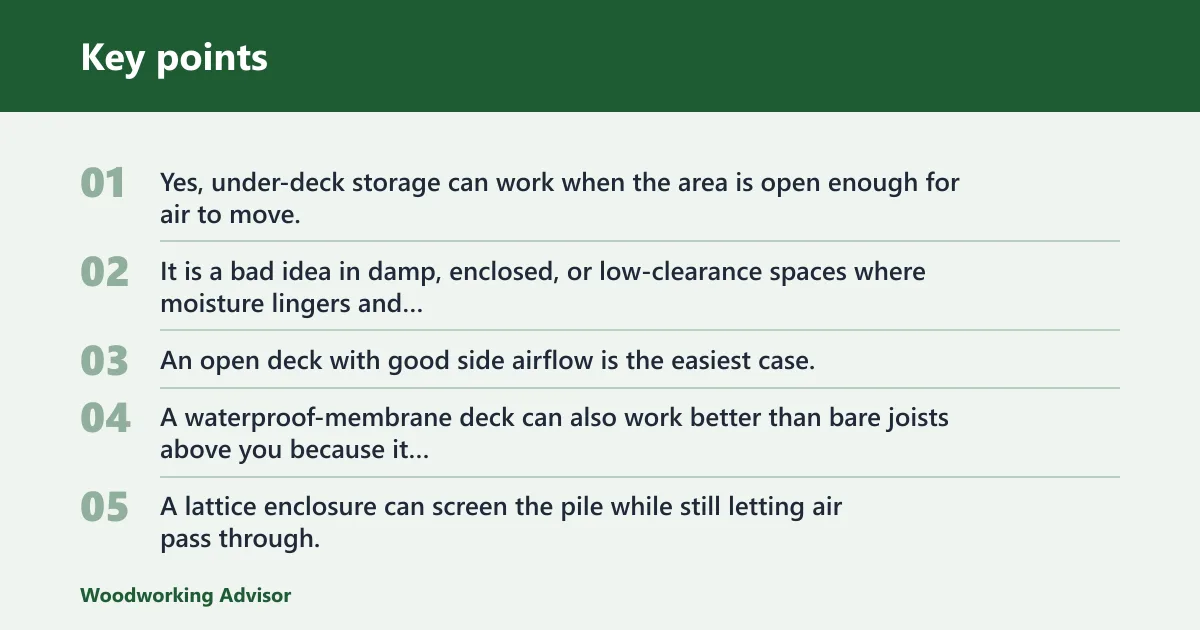


Yes, under-deck storage can work when the area is open enough for air to move, the wood stays off soil, and rainwater does not splash or pool around the stack. It is a bad idea in damp, enclosed, or low-clearance spaces where moisture lingers and mold can build on the pile.
When under-deck storage works
An open deck with good side airflow is the easiest case. A waterproof-membrane deck can also work better than bare joists above you because it catches rain and sends water toward a gutter, but it still needs drainage and ventilation below. A lattice enclosure can screen the pile while still letting air pass through.
When to choose another location
Choose another spot if the underside is fully enclosed, if you see constant dampness, or if the stack would sit in splashback from runoff. Newly split or green wood should not go into a closed under-deck space. In that setting, it dries slowly and can feed mold, insects, and decay.
📊 wikiHow recommends keeping stacked firewood at a maximum height of 5 feet. Source: Wikihow.
Firewood storage checklist
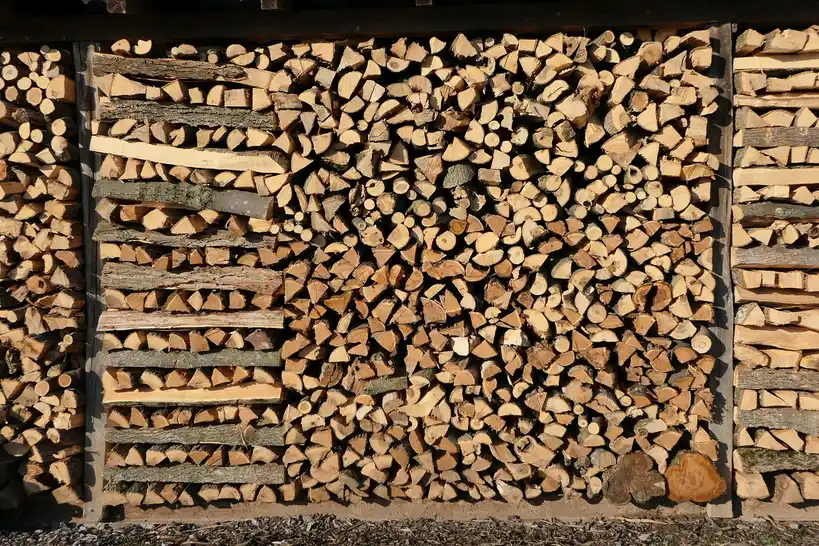
Use this checklist to decide whether the spot fits the job. The goal is dry wood with open airflow, not a sealed space that looks tidy but holds moisture. If several items fail, pick a different location.
| Deck type | Acceptable storage setup | Red flags | Recommended clearance/spacing |
|---|---|---|---|
| Open deck | Firewood rack or pallet base, stack kept under cover but open on the sides | Water dripping from above, muddy soil, blocked airflow | Leave an air gap from posts and framing; keep the pile several feet from the house |
| Waterproof-membrane deck | Raised rack or pallet base under the membrane area, with drainage path left open | Pooled runoff, clogged gutter path, damp corners, no side ventilation | Keep space under the stack for air movement; do not place wood where water can pond |
| Lattice-sided deck | Stack behind lattice that does not block cross-ventilation, with roof or overhead cover above | Solid liners behind the lattice, plastic wrapped tight around the stack | Keep a clear airflow gap on more than one side; do not press the pile against the screen |
| Fully enclosed under-deck space | Only if it stays dry, vented, and elevated on a rack with easy access for rotation | Wet concrete, soil contact, no vents, condensation, or stale air | Leave open air paths and room to inspect all sides; otherwise move the wood elsewhere |
Firewood storage checklist: use a firewood rack
- Use a firewood rack or pallet base so the stack stays off the ground.
- Keep the wood under roof or overhead cover if rain or snow can reach it.
- Leave side openings for airflow; do not seal the pile into a boxy, damp pocket.
- Keep the stack away from house siding, deck framing, and utility runs.
- Choose seasoned firewood for under-deck storage, not wet or green wood.
- Check for splashback, pooling, condensation, or mold after heavy rain.
What makes under-deck storage work
Airflow, drainage, and elevation matter most. If one of those fails, the stack can stay wet even under a roofed area. Good under-deck storage keeps water moving away from the pile and keeps air moving through it.
Airflow and drainage
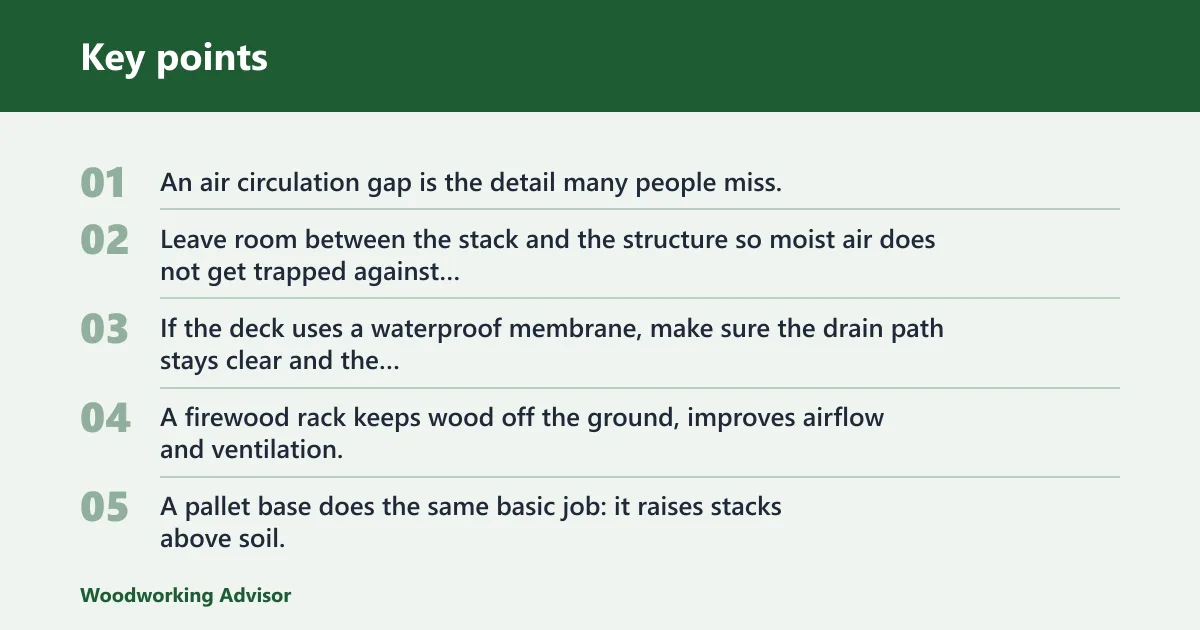
An air circulation gap is the detail many people miss. Leave room between the stack and the structure so moist air does not get trapped against joists, posts, or lattice. If the deck uses a waterproof membrane, make sure the drain path stays clear and the underside does not become a damp chamber.
Raised storage off the ground
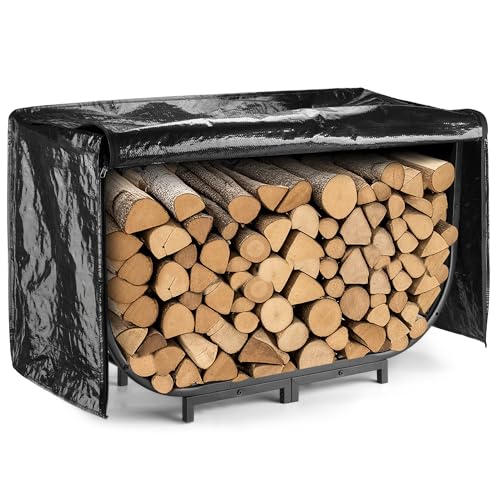
A firewood rack keeps wood off the ground, improves airflow and ventilation, and can be used outdoors under cover. A pallet base does the same basic job: it raises stacks above soil, reduces ground moisture contact, and works best when air can move underneath. One safe setup is to place firewood on a tarp, cement foundation, or wooden pallet.
Keep the stack within a manageable height. wikiHow recommends keeping stacked firewood at a maximum height of 5 feet, which helps with stability and lets air reach more of the pile. Higher stacks can block air circulation and become harder to inspect.
Side access for drying and rotation
You need room to reach the ends of the stack. That lets you rotate newer splits, pull out dry pieces first, and spot damp sections before they spread mold. If access is tight, the space is too enclosed for dependable storage.
Picture a roughly 10-foot-wide open underside with a rack centered under the deck. If the rack sits on a pallet, stays a few inches off the soil, and has clear space on both sides, it is far more workable than a pile pressed into a corner where runoff collects.
Can you store firewood on a deck?
Yes, but only if the deck is built for the load and the storage method does not trap moisture against the boards. A small, raised rack may be fine on a sturdy deck surface, but a full stack can be too heavy, messy, or moisture-prone for many decks. Check the deck’s load rating before you pile on wood.
Weight and moisture concerns
Even dry firewood is heavy enough to matter in bulk, and wet wood is heavier still. Moisture can also stain boards and encourage decay where the stack sits. Keep the pile limited, use a base that spreads the load, and avoid placing wood where water drains slowly across the deck surface.
Why a deck box is not always enough
A deck box can work for a small amount of dry kindling or short-term storage, but it may not suit every setup. Closed boxes can trap moisture if the wood is not already seasoned or if the box has poor ventilation. If you use one, choose a design that leaves room for airflow and does not create a sealed, damp enclosure.
Say your deck box fits a few armloads of split oak, but the lid closes tightly and the box sits in shade after rain. That setup can hold humidity inside, even if the wood started out dry. A vented rack under cover is usually safer for longer storage.
Better on-deck alternatives
For on-deck storage, use a small rack with open sides rather than a solid container. Keep it off the boards with feet or spacers, and leave gaps around the sides. If the deck surface stays wet for long periods, move the wood elsewhere.
How dry should firewood be before storing it under a deck?
Seasoned firewood is the preferred choice near a structure because dry wood burns more efficiently and is less likely to mold or support pests. The Hearth.com discussion notes the wood is below 20% moisture, which is a useful benchmark for ready-to-burn wood. Green wood belongs in an open drying spot, not a closed under-deck space.
Seasoned wood versus green wood
Seasoned wood has had time to lose much of its internal moisture. It is better for storage near a house or deck because it resists mold and lights more reliably. Green wood can sit under a deck and still stay wet inside, especially if the area blocks sun and air movement.
Why moisture content matters
High moisture makes firewood harder to burn and increases the chance of creosote in a chimney. Wet wood also gives molds and insects better conditions. If the wood feels damp, smells sour, or shows dark surface patches after storage, the space is holding too much moisture.
When to move wetter wood elsewhere
If the split ends still feel cool and damp, move the stack to a sunnier, better-ventilated place. Use an open rack, not a closed box or plastic wrap. The goal is drying, not hiding moisture under a deck.
How do you keep firewood dry without trapping moisture?
Use a roof or overhead cover, keep the sides open, and let water drain away from the base. That is safer than wrapping the stack tightly. A tarp can help only if it sheds water without sealing the pile, and it should not touch the ground or block the sides.
Roof or overhead cover
A roof over the deck makes the wood stay dry, and that is more reliable than loose sheet coverage. Roof or overhead cover protects firewood from rain and snow, and it works best with side airflow. If the cover reaches too low or blocks venting, condensation can become the new problem.
Tarp and plastic pitfalls
Lehnhoff’s warns that simply tossing a tarp over wood is not enough. Plastic sheeting or a tarp can trap moisture if it wraps the stack too tightly or reaches the ground. Use only enough coverage to shed rain from the top while leaving the sides open.
Lattice and side ventilation
Lattice enclosure can screen the pile while allowing airflow, but it should not block cross-ventilation. If the lattice is backed by solid sheathing or plastic, it stops behaving like a vented screen and starts acting like a damp wall. That is when storage quality drops.
Does firewood under a deck attract termites or bugs?
It can, but the risk depends on moisture, soil contact, and how close the stack sits to the house. Dry, seasoned wood on a raised rack is less attractive than wet wood touching the ground. The bigger problem is often the conditions around the pile, not the fact that it sits under a deck.
What attracts pests
Pests are drawn to moisture, cover, and easy access. Rotten wood, bark debris, and damp soil near the stack all make conditions better for insects. A firewood rack helps keep pests away by lifting the wood off the ground and limiting hiding places.
Why contact with soil matters
Direct contact with soil keeps the bottom layer damp and gives insects a path into the stack. A pallet base reduces ground moisture contact and improves airflow underneath. If the underside of the deck is already wet, a pallet alone is not enough.
How distance from the house helps
Keep firewood several feet from the house to reduce pest concerns. One common benchmark is at least 3 feet from the home, and another guideline places the stack at least 20 feet away in a sunny, well ventilated area. Those numbers are not interchangeable; the tighter distance is a minimum-style separation, while the larger one is a more cautious outdoor placement. (Wikihow)
Under-deck storage should also stay away from siding, vents, and utility penetrations. If bugs move into the pile, a little extra distance gives you a better buffer and makes inspection easier.
Frequently asked questions
Can you store firewood under a deck?
Yes, if the under-deck space is dry, open to airflow, and raised off the ground. It is a poor choice when runoff, blocked vents, or trapped humidity can keep the wood damp. Open or membrane-lined decks are more workable than fully enclosed spaces.
Can you store firewood in a deck box?
A deck box can hold a small amount of dry wood, but only if it allows some ventilation. A closed box can trap moisture and mold the contents, especially with green wood or poor drainage. It is better for short-term, protected storage than for curing damp wood.
How dry does firewood need to be before storing it under a deck?
Seasoned wood is the best fit for under-deck storage, and a common reference point is below 20% moisture. Wetter wood belongs in a more open drying area. If the stack is still damp to the touch, move it to better airflow before placing it under cover.
Do you need a roof or waterproof liner under a deck for firewood?
A roof or waterproof membrane helps a lot, but it does not make the space fully watertight. The area still needs drainage and ventilation. Without those, the underside can stay humid and leave the stack vulnerable to mold, condensation, and slow drying.
Sponsored / affiliate links. As an Amazon Associate I earn from qualifying purchases. I may earn additional commission from eligible campaigns.