5 Best Chainsaws for Cutting Firewood (2026): We Compared
For many homeowners cutting firewood, the Greenworks 60V 16 in Cordless Electric Chainsaw appears to be a practical fit in this lineup because it offers a 16-inch bar, cordless convenience, and enough power for typical firewood rounds without gas upkeep. Choose by log diameter, wood hardness, and how many cords you cut each year.
Quick comparison
| Product | Badge | Best for | Price | ||
|---|---|---|---|---|---|
 |
NEO-TEC 31.8cc Gas ChainsawNEO-TEC | Our pick | 31.8cc · 14 in · gas powered | $119.99
Price as of 9 Nov 2026
|
View |
 |
SENIX Electric Chainsaw,16" Corded Chain Saw,CSE12-MSENIX | Pair with it | 12 amp · 16 in · corded electric | $48.00
Price as of 9 Nov 2026
|
View |
 |
VEVOR Gas Chainsaw 52CC 2-Cycle Gasoline Powered Chainsaw 18VEVOR | Budget pick | 52cc · 18 in · gas powered | $105.90
Price as of 9 Nov 2026
|
View |
 |
Greenworks 60V 16 in Cordless Electric ChainsawGreenworks | Also great | 60V · 16 in · cordless electric | $299.99
Price as of 9 Nov 2026
|
View |
 |
Goqvuzo 58cc Gas Chainsaw 20 Inch High Power Wood CuttingGoqvuzo | Upgrade pick | 58cc · 20 in · gas powered | $24.97
Price as of 9 Nov 2026
|
View |
There is no one-size-fits-all chainsaw for firewood. A short bar helps with limbing and small logs. A longer bar, plus more power, matters as rounds get bigger or the wood gets harder.
How we chose
The picks below are grouped by job size, not brand popularity. The main filters are bar length, power source, wood type, and whether the saw suits casual firewood cutting or heavier weekly use.
Weight, balance, and maintenance also matter. A saw that is easy to tension, easy to oil, and comfortable to control is more likely to get used safely and often.
Finally, the list stays focused on real firewood work: bucking logs into stove-length rounds, trimming branches, and handling the occasional light felling cut.
Choose your firewood chainsaw in 60 seconds
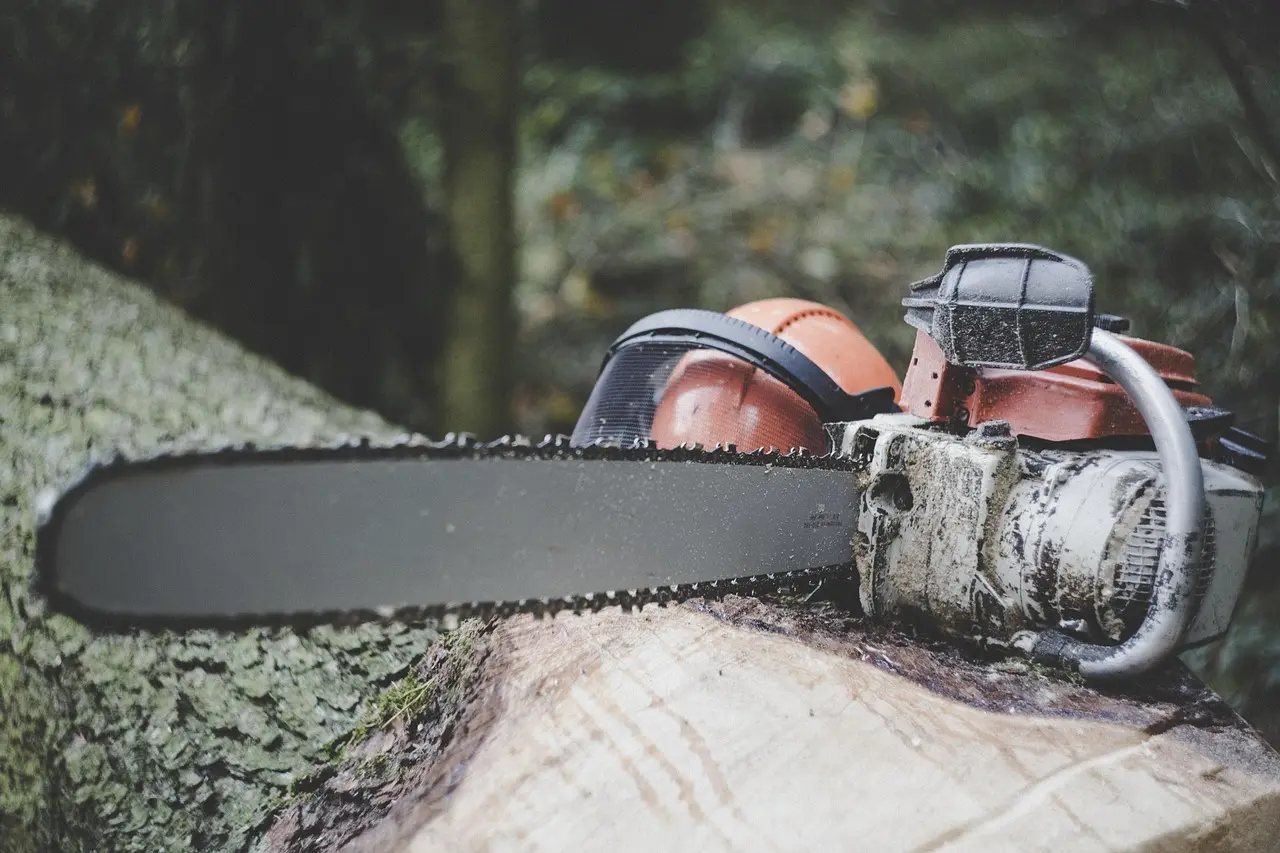
| Log diameter | Wood type | Annual cords cut | Power source | Recommended bar length | Red-flag mistakes |
|---|---|---|---|---|---|
| Up to 8 inches | Softwood or dry mixed wood | Under 1 cord | Corded electric or small battery | 14 to 16 inches | Buying a large gas saw that is heavier than needed |
| 8 to 14 inches | Mixed hardwood and softwood | 1 to 3 cords | Battery or gas | 16 to 18 inches | Choosing too-short a bar and forcing the cut through the full diameter |
| 14 to 18 inches | Hardwood, knotty wood, or frozen rounds | 3 to 6 cords | Gas or high-voltage battery | 18 to 20 inches | Underpowering the saw and stalling in oak, beech, or similar dense wood |
| 18 to 24 inches | Large hardwood rounds | 6+ cords | Gas | 20 to 24 inches | Using a light-duty battery saw for repeated big cuts |
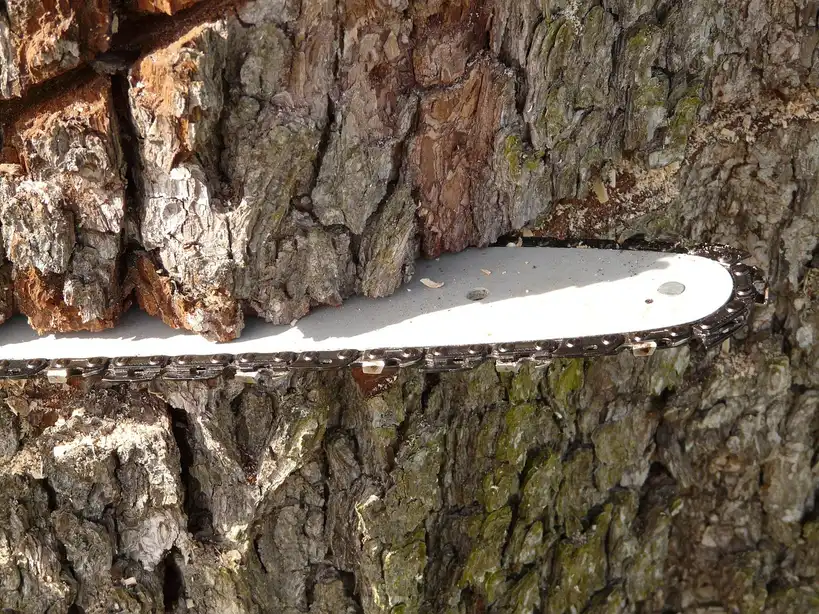
A practical clearance rule helps: the bar needs to reach past the log surface enough to cut cleanly without pinching the nose or burying the tip. If you have to work the saw from both sides on every round, step up in bar length or power.
Say your firewood pile is mostly 10-inch oak and maple. A 16- to 18-inch saw is usually the better match than a 14-inch saw, because hardwood slows smaller saws and leaves less margin for clean bucking.
Best overall for most homeowners: Greenworks 60V 16 in chainsaw
- Brushless motor for fast cutting
- Tool-free chain adjustment
- Includes battery and charger
This is the best all-around choice for homeowners who want a cordless saw for firewood, trimming, and occasional light felling. The 60V class, 16-inch bar, tool-free chain adjustment, battery, and charger make it the most complete plug-and-go option in this group.
It fits small to medium firewood rounds well, especially when you want less noise and less upkeep than gas. The main drawback is runtime: repeated cuts in hardwood, cold weather, or larger rounds can drain a battery faster than many buyers expect.
Best gas pick for bigger rounds: VEVOR 52cc 18 in chainsaw
- 52cc engine for stronger cutting
- 18-inch bar handles larger logs
- Built-in shock absorber helps reduce vibration
This is the strongest fit for buyers who cut thicker firewood and want a gas saw with more muscle for regular bucking. The 52cc engine and 18-inch bar suit larger logs better than a small pruning saw, and the built-in shock absorber is aimed at reducing vibration during longer sessions.
Gas remains the better choice when you need longer run time and quicker refueling than battery allows. The tradeoff is more maintenance, more noise, and more weight to manage around the wood pile.
Best compact gas saw: NEO-TEC 31.8cc 14 in chainsaw
- Lightweight, compact design
- Easy-start setup
- Suitable for pruning and firewood cutting
This is the right pick for small logs, pruning, and occasional firewood prep where a lighter saw is easier to control. The 31.8cc engine and 14-inch bar make it compact, and the easy-start setup should appeal to buyers who want a simple gas saw for light duty.
The drawback is obvious: a 14-inch bar is not the best fit for bigger hardwood rounds. If your firewood pile regularly includes medium or large logs, you will likely outgrow it quickly.
Best budget corded option: SENIX 16 in corded chainsaw
- Uninterrupted power from an outlet
- No battery charging needed
- Auto-oiling system helps keep cutting smooth
This is the low-cost choice for occasional firewood cutting near an outlet. The 12 amp motor, 16-inch bar, and auto-oiling system make it a practical option for yard cleanup, light bucking, and small to medium logs where cord access is not a problem.
The biggest drawback is the cord itself. You trade away mobility, and that limits use around larger wood stacks, downed trees, or any work far from power.
Best larger-bar gas option: Goqvuzo 58cc 20 in chainsaw
- 58cc engine for high-power cutting
- 20-inch bar suits bigger logs
- Automatic lubrication helps maintain performance
This is the best fit for buyers who want a 20-inch bar for larger rounds and heavier firewood work. The 58cc engine, automatic lubrication, and 20-inch bar point toward more confident cutting in bigger stock than a small homeowner saw can comfortably handle.
The drawback is the same one that comes with many high-output gas saws: more saw than some casual users need. If your logs are mostly small or medium, this can be more tool than job.
Which one should you buy?
If you split and buck only a little firewood each year, the SENIX corded saw is the cheapest path into the job. It is best when you stay close to an outlet and cut smaller rounds.
If you want one cordless saw for most homeowner tasks, the Greenworks 60V 16 in model is the most balanced pick here. It covers firewood, trimming, and light felling without the upkeep of gas.
If your wood is larger, harder, or more frequent, move to gas. The VEVOR 52cc 18 in saw is the stronger all-around firewood choice, while the Goqvuzo 58cc 20 in saw makes more sense for larger rounds and users who know they will cut bigger stock often.
The NEO-TEC 14-inch saw is a niche choice for light pruning and small logs. It is not the one to buy if your firewood pile includes many wide hardwood rounds.
How to cut firewood with a chainsaw
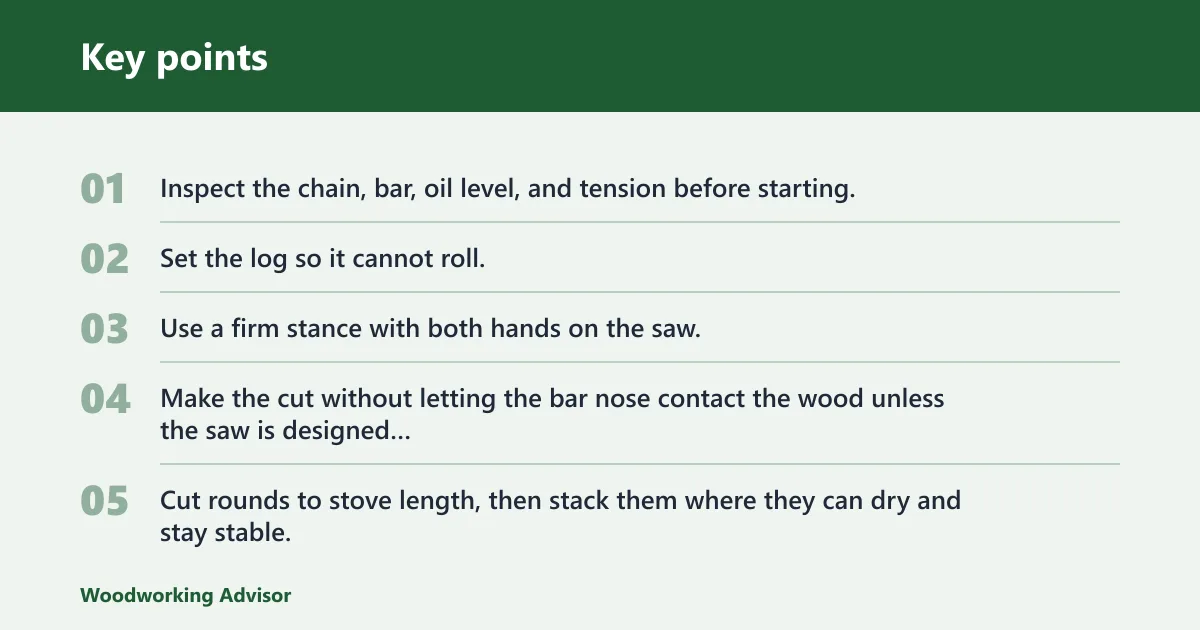
Start by clearing the work area, then stabilize the log before you buck it into rounds. Cut from the top with steady control, keep the chain brake and your stance in mind, and use cut-resistant PPE, eye protection, hearing protection, gloves, and sturdy boots. Kickback can happen if the nose touches wood or another object, so keep both hands on the saw and avoid overreaching.
When a log is supported at both ends, watch for pinching. When it is supported at one end, plan for the kerf to close as the cut finishes. A clean, controlled cut is safer than forcing the bar through fast.
- Inspect the chain, bar, oil level, and tension before starting.
- Set the log so it cannot roll.
- Use a firm stance with both hands on the saw.
- Make the cut without letting the bar nose contact the wood unless the saw is designed for that use.
- Cut rounds to stove length, then stack them where they can dry and stay stable.
Follow the product manual, never work under a vehicle or object held only by a jack, never exceed the rated limit for any vehicle or support system, keep items out of airbag zones and the driver’s view, and check local laws when transport or fuel storage applies.
How to choose a saw for the wood you cut
Softwood is easier on a saw than dense hardwood, so the same bar length can feel very different in practice. A 16-inch saw may feel plenty on pine, but it can slow down quickly on oak, beech, or other hard rounds, especially if the bar is too short for the diameter.
For small rounds, bar length matters less than maneuverability. For medium rounds, a 16- to 18-inch saw is the practical sweet spot for many homeowners. For larger rounds, a 20-inch bar gives more reach and less need to cut from both sides.
Picture a 16-inch white oak round on the ground. A small saw can do it, but a 20-inch gas saw is less likely to bog down and less likely to turn every cut into a slow, tiring task.
Anti-vibration systems matter here too. Long cutting sessions get uncomfortable fast when vibration transfers straight into your hands, and that can reduce control.
Best gas chainsaw for firewood
Gas is the better choice when you cut longer sessions, work through harder wood, or need more cutting consistency as the day goes on. For firewood, a gas saw in the 38cc to 58cc range is a common practical middle ground, with larger engines better suited to bigger hardwood rounds.
The VEVOR 52cc 18 in saw is the strongest gas option in this lineup for general firewood use, while the Goqvuzo 58cc 20 in model is the better pick for larger rounds. The NEO-TEC 31.8cc 14 in saw is lighter and easier to handle, but it is aimed at smaller work.
Gas drawbacks are predictable: more upkeep, more noise, and more routine checks for fuel, plug, filter, chain oil, and tension. If you cut only a few times a season, that extra maintenance may not be worth it.
Pros and cons of gas saws
- Pros: longer runtime, quick refueling, better fit for larger hardwood rounds, more flexible for off-grid work.
- Cons: more maintenance, more noise, more vibration in many models, and fuel storage to manage.
Best battery chainsaw for firewood
Battery saws make the most sense when you want quieter cutting, simpler maintenance, and no fuel mixing. For firewood, the useful class is usually 40V to 60V, with the higher end better for hardwood and repeated cuts.
The Greenworks 60V 16 in model is the best battery pick here because it includes the battery and charger, which lowers the friction of getting started. Battery saws are best for moderate firewood volumes, trimming, and occasional bucking near the house.
The tradeoff is runtime and power fade under hard use. Cold weather, repeated hardwood cuts, and larger diameters all reduce how far a battery saw goes before a recharge.
Pros and cons of battery saws
- Pros: quieter operation, simpler upkeep, no fuel mixing, and fast start-up.
- Cons: runtime depends on battery size and wood hardness, replacement batteries add cost, and heavy hardwood work can drain packs quickly.
Best corded electric chainsaw for firewood
Corded electric saws are best for small firewood jobs close to a power outlet. They avoid battery charging and fuel handling, which makes them a simple option for yard work, branch cutting, and occasional bucking.
The SENIX 16-inch corded saw is the clear fit here. It has uninterrupted power from an outlet and auto-oiling, but the cord limits mobility and makes it a poor match for remote woodpiles or larger jobs away from the house.
Corded saws are also best when you want light-duty cutting without the upkeep of gas. They are not the first choice for large hardwood rounds or long sessions far from an outlet.
Pros and cons of corded saws
- Pros: no battery charging, no fuel mix, consistent power near an outlet, and low upkeep.
- Cons: cord management, limited range, and less suitability for larger or more remote firewood work.
How to choose the right setup
Start with the wood, not the brand. If your logs are small and your yearly volume is low, a 14- to 16-inch saw may be enough. If you cut regular hardwood rounds, 16 to 20 inches is the more useful range for most homeowners.
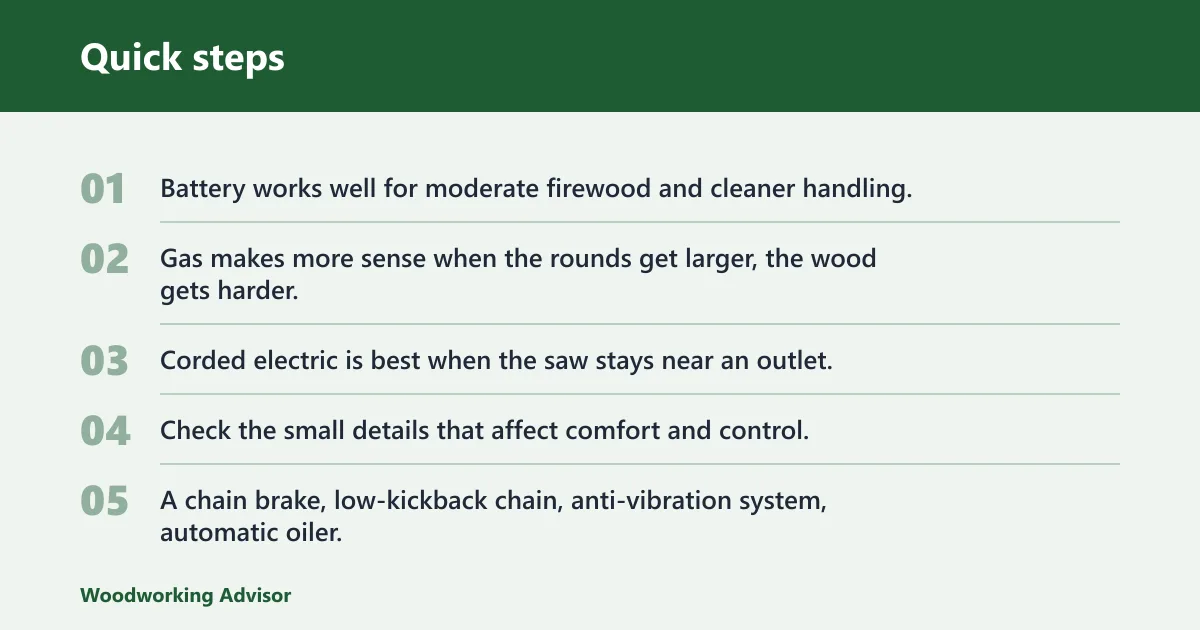
Then match the power source to the job. Battery works well for moderate firewood and cleaner handling. Gas makes more sense when the rounds get larger, the wood gets harder, or you cut more often. Corded electric is best when the saw stays near an outlet.
Check the small details that affect comfort and control. A chain brake, low-kickback chain, anti-vibration system, automatic oiler, and easy tensioning all matter when you are cutting multiple rounds in one session.
Suppose you cut two cords a year from 10- to 12-inch mixed hardwood rounds. A 16-inch battery saw is a sensible fit. Suppose your stack includes 18-inch oak rounds every week through winter. A 20-inch gas saw is the safer, more practical call.
For chain tensioning, keep it snug but not over-tight. Check bar oil often, and make sure the oil reservoir is visible enough that you can confirm flow before the chain runs dry.
Frequently asked questions
What is a good chainsaw for cutting firewood?
A good firewood chainsaw matches bar length and power to the size and hardness of your rounds. For most homeowners, a 16- to 18-inch saw is the practical starting point, with battery for lighter work and gas for larger hardwood or more frequent cutting.
What size chainsaw do I need to cut firewood?
For small logs and limbing, 14 inches can be enough. For most homeowners, 16 to 20 inches is the useful range. If you cut larger hardwood rounds, step up to 20 inches so you do not fight the saw through every cut.
How to cut firewood with a chainsaw: cut with a stable stance
Cut with a stable stance, the chain brake ready, and the log supported so it cannot roll. Buck the log into stove-length rounds, keep the bar clear of pinch points, and use PPE that includes eye, hearing, hand, and leg protection.
What is a good chainsaw for cutting trees?
For cutting trees, the right saw depends on trunk size, species, and how much work you plan to do. A homeowner who mainly cuts firewood usually needs a different setup than someone felling trees regularly, so a 16- to 20-inch saw is often the more practical range.
What is the best chainsaw for cutting down trees?
The best saw for cutting down trees is usually the one with enough bar length and torque for the trunk diameter and species hardness. For small trees, a lighter saw works. For larger trees, a more powerful gas saw with a longer bar is the safer fit.
Best electric chainsaw for cutting firewood
The best electric choice here is the Greenworks 60V 16 in Cordless Electric Chainsaw for cordless work, or the SENIX 16-inch corded model if you stay near an outlet. Battery is better for mobility. Corded is better for low-cost, occasional use.
Best chainsaw to cut logs
For logs, choose the saw that matches the diameter and hardness of the wood rather than chasing the biggest bar. Small logs can be handled by 14 to 16 inches. Medium and larger logs usually call for 18 to 20 inches, especially if the wood is dense.
Sponsored / affiliate links. As an Amazon Associate I earn from qualifying purchases. I may earn additional commission from eligible campaigns.