Edge Banding Calculator: How Much You Need for Jobs
Measure every edge that will get banded, then add about 10% waste for straightforward runs or about 15% for jobs with lots of cuts. Compare that total with your roll length, and buy the next full roll if the remainder comes up short. Miscounting edge banding wastes stock, triggers mid-job shortages, and throws cabinet pricing off fast. This guide covers the calculator inputs, waste allowance, leftover-roll check, and cost estimate for sheet goods and cabinet batches.
How is this calculated?
Press Calculate to see the math with your numbers.
What does an edge banding calculator measure?
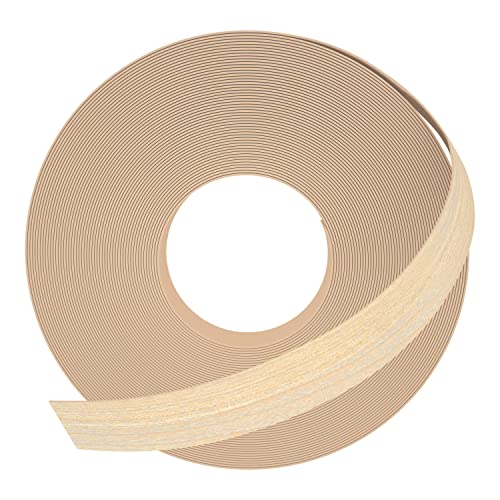


An edge banding calculator measures the linear footage of banding needed for furniture and panel edges, then checks that need against roll data so a shop can estimate leftovers. The main inputs are length, width, thickness, and roll dimensions, and the output should tell you footage, waste, cost, and what remains on the roll.
What the calculator needs
The tool is for residual length on an edge band roll. It estimates roughly how much edge band material remains on a roll, using the outer diameter, inner diameter, and edge thickness in millimeters. The page positions the tool as quick and easy, and also useful for estimating leftover material.
That matters because roll size changes the buy list. A roll that looks full can still be short once mixed widths, damaged edges, or partial use are folded into the estimate.
What the output should tell you
A useful result should turn cabinet parts into linear feet, add a waste allowance, show a cost estimate, and show whether the roll is enough. For shop planning, the answer should also show the remaining length on the roll after the job, not just the amount needed.
How do you calculate edge banding length for cabinets?
Calculate edge banding by adding every visible edge that will be covered, then add waste for cuts, corners, setup, and test pieces. For cabinet work, that means converting each part into linear feet, then applying about 10% allowance for simpler jobs or about 15% when parts are small, awkward, or mixed.
Convert cabinet parts into linear feet
Start with the part perimeter or the edge count. A base cabinet side panel may need only the front edge banded, while a door may need all four edges. Shelves, fillers, stretchers, and exposed gables should be counted separately, because one missed edge is enough to break the material plan.
- List every part that will be banded.
- Measure each banded edge in the same unit.
- Add the edges for each part.
- Convert the total to linear feet if needed.
- Add 10% to 15% waste.
Use a waste allowance that matches the job
Use about 10% for straightforward cabinet runs with long, repeatable edges. Use about 15% when the job has many short parts, corner returns, test strips, color changes, or setup waste during machine adjustment. That allowance also covers trim loss and mistakes made during finishing.
How do you figure out how much is left on a roll?
Figure out what is left on an edge banding roll by checking outer diameter, inner diameter, and edge thickness, then using a roll-based remaining length estimate. The result is an estimate, not a guarantee, because mixed stock, crushed edges, and uneven winding can change the usable length.
How the residual estimate works
An edgeband remaining length calculator uses roll dimensions and thickness to estimate the residual length on the roll. Thicker material takes up more volume per foot, while a larger outer diameter usually means more remaining material. The inner diameter matters because it defines the empty core inside the roll.
If the roll contains mixed widths or mixed thickness stock, the estimate becomes less reliable. A roll that started with one spec but now has spliced remnants may show enough volume on paper and still fail in practice.
When the roll estimate breaks down
Do not trust a roll estimate blindly if the outer wrap is crushed, the inner core is damaged, or the roll has been hand-wound after partial use. That is where a shop can misread leftover length and run short in the middle of a cabinet set.
In those cases, count by measured footage instead of only by diameter, and separate partial rolls by material type, width, and thickness before assigning them to jobs.
Worked estimates for three common projects
These examples show how the calculator moves from part dimensions to total footage, then to waste, cost, and roll planning. The numbers below are practical planning examples, not guarantees, because trim losses and machine setup vary by shop.
| Project | Linear feet needed | Waste allowance | Planned total | Sample roll count | Roll remaining check |
|---|---|---|---|---|---|
| One base cabinet | 18 ft | 10% = 1.8 ft | 19.8 ft | 1 roll | Enough if the roll has more than 19.8 ft left |
| Full kitchen run | 164 ft | 15% = 24.6 ft | 188.6 ft | 4 rolls | About 11.4 ft left after four 50-ft rolls, before splice loss |
| Shop panel batch | 96 ft | 12% = 11.5 ft | 107.5 ft | 3 rolls | About 42.5 ft left if starting from three 50-ft rolls |
One base cabinet
A single base cabinet often looks small until every exposed edge is counted. Side panel fronts, toe-kick parts, stretchers, drawer fronts, and a finished top edge can add up fast. In the example above, 18 ft becomes 19.8 ft after a 10% allowance, so a nearly empty roll is risky.
One full kitchen run
A full kitchen run usually mixes doors, drawer fronts, tall panels, fillers, and exposed ends. That mix pushes the waste rate higher because every setup change can leave test cuts and short offcuts. At 164 ft before waste, the planner should treat four rolls as the starting buy, not the final answer.
One shop panel batch
A batch of repeat panels is easier to estimate, but only if every panel uses the same width and thickness. A 12% allowance is a reasonable planning figure when pieces repeat and the machine setup stays stable. If the batch includes odd widths or finish-matching issues, a higher allowance is safer.
What width and thickness should you buy?
Buy the width and thickness that match the part, the machine, and the final look. Common edge banding material includes PVC material, solid color, and wood grain options. Homag lists thickness from 0.3 to 4 mm in the copied text, and width from 10 to 140 mm, so the material range is wide enough for many cabinet and panel jobs. (en.wikipedia.org)
Match the material to the job
PVC is common for cabinet work because it is easy to handle and comes in many finishes. Solid color stock is useful when the edge should disappear into a painted or laminated part. Wood grain works when the edge needs to look like the face veneer or decorative panel.
Match thickness to look and trimming
Thinner material trims faster and is easier on a simple setup, but it may telegraph substrate edges less convincingly on exposed faces. Thicker stock usually gives a stronger visual edge and more room for post-trim cleanup, but it can slow feed and require more machine adjustment.
How do machines and process choices change your estimate?
Edge banding machines affect the estimate because feed speed, automatic adjustment, and process compatibility change how much time and scrap a job consumes. Homag describes machines with 8 m/min and 11 m/min feed speed, another line listed with 14 m/min feed rate, one line reaching up to 50 m/min, and a model with 25, 30, and 35 m/min feed rates.
Small batch work versus production use
Small batch work usually wastes more material per part because setup changes are frequent and test cuts are common. Production work can run faster, but only if the machine is compatible with the material, the thickness, and the edge finish required. Feed speed matters, but stable setup matters more when the run is short.
Application, trimming, and finishing
The edge banding process includes application, trimming, and finishing. Each stage affects material selection: a thicker band may trim cleaner on some jobs, while a thinner band may reduce cost on hidden edges. A poor trim can force a rework strip, and that extra strip should be counted in the waste allowance.
Mixed thickness rolls are a common failure point. If a shop assumes every strip on the roll has the same build, the leftover estimate can be wrong and the last cabinet can end up waiting for a second roll.
Frequently asked questions
How much edge banding do I need for a sheet of plywood?
Start with the edges that will stay visible after cutting the sheet into parts. A full sheet does not always need all four edges banded, so count only the exposed sides on the final parts, then add waste for trimming and test pieces.
How do I figure out how much is left on an edge banding roll?
Use the roll dimensions: outer diameter, inner diameter, and edge thickness. An edgeband remaining length calculator estimates leftover length from those values, but the answer is still an estimate if the roll is mixed, crushed, or partly hand-wound.
What is the formula for edge banding calculator?
The basic formula is planned edge length plus waste allowance. For roll checks, the calculator uses outer diameter, inner diameter, and edge thickness to estimate residual length on the roll. The output should always be treated as planning data, not a final count.
How do I estimate edge banding cost?
Multiply the planned linear feet by your cost per foot, then add the price of waste material and any setup loss. For project pricing, use the full planned total, not just the raw edge count, because trim cuts and test strips are part of the actual spend.
How many cabinets will one roll of edge banding cover?
It depends on cabinet size, exposed edges, and waste. One roll may cover a small base cabinet, while a full kitchen run can consume several rolls. The safest method is to total the linear feet for the cabinet list, then check the remaining roll length before starting.
Sponsored / affiliate links. As an Amazon Associate I earn from qualifying purchases. I may earn additional commission from eligible campaigns.