Electric Top Handle Chainsaw: Why It’s an Arborist Tool, Not a Backyard Saw
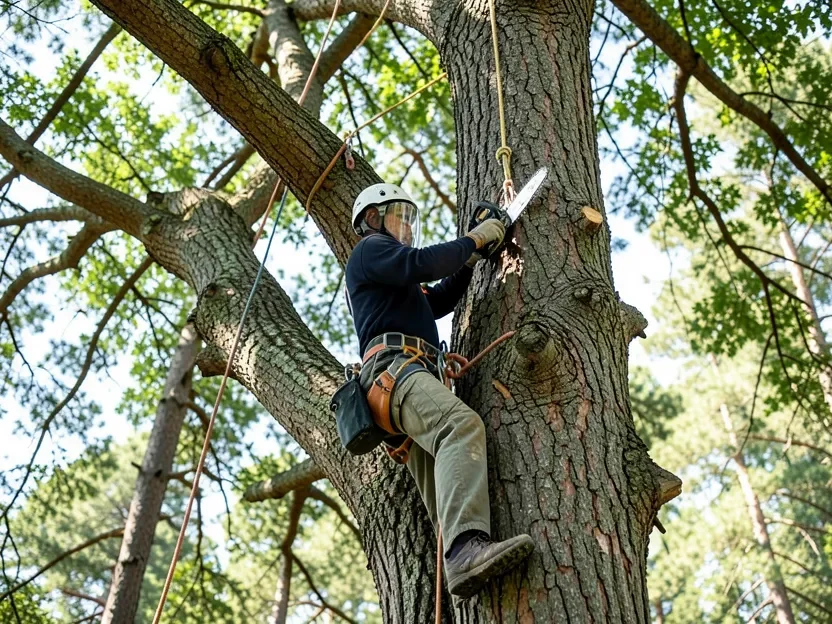
An electric top handle chainsaw is a compact, one-handed-capable saw built for climbing arborists who need to prune and buck limbs while working aloft in a tree – it isn’t a smaller version of the rear-handle chainsaw sitting in most garages. The top-mounted handle and centered balance point are what let a professional run the saw with one hand while the other hand and a climbing line keep them secured to the tree. On solid ground, that same one-handed design removes the second-hand control that keeps a standard chainsaw’s kickback in check, which is exactly why safety standards treat top-handle saws as a specialized professional tool rather than a general-purpose upgrade.
What a Top Handle Chainsaw Is Actually Built For
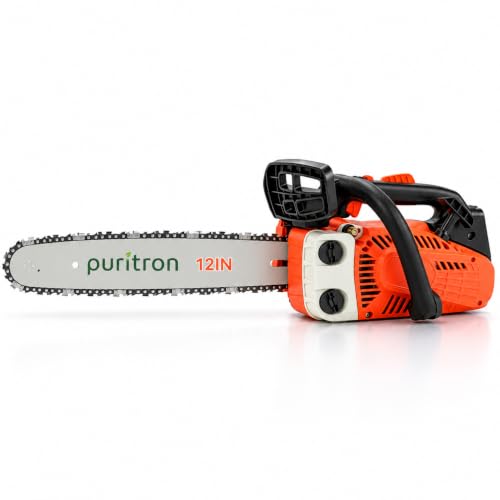
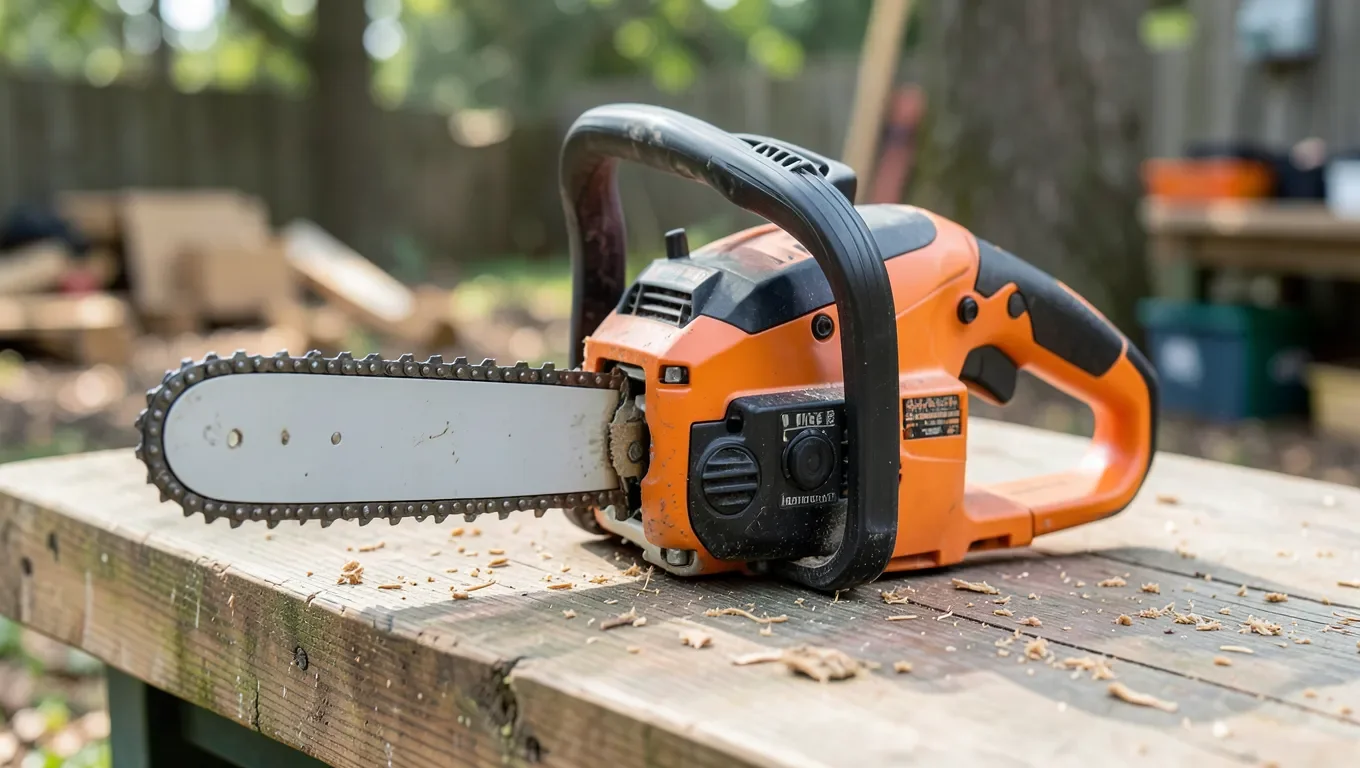
Every design choice on a top-handle saw serves the same job: give a climbing arborist a tool they can run one-handed, at awkward angles, without extra weight pulling at their harness. The handle sits directly over the saw’s center of balance instead of behind the engine, the whole unit typically weighs 6 to 9 pounds instead of the 12 to 15 pounds common on a rear-handle saw, and the throttle and chain brake are both reachable by the same hand gripping that top handle. If you’re standing on the ground with both feet planted and both hands free, none of those trade-offs actually help you – they just mean a shorter bar and a saw that’s easier to lose control of.
Best Battery-Powered Pick for Arborist Work
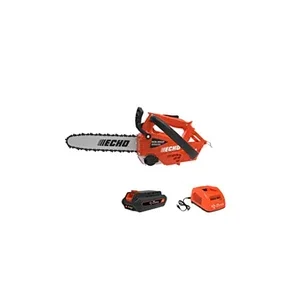 |
Echo DCS-2500T Top Handle Chainsaw – $529 The same 56V battery top-handle saw we compared against seven other top-handle and rear-handle saws, and the one we’d actually put in a climbing kit.
|
Top Handle Chainsaws Are a Professional Tool, Not a General-Use Saw
This is the part most buying guides skip. ANSI Z133, the U.S. safety standard that arborists and tree-care crews are trained to, calls for two-handed operation of a chainsaw. OSHA’s own logging safe-operation guidance is stricter still: one-handed use is only acceptable in narrow situations, such as certain climbing work where using both hands would actually create a greater hazard, like reaching across the body while anchored to a limb. It was never written as a green light for one-handed cutting on the ground.
The reason is kickback. A chainsaw’s bar can kick back toward the operator in a fraction of a second when the moving chain’s tip contacts something unexpectedly, and the second hand on a rear-handle saw is what absorbs and redirects that force before the bar reaches you. A top-handle saw is built without that second point of control by design, because a harnessed climber is using their other hand and body position, not a second grip on the saw, to manage the same risk. Take that saw to the ground without the harness, the rope, and the climbing-specific technique, and you’ve kept the higher kickback risk without the systems that are supposed to offset it.
If you just need to buck firewood, trim a hedge line, or fell a small tree from the ground, a rear-handle electric or gas chainsaw will cut the same wood with a longer bar, more stable two-handed control, and usually a lower price. If a top-handle saw turns out not to be the right fit for your project, our guide to electric wood-cutting tools for DIY projects covers ground-level options built for that job. Save the top-handle saw for actual aerial pruning work, and only after the training to go with it.
How It Differs From a Rear Handle Chainsaw
Beyond the handle position, the two tools are tuned for different jobs. A rear-handle saw puts the handle behind the motor in line with the bar, which spreads the operator’s grip across two hands set wide apart – that’s what gives it the stability to fell trees and buck large logs on the ground. A top-handle saw compresses everything into a single vertical grip point so it can be swung and repositioned one-handed in a canopy. We compared bar length, weight, and price across eight real top-handle and rear-handle saws here if you’re trying to decide which layout actually fits the job you have.
Battery vs. Gas Top Handle Saws
Battery-electric has become the default choice for top-handle saws for a practical reason that has nothing to do with power: exhaust. A gas saw running a few feet from a ground crew’s faces, or right next to the climber’s own head while aloft, means constant two-stroke fumes and noise loud enough to interfere with the verbal signals a climbing crew relies on. A battery saw like the Echo DCS-2500T above cuts that out entirely, starts instantly with a trigger pull instead of a pull cord (useful when you’re one-handed in a tree), and needs no mixed fuel carried up with you. The trade-off is runtime – a 2.5Ah to 4Ah battery on a top-handle saw is generally good for 45 minutes to just over an hour of continuous pruning before it needs a swap, where a gas top-handle saw can run most of a tank without stopping. Most professional crews now carry two or three charged batteries rather than go back to gas.
What to Check Before You Buy
- Bar length: 10 to 14 inches covers nearly all pruning and limbing work; longer bars add weight exactly where you don’t want it aloft.
- Weight: under 9 lb ready-to-cut is the practical ceiling for extended one-handed aerial use – check the weight with the battery installed, not the tool-only spec.
- Battery voltage and capacity: 40V to 56V platforms with a 2.5Ah+ battery are the current sweet spot for real cutting time; match it to batteries you may already own from the same brand’s other outdoor tools.
- Chain brake: a working inertia-activated chain brake is non-negotiable – it’s the single feature that stops the chain fastest in a kickback event.
- Tool-less chain tensioning: lets you adjust tension one-handed from a harness without reaching for a wrench.
- Reduced-kickback bar and chain: lowers, but never eliminates, the chance of the bar tip triggering kickback in the first place.
Safety Gear That Goes With It
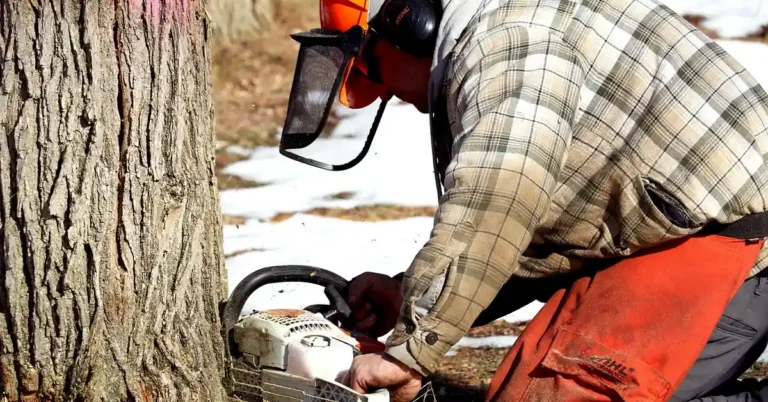
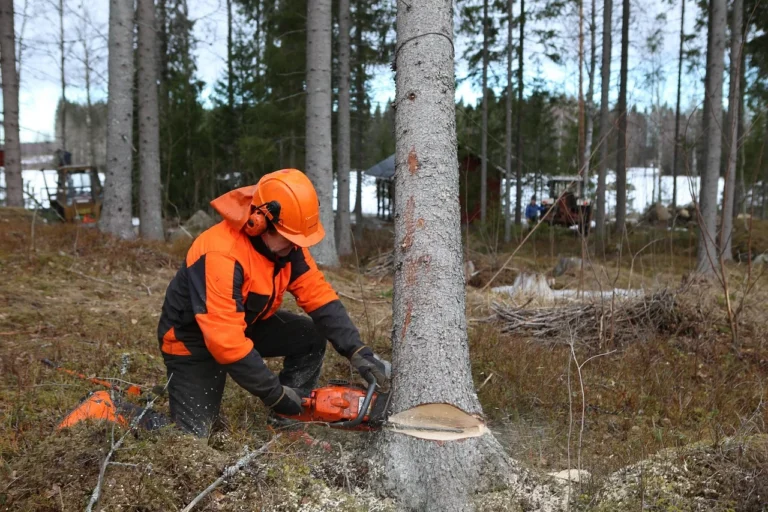
The saw is only part of the setup. Working aloft calls for a climbing-rated helmet with an integrated face screen and hearing protection, cut-resistant gloves, and a harness and climbing line rated specifically for arborist work, not general fall-arrest gear. One thing that surprises people moving over from ground-level cutting: many aerial arborists don’t wear standard chainsaw leg chaps in the tree, since loose chap material can snag on limbs and interfere with climbing movement. Instead they rely on cut-resistant pants, strict hand and body positioning relative to the bar, and the training that governs exactly where the saw is allowed to be relative to the climbing line at any moment. None of this is optional add-on gear – it’s the actual system that makes one-handed operation defensible in the first place, and it’s worth budgeting for alongside the saw itself.
Keeping a Top Handle Saw Ready to Work
A top-handle saw sees more starts, stops, and repositioning in a single hour aloft than a rear-handle saw sees in a day on the ground, so maintenance intervals run shorter. Check chain tension before every climb – a chain that’s stretched even slightly is more likely to derail or bind mid-cut when you’re one-handed and can’t easily brace the saw. Most manufacturers recommend touching up the chain with a round file every 1 to 2 hours of actual cutting time, sooner if you hit bark grit or a nail. Keep the bar oil reservoir topped off; running dry for even a few cuts accelerates bar and chain wear far faster than it would on a saw doing long, continuous ground cuts. Wipe sawdust out of the clutch cover and brake band after each use so the chain brake stays responsive – a brake caked in compressed sawdust reacts slower exactly when speed matters most.
Frequently Asked Questions
Can I use a top handle chainsaw for regular yard work on the ground?
You can, but it isn’t recommended. ANSI Z133 calls for two-handed chainsaw operation, and a top-handle saw removes the second-hand kickback control that a rear-handle saw relies on. For ground-level cutting, a rear-handle electric or gas chainsaw gives you more stable control and usually a longer bar for the same money.
Is it legal to run a top handle chainsaw one-handed?
OSHA’s logging safety guidance permits one-handed chainsaw use only in specific climbing situations where using both hands would create a greater hazard, not as a blanket allowance for casual or ground-level use. Employers and tree-care crews are generally held to the two-handed standard in ANSI Z133 outside of that narrow exception.
How much does a battery-powered top handle chainsaw cost?
Consumer-grade models start around $150 to $250, while professional saws built for daily arborist use, like the Echo DCS-2500T with a 56V battery and charger, run closer to $500 to $600. The price difference mostly comes down to motor durability, battery runtime, and build quality for repeated all-day use.
What bar length is standard on an arborist top handle saw?
Most top-handle saws use a 10 to 14 inch bar. That’s long enough for pruning and limbing cuts up to about a foot in diameter while keeping the saw’s overall weight low enough for extended one-handed use in the canopy.
Sponsored / affiliate links. As an Amazon Associate I earn from qualifying purchases. I may earn additional commission from eligible campaigns.