What Was a Chainsaw Originally Used For? The Real 1780s History
The chainsaw was not invented to cut wood. Its earliest ancestor was a hand-cranked surgical instrument built in the 1780s by two Scottish doctors to help with difficult childbirths — more than a century before anyone patented a machine for felling trees. The first tool built specifically to cut wood was not patented until 1905, and the gas-powered chainsaw most people would recognize today was not commercialized until the 1920s.
This history shows up in medical journals and old patent filings, not just internet trivia lists — and the details matter, because the 1780s medical device and the modern chainsaw work on genuinely different mechanisms, a distinction most short “fun fact” versions of this story skip over. Here is the verified timeline, section by section.
The Chainsaw’s Real Origin: An 18th-Century Surgical Tool
Best Chainsaw Sharpening Kit
 |
Oregon Universal Chainsaw Field 7-Piece Sharpening Kit – $18.88 Whatever era your chainsaw is from, a dull chain is still a dull chain — this kit keeps a modern saw cutting the way the 1905 patent originally intended.
|
In the early 1780s, Scottish surgeons John Aitken and James Jeffray independently described what they called a “flexible saw”: a fine, serrated link chain stretched between two wooden handles, one at each end. A surgeon worked the handles back and forth by hand, similar to a two-person crosscut saw in miniature, to perform a symphysiotomy — cutting through the cartilage of the pelvic joint (the symphysis pubis) to widen the birth canal during an obstructed labor.
Before this instrument existed, surgeons made the same cut with a straight knife, which was slower and far harder to control. Aitken and Jeffray’s chain saw let a surgeon complete the cut more quickly and with less damage to the surrounding tissue — a genuine improvement by the standards of 1780s obstetric surgery, even though the procedure itself was traumatic and is rarely performed today. A Cesarean section is the modern alternative in nearly every situation where a symphysiotomy would once have been used.
The same chain-and-handle concept was later adapted for bone surgery. In 1830, German surgeon Bernhard Heine refined it into the osteotome, a similar hand-cranked chain saw used to cut bone during amputations and other operations. Heine’s osteotome is the device most often, and mistakenly, credited online as “the first chainsaw” — it actually arrived roughly 45 years after Aitken and Jeffray’s original design.
From the Operating Room to a Timber Patent: 1905
The chainsaw did not reach wood until more than a century after Aitken and Jeffray’s device. In 1905, Samuel J. Bens, a logger based in San Francisco, filed the first patent for a chain-driven saw built specifically to fell trees — an “endless chain” saw that ran in a continuous loop rather than being pulled back and forth by hand. That loop mechanism, not the 1780s medical instrument, is the real ancestor of the saw chain used on every gas, electric, and battery chainsaw sold today.
Bens’ design was still far from practical. It was heavy, difficult to control, and the small gasoline or electric engines needed to make a portable saw workable did not exist yet. For roughly the next two decades, the chainsaw stayed mostly a patent-office curiosity rather than a tool anyone was actually using in the woods.
Andreas Stihl, Emil Lerp, and the First Working Chainsaws (1920s)
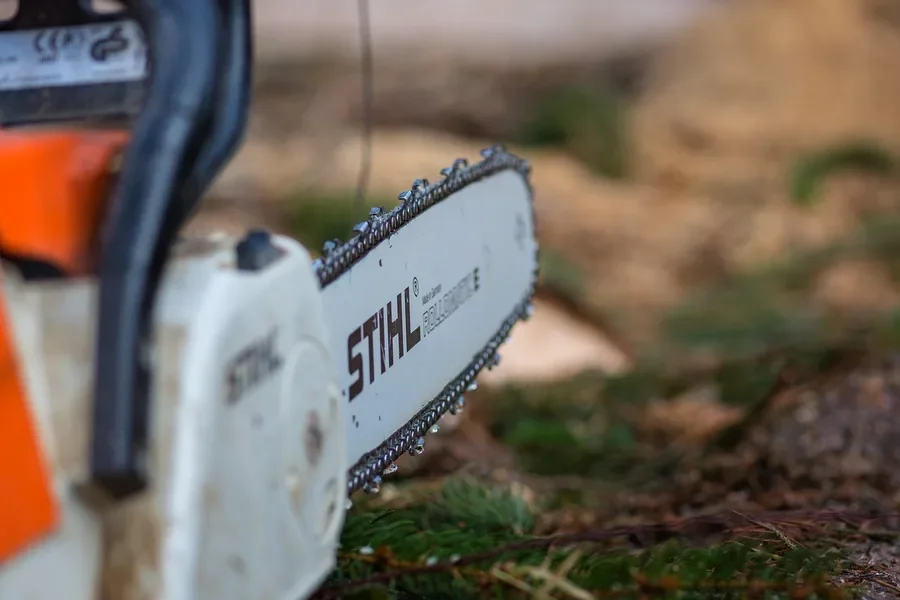
The chainsaw became a working machine in Germany in the mid-1920s. In 1926, engineer Andreas Stihl patented an electric chain saw for cutting wood and founded the company that still carries his name. That same year, fellow German inventor Emil Lerp built what is generally considered the first gasoline-powered chainsaw — a two-person machine, far too heavy for one operator to run alone. Stihl followed with his own gas-powered “tree-felling machine” in 1929.
These early machines needed two operators and weighed roughly as much as a small motorcycle engine, because the light two-stroke engines that let a single person carry a chainsaw were not available until after World War II. The one-person chainsaw most homeowners would recognize did not become common in forestry work until the 1950s — not the 1920s, and certainly not 1905. That gap is also roughly when chainsaws first started showing up outside professional logging crews.
Chainsaw Origin Myths, Corrected
A handful of claims about chainsaw history circulate constantly and are worth correcting directly:
- Myth: chainsaws were invented for warfare. There is no credible historical record of a purpose-built military chainsaw; this claim does not appear in the patents or the medical literature covering the tool’s actual development.
- Myth: chainsaws were originally built to cut down trees. The earliest documented chain-saw device was a surgical instrument for symphysiotomy, roughly 120 years before Samuel Bens’ 1905 wood-cutting patent.
- Myth: the 1780s medical chain saw and the modern chainsaw are basically the same tool. They are not. The medical version was hand-cranked and pulled back and forth; it never formed a continuous loop. The loop-chain-around-a-guide-bar design that defines a modern chainsaw was not patented until 1905 and was not practical until the 1920s.
What Chainsaws Are Actually Used for Today
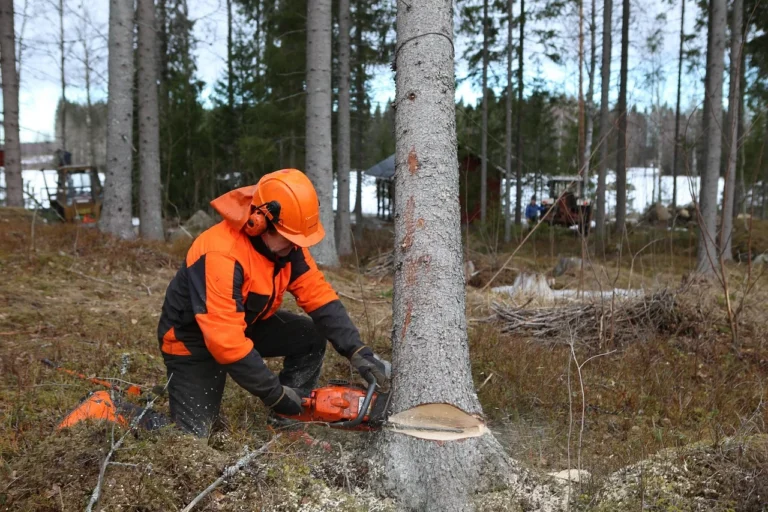
Modern chainsaws — gas, corded electric, or battery-powered — are built for felling trees, limbing, and bucking logs into firewood lengths. Woodworkers also use them for chainsaw milling, turning a felled log into rough lumber with a chainsaw mill attachment, and for chainsaw carving, where the same basic tool that once assisted surgery is now used to shape bears, totem poles, and furniture blanks out of raw logs.
Chainsaws also show up in less obvious places: wildland firefighters use them to cut firebreaks ahead of a burn, rescue crews use them to cut through debris after storms and building collapses, and competitive ice sculptors use specialized chainsaws to rough out large block designs before switching to hand tools for detail work. Butchers and processors occasionally use heavy-duty band or chainsaw-style equipment for cutting large frozen cuts of meat, though that is a different, food-safety-rated tool from a woodworking or forestry chainsaw — see our guide on whether a bandsaw can safely cut meat for that distinction.
Knowing which way the chain should run on the bar matters just as much for these modern uses as it does for a straightforward firewood cut, since a backward-mounted chain will not cut at all and can be dangerous to run.
None of these modern jobs need anything close to the original 1780s design. But a modern chain still dulls with use, and a dull chain is one of the most common reasons a chainsaw binds, kicks back, or burns through bar oil faster than it should — which is why routine chain maintenance, not just horsepower, is what actually determines how well a chainsaw performs on any of these tasks.
The Chainsaw in Pop Culture
The chainsaw’s real medical history is dark, but it is a footnote compared to the reputation the tool picked up from horror films. The Texas Chain Saw Massacre (1974) introduced Leatherface, who wielded a Poulan 306A chainsaw in the original film, cementing the chainsaw’s association with horror for the next five decades of pop culture. That fictional reputation has nothing to do with the tool’s actual origin story, but it is almost certainly why the “invented for childbirth” fact catches people off guard — the real history is nothing like the movies.
Frequently Asked Questions
What was the chainsaw originally made for?
The earliest chainsaw-like device, built around 1783–1785 by Scottish surgeons John Aitken and James Jeffray, was made to perform symphysiotomy, a surgical procedure that widened the pelvis during a difficult childbirth. It was not built to cut wood.
When was the chainsaw first used to cut wood?
Samuel J. Bens patented the first chain-driven saw built specifically to fell trees in 1905, more than a century after the original medical device. Practical, working chainsaws for forestry did not appear until Andreas Stihl and Emil Lerp’s machines in the mid-to-late 1920s in Germany.
Was the chainsaw really used in childbirth?
Yes. The 1780s “flexible saw” was used to perform symphysiotomy, cutting the pelvic cartilage to widen the birth canal during obstructed labor. The procedure was painful and traumatic by modern standards and has largely been replaced by the Cesarean section.
What chainsaw did Leatherface use in the original movie?
Leatherface used a Poulan 306A chainsaw in the original 1974 “Texas Chain Saw Massacre” film.
Conclusion
The chainsaw’s real origin story starts in a Scottish operating room in the 1780s, not a logging camp. It took a 1905 patent from Samuel J. Bens to point the design at wood at all, and another two decades of engine development before Andreas Stihl and Emil Lerp turned that patent into a working machine anyone could actually use.
From that unlikely medical beginning, the chainsaw is now one of the most versatile power tools available — used for felling, milling, carving, rescue work, and everything in between.
Sponsored / affiliate links. As an Amazon Associate I earn from qualifying purchases. I may earn additional commission from eligible campaigns.