Best Cordless Mop for Hardwood Floors: Battery Spin Mop Picks
A cordless mop for hardwood floors is specifically a battery-powered spin or spray mop — no cord, no wall outlet needed while you clean, and no vacuum motor built in. That distinction matters more than most buying guides admit: “electric mop” and “cordless mop” get used interchangeably in search results, but a $270 cordless vacuum-mop combo and a $100–$165 cordless spin mop solve different problems. If you already own a vacuum and just want an easy way to mist and buff a sealed hardwood floor, a pure cordless spin mop is the simpler, cheaper tool — and it’s what this guide covers.
Our Pick: A Cordless Spin Mop Built for Hardwood
For a straightforward cordless mop that won’t oversaturate a sealed hardwood floor, the BISSELL Spinwave Cordless Pet Spin Mop is a well-reviewed, currently in-stock option in this specific category — a pure spin/spray mop, not a wet-dry vacuum combo.
Best Cordless Spin Mop for Hardwood
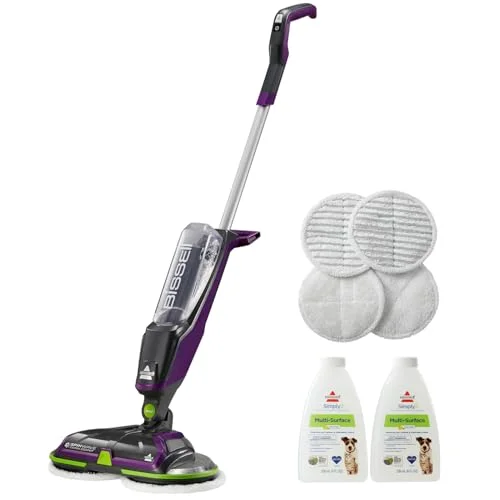 |
BISSELL Spinwave Cordless Pet Spin Mop – $164.99 A pure battery spin mop (not a vacuum-mop combo) with dual rotating pads and on-demand spray control, sized right for sealed hardwood floors.
|
What Actually Makes a Mop “Cordless” (Not the Same as “Electric”)
Three different product types get lumped under “electric mop” searches, and they aren’t interchangeable. A plug-in electric mop runs on a cord the whole time you use it — less common now, but still sold. A cordless vacuum-mop combo, like the Tineco Floor ONE line, runs on a battery too, but it vacuums dry debris and mops in the same pass, weighs more, and typically costs $250–$400. A cordless spin or spray mop, like the Bissell Spinwave above, is battery-powered and lightweight, but it only mops — you still need to sweep or vacuum first. If you want the all-in-one vacuum-and-mop approach, our electric mop guide compares those combo machines in more depth. This page is for the simpler, cheaper cordless spin-mop category specifically.
The fastest way to tell which category a listing actually belongs to: check whether it has a separate dustbin or suction path. If the spec sheet only mentions a water tank, pads, and a spray trigger, it’s a spin/spray mop. If it also lists a dustbin, filter, or suction wattage, it’s a vacuum-mop combo wearing “electric mop” as marketing language, and it’ll cost accordingly.
How a Cordless Spray Mop Protects a Hardwood Finish
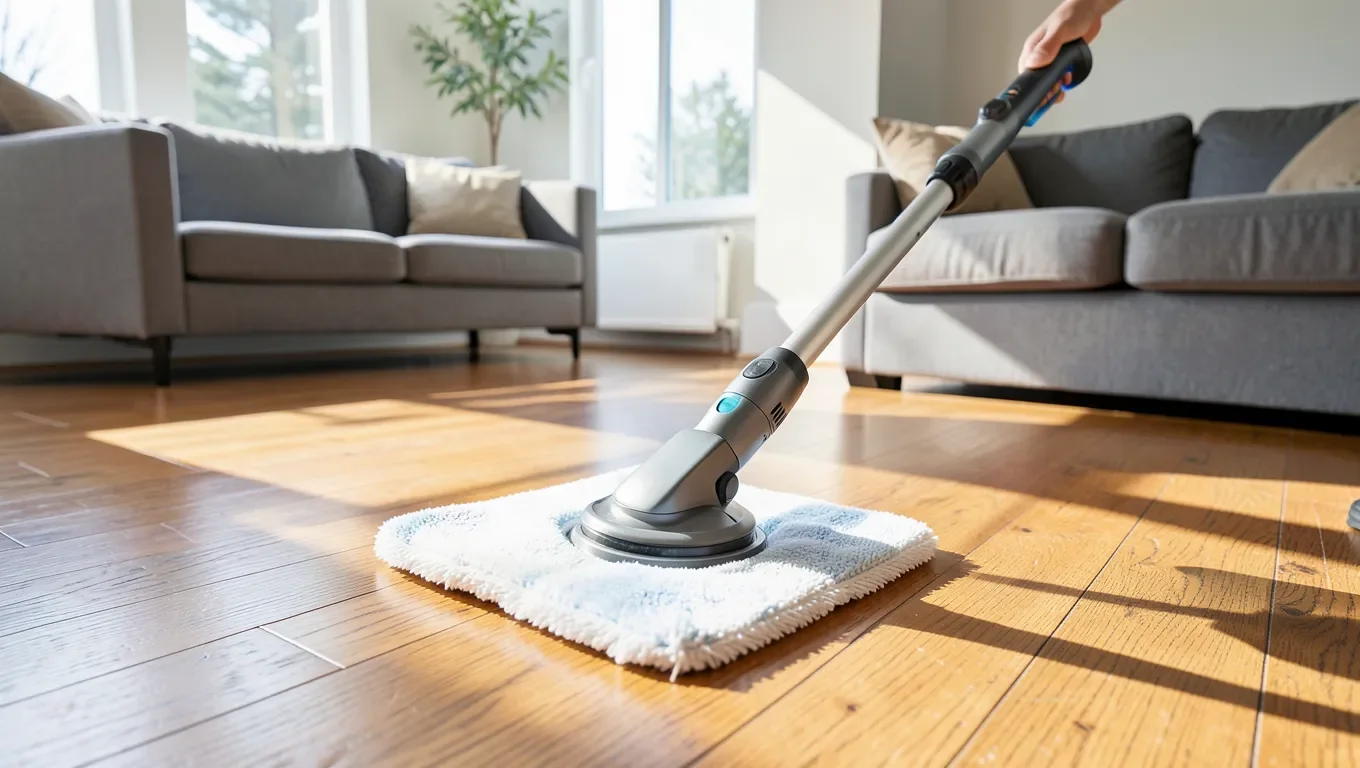
Standing water, not brief moisture, is what actually damages a hardwood finish — it seeps into seams between boards and can cause swelling, cupping, or a cloudy finish over time. A cordless spray mop’s on-demand trigger releases a fine, measured mist onto the pad right before it passes over the floor, instead of a pad that’s been soaked in a bucket and dragged across the boards. That control only matters if the floor has an intact topcoat sealing the wood.
Most hardwood sold in the last few decades has a water-based or oil-based polyurethane topcoat, which is what actually contacts the mop pad — the wood itself never gets wet as long as that coating is intact. Older floors finished with penetrating oil or paste wax don’t have that barrier, so any moisture goes straight into the grain. If you’re not sure which finish is under your feet, run a fingertip test: a few drops of water that bead up and wipe away clean mean a sealed topcoat; water that darkens the wood or soaks in within a minute or two means it’s unsealed, and a wet mop — cordless or otherwise — isn’t the right tool. A dry or barely-damp microfiber pad is safer there.
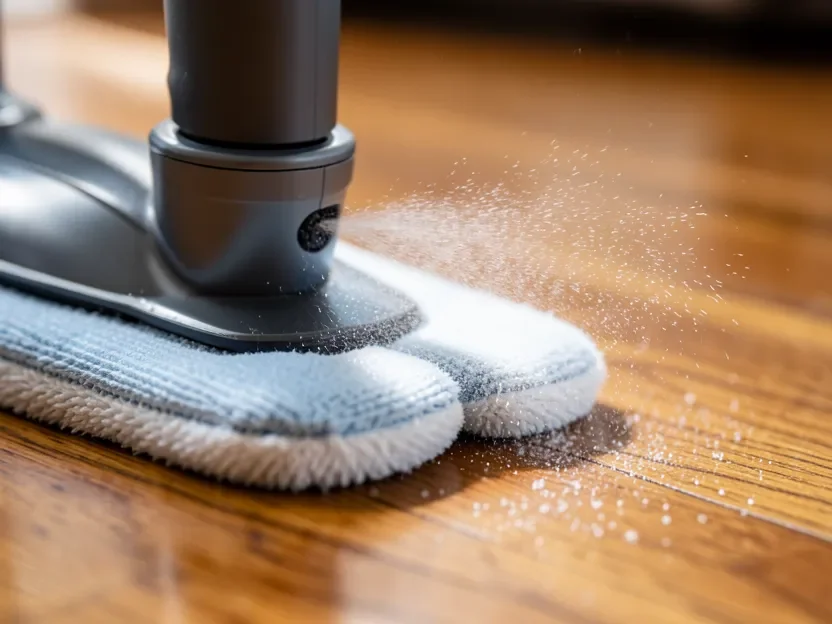
Using a Cordless Spray Mop on Hardwood, Step by Step
- Dry-mop or sweep first. Grit and pet hair under a wet pad will scratch the finish; a quick pass with a microfiber dust mop or vacuum clears it before you add any moisture.
- Fill the tank with water, or a hardwood-safe cleaning solution. Check the manufacturer’s manual before substituting a third-party cleaner — some voids the pad warranty.
- Attach a clean, dry microfiber pad. A pad that’s still damp from the last use just redistributes dirty water.
- Use the lightest spray setting that still lifts the mess. You can always spray again; you can’t un-soak a board.
- Keep the mop moving. Letting a wet pad sit stationary on one spot for more than a few seconds is what causes localized moisture damage.
- Rinse the pad and let it air dry fully before storing the mop. A damp pad left in a closed housing grows mildew.
What to Check Before You Buy
Every cordless spin mop listing reads similarly at a glance — spinning pads, a spray trigger, a battery icon. The specs that actually separate a good one from a frustrating one are runtime, tank size, and how the pads attach, not the marketing copy around them.
- Runtime per charge: Most cordless spin mops run 15–25 minutes; that’s usually enough for one to two average rooms before a recharge.
- Tank size: A larger tank means fewer refill stops, but also a heavier mop to maneuver.
- Pad material and count: Washable microfiber pads are cheaper long-term than disposable ones; check how many ship in the box.
- Weight: Anything under about 6–7 lbs is noticeably easier to hold at an angle for a full session.
- Charge time: A 2–3 hour full charge is typical; a mop that needs an overnight charge for 20 minutes of runtime is a worse deal than the spec sheet implies.
- Manufacturer’s hardwood guidance: Confirm the listing specifically says safe for sealed hardwood, not just “hard floors” as a catch-all.
Cordless Spray Mop vs. Bucket Mop vs. Vacuum-Mop Combo
| Method | Water control | Typical cost | Best for |
|---|---|---|---|
| Cordless spray/spin mop | Metered mist on demand | $100–$165 | Sealed hardwood, quick cleanups |
| Traditional bucket mop | Manual, easy to over-wet | $10–$30 | Tight budgets, occasional use |
| Cordless vacuum-mop combo | Reclaims dirty water in the same pass | $250–$400 | Mixed hard-floor homes wanting one machine |
Mistakes That Damage Hardwood With Any Mop
None of these mistakes are specific to cordless mops — they’re the same ones that damage hardwood with a bucket mop or a vacuum-mop combo. A cordless spray mop makes them easier to avoid because the water output is metered, but it doesn’t prevent them on its own.
- Over-wetting. More spray doesn’t mean cleaner — it means more water sitting in the seams.
- Using vinegar or ammonia-based cleaners. Both can dull or strip a polyurethane finish over repeated use; stick to a cleaner the flooring manufacturer lists as safe, and see our floor finish guide if the shine has already worn thin.
- Mopping unsealed or waxed wood with any wet mop. Dry or near-dry cleaning only, regardless of how “gentle” the mop claims to be.
- Skipping the dry-sweep step. Wet-mopping over grit is what actually scratches a finish, not the mop itself.
Frequently Asked Questions
What’s the difference between a cordless mop and an electric mop?
“Electric mop” is the broader category and includes corded models and battery-powered vacuum-mop combos. “Cordless mop” as used on this page means a lightweight battery spin or spray mop that only mops, with no vacuum motor and no cord during use.
Is a cordless spray mop safe for hardwood floors?
Yes, on sealed hardwood with an intact topcoat finish, since the spray is metered rather than soaking the pad. It is not the right tool for unsealed, oiled, or waxed wood — those need dry or barely-damp cleaning instead.
How long does the battery last on a cordless spin mop?
Most cordless spin mops, including the Bissell Spinwave Cordless, run about 20 minutes per charge — enough for a room or two before you need to recharge.
Can I use a cordless mop on unsealed or waxed hardwood?
No. Any wet mop, cordless or not, risks warping or clouding unsealed or waxed wood. Use a dry or barely-damp microfiber dust mop on those floors instead.
What cleaning solution should I use in a cordless mop on hardwood?
Use plain water or a cleaner the mop manufacturer or your flooring maker lists as hardwood-safe. Avoid vinegar and ammonia-based cleaners, which can dull a polyurethane finish over repeated use.
Do I need to sweep before using a cordless mop?
Yes. Dry-mopping or vacuuming first removes grit and pet hair that would otherwise get dragged across the finish by a wet pad.
A cordless spin mop is the right tool specifically when you have sealed hardwood and want controlled, on-demand moisture — not a vacuum motor, and not a bucket. Sweep first, spray lightly, and keep the pad moving.
Sponsored / affiliate links. As an Amazon Associate I earn from qualifying purchases. I may earn additional commission from eligible campaigns.