Festool Trion Jigsaw Reviews (2026): Is the PS 300 Still Worth Buying?
Festool discontinued the Trion jigsaw line in the US, shifting its jigsaw lineup to the battery-powered Carvex platform – so if you have been searching for “Festool Trion jigsaw” and finding a mix of dead listings, used tools, and confusing model numbers, that is why. The Trion still shows up in a handful of active Amazon listings, mostly the 230V European-spec PS 300 EQ-Plus, and it still has a loyal following among woodworkers who used it before the switch. Below we verify which Trion listing is actually real and in stock right now, walk through what made the Trion’s blade guidance different from a typical jigsaw, and lay out honestly where a current Carvex model makes more sense instead.
Our Pick: Festool PS 300 EQ-Plus Trion (Currently In Stock)
Verified In Stock – Genuine Trion Listing
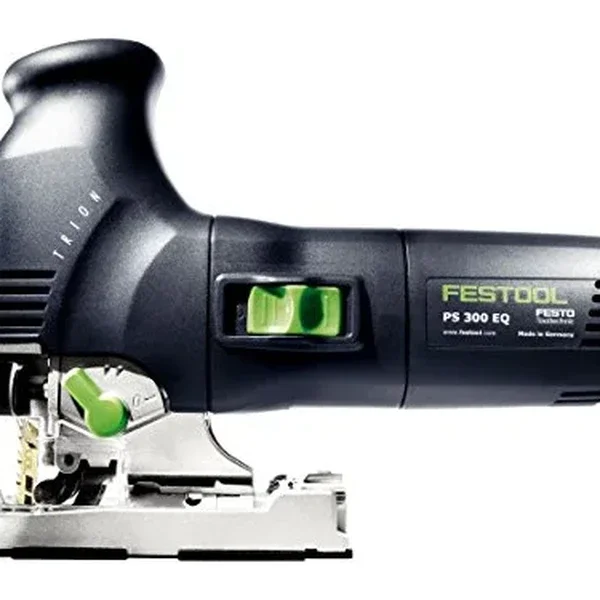 |
Festool PS 300 EQ-Plus Trion (561445) – $898.99 The genuine PS 300 EQ-Plus Trion, confirmed in stock at the time of this review – it is a 230V European-spec unit, which is the only way this exact model currently ships on Amazon US.
|
A quick note before you buy: this listing is genuinely in stock and the reviews on it are real, but nearly all of them come from buyers in Germany, Italy, and France – the 230V spec is a strong hint that most US buyers picking this up are doing so deliberately, usually because they already own a step-down transformer for other imported Festool gear. If that is not you, skip ahead to how the Trion compares to Festool’s current Carvex lineup below.
What Made the Trion’s Blade Guidance Different
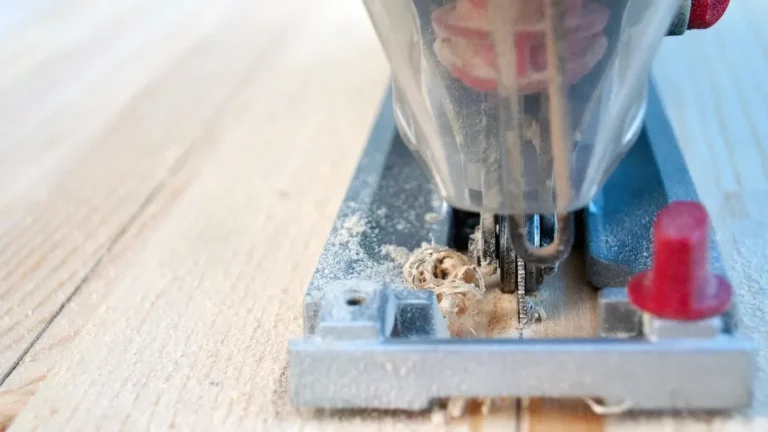
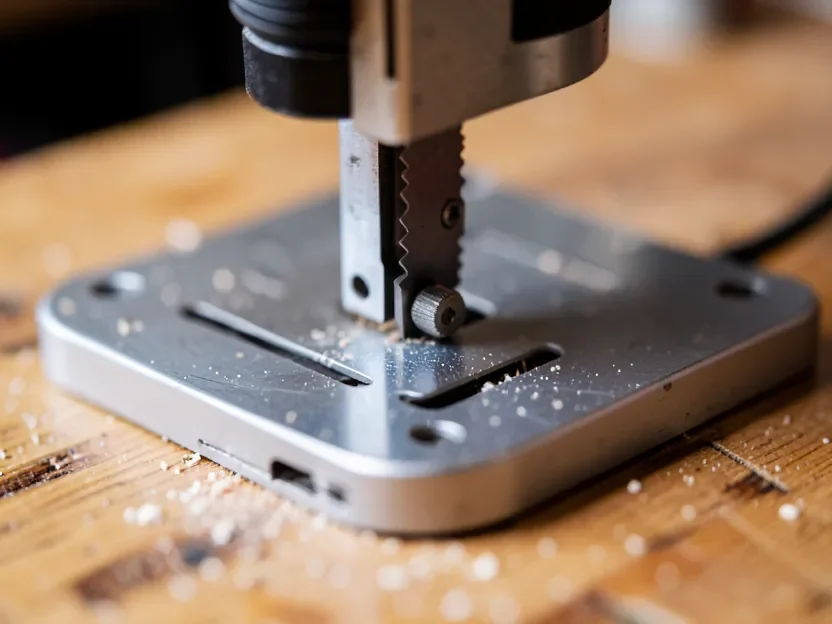
The feature that got the Trion its reputation is the triple blade guide system Festool patented for the line. Most jigsaws support the blade with a single roller or guide block sitting behind it, which lets the blade flex sideways the deeper you cut – that flex is what causes an out-of-square edge on a thick board. The Trion’s guide wraps the blade on three sides instead of one, closer to a hook than a roller, which keeps the blade from wandering even on cuts near its full 120mm wood-cutting depth. It is a mechanical difference you can feel: the cut stays flatter and more consistent from the top face to the bottom face of the board, not just at the surface.
Blade changes use Festool’s FastFix system – a lever releases the blade without a wrench or hex key, which matters more than it sounds like once you are cycling between a fine-tooth blade for hardwood and a coarser one for framing lumber on the same project. The base also routes dust straight into a hose connector through air channels molded into the sub-base, so the cut line stays visible instead of disappearing under a pile of sawdust, which is a common complaint with cheaper corded jigsaws.
Trion vs. Carvex: Why Festool Retired the Line
Festool has been moving its US power tool lineup toward battery platforms, and the jigsaw category followed – Carvex is the direct successor, built around the same 18V battery system as Festool’s drills, routers, and sanders. If you already own Festool batteries, a Carvex jigsaw slots into that ecosystem in a way the corded, 230V-only Trion cannot. The trade-off is that the Trion’s triple blade guidance was never fully carried over in the same form – Carvex uses its own carbide guide design, which is good but reviewed slightly differently by long-time Trion owners on woodworking forums, some of whom kept an old Trion specifically for deep, straight cuts where blade wander matters most.
If your priority is buying whatever Festool jigsaw is easiest to find in full current production, cordless, and backed by Festool’s active US parts and service network, we would point you to our Festool Carvex 420 jigsaw review instead, where we verify which specific Carvex 420 model is currently in stock. This page exists for the narrower case: you specifically want the Trion, not a substitute.
Festool PS 300 EQ-Plus Trion: Full Specs
| Power consumption | 720 W |
| Stroke rate | 1,000-2,900 strokes/min |
| Pendulum stroke settings | 4 levels |
| Bevel range | 0-45° |
| Cutting depth, wood | 120 mm (4.7 in.) |
| Cutting depth, non-ferrous metal | 20 mm |
| Cutting depth, soft steel | 10 mm |
| Weight | 2.4 kg (5.3 lbs) |
| Included | 2 saw blades, splinter guard, Systainer SYS 1 T-Loc case |
| Voltage | 230V (step-down transformer required for US outlets) |
Blade Compatibility: What Still Fits the Trion
The FastFix clamp on the PS 300 EQ-Plus takes standard T-shank jigsaw blades, not just Festool’s own branded blades – the clamp itself is a universal T-shank design, so a Bosch, Diablo, or Milwaukee T-shank blade will physically fit and lock in the same way a Festool blade does. What changes is how well a given blade rides in the triple guide: Festool cuts its own blades to a slightly tighter back-edge tolerance so they sit snugly against all three contact points of the guide. A generic T-shank blade will still run, but on very deep cuts you may notice a bit more of the wander the guide is designed to prevent, simply because the blade back has more clearance in the guide channel than a Festool blade does. For general work, any quality T-shank blade is fine; for the deep, precision cuts the Trion is actually good at, a Festool-branded blade is where the guide system performs the way it is designed to.
Where the Trion Falls Short
The honest downside is raw speed. Side-by-side comparisons from woodworkers who have run both note that a Bosch corded jigsaw at its top setting cuts roughly twice as fast through the same material as the Trion at its highest stroke rate. Festool tuned the Trion for control and edge quality rather than for ripping through sheet goods as fast as possible, which is the right trade-off for fine joinery and cabinetry, and the wrong one if you are cutting a stack of plywood panels to rough size all day. The 230V spec is the other real limitation – you are running a transformer any time you use it, which is one more thing that can fail and one more cost on top of an already premium price.
Pricing on this listing also runs well above what the Trion sold for domestically before Festool discontinued it in the US – import availability, not routine demand, is driving that price, so it is worth checking whether a comparable Carvex model saves you money if the triple blade guide is not a hard requirement for your work.
Frequently Asked Questions About the Festool Trion Jigsaw
Is the Festool Trion jigsaw still available to buy?
Festool discontinued the Trion in the US and moved its jigsaw lineup to the battery-powered Carvex platform. A genuine PS 300 EQ-Plus Trion listing is still available on Amazon, but it is a 230V European-spec unit that requires a step-down transformer for US outlets.
What is the difference between the Festool Trion and Carvex jigsaw?
The Trion is corded and uses Festool’s patented triple blade guidance system, which wraps the blade on three sides to reduce blade wander on deep cuts. The Carvex is Festool’s current cordless platform, built around the same 18V battery system as its other tools, with its own carbide blade guide design.
What makes the Trion’s blade guidance different from a typical jigsaw?
Most jigsaws support the blade with a single roller or guide block behind it, which lets the blade flex sideways on deep cuts. The Trion’s triple guide wraps the blade on three sides instead of one, keeping the cut flatter and more consistent from the top face to the bottom face of the board.
Does the Festool PS 300 EQ-Plus cut faster than competitors?
No. Festool tuned the Trion for control and edge quality rather than raw speed – a Bosch corded jigsaw at its top setting cuts roughly twice as fast through the same material at maximum stroke rate. The Trion trades speed for a more precise, controlled cut.
Is the Festool Trion worth buying today?
It is worth buying only if you specifically want the original Trion’s triple blade guidance and are comfortable running a step-down transformer for its 230V spec. If you just want Festool’s current, fully supported US jigsaw, the cordless Carvex 420 platform is the better default choice.
Conclusion
The Festool Trion earned its reputation on one specific strength: blade guidance precise enough to keep a deep cut square from top to bottom, which is why some woodworkers still track down a genuine PS 300 EQ-Plus instead of switching to Carvex. If that precision on deep, controlled cuts is what you actually need, the verified listing above is real and currently in stock, with the 230V caveat clearly in mind. If you just want a current, fully supported Festool jigsaw and do not need a transformer in the mix, our Carvex 420 review covers the model Festool actually sells today.
Sponsored / affiliate links. As an Amazon Associate I earn from qualifying purchases. I may earn additional commission from eligible campaigns.