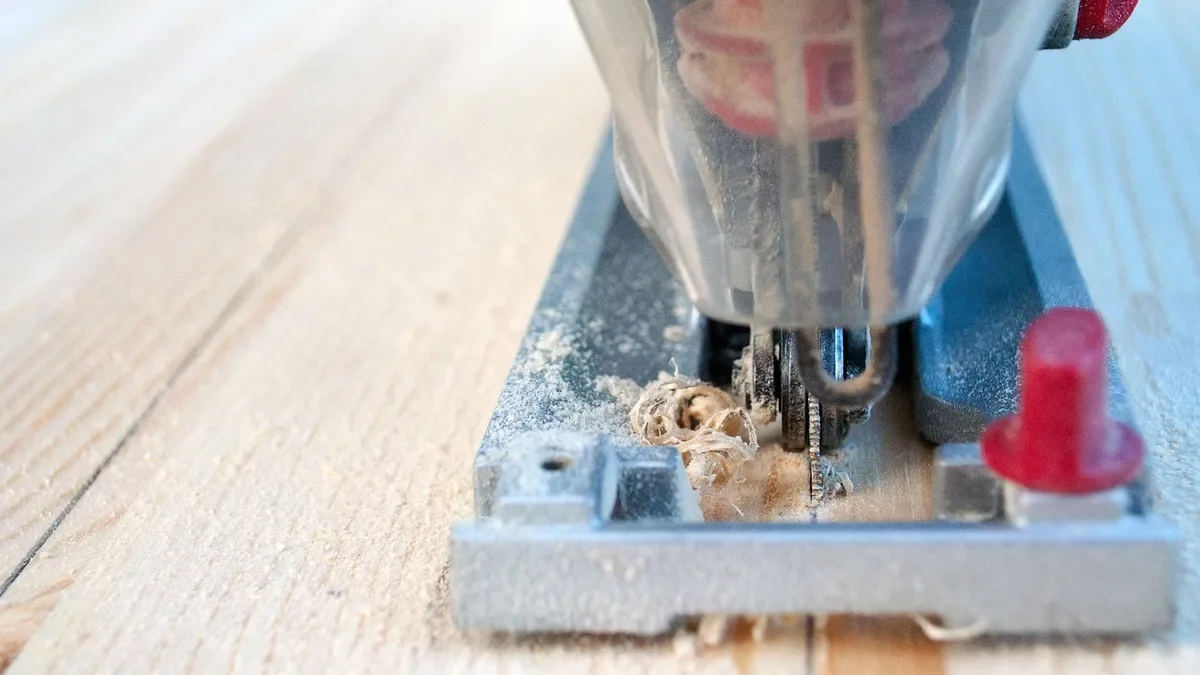
T-Shank vs U-Shank Jigsaw Blades: How to Tell Which Fits
T-shank jigsaw blades lock in with no tools and fit nearly every jigsaw sold today. U-shank blades are the older style and are held by a set screw. A blade of one type will not seat in a clamp made for the other, so the shank has to match your saw before anything else about the blade matters.
This guide shows how to tell which shank your jigsaw takes in about 30 seconds, what really separates the two, and where the common advice gets it wrong. If you are still choosing blades by material and tooth count, the jigsaw blade and TPI guide covers that side of the decision.
T-Shank vs U-Shank at a Glance
|
Best T-Shank Blade Set  |
Bosch T5002A 10-Piece T-Shank Jig Saw Blade Set: $15.98 A starter set of T-shank blades for wood and metal, in a plastic case, for any jigsaw with a tool-free clamp.
|
As an Amazon Associate we earn from qualifying purchases.
The two shanks differ in tang shape, in how the clamp holds them, and in how many blades you can buy. Here is the side-by-side.
| T-shank | U-shank | |
|---|---|---|
| Tang shape | Flat tang with a T-shaped top, shoulders on both sides | Flat tang with a U-shaped cutout |
| How it is held | Tool-free clamp: push in, lever or collar locks it | Set screw tightened with a screwdriver or hex key |
| Where you find it | Nearly all current jigsaws | Older saws and some budget models |
| Blade selection | Widest range: wood, metal, laminate, scrolling, specialty | Smaller range, mostly general-purpose |
| Changing a blade | Seconds, no tools | Longer, needs a screwdriver or key |
| Fits the other clamp? | No, not in a set-screw clamp | No, not in a keyless clamp |
One exception: a few jigsaws have a universal clamp that accepts both shank types. If yours does, the manual will say so.
How to Tell Which Shank Your Jigsaw Takes
You do not need to guess or measure anything. Check the clamp at the front of the saw, where the blade enters the body. Unplug the saw or remove the battery first, and remember that a blade you just used can be hot.
- Unplug the saw or take the battery off. Never handle the blade with the tool connected.
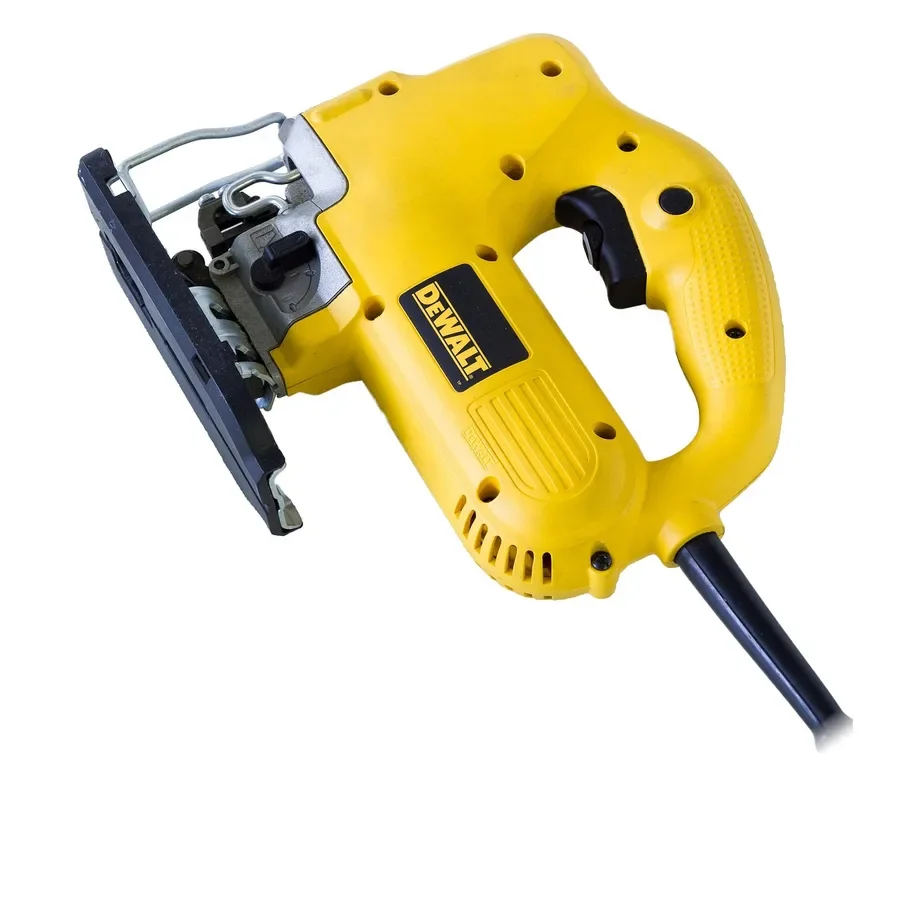
- Look at the clamp. A lever, collar or spring-loaded release you can work with your fingers means a T-shank saw.
- If you see a small screw or hex bolt that clamps the blade, the saw takes U-shank blades (or has a universal clamp that also takes T-shank).
- Compare an old blade to the tang shapes above if one is still in the saw. A T-shaped top is T-shank; a rounded top with a U-shaped cutout is U-shank.
- Still unsure? Look up the model number in the manual or on the maker’s parts page. It lists the blade shank.
For a full walkthrough of removing and seating a blade on a tool-free saw, see how to change a DEWALT jigsaw blade.
The Myth: Shank Type Changes How Well the Saw Cuts
A common claim is that T-shank blades cut cleaner or faster than U-shank blades. The shank does not do that. What controls cut quality is the blade itself: tooth count (TPI), tooth geometry, blade thickness and material, plus the saw’s orbital setting and speed. The shank decides three things only: whether the blade fits your saw, how quickly you can change it, and how many blade designs you can buy.
That last point is where T-shank earns its lead. Clean-cut wood blades, laminate blades, scrolling blades and metal blades are all sold in T-shank, so you can match the blade to the material. If a cut wanders or the saw chatters, look at the blade’s condition, the roller guide behind it and how the saw is being fed before blaming the shank. Our TPI explainer shows how tooth count changes the cut.
Reading a T-Shank Blade Code
Bosch-style T-shank blades carry a code stamped on the tang, and other brands use similar codes. Decoding it saves you from buying the wrong blade for a job. The codes below are the ones in the Bosch T5002A set above:
| Code | What the maker calls it | Typical use |
|---|---|---|
| T144D | Speed for wood | Fast rough cuts in solid wood and plywood |
| T101B | Clean for wood | Smoother cuts with less splintering on the top face |
| T119BO | Basic scrolling | Tighter curves in wood |
| T118A | Basic for metal | Thin sheet metal |
| T118B | Basic for metal | Thicker metal, slightly coarser teeth |
The letters after the number vary by brand and blade line, so treat the table as a decoder for this set rather than a universal chart. The one part that holds everywhere is the leading T, which marks a T-shank tang.
Are There Only Two Shank Types?
For jigsaw blades sold today, T-shank and U-shank cover almost everything. Very old jigsaws, and a few specialty or proprietary saws, use other tang styles, which is why the manual is the final word. Two mix-ups are worth avoiding:
- Reciprocating saw blades are not jigsaw blades. They also come in T-shank and older styles, but they are longer and thicker and will not fit a jigsaw clamp. Our reciprocating saw blade fit guide covers that tool.
- Scroll saw blades do not fit a jigsaw. They attach differently. If you want fine scroll work, see can you use a scroll saw blade in a jigsaw.
Common Mistakes When Swapping Jigsaw Blades
Most blade problems on a jigsaw trace back to the change itself, not the shank type. These are the ones that come up most often:
- Changing the blade with the saw still connected. An accidental trigger pull with your fingers at the clamp is the main injury risk. Unplug the saw or remove the battery every time.
- Not seating the tang fully. On a tool-free clamp the blade should click or lock and then hold when you tug it lightly. A half-seated blade can drop out or wobble mid-cut.
- Over-tightening a set screw. On a U-shank saw, tighten until the blade is firm, not until the screw is at its limit. Stripped threads on the clamp are hard to fix and can end the saw.
- Forcing the wrong shank. If the blade does not slide in easily, stop. Forcing a T-shank tang into a U-shank clamp, or the reverse, can damage the clamp and will not hold the blade safely.
- Leaving sawdust in the clamp. Packed dust can keep a tool-free clamp from locking. Blow it out or brush it away before you insert the new blade.
If a tool-free clamp will not lock even when clean, or a blade still moves after seating, the clamp or the roller guide may be worn. That is a saw repair, not a blade problem, and it is a good moment to check the maker’s parts page for a replacement.
Which Shank Should You Buy?
Buy whatever your saw takes. If it is a T-shank saw, you are done: pick the blade type for your material, and keep a small set on hand. If your saw is U-shank, you have two options. Keep buying U-shank blades, accepting a narrower choice, or replace the saw with a tool-free model if you use it often enough that slow blade changes and limited blade types bother you.
A few things to weigh when you choose:
- How often you cut. Occasional use makes a U-shank saw perfectly workable. Frequent blade swaps between wood, laminate and metal favor a tool-free clamp.
- What you cut. Specialty jobs, like scrolling curves in wood or cutting laminate without chipping, are easier to source in T-shank.
- Blade length. Shank type does not set how thick a piece you can cut. Length does, which we cover in how thick a jigsaw can cut.
- Buy a set, not singles. A small assorted case, like the T-shank set above, covers wood, curves and thin metal without spares of every type.
Blade Care Basics
- Store blades in their case, dry, so the teeth do not rust or knock together.
- Throw out a blade with missing or rounded teeth, or one that is bent. A dull blade wanders and burns the cut.
- Check that the tang is fully seated and locked before you pull the trigger.
- Let a hot blade cool before you remove it, or wear gloves.
Frequently Asked Questions
Will a T-shank blade fit a U-shank jigsaw?
No. The T-shaped tang will not seat in a set-screw clamp made for U-shank blades. Some saws have a universal clamp that accepts both, so check the manual before buying.
Are U-shank blades obsolete?
Not gone, but on the way out. U-shank blades are still sold for older saws, though the range is much smaller than T-shank and most current jigsaws use T-shank.
Can a Black and Decker jigsaw use T-shank blades?
It depends on the model. Many current Black and Decker jigsaws take T-shank blades, while older ones use a screw-in clamp. Look at the clamp: a tool-free lever or collar means T-shank, and the manual confirms the model.
How many types of jigsaw blade shank are there?
Two are in common use: T-shank and U-shank. Very old or proprietary saws may use another tang style, which is why you should confirm the shank in your saw’s manual.
Conclusion
T-shank is the current standard: tool-free changes and the widest blade selection. U-shank is the older screw-in style found on older and some budget saws. The two are not interchangeable, so check your saw’s clamp first, then choose the blade by material and tooth count, not by shank. Start there and the rest is straightforward.
Sponsored / affiliate links. As an Amazon Associate I earn from qualifying purchases. I may earn additional commission from eligible campaigns.