Woodworking Jigsaw: Uses, Blade Types & When to Use It
A woodworking jigsaw is a handheld power saw that uses a thin, reciprocating blade to cut curves, circles, and cutouts a circular saw or table saw cannot follow. It handles bevel cuts up to 45 degrees, plunge cuts without a pre-drilled starter hole, and clean lines in plywood, hardwood, MDF, and laminate once it’s loaded with the right blade. This guide covers exactly what a jigsaw is used for in woodworking, which TPI blade to load for each material, what the orbital action dial actually changes, and when a circular saw, bandsaw, or router gets the job done better.
Quick answer: Use a woodworking jigsaw for curved cuts, circular cutouts, plunge cuts, and bevel cuts up to 45 degrees. Load a 6–10 TPI blade for fast, rough cuts in softwood, 8–12 TPI for hardwood, and 18–24 TPI for thin metal or laminate. Reach for a circular saw or bandsaw instead for long, straight rip cuts.

What Is a Woodworking Jigsaw Used For?
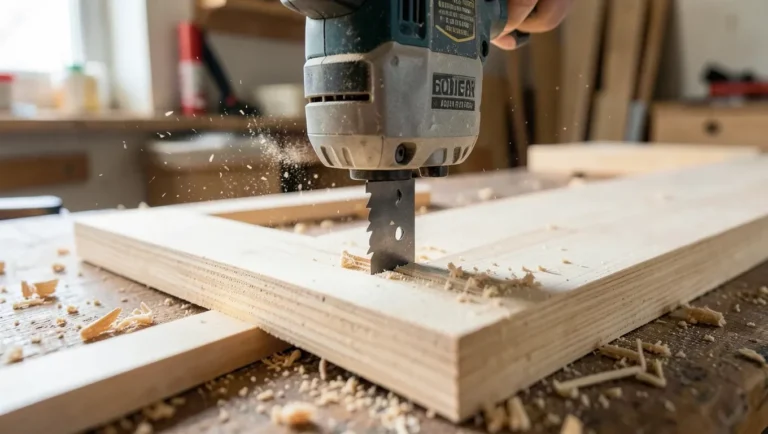
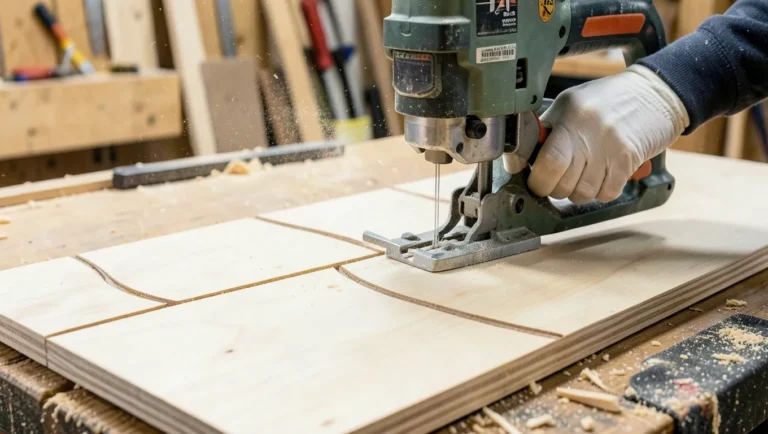
A woodworking jigsaw cuts curves, circles, S-shapes, and other irregular lines that a circular saw’s rigid base cannot follow. Woodworkers use it for sink cutouts, rounded corners, decorative scrollwork, plunge cuts into the middle of a panel, and bevel cuts up to 45 degrees.
The blade moves up and down at up to a few thousand strokes per minute, guided entirely by hand along a marked line. That freedom is the jigsaw’s whole reason to exist — a table saw or circular saw cuts a straighter, faster line, but only in a straight line.
I’ve used a jigsaw to cut a 14-inch radius curve in 3/4-inch birch plywood: a 10-TPI down-cut blade at orbital setting 1 got a clean edge in about 90 seconds that only needed light sanding, not wood filler. That same curve attempted with a circular saw simply isn’t possible — the base has nowhere to pivot.
Common woodworking uses include cutting sink and faucet holes in a countertop, rounding sharp table corners, notching a workbench leg around a stretcher, drawing and cutting a template-free curved chair back, fitting wood trim to a curved wall, and trimming laminate flush to an edge.
What Can a Jigsaw Cut, and How Thick?
A jigsaw cuts softwood up to about 2 inches thick and dense hardwood up to about 1.5 inches, plus plywood, MDF, laminate, thin sheet metal, and plastic when fitted with the matching blade. Corded models run roughly 500 to 3,100 strokes per minute; cordless models trade some top-end speed for portability.
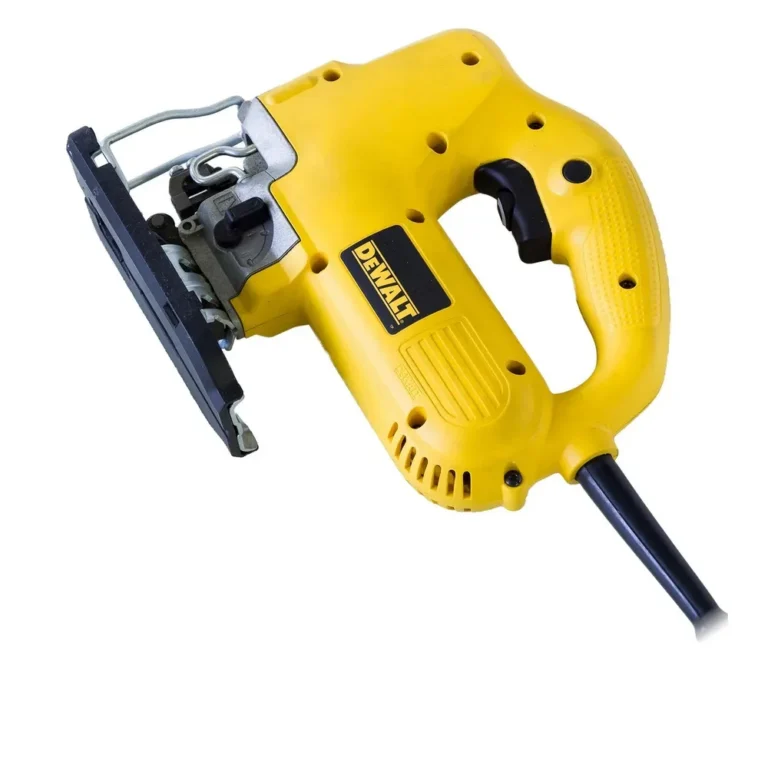
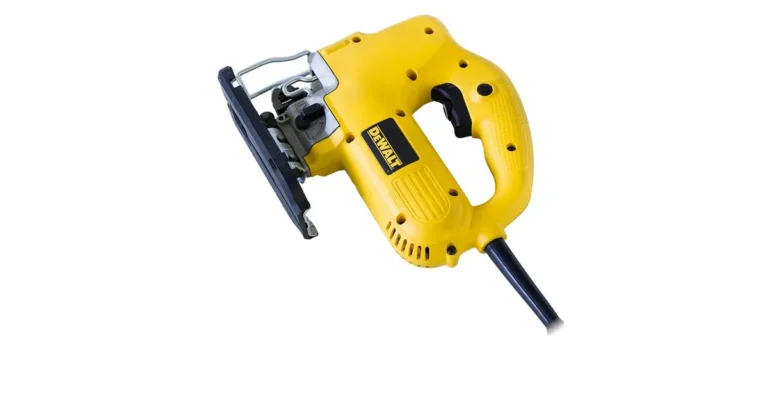
DeWalt’s spec sheet for the DW317K, a common 5.5-amp corded jigsaw, lists a variable-speed range of 0 to 3,100 strokes per minute — that range is what lets one saw creep through a tight curve at low speed and rip a straight cut at full speed a moment later.
Push a jigsaw past roughly 2 inches of hardwood and the thin blade starts to flex and wander off the line before it finishes the cut, even with a fresh blade. For anything thicker than that, a bandsaw’s rigid, continuous blade tracks a straight or curved line far more accurately.
Which Jigsaw Blade TPI Should You Use for Each Material?
Match blade TPI (teeth per inch) to the material and the finish you need: 6–10 TPI for fast, rough cuts in softwood, 8–12 TPI for hardwood, 10–14 TPI for plywood and laminate, and 18–24+ TPI for thin sheet metal. Lower TPI cuts faster and rougher; higher TPI cuts slower and smoother.
| Material | TPI Range | Blade Type | Result |
|---|---|---|---|
| Softwood (pine, fir) | 6–10 TPI | Standard up-cut, coarse | Fast, rougher edge |
| Hardwood (oak, maple) | 8–12 TPI | Standard or bi-metal | Balanced speed and finish |
| Plywood (visible face) | 10–14 TPI | Down-cut, fine tooth | Minimal top-face splintering |
| Laminate / countertop | 10–14 TPI | Down-cut, fine tooth | Clean edge, no chipping |
| Thin sheet metal | 18–24 TPI | Bi-metal, fine tooth | Slow, smooth cut, no snagging |
A blade rated for one material will cut another poorly rather than not at all — a 6-TPI wood blade forced through thin aluminum grabs and tears instead of shearing cleanly, and a 24-TPI metal blade crawls through softwood far slower than a coarse blade would.
T-Shank vs U-Shank — Which Fits Your Jigsaw?
T-shank blades lock into almost every modern tool-less jigsaw clamp and are the current standard; U-shank blades use a two-hole mount found mostly on older saws. Check the saw’s manual before buying blades, since the two shanks are not interchangeable.
Our full U-shank vs. T-shank comparison covers hold strength and blade selection in more depth, and if the blade needs swapping mid-project, changing a jigsaw blade takes under a minute on a tool-less model.
What Does Orbital Action Do, and When Should You Turn It Off?
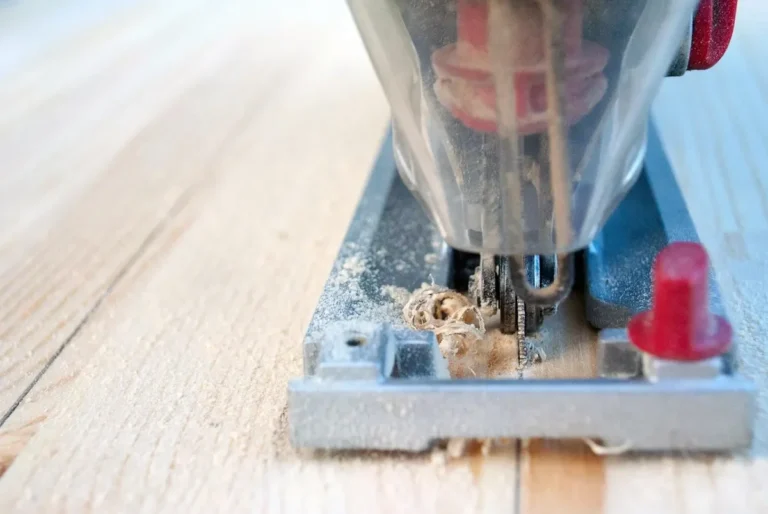
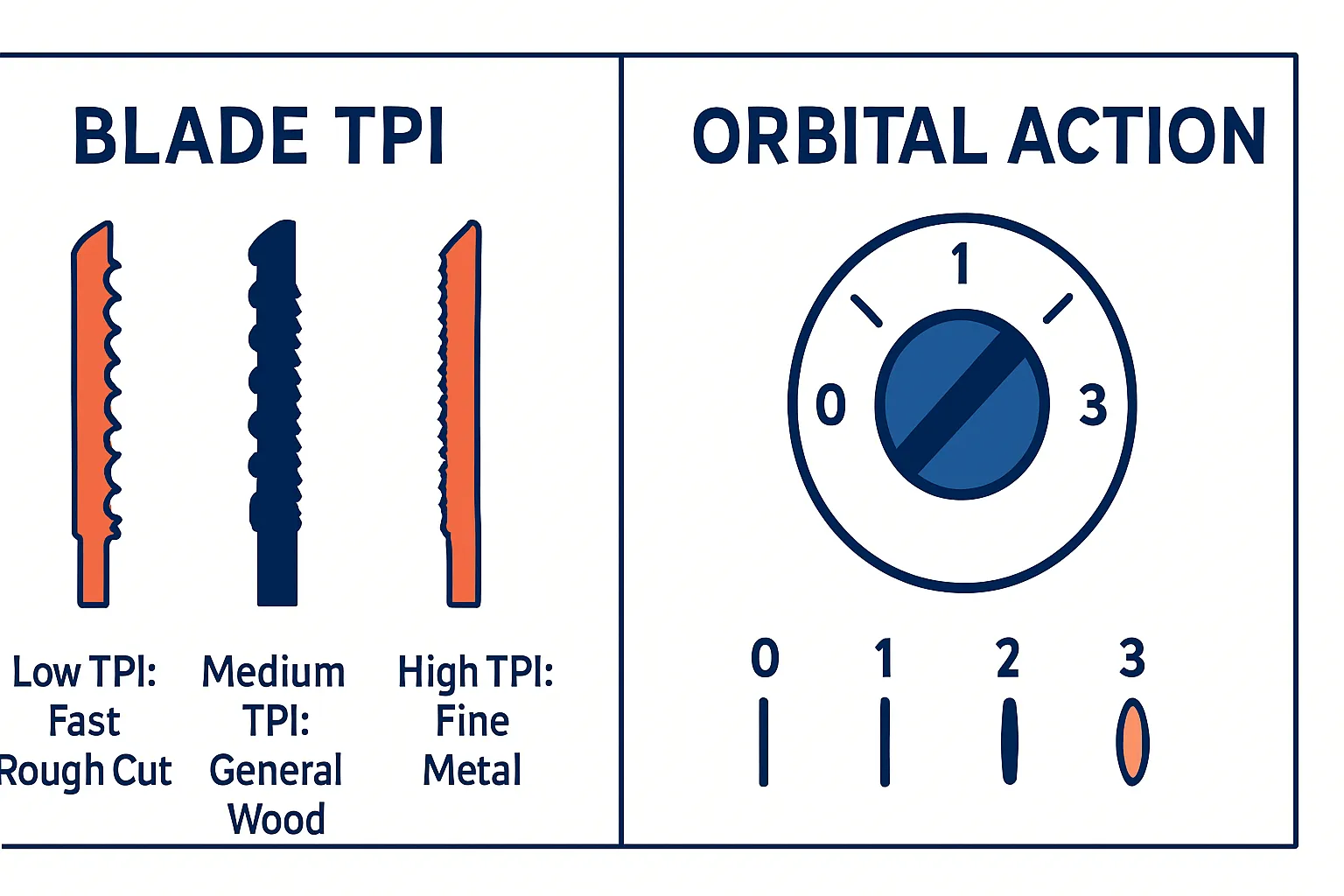
Orbital action tilts the blade’s stroke into a slight forward ellipse instead of a straight up-and-down motion, cutting faster in wood at the cost of a rougher edge. Most jigsaws offer settings 0 through 3; higher numbers cut faster but leave more tear-out.
| Setting | Blade Motion | Best For |
|---|---|---|
| 0 | Straight up-and-down | Metal, plunge cuts, tight scrolling curves |
| 1 | Slight forward ellipse | Sweeping curves, general plywood cuts |
| 2 | Moderate ellipse | Faster rip cuts in thicker softwood |
| 3 | Widest ellipse | Fastest, roughest cuts in thick softwood only |
According to This Old House’s jigsaw guidance, orbital action should stay off for metal, plastics, and any plunge cut, since the forward motion fights the blade tip trying to stay engaged as it drops into the material.
I ran the same 14-inch curve in 3/4-inch plywood with one 10-TPI blade at three settings: setting 0 took about 2 minutes with almost no tear-out, setting 1 took roughly 90 seconds with light fuzzing on the top edge, and setting 2 finished in just over a minute but left visible splinter marks that needed sanding before finishing. For a visible-face cut, setting 1 was the actual best trade-off — not the fastest setting and not the slowest.
When Should You Reach for a Jigsaw Instead of Another Saw?
Reach for a jigsaw for curves, cutouts, and plunge cuts. Reach for a circular saw for long, straight rips in sheet goods. Reach for a bandsaw for thick stock or repeated curved parts. Reach for a router for a perfectly smooth, templated edge.
| Task | Best Tool | Why |
|---|---|---|
| Curved cutout, sink hole | Jigsaw | Only tool that pivots freely along a marked line |
| Long straight rip in plywood | Circular saw | Rigid base and guide rail track a straight line faster |
| Repeated curves in thick stock | Bandsaw | Continuous blade doesn’t flex or wander over 2 inches |
| Perfectly smooth templated edge | Router | Bearing-guided bit leaves no saw marks to sand out |
Our jigsaw vs. bandsaw comparison breaks down the thickness and repeat-cut tradeoffs in more detail, and router vs. jigsaw covers the finish-quality difference for edge work if a router is already in your shop.
If curved cutouts and template work are a regular part of your shop time, it’s worth stepping up to a jigsaw built specifically for that kind of precision — see our Festool Carvex 420 jigsaw review for what the triple blade guidance actually buys you over a standard jigsaw.
How Do You Make a Clean Curved Cut Without Splintering?
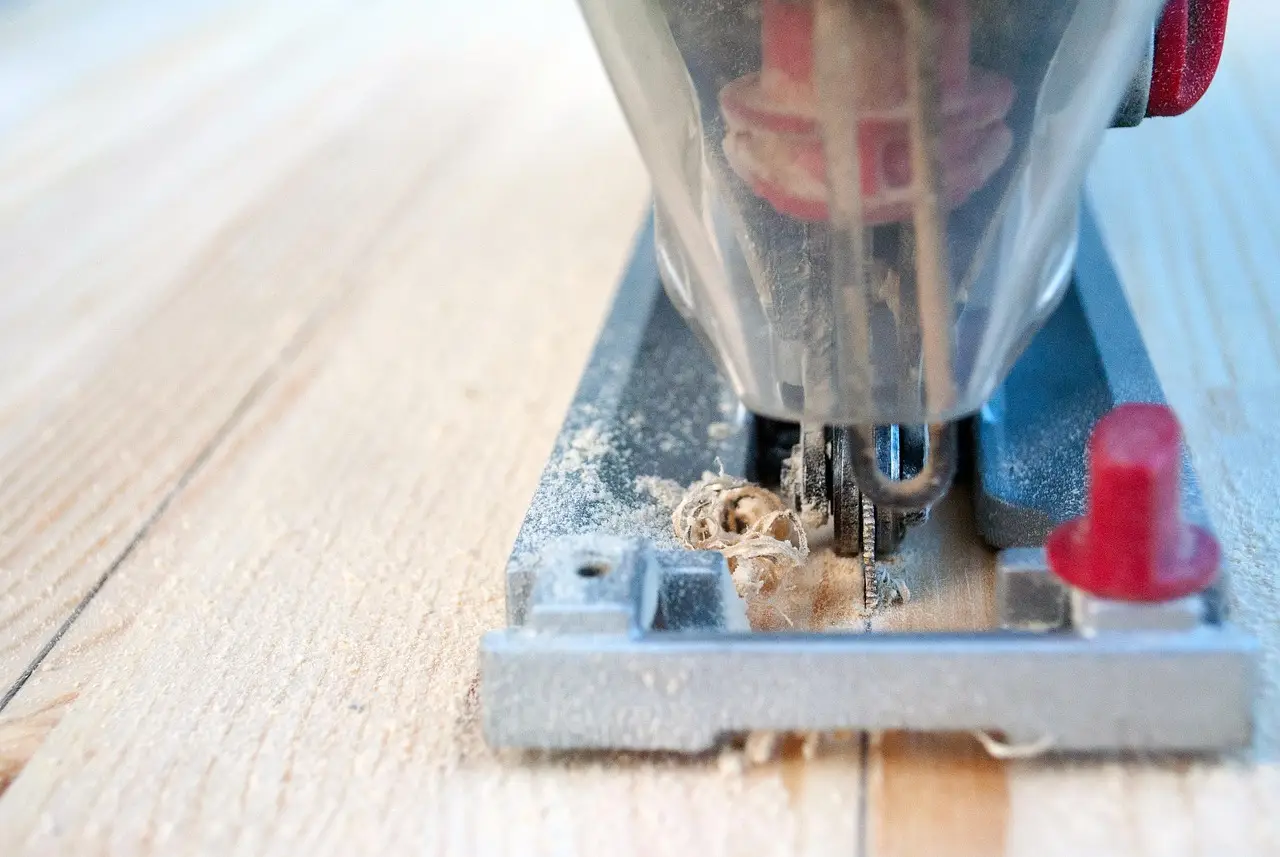
Tape the cut line with painter’s tape, cut with the good face down, load a fine down-cut blade, and feed the saw slowly enough that the blade never bogs down. Those four habits fix nearly every splintering complaint on plywood and laminate.
- Mark and tape the line: Painter’s tape over the cut line reduces surface splintering on plywood and laminate before the blade ever touches it.
- Cut good-face-down: A jigsaw’s blade cuts on the upstroke, so the visible splintering happens on the top face — flip the workpiece so the finished side faces down.
- Load a fine down-cut blade: 10–14 TPI down-cut blades push splinters into the underside instead of lifting them off the visible face.
- Feed at a steady, moderate pace: Pushing too fast bends the blade off the line; feeding too slowly on a high orbital setting burns the edge.
A full walkthrough with photos is in our guide to cutting plywood with a jigsaw without splintering.
Even with all four habits, a jigsaw will not match a table saw’s factory-straight edge on a long rip cut — the thin blade has more flex than a rigid circular blade, so a straight cut over about 3 feet is worth double-checking with a straightedge as you go.
Worth Having On Hand
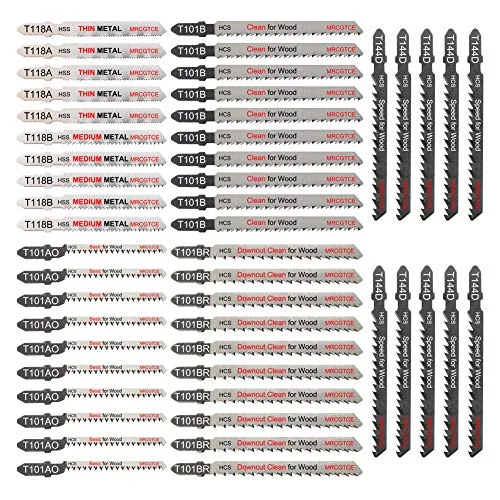
A 50-piece T-shank assortment covers softwood, hardwood, laminate, and thin metal without buying single blades every time the material changes — useful once you’re matching TPI to material on a regular basis.
See the blade assortment on Amazon →Frequently Asked Questions
Can a jigsaw cut a straight line?
Yes, but only with a guide — a straightedge clamped to the workpiece or the saw’s own edge guide, since the blade’s flex makes a fully freehand straight cut harder to keep accurate than a curved one.
Do you need orbital action for plywood?
Only for rough, fast cuts. For a visible plywood face, orbital setting 0 or 1 with a fine down-cut blade leaves a cleaner edge than the more aggressive settings 2 and 3.
What TPI is best for general woodworking?
8 to 12 TPI covers most general woodworking tasks across softwood and hardwood, balancing cut speed against a clean enough edge to sand and finish without much extra work.
How thick can a jigsaw cut through hardwood?
About 1.5 inches through dense hardwood before the blade starts to flex and wander off the marked line, even with a fresh, sharp blade.
Is a jigsaw good for a beginner woodworker?
Yes — it’s lightweight, forgiving of an unsteady hand at slow speed, and inexpensive compared to a bandsaw or table saw, which makes it a common first power saw for curved and detail work.
For the full lineup of saws used in a woodworking shop and how to choose between them, see our woodworking tools & saws guide.
Four orbital steps are standard on Bosch corded models; see our Bosch JS365 jigsaw review for how one of them compares on specs and price.
Sponsored / affiliate links. As an Amazon Associate I earn from qualifying purchases. I may earn additional commission from eligible campaigns.