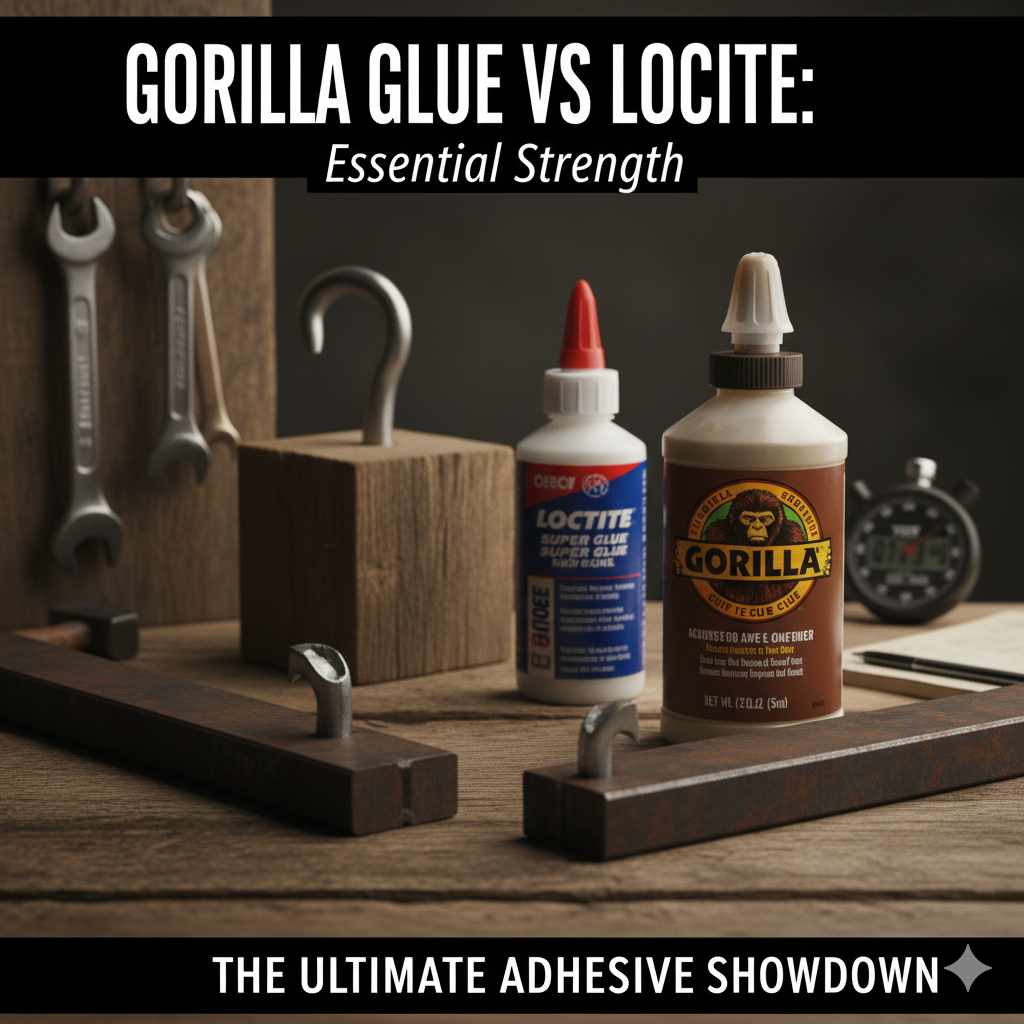
Gorilla Glue vs Loctite: Essential Strength
Gorilla Glue vs Loctite provides essential joining strength for various DIY projects, with Gorilla Glue excelling in expanding, gap-filling applications and heavy-duty bonding on rough surfaces, while Loctite offers rapid, precise adhesion for smaller, non-porous materials, metal repairs, and threadlocking needs. Both offer robust solutions, but the best choice depends on your specific project’s demands for flexibility, strength, and material compatibility.
Hello there, fellow makers and home improvers! Md Meraj here, your guide to making things stick. Ever found yourself staring at two bottles of powerful glue, wondering which one will save the day for your project? You’re not alone! It’s a common puzzle: Gorilla Glue versus Loctite. Both promise super strength, but they’re built for different kinds of work. Choosing the wrong one can lead to a wobbly joint or a bond that just doesn’t hold. But don’t you worry! We’re going to break down these two mighty adhesives, so you can pick the perfect one every time. Get ready to discover which glue reigns supreme for your next fix-it or build-it adventure!
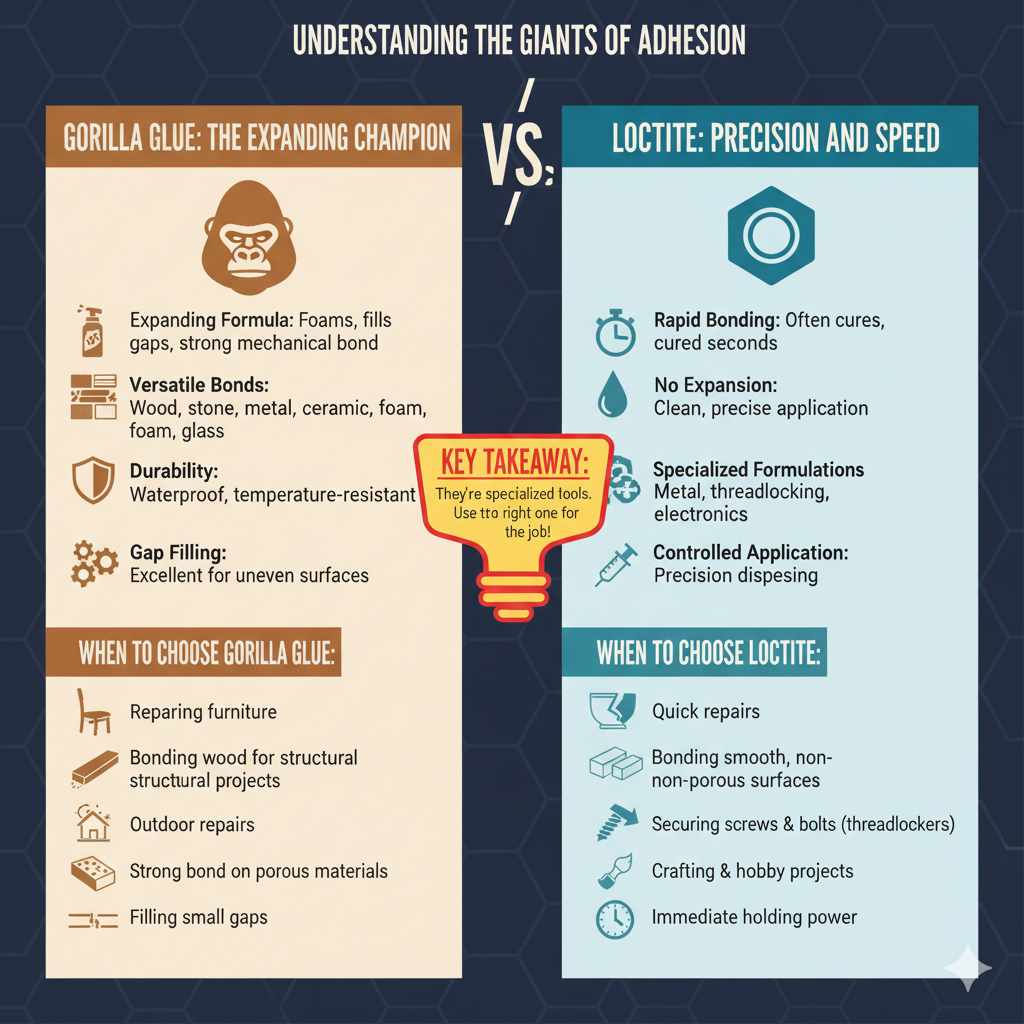
Gorilla Glue vs Loctite: Understanding the Giants of Adhesion
When it comes to making things stick, two names often come up: Gorilla Glue and Loctite. They’re both titans in the world of adhesives, known for their incredible holding power. But here’s a little secret: they’re not interchangeable. Think of them as specialized tools in a toolbox; you wouldn’t use a hammer to tighten a screw, right? Similarly, each glue has its strengths and ideal applications. Understanding these differences is key to a successful, long-lasting repair or build. Let’s dive into what makes each one unique and when you should reach for it.
Gorilla Glue: The Expanding Champion
Gorilla Glue is famous for its incredible strength. One of its most amazing features is that it expands as it dries. This isn’t a flaw; it’s a superpower! This expansion allows the glue to expand into tiny cracks and imperfections in surfaces, creating a super-strong, interlocking bond once cured. This makes it fantastic for uneven or rough materials where a perfect fit isn’t always possible. It’s often the go-to for projects needing serious heft and a bond that can withstand a lot of stress over time. It’s also known for its waterproof and temperature-resistant qualities, making it suitable for both indoor and outdoor applications.
What Makes Gorilla Glue Special?
- Expanding Formula: This is its signature. It foams up slightly as it cures, filling gaps and forming a strong mechanical bond.
- Versatile Bonds: It adheres strongly to a wide range of materials, including wood, stone, metal, ceramic, foam, glass, and more.
- Durability: Once cured, it’s incredibly strong, waterproof, and resistant to temperature fluctuations and impacts.
- Gap Filling: Its expansion makes it excellent for bonding slightly uneven or porous surfaces.
When to Choose Gorilla Glue:
- Repairing furniture with uneven breakages.
- Bonding wood for structural projects.
- Outdoor repairs exposed to the elements.
- Projects where you need a strong, unbreakable bond on porous materials.
- Filling small gaps between joining pieces.
Loctite: Precision and Speed
Loctite, on the other hand, is a name synonymous with precision, speed, and specialized bonding. While they offer a broad range of adhesives, their most recognized products are often cyanoacrylates (super glues) and anaerobic adhesives (like threadlockers). Loctite super glues are famous for their incredibly fast “set” time, bonding surfaces almost instantly. They don’t expand, which means a cleaner application and less squeezing out. Their anaerobic adhesives are revolutionary for metal applications, curing in the absence of air to prevent parts from loosening, especially in machinery and threaded connections. Loctite is often the choice for detailed work, quick fixes, and applications where immediate holding power is critical.
What Makes Loctite Stand Out?
- Rapid Bonding: Many Loctite adhesives cure very quickly, often in seconds.
- No Expansion: The lack of expansion means less mess and precise application, ideal for non-porous materials and delicate components.
- Specialized Formulations: Loctite offers a wide array of products tailored for specific materials and conditions, like metal bonding, threadlocking, and electronics.
- Controlled Application: Often designed for precision dispensing, allowing for exact placement without excess.
When to Choose Loctite:
- Quick repairs on ceramics, plastics, or small metal parts.
- Bonding smooth, non-porous surfaces where a tight fit is achievable.
- Securing screws and bolts to prevent loosening (threadlockers).
- Crafting and hobby projects requiring speed and precision.
- When you need a bond that sets almost immediately.
Key Differences: A Direct Comparison
Let’s break down the head-to-head differences between Gorilla Glue and Loctite in a way that makes choosing easy. It’s all about understanding what each glue does best so you can match it to your project’s needs.
Material Compatibility
Both glues can bond a variety of materials, but their optimal performance varies. Gorilla Glue is known to be more forgiving with porous and rough surfaces due to its expanding nature. Loctite, especially its super glues, often performs best on smooth, non-porous materials where a tight, gap-free bond can be achieved quickly.
- Gorilla Glue: Excellent on wood, stone, concrete, ceramic, metal, glass, fabric, paper, and most plastics. It’s particularly good for materials that aren’t perfectly smooth.
- Loctite (Super Glue Types): Fantastic on plastics, rubber, metal, ceramic, and sometimes wood, but works best when the surfaces are clean, dry, and fit together snugly. Their specialized products, like threadlockers, are specifically for metal.
Bonding Process and Curing Time
This is where you’ll see the most significant difference. If you need something to hold in seconds, Loctite often wins. If you have a bit more time and need a bond that will fill imperfections and expand for maximum grip, Gorilla Glue is your ally.
- Gorilla Glue: Requires moisture to cure, so you might need to lightly dampen one surface. It takes longer to cure fully, typically several hours, but it expands significantly during this time. Initial tack is slower.
- Loctite: Most super glues are activated by moisture already present on surfaces and cure very rapidly, often within 10-30 seconds for initial hold and within minutes for manageable strength. Full cure can take up to 24 hours. Anaerobic threadlockers cure when deprived of oxygen, typical in metal-to-metal threaded assemblies.
Strength and Durability
Both offer exceptional strength, but the type of strength can differ. Gorilla Glue creates a robust, often rigid bond that’s excellent for structural integrity and resisting shear forces. Loctite super glues can create very strong bonds too, but they might be more brittle and prone to impact damage if not perfectly applied or if the bond line is stressed acutely. Loctite threadlockers are specifically designed to prevent vibration and shock from loosening metal parts.
- Gorilla Glue: Known for its high tensile and shear strength, excellent impact resistance, water resistance, and temperature stability. It creates a permanent, rigid bond.
- Loctite: Super glues offer impressive bond strength quickly. Threadlockers provide resistance to vibration, shock, and leakage. Durability can vary greatly depending on the specific Loctite product.
Gap Filling Capabilities
This is a defining characteristic for Gorilla Glue.
- Gorilla Glue: Its primary advantage. The expanding nature means it can effectively fill small gaps, cracks, and imperfections, creating a solid bond even when surfaces aren’t perfectly matched.
- Loctite: Most Loctite glues (especially super glues) are not designed for gap filling. They work best when surfaces meet tightly. If there are significant gaps, the bond may be weak or fail. Specialized Loctite epoxies and construction adhesives can fill gaps, but their general super glues do not.
Gorilla Glue vs Loctite: Projects Perfected
To really understand the difference, let’s imagine some common DIY scenarios and see which glue is the right fit. These examples will help you visualize the application in your own home or workshop.
When Gorilla Glue Shines:
Imagine you’re fixing a beloved wooden chair that has a leg that wobbled loose. One of the break points isn’t completely clean; there are some tiny splintered bits. This is the perfect job for Gorilla Glue. You apply it to both surfaces, press them together, and let the naturally occurring moisture in the wood help the glue cure. As it dries, it expands, gripping onto those imperfections and creating a bond that’s stronger than the original wood in many cases. It’s also ideal for outdoor projects, like reattaching a stone to a garden wall, as its waterproof and weather-resistant properties will ensure the repair lasts.
| Project Type | Why Gorilla Glue is Ideal | Tips for Success |
|---|---|---|
| Wooden Furniture Repair | Fills gaps from splintered wood, creates a super-strong, often invisible bond. | Lightly dampen one surface, clamp firmly, wipe away excess immediately. |
| Outdoor Decor Repair (Stone, Ceramic) | Waterproof and weather-resistant, bonds well to porous materials. | Ensure surfaces are clean and dry before application. Allow full cure for maximum weather resistance. |
| Laminating Materials (e.g., wood veneers) | Its expansion helps ensure full contact and a strong bond. | Apply evenly, press firmly, and use even pressure during curing. |
| Repairing Broken Tools with Handles | Strong enough to withstand impact and stress, good gap filling for imperfect fits. | Apply liberally to the inside of the handle socket; may require clamping. |
| Crafting with Natural Materials | Works well on wood, branches, rocks, and other irregular items. | Test on a small, inconspicuous area first if unsure about material reaction. |
When Loctite is the Master:
Now, picture a different scenario: your eyeglasses hinge breaks, or a small plastic decorative piece on your car snaps off. These are jobs for Loctite. You need precision and speed. You apply a tiny drop of Loctite super glue to one surface, press the pieces together, and they’re bonded almost instantly. No mess, no fuss, and a discreet repair. Or consider a metal bolt that keeps vibrating loose on your bike. This is where Loctite’s threadlockers come in. You apply a drop to the threads, screw it in, and it cures into place, preventing any loosening due to vibration. It’s about targeted strength where it’s needed most, without excess.
| Project Type | Why Loctite is Ideal | Tips for Success |
|---|---|---|
| Eyeglasses Repair | Fast curing, precise application for small parts, bonds plastic and metal. | Use sparingly, apply to one surface only, hold firmly for a few seconds. |
| Ceramic or Porcelain Repair | Quick bond, minimal expansion means no drips or excess adhesive marring delicate surfaces. | Clean surfaces thoroughly. For porous ceramics, a slightly more absorbent product might be better, but Loctite often works well. |
| Metal Hardware Bonding | Super glues work well on smooth metals; threadlockers prevent loosening. | Ensure metal is clean and free from oil. For threadlockers, apply to threads and assemble. |
| Rapid Assembling Small Items | When you need parts to hold together immediately for further work or display. | Have all pieces ready before applying glue. Have a plan for how to hold them together. |
| Plastic Model Assembly | Precise application prevents damaging delicate plastic parts. Fast cure allows rapid assembly. | Test adhesive on sprue to ensure it doesn’t melt or damage particular plastics. |
Choosing the Right Adhesive: Beyond the Brand Name
It’s important to remember that both Gorilla Glue and Loctite offer a range of products. The general advice above applies to their most common formulations, but it’s always best to read the specific product label.
For instance, Gorilla Glue also makes super glues and epoxies, while Loctite offers stronger construction adhesives and epoxies that compete directly with some Gorilla Glue offerings. When you’re in the store or browsing online, look at the product’s description. Does it mention filling gaps? Is it designed for porous materials? Does it highlight fast bonding or temperature resistance? These details are your best guide.
Many DIYers find having both on hand is the best solution. A small bottle of Loctite super glue for quick fixes and a robust Gorilla Glue for bigger jobs or uneven materials means you’re always prepared. For instance, if you’re building a simple birdhouse, you might use Gorilla Glue for assembling the main wooden structure where gaps are likely, and then use a tiny bit of Loctite super glue to affix a small decorative perch precisely.
It’s also wise to consider the environment where the bond will exist. Will it be subject to water, extreme heat or cold, or constant vibration? The packaging will usually provide this information. For example, bonds exposed to water might benefit from Gorilla Glue’s waterproof formulation, while a vibrating bolt on a machine definitely needs a Loctite threadlocker. For more information on adhesive types and their best uses, resources from the U.S. Consumer Product Safety Commission can offer general safety and usage guidelines for household products.
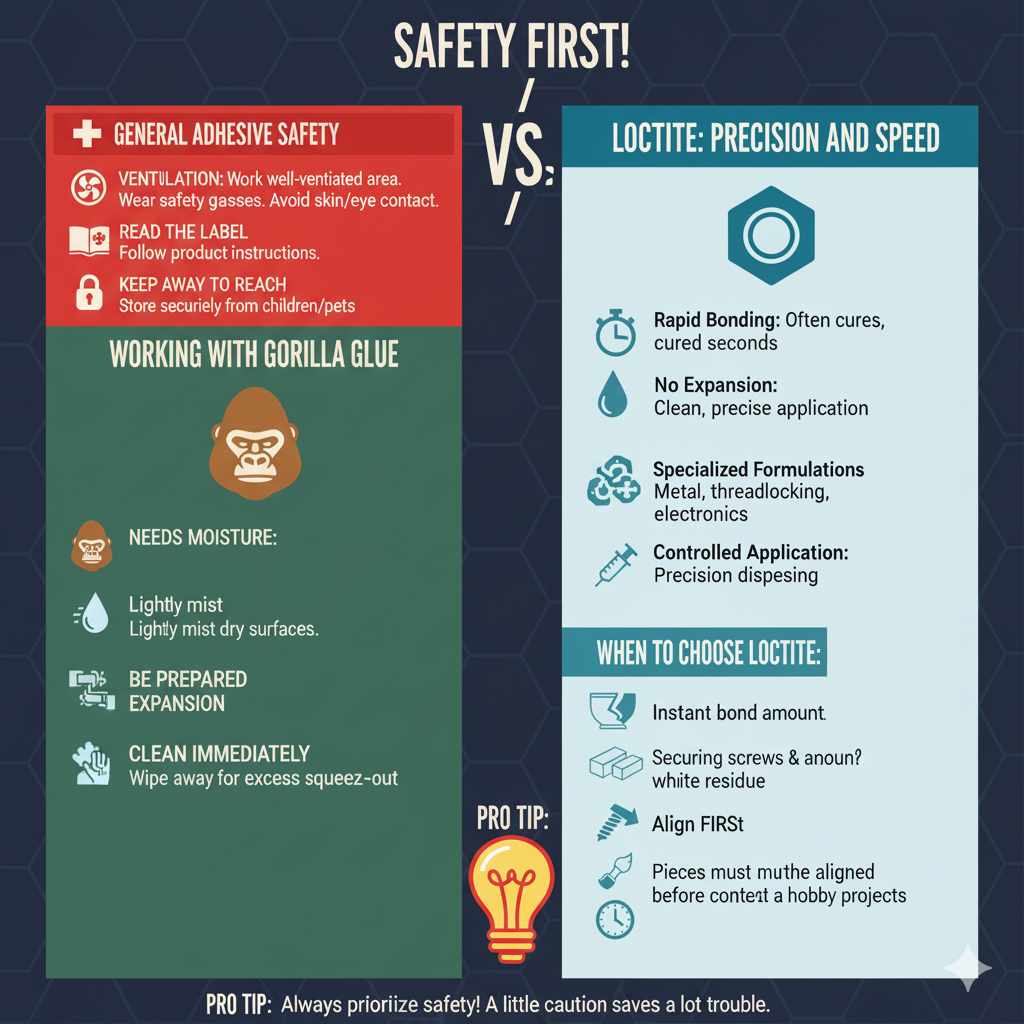
Safety First!
No matter which glue you choose, always remember to use adhesives safely. This is crucial, especially with powerful glues like these.
- Ventilation: Always work in a well-ventilated area. Some glues release fumes that can be harmful if inhaled over long periods.
- Skin and Eye Protection: Wear safety glasses to protect your eyes from accidental splashes. Avoid getting glue on your skin, especially Loctite super glue, which can bond skin instantly. If you do get it on your skin, don’t force it apart – try soaking in warm, soapy water or using nail polish remover (acetone) if it’s on your fingers, but be cautious with painted or finished surfaces. Consider wearing gloves, particularly for larger tasks or when using Gorilla Glue.
- Read the Label: Always follow the specific instructions and warnings on the product packaging.
- Keep Out of Reach: Store glues securely away from children and pets.
- Fire Hazard: Some adhesives are flammable. Keep them away from open flames and heat sources.
Working with Gorilla Glue: Safety & Application Tips
When using Gorilla Glue, remember that it needs moisture to cure. If trying to bond very dry materials, you might need to lightly mist one of the surfaces with water. Be prepared for the expansion – it’s designed to happen! Always clamp your workpiece securely until the glue is fully cured. Wipe away any excess squeeze-out immediately with a damp cloth. If it hardens, it can be tough to remove. For sensitive projects, doing a test bond on scrap material is highly recommended. The curing process can take several hours, so avoid putting stress on the joint too soon.
Working with Loctite: Safety & Application Tips
Loctite super glues are known for their instant bonding capabilities. This convenience comes with a caution: skin and eyelids can bond in seconds. You’ll want to work quickly and precisely. Having all your parts aligned and ready before applying the glue is essential. Apply only a small amount to one surface; excess won’t make the bond stronger and can create a messy white residue (blooming) on plastics or other materials. For Loctite threadlockers, ensure the metal threads are clean for optimal performance. They are designed to be disassembled later with hand tools, but their holding power is significant.
Frequently Asked Questions
Here are some common questions beginners have about Gorilla Glue and Loctite:
Q1: Can I use Gorilla Glue on a cracked phone screen?
A1: Generally, no. Gorilla Glue expands and can make the crack worse or leave a messy residue on the screen. Loctite’s super glues are better suited for small, non-porous repairs, but even then, a specialized screen repair adhesive or professional service is usually recommended for best results and to maintain touch functionality.