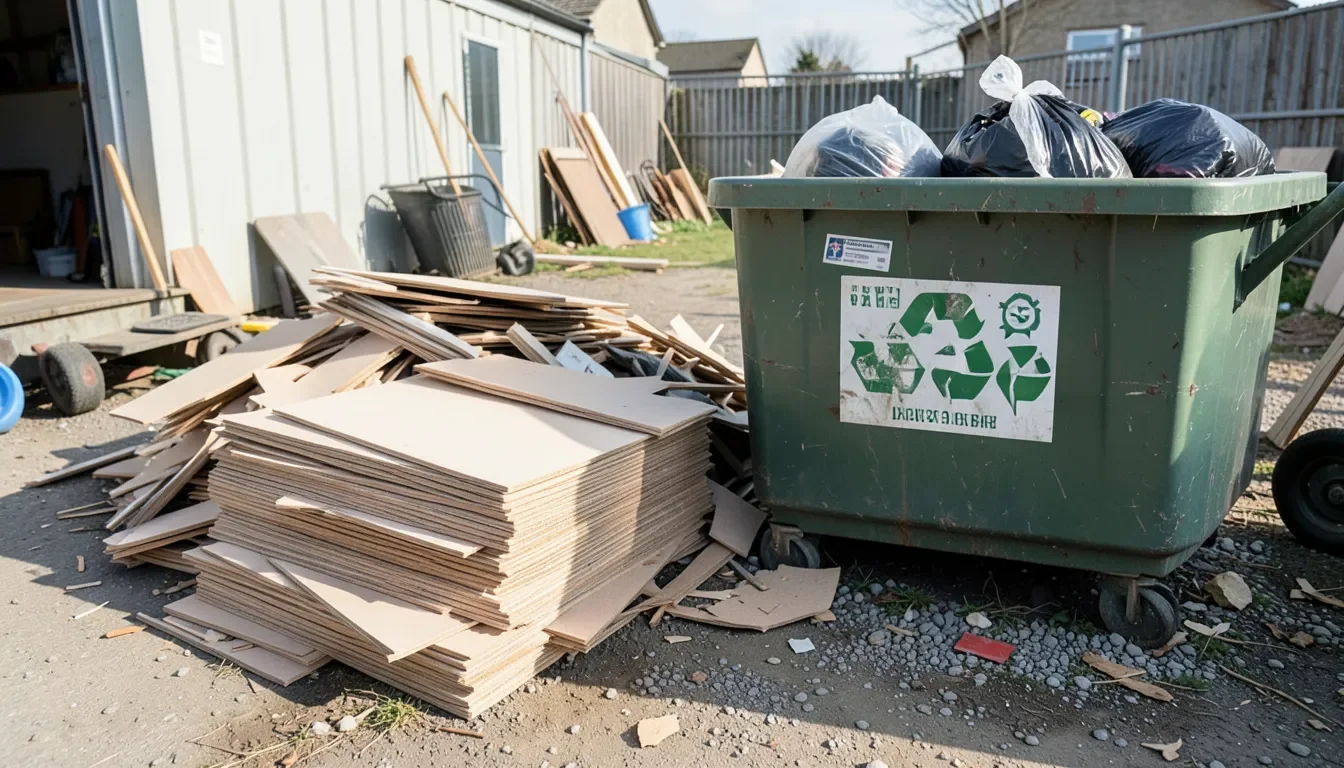
How Can MDF Be Recycled? The Real Options
MDF cannot go in your curbside recycling bin, and there’s a specific reason for that: the resin holding it together is a thermoset plastic, not a simple glue.
Unlike a soda bottle or a sheet of paper, medium-density fiberboard is wood fiber permanently bonded with urea-formaldehyde resin under heat and pressure. Once that resin cures, it doesn’t melt, soften, or dissolve the way ordinary recyclables do – so the machines your local recycling program uses simply can’t pull the wood fiber back out. That doesn’t mean MDF has zero recycling options. It means the real ones look nothing like tossing a piece in your blue bin, and most of what gets repeated online about “just recycle it” skips the part that actually matters: what happens to the formaldehyde.
Is MDF Actually Recyclable?
Technically, yes – but only through specialized industrial processing, not general recycling. A small number of facilities can hydrolyze the resin and recover usable wood fiber. Everywhere else, MDF that gets thrown in a standard recycling stream is usually pulled out as contamination and sent to landfill or a construction-waste transfer station anyway. If a page tells you MDF is “100% recyclable at home” or that ordinary curbside programs accept it, that’s not accurate – check your specific municipality’s rules, but assume the answer is no until you confirm otherwise.
Why Your Curbside Bin Won’t Take It
Most engineered wood products – plywood, OSB, even particleboard in some programs – can at least be considered for mechanical recycling because their binders break down or separate under grinding and heat. MDF’s binder is different. Urea-formaldehyde resin is a thermosetting plastic: once it cures during manufacturing, heating it again doesn’t soften it back up the way a thermoplastic would. It stays locked around the wood fibers.
That’s the whole problem in one sentence: a standard recycling facility’s job is to separate materials so they can be reprocessed, and MDF’s fiber and resin are fused in a way ordinary shredding and sorting equipment can’t undo. Send it through anyway and you get contaminated output that ruins a batch of otherwise-recyclable wood waste, which is why most facilities reject MDF outright rather than risk it.
The Real Industrial MDF Recycling Process
Genuine MDF recycling exists, it’s just not something your municipal program runs. Specialized facilities use a hydrolysis process: the board is shredded into small pieces, soaked in water or another liquid medium for an extended period, then heated to around 90°C (194°F). That heat and moisture combination hydrolyzes the urea-formaldehyde resin and the wax content, breaking the chemical bond enough to release usable wood fiber. Those recovered fibers can go into new MDF, particleboard, or other reconstituted wood panels.
The catch is scale and access. This isn’t a process you can replicate at home or drop MDF off for at a typical recycling center – it requires industrial equipment, controlled temperatures, and wastewater handling for the formaldehyde released during hydrolysis. A handful of specialty wood-waste processors and some manufacturer take-back programs run this kind of operation, mostly handling factory offcuts and commercial volumes rather than a homeowner’s few sheets. If you’re disposing of a small amount, the honest answer is that true fiber-recovery recycling probably isn’t available to you locally – which is why the practical routes below matter more for most people.
What NOT to Do With Old MDF
Never burn MDF in a fireplace, wood stove, chiminea, or bonfire. Burning releases the formaldehyde locked in the resin along with other combustion byproducts, including dioxins and furans – none of which you want in a room you’re standing in. MDF also burns down to a fine, powdery ash that clogs flues and can leave sticky resin residue inside a chimney or stovepipe, which is a separate fire-safety problem on top of the air-quality one. If you see advice suggesting “energy recovery” by burning MDF at home for heat, that’s describing an industrial waste-to-energy process with emissions controls – not something to replicate in a residential appliance.
Don’t assume MDF sawdust or offcuts are safe to compost or use as garden mulch, either. Research on formaldehyde behavior in composting shows it can break down significantly under controlled, sustained thermophilic conditions over weeks – but that’s a managed industrial or municipal composting process, not a backyard bin. Left in ordinary garden compost, MDF dust and scraps don’t reliably break down the same way, and there’s real uncertainty about formaldehyde leaching into soil in the meantime. Treat “just compost it” as a myth until your local facility explicitly confirms it accepts engineered wood waste.
What Happens to MDF That’s Not Recycled?
The realistic outcome for most MDF waste is landfill, and it’s worth knowing what that actually means rather than assuming the worst version of every claim. MDF doesn’t biodegrade the way untreated solid wood does – the resin resists the fungal and microbial breakdown that would normally rot wood fiber, so a board buried in a landfill can persist for years rather than composting away naturally. That’s different from saying it’s actively toxic sitting there; the concern researchers track is formaldehyde off-gassing and potential leaching as the material weathers over time, which is part of why modern landfills that accept construction and demolition debris manage leachate rather than leaving it to drain into open ground.
None of that makes landfill disposal dangerous for you to use as a homeowner – it’s a properly engineered, regulated destination for material that genuinely doesn’t have a better option yet. It does mean the “recycling” framing on a lot of older MDF content is optimistic. Reducing how much MDF you send there in the first place – by reusing offcuts, buying only what a project needs, or choosing a lower-formaldehyde board (look for CARB2 or E1/E0 emission ratings) for your next purchase – does more than hoping a recycling bin will handle it.
Practical Ways to Get Rid of MDF Responsibly
Since fiber-recovery recycling usually isn’t accessible for small quantities, here’s what actually works for most people:
- Household waste recycling center (the “tip”): most municipal waste sites accept MDF as general wood waste, separate from clean/untreated timber recycling. Call ahead – some sites cap the quantity you can drop off for free.
- Council bulky-item or skip collection: larger volumes from a renovation are usually better suited to a scheduled bulky pickup or a rented skip than multiple car trips.
- Trade waste accounts: if a joiner or contractor is doing the work, ask whether their waste account already routes MDF to a facility with proper handling – it often does, at no extra cost to you.
- Reuse before you dispose: offcuts too small to recycle can still work as shelf supports, drawer dividers, or backing panels for other projects – it’s not a recycling fix, but it keeps material out of the waste stream a little longer.
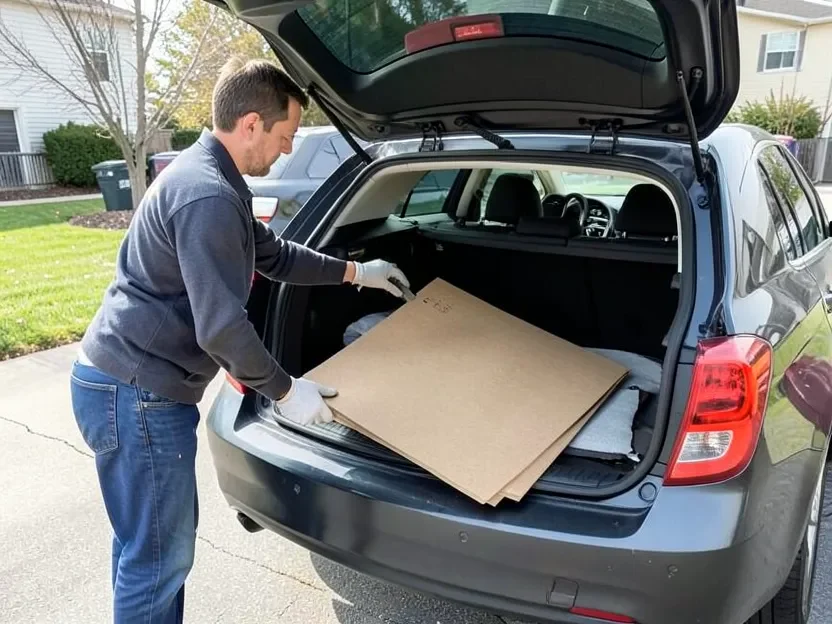
For a full breakdown of every disposal route side by side – including skip hire and donation options – see our complete guide on how to dispose of MDF. If you’re specifically trying to cut a board down to a size that fits in your car or bin, our guide on how to get rid of MDF covers cutting and safety in more depth.
Frequently Asked Questions
Is MDF recyclable through my curbside program?
Almost never. Curbside programs sort by material type using equipment that can’t separate MDF’s cured urea-formaldehyde resin from the wood fiber, so MDF placed in a recycling bin is typically pulled out as contamination. Confirm with your specific municipality, but plan on taking MDF to a waste recycling center instead.
Can MDF be recycled at all, anywhere?
Yes, through specialized industrial hydrolysis processing that shreds the board, soaks it, and heats it to around 90°C to break down the resin and recover wood fiber. This capability exists mainly at specialty wood-waste processors and some manufacturer take-back programs, not general recycling centers, so it’s usually only practical for commercial or factory-scale volumes.
Is it safe to burn MDF for heat or disposal?
No. Burning MDF releases formaldehyde along with dioxins and furans from the resin, and it leaves a fine ash and resin residue that can clog a flue or chimney. Never burn MDF in a fireplace, wood stove, chiminea, or bonfire.
Can I compost MDF sawdust or offcuts?
Not in a typical backyard compost bin. Formaldehyde reduction has been shown under sustained, controlled industrial composting conditions, but ordinary home composting doesn’t reliably replicate that process. Treat home composting of MDF waste as unconfirmed unless your local composting facility specifically says it accepts engineered wood.
Is MDF 100% recyclable?
No. Because the wood fiber and urea-formaldehyde resin are chemically bonded rather than just mixed together, some material loss and quality reduction happen every time MDF fiber is recovered and reprocessed. Recovered fiber is more commonly downcycled into particleboard or lower-grade panel products than turned back into identical MDF indefinitely.
Is MDF particle board recyclable?
Particleboard uses the same category of formaldehyde-based resin binders as MDF, so it faces the same curbside limitation – standard recycling programs generally won’t take it either. The same specialized industrial hydrolysis facilities that process MDF can sometimes handle particleboard, but availability is just as limited, and a household waste recycling center is still the realistic disposal route for most people.
The Bottom Line
MDF’s resin is what makes it useful – and exactly what makes it hard to recycle. Real fiber-recovery recycling exists, but it’s an industrial process most homeowners can’t access for a few sheets or offcuts. For everyday disposal, skip the bin, skip the fire pit, and take MDF to a household waste recycling center or your local council’s bulky-waste collection instead.
Sponsored / affiliate links. As an Amazon Associate I earn from qualifying purchases. I may earn additional commission from eligible campaigns.