How Is MDF Board Made? The Real Industrial Process Explained
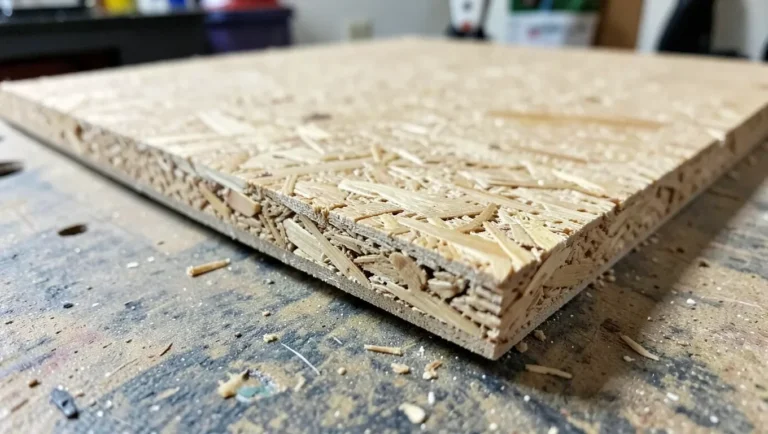
MDF isn’t something you can make at home – it requires an industrial defibrator and a hot press exerting hundreds of pounds per square inch, equipment no home shop has. What you actually can do at home is combine wood fibers or sawdust with resin and press them under a much lower clamped pressure, but the result is a rough particleboard-like panel, not real MDF’s smooth, dense, machinable surface. This guide explains the real industrial process step by step, what a home version can and can’t replicate, and a safety issue most guides skip entirely: the resin dust released when you cut or sand a finished board. (Just need the quick version? See our short answer on how MDF is made.)
Why MDF Can’t Really Be Made At Home
Best Respirator For Cutting MDF
 |
GVS Elipse P100 Dust Half Mask Respirator – $49.91 Cutting or sanding MDF releases fine dust carrying the same resin the board is bonded with, which is why a real P100 respirator matters more here than on solid wood.
|
Two pieces of industrial equipment make real MDF possible, and neither has a practical home-shop substitute:
- A defibrator – a machine that steams and mechanically refines wood chips down to individual wood fibers, not just small splinters. This step is what gives MDF its smooth, grain-free surface; a home blender or chipper produces coarse fragments, not true fiber.
- A continuous hot press – industrial MDF presses run at roughly 300°F+ and several hundred PSI simultaneously, curing the resin through the full thickness of the mat in one pass. A home clamp or even a hydraulic press can’t safely reach that combined heat and pressure across a full sheet.
If you want a genuine DIY version of a fiber-and-resin panel, you’ll get a coarser, weaker product than store-bought MDF – still useful for some craft projects, but not a substitute where MDF’s strength or smooth surface matters. If the project needs the real thing, buying a sheet is simpler and cheaper than trying to replicate the industrial process; see our guide to where to find MDF board at local and online retailers.
How MDF Is Actually Manufactured
1. Chipping And Refining
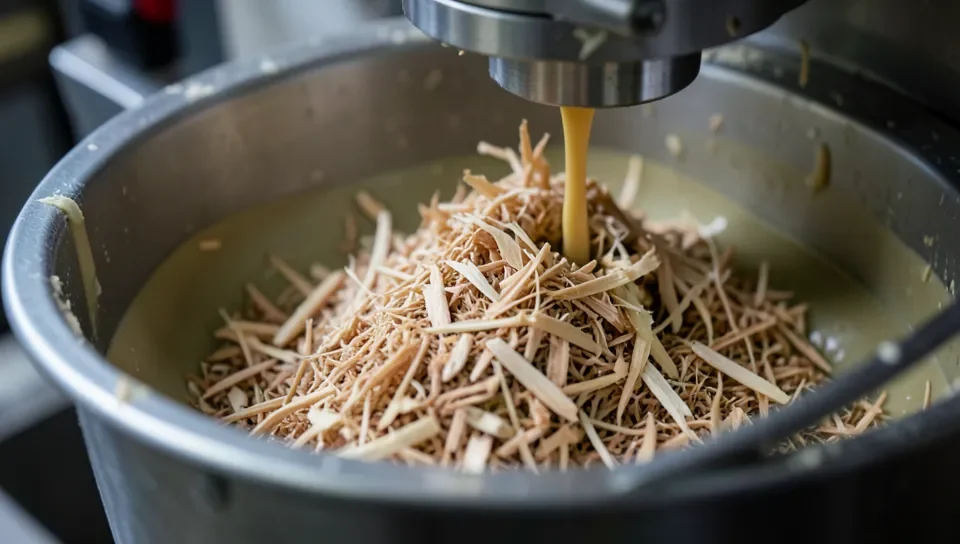
Softwood logs, sawmill offcuts, and wood residues are chipped into small pieces, then steamed and mechanically refined in a defibrator until the wood separates into individual fibers rather than chips or splinters. This fiber size — much finer than particleboard’s wood flakes — is what gives MDF its smooth face and clean-cutting edges.
2. Resin Blending
The dried fibers are blended with a resin binder — typically urea-formaldehyde (UF) resin for standard interior-grade MDF, or a moisture-resistant MDI (methylene diphenyl diisocyanate) resin for exterior or moisture-resistant grades — along with a small amount of wax for water resistance. The fiber-resin mixture is then formed into a loose, even mat.
3. Hot Pressing
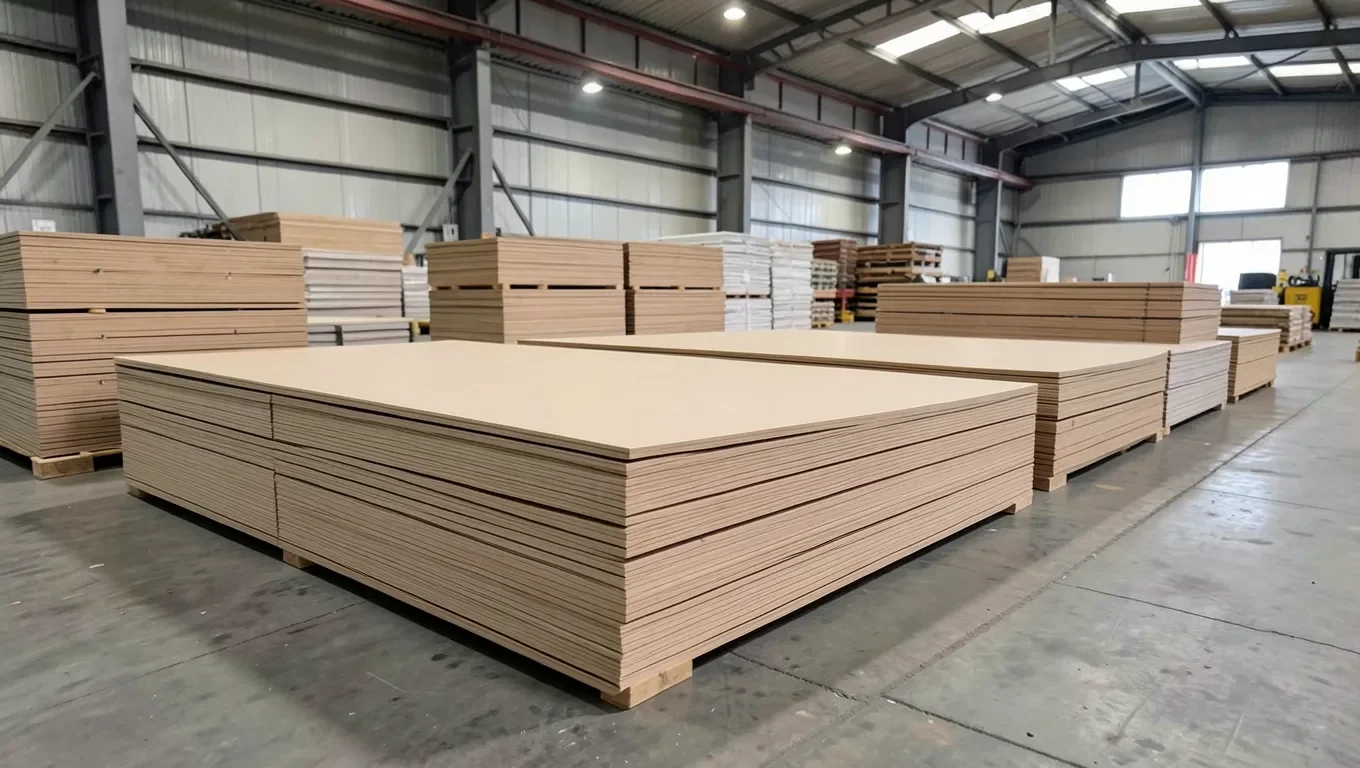
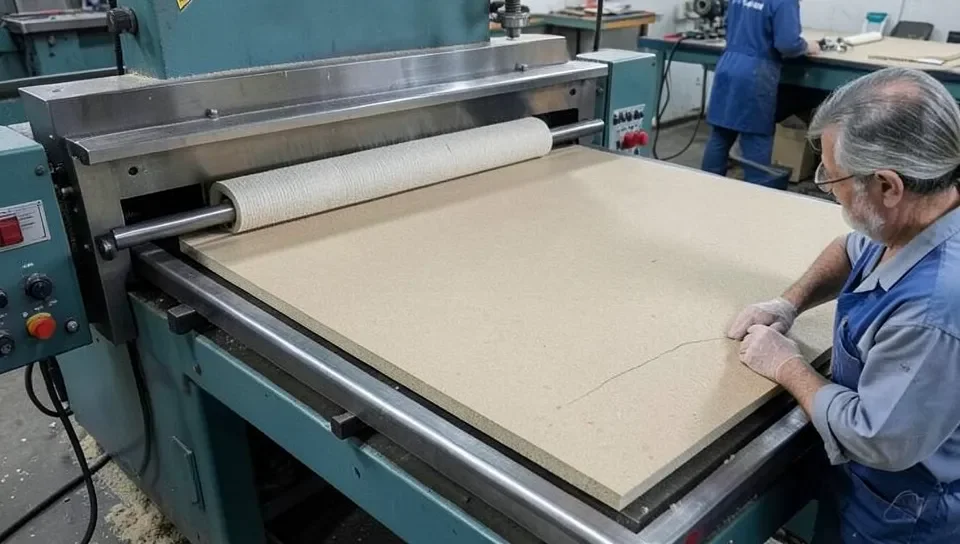
The mat moves through a continuous hot press that applies heat and hundreds of PSI of pressure simultaneously, curing the resin and compressing the mat into a dense, uniform panel in a single pass. Pressure and heat together are what cure the resin evenly through the full thickness — skipping either produces a weak or unevenly cured board.
4. Cooling, Trimming, And Sanding
Pressed panels are cooled, trimmed to final sheet size, and sanded on both faces to the smooth, consistent surface MDF is known for. Quality control checks density and thickness before the sheets are packaged for sale.
The Formaldehyde Question Most Guides Skip
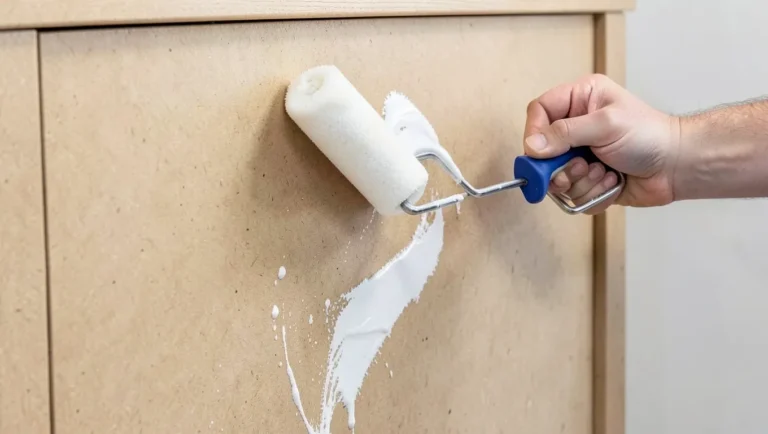
Standard UF-resin MDF off-gasses small amounts of formaldehyde, particularly when the board is new and in an enclosed space. U.S. manufacturers selling composite wood products are required to meet CARB Phase 2 (or the equivalent federal TSCA Title VI) formaldehyde emission limits, and boards compliant with this standard are usually labeled as such on the sheet edge or a supplier’s spec sheet. If a project is for a poorly ventilated space or involves a lot of exposed MDF edge, checking for a CARB2/TSCA Title VI compliance label is worth the extra minute — and sealing exposed edges with paint or edge banding cuts off-gassing further.
Cutting And Sanding Safety
The dust released when you cut, rout, or sand a finished MDF board carries fine wood fiber plus the resin the board is bonded with — finer and more irritating than typical solid-wood sawdust. A few practical steps matter more here than on solid lumber:
- Wear a real P100-rated respirator, not just a disposable paper dust mask, when cutting or sanding MDF for any length of time.
- Cut outdoors or with dust collection running whenever possible – MDF dust is fine enough to stay airborne longer than coarser sawdust.
- Use sharp carbide blades – a dull blade generates more fine dust and burns the resin at the cut edge, producing a stronger odor.
MDF Vs. A Home-Made Fiber Panel: What You Actually Get
| Property | Real MDF (Factory) | Home Fiber-Resin Panel |
|---|---|---|
| Surface smoothness | Very smooth, paint-ready | Rough, needs heavy sanding/filling |
| Density/strength | Consistent, high density | Lower, uneven density |
| Edge machinability | Cuts and routes cleanly | Tends to crumble at edges |
| Equipment needed | Industrial defibrator + hot press | Blender/chipper + clamps or a small press |
Frequently Asked Questions
Can You Make MDF Board At Home?
Not real MDF. The industrial process needs a defibrator to produce true wood fiber and a hot press applying heat and hundreds of PSI at once, neither of which has a practical home-shop equivalent. A home version made from sawdust, resin, and clamping pressure will be rougher and weaker than store-bought MDF.
What Resin Is Used To Make MDF?
Standard interior-grade MDF uses urea-formaldehyde (UF) resin. Moisture-resistant and exterior-grade MDF typically uses MDI (methylene diphenyl diisocyanate) resin instead, which holds up better to humidity and moisture.
Is MDF Dust Dangerous To Breathe?
MDF dust is finer than typical solid-wood sawdust and carries resin along with the wood fiber, so a real P100-rated respirator is recommended when cutting, routing, or sanding it for any length of time, along with dust collection or outdoor cutting where possible.
What Does CARB2 Mean On An MDF Label?
CARB Phase 2 (or the federal TSCA Title VI equivalent) is a formaldehyde emissions standard for composite wood products sold in the U.S. A board labeled CARB2/TSCA Title VI compliant meets a stricter formaldehyde emission limit, which matters most for enclosed or poorly ventilated spaces.
Conclusion
Real MDF is an industrial product – a defibrator for true wood fiber and a hot press for even resin curing aren’t things a home shop can replicate, so a DIY fiber-resin panel will always be a rougher stand-in, not equivalent MDF. If a project needs real MDF’s strength and smooth surface, buying a sheet and protecting yourself from its resin-laden dust with a proper respirator is the more practical path.
Sponsored / affiliate links. As an Amazon Associate I earn from qualifying purchases. I may earn additional commission from eligible campaigns.