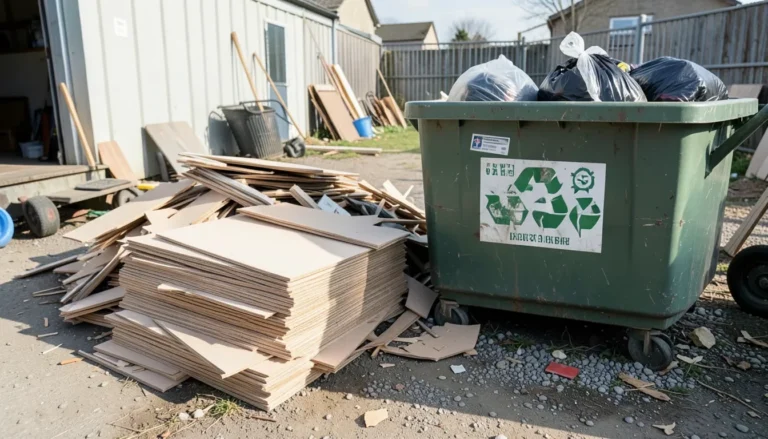
How to Get Rid of MDF: Disposal, Recycling & Cutting Safety
MDF can’t go in your curbside recycling bin, and burning it in a fire pit or wood stove is a genuinely bad idea — not because of a rule someone made up, but because of what’s actually holding the board together. Here’s what MDF is made of, why that changes the disposal math, and the safest way to cut, remove, and get rid of it without breathing what you shouldn’t.
Want the full explanation of why MDF resin blocks curbside recycling and what genuine industrial recycling involves? Read our guide on how MDF can actually be recycled.
What MDF Is Made Of (And Why That Matters For Disposal)
Best For Heavy MDF Cutting Sessions
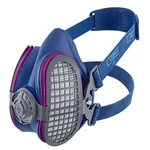 |
GVS Elipse P100 Dust Half Mask Respirator – $29.99 A low-profile, reusable P100 respirator that fits under safety glasses — the practical upgrade if you’re cutting more than a sheet or two of MDF at a time.
|
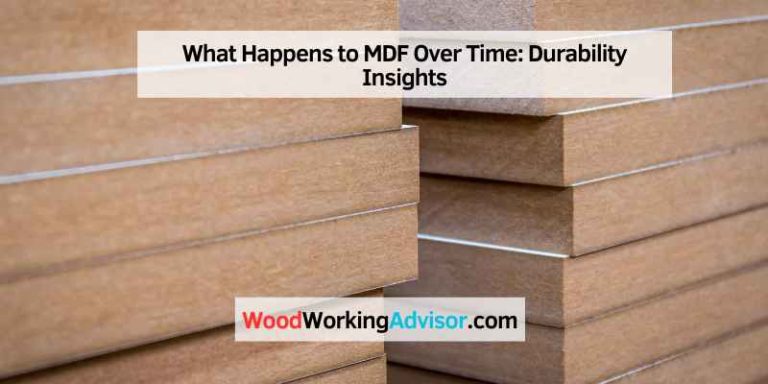
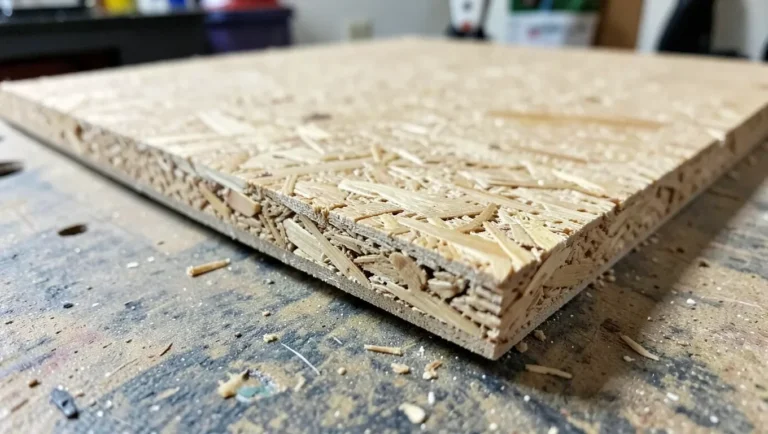
Medium-density fiberboard is wood fiber — not chips, not veneer, actual fibers broken down almost to a pulp — pressed together with a urea-formaldehyde (UF) resin under heat and high pressure. That resin is roughly 8-10% of the board’s weight, and it’s the reason MDF behaves so differently from solid lumber or even plywood once you’re trying to get rid of it. A standard 3/4-inch, 4×8 sheet weighs about 96-100 pounds — noticeably heavier than a same-size sheet of plywood at roughly 60-65 pounds — because that dense fiber-and-resin mat has almost no air pockets in it.
That resin also keeps off-gassing formaldehyde for years after the board leaves the factory, which is why U.S. sheet goods have been under CARB Phase 2 / EPA TSCA Title VI emission limits since 2018 (0.09 ppm formaldehyde for MDF 8mm or thinner). If your MDF is older than that, or came from outside the U.S., it may emit more. None of this makes MDF dangerous to own — millions of cabinets and shelves are built from it — but it does explain every rule below.
Can You Actually Recycle MDF? The Honest Answer
Mostly, no — and this is the point where most disposal guides quietly lie to you. Curbside recycling and standard wood-waste recycling programs are built around clean, unglued wood fiber. The urea-formaldehyde resin in MDF contaminates that stream: it can’t be re-pulped the way clean sawdust or offcuts can, and it releases formaldehyde if it’s chipped and composted or turned into mulch. Some regions have industrial engineered-wood-board recyclers (the UK’s MFRA program is the best-known example), but in most of the U.S. there is no consumer-facing MDF recycling pathway — check your specific municipality, but don’t assume “recycle” means “curbside bin.”
What you’re actually looking for is a construction & demolition (C&D) debris facility, not a residential recycling center. Most transfer stations sort C&D wood separately from “clean wood” precisely because of adhesives like the one in MDF, and they’ll take it — often for a small per-load fee — even when the blue recycling bin won’t.
Never Burn MDF — Even in a Backyard Fire Pit
Burning solid pine or oak scrap outdoors is generally fine. Burning MDF is not, and this is the single most important safety point in this guide. When the urea-formaldehyde resin combusts, it releases free formaldehyde gas along with nitrogen oxides, and incomplete combustion (which is normal in an open fire pit or a standard wood stove not rated for engineered wood) produces additional aldehydes and particulates you don’t get from clean lumber. This isn’t a minor “some people say” caution — it’s why manufacturers explicitly warn against burning MDF offcuts and why most municipal burn ordinances exclude “manufactured wood products” from backyard burn piles. If you’re getting rid of an old MDF shelf, put it in the trash or a C&D load. Don’t put it in the chiminea.
Cutting and Handling MDF Safely: Dust vs. Off-Gassing (They’re Different Problems)
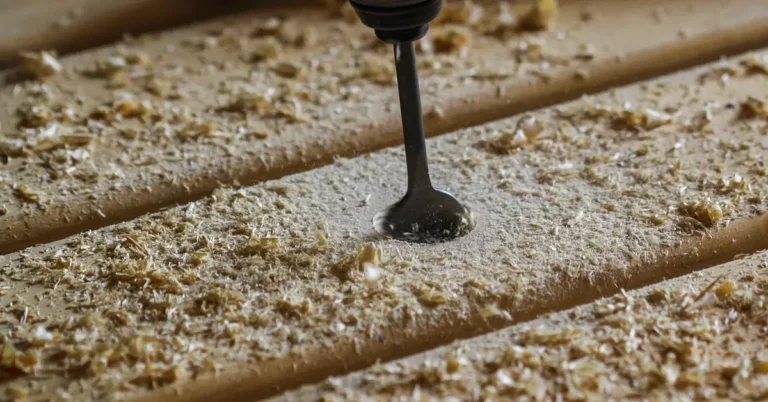
Here’s a distinction most articles blur together: the dust mask you wear while cutting MDF protects you from the fine particulate created by the saw blade — it does not protect you from the invisible formaldehyde gas the board off-gasses continuously just sitting in a room. A basic N95 or a fitted respirator with a P100 particulate filter stops the dust. Neither one has an activated-carbon or organic-vapor cartridge, so neither one filters formaldehyde gas. If you’re cutting a large amount of MDF indoors, the fix isn’t a better mask — it’s ventilation (a box fan blowing outward through a window, or cutting outside entirely) plus a dust mask for the particulate side of the job.
MDF dust itself is fine enough to be classified as a respirable wood dust hazard by OSHA and NIOSH, and it’s more uniform and penetrating than sawdust from solid lumber because the fibers are already broken down small. A shop vac with a HEPA filter connected directly to your saw’s dust port cuts airborne exposure dramatically more than sweeping up afterward. Always cut MDF in a ventilated space, and treat the dust collection bag as something you empty outside, not next to your workbench.
If you’re doing a lot of MDF cutting — a full built-in project, several cabinet carcasses, a run of shelving — a properly fitted half-mask respirator rated P100 is worth the upgrade over a disposable paper mask, mainly for comfort and seal over a full afternoon of cutting, not because a disposable mask is unsafe for occasional use.
Your Real Disposal Options, Ranked
- Reuse or repurpose it first. Painted, primed MDF cut into shelves, small tables, or wall art keeps it out of the waste stream entirely and costs you nothing but time.
- Donate usable pieces. Habitat for Humanity ReStores, school shop programs, and community theater set-builders regularly take clean MDF offcuts and full sheets.
- Sell it. Facebook Marketplace and local classifieds move leftover sheet goods quickly — list the exact dimensions and thickness, since buyers are usually matching a specific project.
- Take it to a C&D transfer station, not your curbside bin. Call ahead; some charge by the pound or by the truckload.
- Book a junk removal service for large amounts — a full kitchen’s worth of old MDF cabinets is usually cheaper to have hauled than to transport yourself.
Legal and Local Considerations
Rules vary a lot by city and county. Some municipalities classify MDF as regular construction debris with no special handling; others require it to go through a licensed waste hauler once you exceed a certain volume (commonly a pickup-truck load). Illegal dumping fines for construction debris are enforced in most jurisdictions and can run into the hundreds of dollars, so a five-minute call to your local public works department before a big teardown is worth it.
Frequently Asked Questions
How do you get rid of MDF?
Reuse or donate usable pieces first, sell full sheets or large offcuts locally, and take the rest to a construction & demolition (C&D) transfer station rather than curbside recycling, since most residential recycling programs don’t accept resin-bonded engineered wood. For large volumes, a junk removal service is usually faster and cheaper than hauling it yourself.
Can MDF be recycled?
Rarely through standard residential recycling. The urea-formaldehyde resin that holds MDF together contaminates the clean-wood recycling stream, so most curbside and municipal wood-recycling programs reject it. A few regions have dedicated engineered-wood-board recycling programs; otherwise, MDF typically goes through C&D debris disposal rather than a recycling bin.
Is it safe to cut MDF indoors?
Only with real ventilation and dust control. MDF dust is fine, penetrating, and classified as a respirable wood dust hazard, so cut with a dust-collecting saw or shop vac attached, wear a fitted N95 or P100 mask, and ventilate the room. A dust mask filters the particulate but does not block formaldehyde gas, so ventilation matters even if you’re wearing proper respiratory protection.
Can you burn MDF in a fire pit or wood stove?
No. Burning MDF releases formaldehyde gas and other aldehydes from the resin binder, along with more particulate than clean lumber produces, especially in an open fire pit or a stove not designed for engineered wood. Dispose of MDF scraps through the trash or a C&D facility instead of burning them.
Sponsored / affiliate links. As an Amazon Associate I earn from qualifying purchases. I may earn additional commission from eligible campaigns.