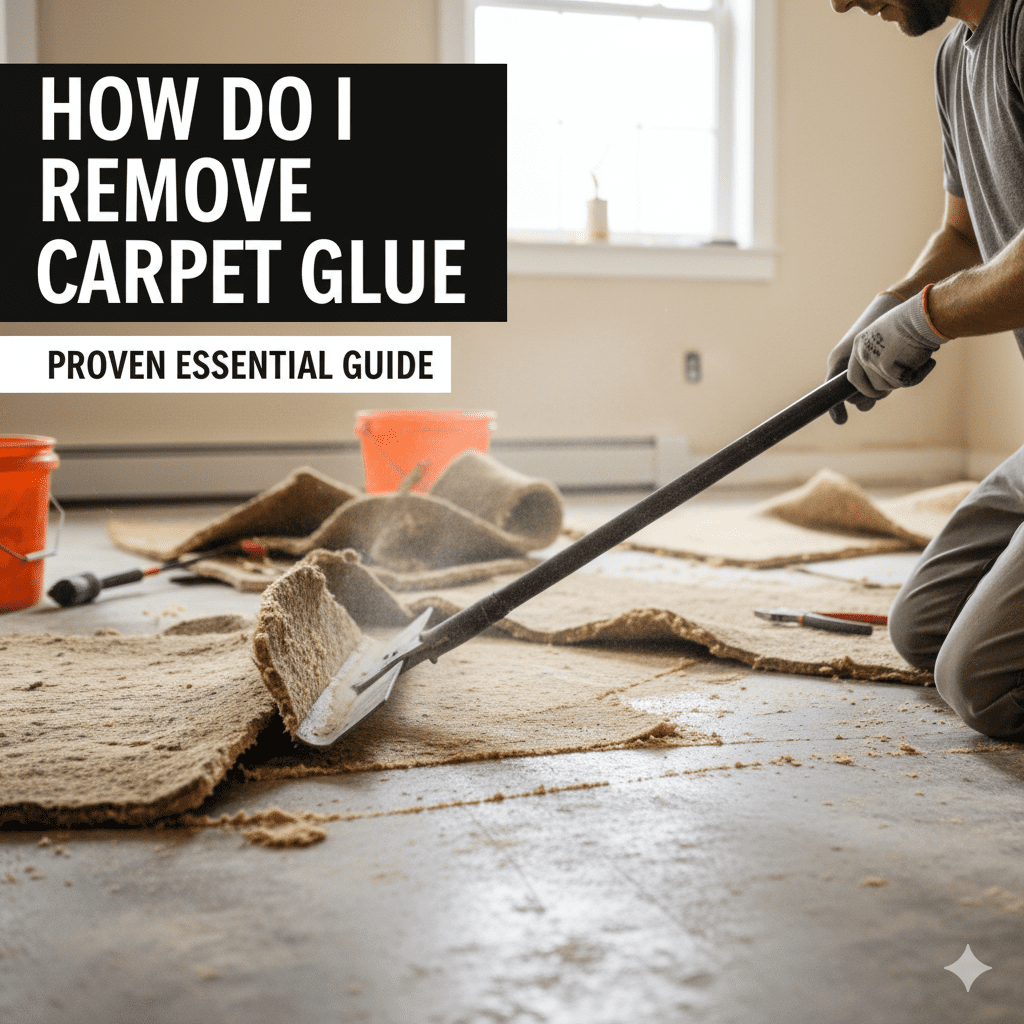
How Do I Remove Carpet Glue: Proven Essential Guide
Bolded Quick Summary (Top of Article)
Removing carpet glue is achievable with the right methods. For most glues, scraping with a putty knife, applying a solvent like mineral spirits or a specialty adhesive remover, and then cleaning the area thoroughly will get the job done. Always test in an inconspicuous spot first.
Hey there, fellow DIYers and homeowners!
Ever pulled up old carpet only to find a stubborn, sticky mess of glue left behind? Ugh, it’s one of those tasks that can really make you pause and think, “Now what?” But don’t worry, I’ve been in that spot more times than I can count in my workshop, and I’m here to tell you that removing carpet glue doesn’t have to be a huge headache. It’s a common hurdle when you’re updating flooring, and with a few simple tools and techniques, you can conquer it and get your subfloor ready for its next transformation. We’ll walk through this step-by-step, so you can feel confident tackling this job. Let’s get that floor clean and ready for your next project!
Why is Removing Carpet Glue So Tricky?
Carpet glue, or adhesive, is designed to hold on tight. It’s engineered to withstand pressure, foot traffic, and humidity, which means it’s incredibly durable. When you try to scrape it off dry, it often just smears or breaks into tiny, annoying bits that embed themselves further into the subfloor. This can be frustrating because it looks like you’re not making much progress, and the stickiness can transfer to your tools and even your hands!
Different types of glue have different properties, too. Some are water-based and might dissolve with water and scrubbing, while others are synthetic or epoxy-based and require stronger solvents. The type of subfloor you have – whether it’s concrete, plywood, or another material – also plays a role in how you should approach the removal, as some solvents can damage certain surfaces. But fear not, we’ll cover the most common scenarios and solutions.
Essential Tools and Materials for Glue Removal
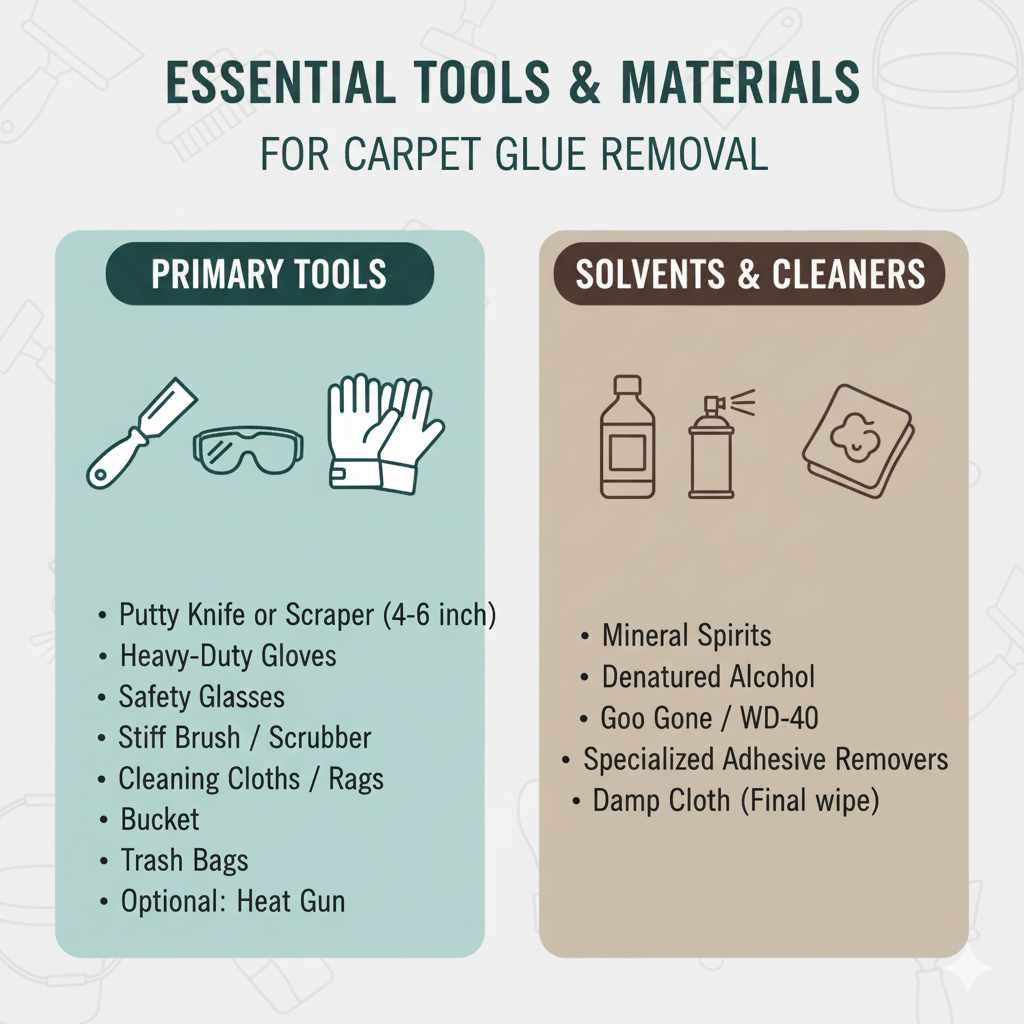
Before we dive into the methods, let’s gather what we’ll need. Having everything ready beforehand makes the process much smoother. Think of this as prepping your workbench before a fine woodworking project!
What You’ll Likely Need:
- Putty Knife or Scraper: A stiff metal putty knife (4-inch or 6-inch) or a floor scraper is your primary tool for getting under the bulk of the glue.
- Gloves: Heavy-duty work gloves are essential to protect your hands, especially when using solvents.
- Safety Glasses: Always wear safety glasses to protect your eyes from flying debris or splashes of cleaning solutions.
- Screwdriver: For prying up any stubborn edges.
- Stiff Brush or Scrubber: A wire brush or a stiff-bristled scrub brush can help loosen dried glue.
- Vacuum Cleaner: A shop vacuum is ideal for collecting dust and debris.
- Cleaning Cloths or Rags: You’ll need plenty of these for wiping and cleaning.
- Bucket: For mixing cleaning solutions.
- Trash Bags: Heavy-duty bags for disposing of scraped glue.
- Solvent (if needed): Options include mineral spirits, denatured alcohol, Goo Gone, WD-40, or specialized adhesive removers. (More on this below!)
- Damp Cloth: For a final wipe-down.
- Optional: Heat Gun: Can sometimes soften stubborn glue for easier scraping.
Understanding Different Carpet Adhesives
The best way to remove carpet glue depends heavily on what kind of glue was used. While it might be hard to tell sometimes, knowing the common types can help you pick the right approach. Here’s a quick rundown:
Common Carpet Glue Types:
- Latex-Based Adhesives: These are common for carpet tiles and some residential carpets, especially those with a foam backing. They are often water-soluble when wet, but can become very tough once dried and cured.
- Spray Adhesives: Used for temporary applications or certain types of carpet, these can be less tenacious but sticky nonetheless.
- Epoxy or Urethane Adhesives: These are heavy-duty glues, often used for commercial carpets or carpets requiring extreme durability. They are typically the hardest to remove.
- Hot Melt Adhesives: Less common for wall-to-wall carpet, but sometimes used for seams or carpet tiles. They soften with heat.
Most DIYers will encounter latex-based or maybe some older, tougher synthetic glues. The good news is that most removal methods can handle a variety of these once the glue has dried.
Step-by-Step: How to Remove Carpet Glue Like a Pro
Alright, let’s get down to business. This guide will cover the most common methods, starting with the simplest. Always remember to test any solvent in an inconspicuous area first to ensure it doesn’t damage your subfloor.
Phase 1: The Initial Scrape
This is where you’ll remove the bulk of the loose or thick adhesive. Patience is key here; you won’t get it all in one go.
- Prepare Your Area: Make sure the carpet is completely removed. Use your screwdriver or pliers to pull up any remaining edges of the carpet or tack strips. Sweep or vacuum the area to remove loose debris that could get in your way.
- Use Your Scraper: Hold your putty knife or floor scraper at a low angle to the subfloor. Gently but firmly try to get under the edge of the hardened glue. Work in small sections. The goal here is to lift and break off chunks of glue. If the glue is very hard, you might need to apply a bit more force, but be careful not to gouge your subfloor, especially if it’s wood.
- Collect the Debris: As you scrape, collect the glue chunks and dust in a dustpan or directly into your trash bag. A shop vac can be helpful for initial cleanup of loose bits.
Phase 2: Tackling Stubborn Glue with Solvents
If scraping alone isn’t cutting it, it’s time to bring in some help from a solvent. This is where you’ll soften the remaining glue, making it easier to remove.
- Choose Your Solvent: The choice of solvent depends on the glue and your subfloor.
- Mineral Spirits (Paint Thinner): Effective for many synthetic adhesives and can soften old, tough glue. Be sure to use this in a well-ventilated area!
- Denatured Alcohol: A milder option that can work on some adhesives.
- Goo Gone or Similar Citrus-Based Removers: These are often gentler and have a pleasant smell, but might be less effective on very heavy-duty glues.
- WD-40: Surprisingly effective for softening many types of sticky residues.
- Specialty Adhesive Removers: Available at hardware stores, these are formulated for tough jobs. Read the labels carefully for subfloor compatibility.
- Test, Test, Test: Before applying any solvent to a large area, test it on a small, hidden spot of your subfloor. Wait a few minutes to see if it causes any discoloration, softening, or damage. This is crucial, especially for wood subfloors which can be sensitive.
- Apply the Solvent: Wearing your gloves and safety glasses, apply the chosen solvent to a small section of the glue-covered floor. You can use a brush, a rag, or even a spray bottle for larger areas. Work in manageable sections, about 2-3 square feet at a time.
- Let it Dwell: Allow the solvent to sit on the glue for the amount of time recommended on the product label, or for about 5-15 minutes. This gives it time to break down the adhesive’s bond.
- Scrape and Wipe: After the dwell time, use your putty knife or scraper again to lift the softened glue. It should come off much more easily now. Use clean rags to wipe away the loosened glue and solvent. You may need to reapply solvent as you work.
- Repeat as Needed: For very stubborn patches, you might need to repeat the solvent application and scraping process.
Phase 3: Cleaning and Final Touches
Once the bulk of the glue is gone, you need to clean the subfloor thoroughly to remove any residue and prepare it for its next use.
- Clean with Mild Soap and Water: For most subfloors (especially concrete or sealed wood), a mild solution of dish soap and warm water is a good final cleaner. Dip a rag or scrub brush into the solution, wring it out so it’s damp (not soaking wet), and scrub the area. This will help remove any remaining solvent residue and stickiness.
- Rinse with a Damp Cloth: Use a clean, damp cloth to wipe away the soap residue. You might need to do this a few times.
- Dry Thoroughly: Ensure the subfloor is completely dry before proceeding with any new flooring installation. You can use dry rags to wipe it down, or let it air dry for some time. Using a fan can speed up the drying process. For wood subfloors, it’s especially important to avoid excess moisture.
- Final Inspection: Run your hand over the subfloor. It should feel smooth, clean, and free of any tackiness.
Alternative Methods for Tough Spots
Sometimes, you encounter glue that just won’t budge. Here are a couple of other options to consider:
Using Heat
A heat gun can be surprisingly effective for softening certain types of adhesive, especially those used for carpet tiles that might be more pliable. Be cautious with this method:
- Set your heat gun on a low to medium setting.
- Hold it a few inches above the glue, moving it constantly to avoid overheating or scorching the subfloor.
- As the glue softens, immediately use your putty knife to scrape it away.
- This method works best on smaller areas and requires quick work. It’s not ideal for large installations.
Safety Note: Always use caution with heat guns. Ensure good ventilation and be aware of any flammable materials nearby. For wood subfloors, be extra careful not to scorch the wood.
Mechanical Abrasion
For incredibly stubborn, baked-on adhesive, especially on concrete, mechanical abrasion might be your best bet. This usually involves equipment that you might rent or hire, but it’s good to know about:
- Floor Grinder: These machines use diamond-tipped or abrasive discs to grind away the top layer of concrete, taking the glue with it. This is a powerful solution for concrete but leaves dust and requires proper safety gear and experience.
- Sanding: For wood subfloors, a belt sander or orbital sander with coarse-grit sandpaper can remove thin layers of glue residue. Again, this creates dust and requires care to avoid damaging the wood.
For most DIY projects, you’ll want to avoid methods that require heavy machinery unless you’re very experienced or willing to rent specialized equipment. The solvent method is usually sufficient.
Subfloor-Specific Considerations
The material of your subfloor matters. What works on concrete might not be the best approach for plywood.
Concrete Subfloors
Concrete is pretty durable, making it a good candidate for most removal methods. Solvents are generally safe, and if absolutely necessary, mechanical grinding is an option. Ensure the concrete is fully dry and clean before applying new flooring.
Plywood or Wood Subfloors
Wood is more sensitive. Test solvents in a hidden area diligently. Avoid excess moisture, as it can warp or damage the wood. If using a solvent, wipe it up quickly with a dry rag after scraping. Don’t let it soak into the wood. If you need to sand, do so lightly and ensure the surface is smooth and free of dust. If the wood subfloor has been sealed, be extra careful; harsh solvents or excessive scraping could breach the seal.
What About Newer Glue Types?
Modern carpet adhesives are often designed for easier removal, or at least less damage. Some are even water-based and can be cleaned with water and scrubbing while still somewhat fresh. If you know the brand of glue used, checking the manufacturer’s website for removal instructions can be helpful. For example, if you’re ripping up carpet to paint a concrete floor, getting it perfectly clean is a must.
When to Call a Professional
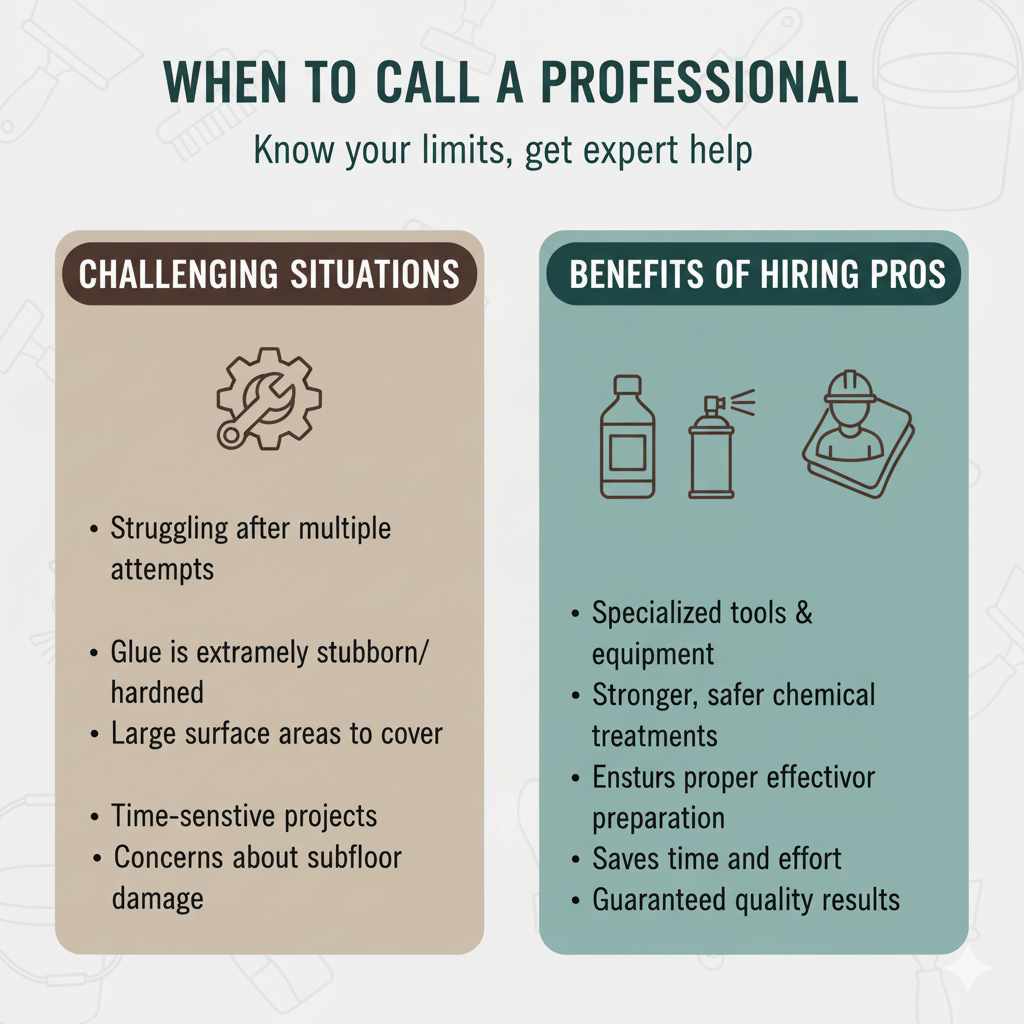
Sometimes, the glue is just too much to handle. If you’ve tried multiple methods and are still struggling, or if you’re concerned about damaging your subfloor, it might be time to call in the pros. Professional floor removal services have specialized tools and stronger, but safe, chemical treatments that can tackle even the most stubborn adhesives quickly and effectively. It’s always an option to consider if you want to save time and ensure the job is done right.
FAQs About Removing Carpet Glue
Q1: How long does it take to remove carpet glue?
The time can vary greatly depending on the amount of glue, its type, and the method you use. A small room might take a few hours, while a larger area with tough glue could take a full day or more.
Q2: Can I just paint over the carpet glue?
Generally, no. If you plan to install new flooring, the glue needs to be removed as it can create an uneven surface and affect the adhesion of your new flooring. Painting over it isn’t a recommended long-term solution.
Q3: Is it safe to use strong chemicals like paint thinner to remove glue?
Yes, but with caution. Always ensure excellent ventilation, wear gloves and safety glasses, and test in a small area first. Read the product’s Material Safety Data Sheet (MSDS) if available for detailed safety information. For wood subfloors, use milder alternatives if possible.
Q4: What’s the most common method for removing carpet glue?
The most common and effective DIY method involves scraping off the bulk of the glue with a putty knife or scraper, followed by applying a solvent (like mineral spirits or a specialty remover) to soften the remaining residue, then scraping and wiping it clean.
Q5: How do I clean up after using a solvent?
After you’ve removed the softened glue, clean the area with a mild soap and water solution on a damp cloth to remove any solvent residue. Follow this with a rinse using a clean, damp cloth, and then dry the subfloor thoroughly.
Q6: Will WD-40 work on carpet glue?
Yes, WD-40 can often soften and help lift many types of carpet glue, especially older or less aggressive adhesives. Spray it on, let it sit for a few minutes, and then try scraping the glue away.
Conclusion
Tackling leftover carpet glue might seem daunting, but with the right approach, it’s a perfectly manageable DIY task. Remember to start with scraping, bring in solvents for the tough spots after you’ve tested them, and always finish with a thorough cleaning. Whether your subfloor is concrete or wood, being mindful of the material will help you choose the safest and most effective methods. Don’t be afraid to take your time; a little patience goes a long way in achieving a clean, smooth surface ready for your next flooring project. You’ve got this!