How to Set the Carburetor on a Poulan Chainsaw (By Model Type)
Setting the carburetor on a Poulan chainsaw is not the same job on every saw. An older, fully-adjustable Poulan lets you turn the H (high-speed) and L (low-speed) mixture screws a set number of turns from a lightly-seated position. Many newer Poulan and Poulan Pro models, however, ship with plastic “limiter caps” over those same screws that physically block how far they can turn – a design change Poulan made to meet EPA small-engine emissions rules, not a defect. Knowing which one you have, before you start turning screws, is the difference between a clean tune-up and a saw that runs worse than when you started.
Not All Poulan Carburetors Adjust the Same Way
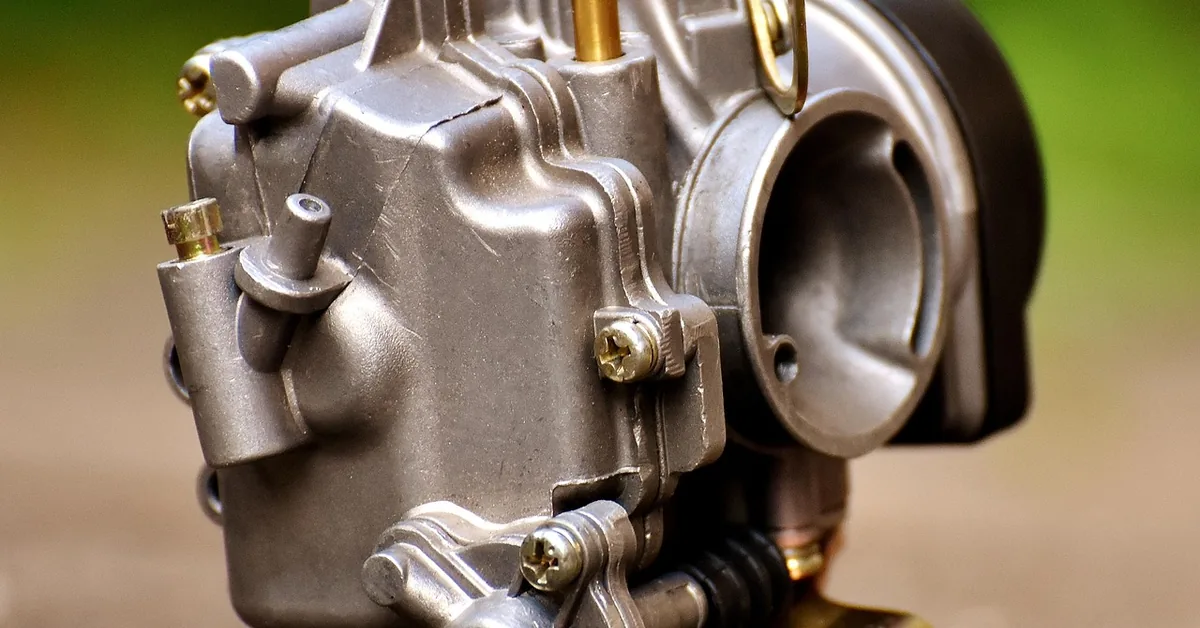
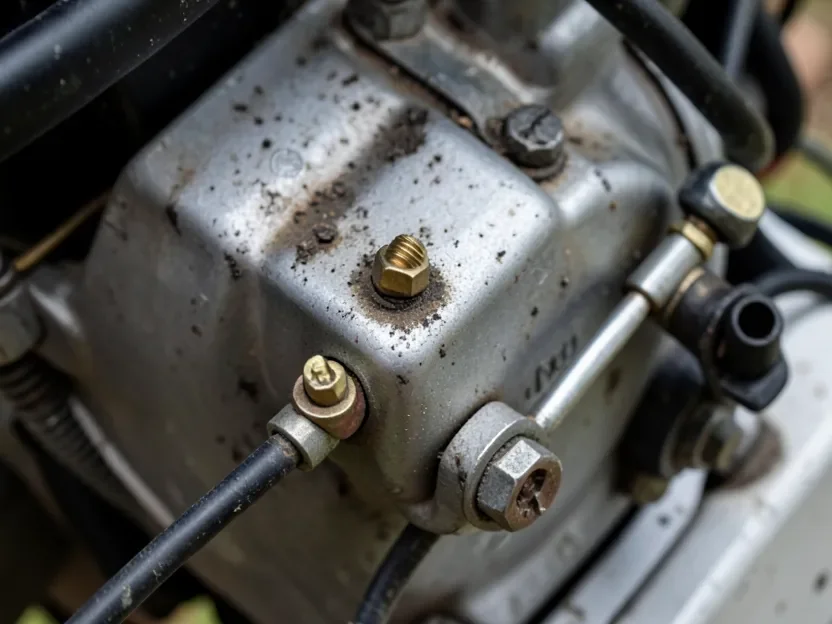
Bing search data for this page shows people looking up carb settings for specific old saws – the Poulan 1950, 2050, 2350, and 3816 among them – alongside newer models like the PP4018. That split matters. Pre-2000s and early-2000s Poulan gas chainsaws generally use a Walbro or Zama carburetor with plain flathead H and L screws you can turn with a small screwdriver, full range, no cap. Most newer Poulan and Poulan Pro saws use the same style of carburetor but with a factory-installed limiter cap – a small plastic collar – fitted over the H and L screw heads. The cap only lets the screw travel a narrow pre-set arc, intentionally keeping the fuel mixture inside EPA-compliant limits. There is no single “factory setting” that applies to both groups, and a generic “turn it 1 to 1.5 turns” instruction found on a lot of chainsaw sites doesn’t account for that difference. If you’re not sure which type you have, look at the two small screws on the carburetor body: bare metal screw heads you can turn freely means an older, fully-adjustable unit; a plastic ring or dome sitting over the screw means a limiter cap.
Tool For Limiter-Cap Carburetors
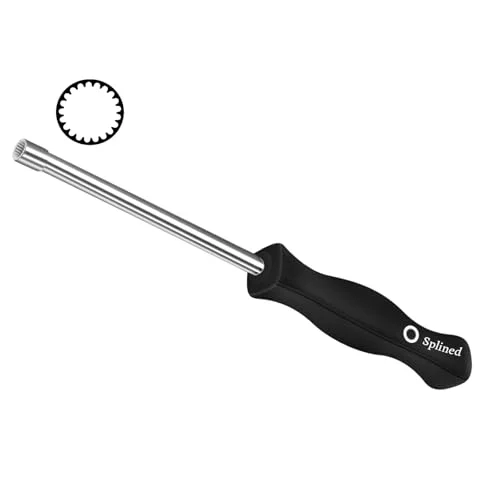 |
Ferilter 21-Tooth Splined Carburetor Tool – $4.39 If your Poulan’s H and L screws have a limiter cap over them, a flathead screwdriver won’t reach the actual screw – this tool’s splined tip does.
|
Tools You’ll Actually Need
For an uncapped carburetor, a small flathead screwdriver is enough. For a capped one, you need the splined tool above (or a small pick to pry the cap off, which several owners do – just know that removing the cap can be treated by some dealers as tampering with emissions equipment, so check your saw’s warranty status first). A tachometer is optional but useful if you want to confirm the high-speed screw lands near the engine’s rated max RPM rather than just “sounds right.” Keep your owner’s manual or a printout of the model-specific spec on hand – the exact number of turns and idle RPM target genuinely varies by model and by year, even within the Poulan lineup, so there isn’t one universal number to memorize.
Step 1: Start With the Idle (T) Screw – the Safest Adjustment to Make Yourself
The T screw (sometimes marked “idle” or “LA”) is a straightforward mechanical stop – it controls how far the throttle butterfly sits open at idle, not the fuel mixture. It has no limiter cap on any Poulan model, which is exactly why it’s the one adjustment most owners can make safely without special tools or emissions concerns.
This is also the one adjustment with a real safety stake attached to it: if the idle speed is set too high, the centrifugal clutch can engage and spin the chain even with the trigger untouched. A chain that moves at idle is a genuine hazard – it can catch a hand, clothing, or a branch the moment the saw is set down running. Most Poulan gas chainsaws are designed to idle in roughly the 2,600-3,400 RPM range, comfortably below clutch engagement, but “roughly right by ear” isn’t good enough here.
- Start the saw and let it warm up for a couple of minutes.
- With the saw idling and the trigger fully released, watch the chain on the bar.
- If the chain is moving, turn the T screw counterclockwise in small increments – this lowers idle RPM – until the chain stops completely.
- If the engine stalls at idle instead, turn the T screw clockwise slightly until it holds a steady idle with the chain still.
- Recheck after the saw has run a few minutes and warmed up fully; idle speed can drift as the engine reaches operating temperature.
Never hand a running saw to someone else, or set it down, until you’ve confirmed the chain sits completely still at idle.
Step 2: Adjusting the H and L Mixture Screws (Uncapped Models)
If your saw’s H and L screws are bare – no plastic cap – you can adjust the fuel mixture yourself, carefully. This applies mainly to older, pre-emissions-limiter Poulan saws.
- With the engine off, turn both the H and L screws clockwise until they lightly seat – stop the instant you feel resistance, don’t force them.
- Back each screw out (counterclockwise) roughly 1 to 1.5 turns as a starting point. This is a common baseline for older Walbro/Zama chainsaw carbs, not a guaranteed factory number for your specific model – if your manual lists a different figure, use that instead.
- Start the saw and let it warm up.
- Set the idle (T screw) first, as above, so the chain is still at idle.
- At full throttle, turn the L screw slightly to find the point where the engine accelerates cleanly off idle without hesitation or a “bog.”
- Still at full throttle, adjust the H screw for the strongest, cleanest-sounding high RPM – a four-stroking “burbling” sound means it’s too rich (turn H slightly clockwise); a screaming, thin-sounding high RPM means it’s too lean (turn H slightly counterclockwise) and should be corrected quickly, since running lean at full throttle for long is what actually damages these engines.
If Your Saw Has Limiter Caps
On a capped carburetor, the H and L screws can only move within the narrow arc the factory allows, which is enough for fine idle-quality tuning but not enough to correct a badly worn carburetor, a bad diaphragm, or an air leak – problems that show up as the same symptoms (won’t idle, bogs on acceleration, stalls). If you’ve adjusted within the capped range and the saw still won’t run right, the honest next step is a small-engine technician rather than forcing the cap off. A tech has the parts and the reference specs to either work within the emissions-compliant range or replace the carburetor outright, and in some states removing emissions-control limiter caps on outdoor power equipment carries its own regulatory restrictions – it’s worth a five-minute phone call to a local shop before you decide to pry a cap off yourself.
Signs Your Carburetor Is Set Wrong
A few symptoms point back to the carburetor specifically, rather than the chain, bar, or ignition:
- Chain moves at idle – idle (T) screw set too high; fix immediately, this is a safety issue.
- Stalls when you squeeze the trigger – L screw likely too lean, or a clogged fuel filter starving the engine right when demand jumps.
- Heavy blue-white smoke and a rich, sluggish feel – H screw likely too rich; if the smoking persists even after a mixture check, our guide to chainsaw smoke colors walks through the other common causes.
- Screaming high RPM, loss of power under load – H screw too lean; correct this one promptly rather than “run it and see,” since sustained lean running is a real cause of piston and cylinder damage on these small two-strokes.
- Won’t hold an idle at all – often a dirty fuel filter or a stale-fuel-gummed carburetor rather than a screw position; see the fuel and filter checks below before you keep chasing it with the screws.
Maintenance That Keeps It From Drifting Out of Tune
Most “the carburetor needs adjusting” complaints on an older Poulan actually trace back to old fuel. Ethanol-blended gas left sitting for more than a month or two breaks down and leaves a varnish residue that gums up the tiny passages inside the carburetor and clogs the fuel filter – which then mimics a bad mixture screw setting (stalling, hesitation, won’t hold idle) even though the screws haven’t moved. Before you touch the H, L, or T screws on a saw that’s been sitting, it’s worth: draining old fuel and running fresh, ethanol-free or stabilized fuel if you can get it; pulling and inspecting the fuel filter inside the tank, replacing it if it looks dark or stiff; and cleaning or replacing the air filter, since a clogged air filter throws off the air-fuel ratio the same way a bad screw setting does. If you’ve ever wondered why a properly-tuned Poulan chainsaw suddenly won’t idle the way it used to, stale fuel is the more common culprit than the carburetor itself.
Frequently Asked Questions
How do I know if my Poulan chainsaw has limiter caps on the carburetor?
Look at the H and L screw heads on the carburetor body. If you see bare metal screw slots you can turn freely with a flathead screwdriver, there’s no cap. If a small plastic ring or dome sits around the screw and blocks a flathead from seating fully, that’s a limiter cap – common on newer Poulan and Poulan Pro models built to meet EPA emissions rules – and you’ll need a splined adjustment tool to reach the screw within its allowed range.
What should I adjust first: the idle screw or the H/L mixture screws?
Set the idle (T) screw first and confirm the chain is completely still at idle before touching the H or L mixture screws. Adjusting mixture first and idle last can leave you tuning against a moving target, since idle speed and low-speed mixture interact.
Why does my Poulan chainsaw stall when I give it gas?
The most common causes are a low-speed (L) mixture that’s set too lean, a clogged fuel filter restricting flow the moment you demand more fuel, or gummed carburetor passages from old, ethanol-degraded fuel. Check the fuel filter and try fresh fuel before assuming the mixture screws need adjustment.
Is it safe to adjust the H and L screws myself on a limiter-cap model?
Within the capped range, yes – fine adjustments for idle quality and acceleration are what the limiter is designed to still allow. But if the saw won’t run right within that range, that usually points to a worn carburetor or another mechanical issue rather than something more turning can fix, and it’s best handled by a small-engine technician rather than removing the limiter cap yourself.
Conclusion
Setting a Poulan chainsaw’s carburetor comes down to knowing which of the two carburetor types you actually have before you turn anything. Handle the idle (T) screw yourself on every model – it’s uncapped, it’s safe, and getting the chain to sit still at idle matters for your safety, not just performance. For the H and L mixture screws, an older uncapped saw gives you room to fine-tune the full-throttle and acceleration response; a newer limiter-cap saw restricts that range on purpose, and forcing past it is rarely the fix a stubborn running problem actually needs.
Sponsored / affiliate links. As an Amazon Associate I earn from qualifying purchases. I may earn additional commission from eligible campaigns.
 IVOOJA Carburetor Adjustment Tool Kit, 10 in 1 Carb Tool Set with Cleaning Tools & Storage Case, for 2-Cycle Small Engine, Compatible with Poulan Husqvarna STIHL Echo, Trimmer Weedeater Chainsaw
 Top Handle Gas Chainsaws, 20 Inch Bar Power Chain Saws, Cycle Gas Powered Chainsaw, Chainsaw 2 Stroke Handed Petrol Gasoline Chain with Tool Bag, Gas Chain Saw for Cutting Wood Pruning Branches(52cc)