Sharpen a Chainsaw Chain With a Dremel: Stone Size by Pitch
You can sharpen a chainsaw chain with a Dremel, but only with the right stone for your chain pitch and a guide that holds it at the correct angle. Dremel sells a dedicated chainsaw sharpening attachment, the 1453 kit, for exactly this job. A loose grinding bit held freehand is how chains end up uneven.
This guide shows which stone goes with which pitch, how to set up safely with the chain brake on and the bar clamped, how the attachment is used tooth by tooth, and the depth gauge step that most Dremel tutorials leave out.
Dremel Chainsaw Sharpening Kit: Which Stone Fits Your Chain
Best Dremel Chain Sharpening Kit | |
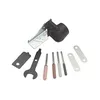 |
Dremel 1453 Chainsaw Sharpening Kit for Rotary Tools The kit this guide uses: a sharpening angle guide, adjustment gauge, wrench, spacers and four grinding stones in different sizes.
|
As an Amazon Associate we earn from qualifying purchases. | |
The Dremel 1453 kit contains a sharpening angle guide, an adjustment gauge, a wrench, two spacers and four grinding stones of 4.0, 4.5, 4.8 and 5.6 mm. The stone has to match the gullet of your cutters, and the gullet size follows chain pitch. Dremel’s manual pairs stone, pitch and spacers like this, and Oregon’s file chart agrees on the diameters:
| Chain pitch | Dremel stone | Spacers needed | Matching hand file (Oregon chart) |
|---|---|---|---|
| 1/4 inch | 5/32 inch (blue, 4.0 mm, #453) | None | 5/32 inch |
| 3/8 inch low profile | 5/32 inch (blue, 4.0 mm, #453) | None | 5/32 inch |
| .325 inch | 3/16 inch (orange, 4.8 mm, #454) | One | 3/16 inch |
| 3/8 inch (standard) | 7/32 inch (pink, 5.6 mm, #455) | Both | 7/32 inch |
One common mix-up: 5/32 inch is the right stone for 3/8 inch low profile chain, not for standard 3/8 inch chain, which takes the larger 7/32 inch stone. Pitch is usually stamped on the guide bar near the mounting slot, and our comparison of .325 vs 3/8 chainsaw chain explains how to tell them apart. Also confirm that your Dremel model is on Dremel’s compatibility list before buying, because the attachment does not fit every rotary tool.
Safety Setup Before You Touch the Stone
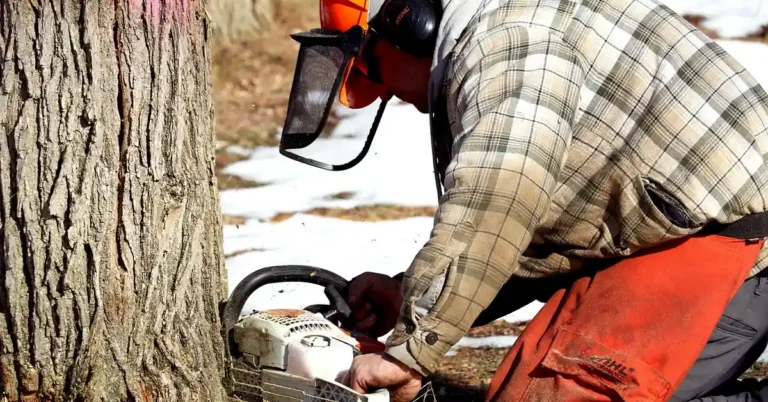
Chain sharpening happens with a live cutting tool in your hands, so set up the way the chain makers tell you to. Oregon’s sharpening guide says to wear gloves and eye protection, engage the chain brake and clamp the bar in a bench vise, and turn the saw off first. Stihl’s guide also says to wear sturdy gloves and to hold the bar in a vise.
- Engine off, battery out. Turn a gas saw off, and remove the battery or unplug an electric one.
- Clamp the bar. Clamp the bar lightly in a bench vise with the chain brake on. Release the brake only when you need to advance the chain by hand, and wear gloves when you do.
- Gloves and eye protection. The chain is sharp even when it is dull, and the stone throws grit and metal dust.
- Clean the chain first. Oregon says to wipe off oil and grease before sharpening.
- Two hands on the Dremel. Keep one hand on the guide and one on the tool so the stone cannot skip across the cutter.
How to Sharpen a Chainsaw Chain With a Dremel, Step by Step
- Pick the stone. Use the table above. Fit spacers between the guide and the clamp for the 3/16 inch (one) or 7/32 inch (both) stone, and none for the 5/32 inch stone.
- Fit the stone and guide. Insert the stone in the Dremel, tighten it, and mount the angle guide. Use the adjustment gauge from the kit to set the stone height against the cutter.
- Mark your starting tooth. A dab of marker on one cutter tells you when you have gone all the way round.
- Seat the guide on the chain. Rest the guide on top of the cutter and line the 30 degree mark with the bar so the stone sits in the gullet of the cutter.
- Make slow, light passes. Dremel’s advice is multiple slow strokes at 30 degrees. Give every tooth the same treatment, for example a count of ten, so the cutters stay the same length.
- Work every other tooth. The cutters alternate left and right. Sharpen all the teeth angled toward one side, then reposition the guide for the other direction and do the rest.
- Stop at the marked tooth and check that every cutter has a bright, freshly ground top plate and side edge.
Dremel’s own product page does not state a recommended tool speed, and the sources I read did not either, so start at a low setting and follow the speed guidance in your Dremel manual.
The Step the Dremel Does Not Do: Depth Gauges
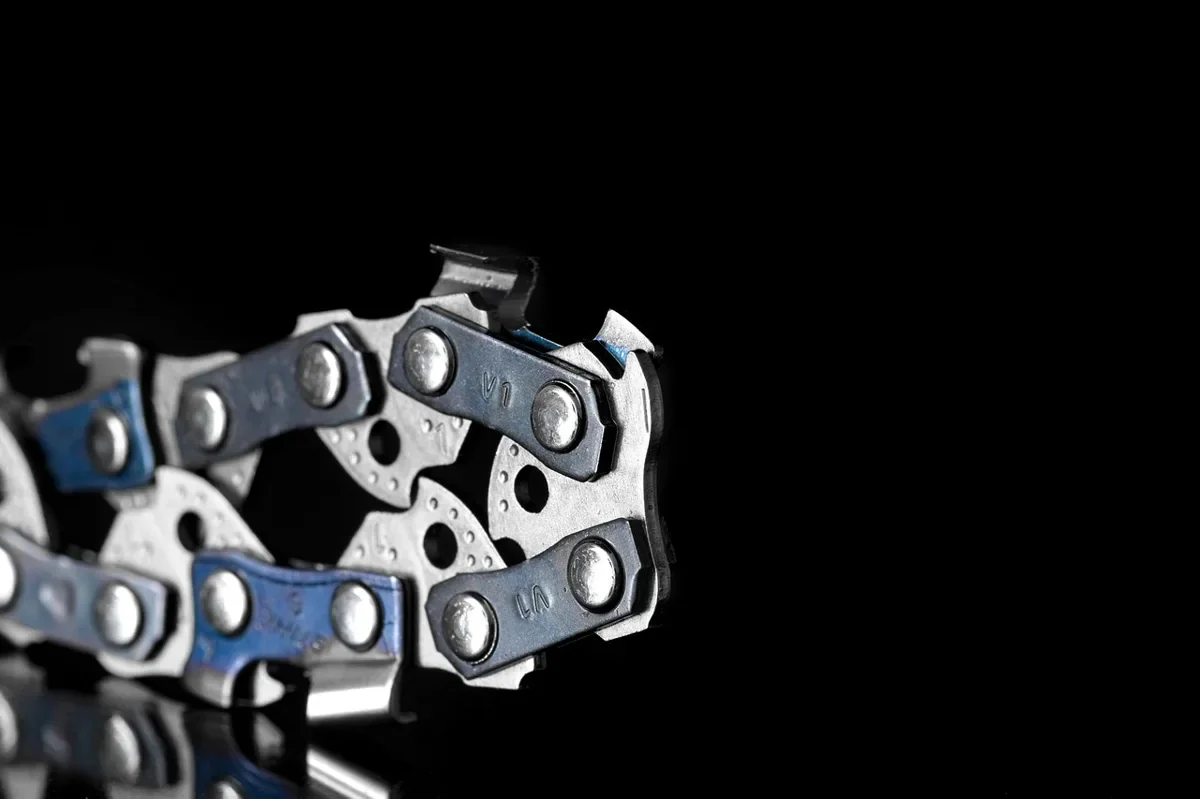
Every cutter on your chain has a small hook-shaped tab in front of it called a depth gauge (or raker). It controls how deep the cutter can bite. Sharpening shortens the cutter, which makes the depth gauge relatively taller, and the chain starts to skim instead of cut. The Dremel stone does not touch it.
Stihl says to check the depth gauge setting after sharpening all the cutters and to file it down if needed, with a filing gauge that should sit flush with the depth gauge. Oregon sells a depth gauge tool set to .025 inch, the common setting for standard chain, and larger .404 inch pitch chain is usually set deeper at .030 inch (from tool listings and forum summaries, so confirm the value for your chain in its manual). Do not overdo it: a depth gauge filed too low increases kickback.
| Situation | What to do |
|---|---|
| Filing gauge sits flush with the depth gauge | Leave it alone |
| Depth gauge sticks up through the gauge slot | File it flush with a flat file, then round the front slightly |
| You have sharpened three or more times since the last check | Check every depth gauge, since many guides recommend at least every third sharpening |
| Gauge already at the limit | Chain is worn: see the replacement section below |
Dremel vs Hand File vs Bench Grinder
The most useful comparison is not which is best but which is repeatable. Here is how the three DIY routes compare on what actually matters.
| Method | Angle control | Speed | Watch out for |
|---|---|---|---|
| Dremel 1453 attachment | Guide set for 30 degrees | Fast once set up | Not every chain is a 30 degree chain; check your chain spec |
| Round file in a file guide | Guide marks match the chain angle | Slower | Needs a steady stroke and the correct file size |
| Bench chain grinder | Adjustable head | Fastest | Removes more metal, easy to overheat cutters |
For hand filing, see our guides to square filing a chainsaw chain and using a chainsaw chain sharpening jig, and our roundup of the best chainsaw files. If you own a Stihl, our Stihl chain sharpening guide covers their file size and angle.
Two Myths About Sharpening
Myth 1: the angle depends on the wood. You will see charts online assigning different angles to softwood and hardwood. Oregon’s guidance says the angle comes from the chain type and its specifications, and to check your owner’s manual or the chain packaging. Stihl says its chains are generally filed to 30 degrees. Match the chain, not the log.
Myth 2: test sharpness by running the chain against paper. Never hold anything against a moving chain. Look at the chips instead. Oregon notes that a dull chain throws fine dust rather than chips, and that is the sign to sharpen.
Common Dremel Sharpening Mistakes
- Uneven cutter length. Stihl says every tooth should be sharpened the same and be the same length. Count your strokes.
- Wrong stone. A stone that is too small leaves the gullet corner unground, and one that is too big ruins the cutter shape.
- Heavy pressure. Use light passes. Pressing hard or dwelling on one tooth heats the metal.
- Skipping the depth gauges. A perfectly sharp chain with tall depth gauges still cuts poorly.
- Sharpening a damaged chain. Sharpening will not fix a cracked or badly worn chain.
When to Stop Sharpening and Replace the Chain
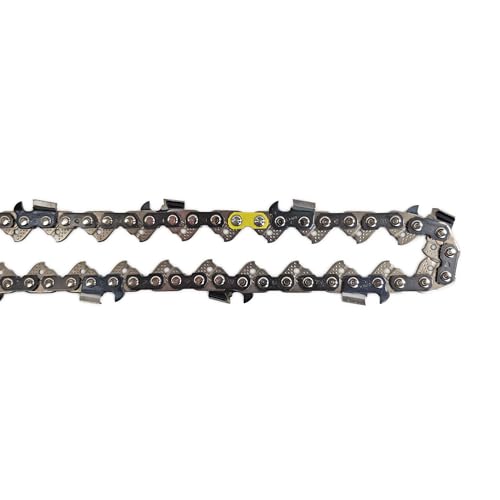
Oregon lists cracked or broken cutters, cutter top plates or tie straps, and an abnormally worn chain as reasons to replace it. Stihl points owners to the wear marking on the cutters and recommends a new chain once it is reached. Our guide on when to replace a chainsaw chain lists the signs, how to change a chainsaw chain walks through the swap, and how often to sharpen a chainsaw covers timing. If the chain is badly damaged, a professional chainsaw sharpener can regrind it or tell you it is finished.
Frequently Asked Questions
Can you sharpen a chainsaw chain with a Dremel?
Yes, if you use Dremel’s chainsaw sharpening attachment (the 1453 kit) rather than a loose grinding bit. The attachment holds a small stone at a set 30 degree angle to the chain. It sharpens the cutters only, so you still need to check and file the depth gauges by hand.
What size Dremel stone do I need for my chain?
It depends on chain pitch. Dremel’s kit chart pairs the 5/32 inch stone with 1/4 inch and 3/8 inch low profile chain, the 3/16 inch stone with .325 inch chain, and the 7/32 inch stone with standard 3/8 inch chain. Check the pitch stamped on your bar or on the chain packaging before choosing.
How many times can you sharpen a chain with a Dremel?
There is no single number. Each sharpening removes a little metal from every cutter, so the cutters get shorter. Stihl tells owners to check the wear marking on the cutters and replace the chain when it is reached, and Oregon lists cracked or broken cutters and an abnormally worn chain as reasons to replace it.
Is a Dremel better than a file for sharpening a chainsaw?
Not better, just easier for some people to hold at a consistent angle. A round file in a file guide sharpens any chain to the angle marked on it, while the Dremel guide is built around 30 degrees. Both methods leave the depth gauges to a separate flat file.
Conclusion
A Dremel with the 1453 attachment is a reasonable way to keep a chain sharp if you pick the stone that matches your pitch, clamp the bar with the brake on, and give every cutter the same number of light strokes. Then finish the job with the depth gauges, because the Dremel will not do that for you.
Not verified from a source read this session: the exact 5.6 versus 5.5 mm size of the 7/32 inch stone, the 4.5 mm stone’s intended pitch (Dremel’s product page does not say), the manual’s speed guidance, that overheating harms the cutter metal, and the .404 inch depth gauge value (secondary sources). Check your kit manual and chain packaging.
Sponsored / affiliate links. As an Amazon Associate I earn from qualifying purchases. I may earn additional commission from eligible campaigns.