How Far Off the Ground Should a Wood Fence Be?
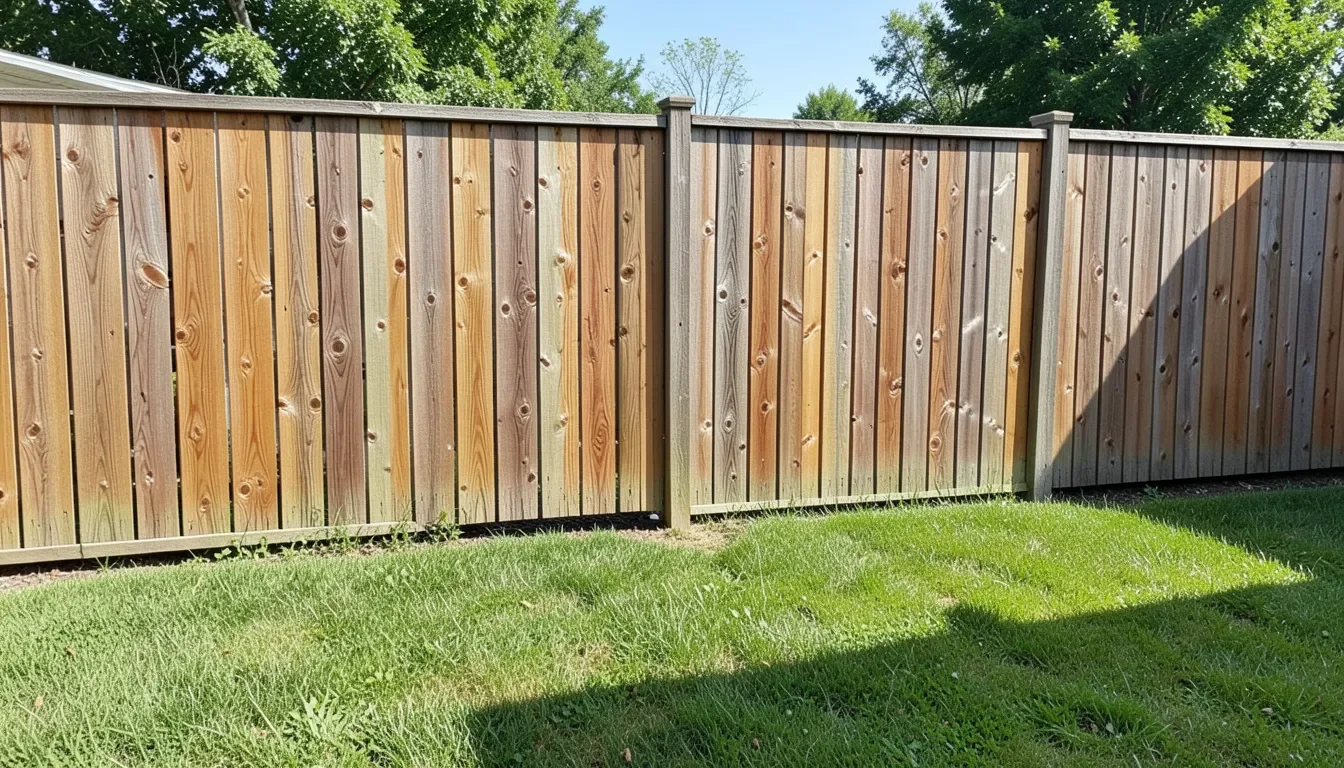
A wood fence should typically clear the ground by 1 to 2 inches for a standard privacy or picket fence, with up to 4 inches where drainage, mulch, or a sloped yard make a tighter gap impractical. There is no single number that applies everywhere – it depends on the fence’s job, your soil, and local code – but the target is always the same: enough space for water and debris to pass through, not so much that the fence stops doing its job.
It is a smaller detail than fence height or post spacing, but the ground gap affects how long the fence lasts and whether it actually does its job. Leave zero clearance and the bottom rail or pickets sit in damp soil every time it rains, even during stretches that look dry on the surface. Leave too much clearance and a privacy fence stops blocking sightlines, a pet fence stops blocking pets, and on pool-adjacent fencing the gap can fail safety code outright. Getting the number right means understanding both failure modes, not just picking “a couple of inches” and moving on.
Why Wood Fences Are Built With a Gap at All
Two separate problems get solved with the same small gap.
The first is moisture. Wood that sits directly against soil is in near-constant contact with ground moisture, because soil holds water long after the surface looks dry. That moisture wicks into the end grain of pickets and rails and accelerates rot from the bottom up – the classic failure pattern where a fence looks fine at eye level but the bottom several inches are soft or crumbling. This holds true even for rot-resistant species like cedar or redwood: they resist decay longer than untreated pine, but they are not immune to constant ground contact, and a cedar or redwood fence still needs the same clearance as any other wood fence to get its full lifespan.
The second is drainage and debris. A fence set flush to the ground acts like a small dam. Rainwater, mulch, grass clippings, and fallen leaves pile up against the bottom rail instead of passing underneath, which keeps that section wet longer after every storm and gives insects a place to nest against the wood. Even a modest gap lets water sheet through instead of pooling against the boards.
Protecting the Bottom Boards, Not Just Spacing Them
Clearance handles most of the moisture risk, but the bottom few inches of any wood fence still take the heaviest weather exposure on the whole structure – splash-back from rain, sprinkler overspray, and ground humidity all hit that zone even with a proper 2-inch gap. Sealing the lower boards with a penetrating water-repellent finish is cheap insurance that keeps the gap from having to do all the work by itself.
Best Pick for Sealing Fence Bottoms
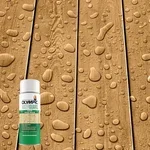 |
Olympic WaterGuard Clear Waterproofing Wood Sealer – $5.97 A penetrating clear sealer for the bottom few inches of fence boards, the zone that takes the most splash-back and ground moisture even with a proper gap.
|
How Much Clearance Is Actually Right?
There is no single code-mandated number for a general backyard wood fence – it depends on what the fence is holding back and how the yard drains. A few reference points that fence contractors actually use:
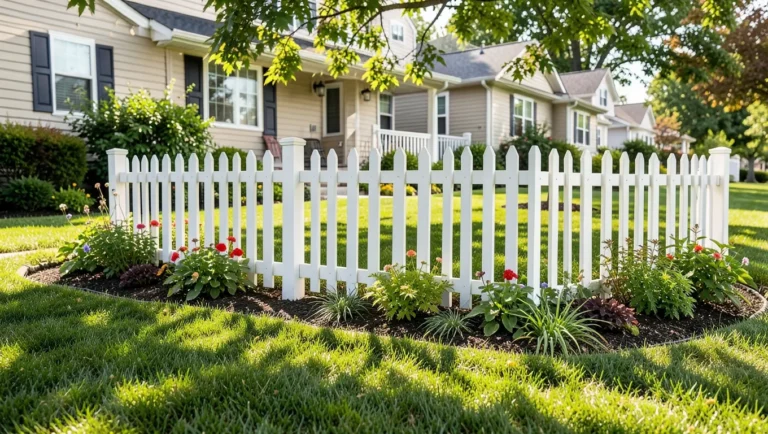
- Standard privacy or picket fence: 1 to 2 inches is the default most installers use. It is enough for drainage and mowing without opening a visible gap at eye level.
- Fence running through a mulch bed or heavy landscaping: closer to 3 to 4 inches, since mulch and soil build up over a season and can bury a 1-inch gap within a year.
- Pool-adjacent fencing: most pool-safety codes, based on U.S. Consumer Product Safety Commission guidance, cap the gap at 2 inches over a soft surface like grass or gravel and 4 inches over a solid surface like concrete or pavers – that is roughly the largest gap a toddler cannot squeeze through. Always confirm the exact number with your local pool-barrier code before finalizing clearance on pool fencing.
None of these are universal law. Local building departments and HOAs sometimes specify their own maximum gap, particularly for privacy or security fencing, so it is worth a quick check before you set posts.
When a Bigger Gap Becomes a Problem
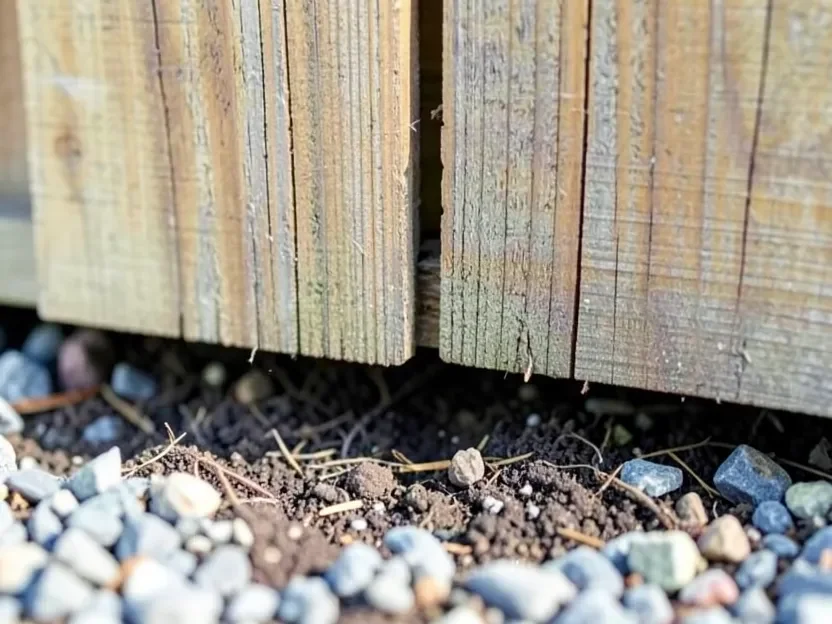
More clearance is not automatically better. A gap that grows past a few inches starts working against the fence’s actual purpose. On a privacy fence, a wide gap opens a sightline right along the ground that defeats the point of the fence. On a fence meant to contain a dog, several extra inches is often enough room for a small or medium breed to squeeze or dig under. Some HOAs and municipal codes cap the allowable gap on privacy and security fencing directly, separate from any pool-specific rule, so “as much clearance as possible for drainage” is not a safe default without checking those rules first.
The practical approach is to size the gap to the fence’s job first, then adjust up slightly if drainage or mowing genuinely requires it – not the other way around.
Setting the Gap Correctly During Installation
The most reliable way to hold a consistent gap is to stop measuring by eye. Cut a set of spacer blocks to the target height (a couple of scrap 2×4 offcuts work fine) and rest each picket or panel on the blocks while you fasten it, rather than eyeballing the distance from the ground each time. Run a string line at the target height across the full run before you start setting boards – it catches drift over a long fence line that individual measurements can miss.
Sloped or uneven yards complicate this, since a level fence line and a level ground line rarely match. On a moderate slope, most installers either step the fence (each panel level, with a small jump in height at each post) or rack it (panels angled to follow the slope, keeping a consistent gap along the bottom rail the whole way). Racking generally looks better and keeps the clearance gap more consistent, but it takes more careful cutting at each post. For the full walkthrough on cutting and setting panels on a slope, see our guide on installing wood fence panels on uneven ground.
For fence styles that use solid panels rather than individual pickets, a concrete or composite gravel board (also called a kickboard) along the bottom is worth considering. It sits in the gap itself, blocking the sightline and keeping pets contained while the actual wood panel stays elevated and dry above it – effectively getting the benefits of a tight gap and a wide one at the same time.
Keeping the Gap From Disappearing Over Time
A gap set correctly at installation does not necessarily stay that way. Soil settles and shifts seasonally, mulch and topsoil get added to garden beds next to the fence line, and grass clippings and leaf litter build up along the bottom rail if that section is not cleared regularly. Any of these can quietly close a 2-inch gap down to nothing within a year or two, at which point the fence is back to sitting in constant ground contact even though it was installed correctly.
It is worth walking the fence line once or twice a year, especially after mulching or major yard work, and clearing anything that has built up against the bottom boards. It takes a few minutes and it is a lot cheaper than replacing rotted pickets a few years early. If the wood at the base already shows early softness or discoloration, treating it with a water-repellent sealer before it progresses further is far less work than section replacement – see our guide on preventing wood from rotting at ground contact for more on catching this early.
Frequently Asked Questions
How Far Off the Ground Should a Wood Fence Be?
Most wood fences should sit 1 to 2 inches above the ground, with up to 4 inches acceptable where mulch, mowing, or drainage make a tighter gap impractical. The right number depends on the fence’s job and your local code more than a single universal rule.
What Happens if a Wood Fence Touches the Ground?
A fence with no gap sits in near-constant contact with soil moisture, which speeds up rot at the bottom of the pickets and rails even in rot-resistant species. It also blocks drainage, so water, mulch, and debris pile up against the wood instead of passing underneath, keeping that section wet longer after every rain.
Can the Gap Under a Fence Be Too Big?
Yes. A gap much wider than a few inches can violate local privacy-fence or HOA sightline rules, let small pets slip underneath, and on pool-adjacent fencing can fail safety code outright. Bigger is not automatically better – the gap should be sized to the fence’s actual job.
Does the Ground Clearance Rule Change for Pool Fences?
Yes. Many pool-safety codes, based on U.S. Consumer Product Safety Commission guidance, cap the gap at 2 inches over soft ground like grass or gravel and 4 inches over a solid surface like concrete or pavers, since that is roughly the smallest gap a toddler cannot squeeze through. Check your local pool-barrier code before finalizing clearance on pool fencing.
Conclusion
The right ground clearance for a wood fence is less about hitting one magic number and more about matching the gap to the fence’s job: 1 to 2 inches for a standard privacy or picket fence, more where drainage or mulch demand it, and tighter where local pool or security code requires it. Set it with spacer blocks or a string line rather than by eye, seal the bottom boards while you are at it, and recheck the gap once a year so mulch and soil buildup do not quietly close it back up.
Sponsored / affiliate links. As an Amazon Associate I earn from qualifying purchases. I may earn additional commission from eligible campaigns.