Plywood vs Solid Wood for DIY Furniture Projects
Use plywood for large flat panels, cabinet boxes, shelves, and carcass parts that stay hidden or painted; choose solid wood for legs, rails, edges, and any part that must move with seasonal wood movement or be refinished later. Picking the wrong material can lead to sagging panels, split edges, joint failure, or a finish that reveals movement. This guide matches each furniture part to the better material by load, movement, finish quality, and budget.
This guide is part of our Woodworking project ideas and plans series.
| Decision factor | Plywood | Solid Wood for DIY Furniture Projects | Winner |
|---|---|---|---|
| Large flat panels and box parts | Sheet format makes cabinet sides, tops, and shelves efficient to cut. | Boards need glue-up, more layout, and wider movement allowance. | Plywood |
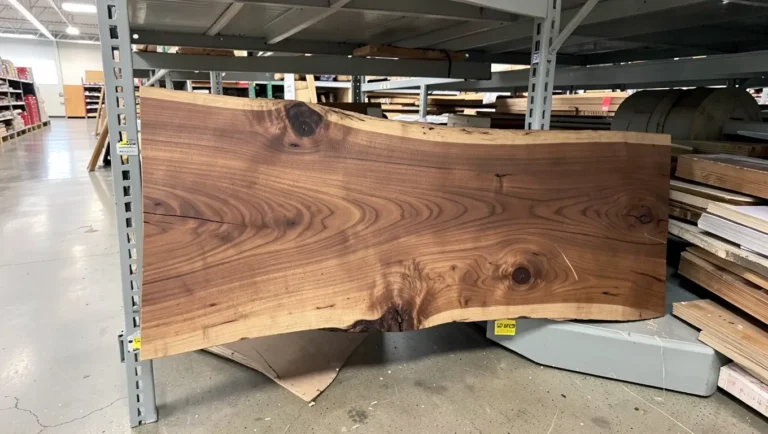
| Visible grain and refinishability | Edge and veneer quality can limit the look, especially on exposed ends. | Natural grain, shaping, and sanding support a cleaner furniture appearance. | Solid Wood for DIY Furniture Projects |
| Dimensional stability | Cross-grained layers resist cupping and seasonal movement better in panels. | Boards expand, contract, and can warp if restrained or poorly dried. | Plywood |
| Weight for wall-mounted or movable pieces | Lighter than solid boards at comparable panel size. | Heavier, especially in thick sections and large tops. | Plywood |
| Edge treatment and joinery effort | Needs edge banding, solid edging, or concealment on exposed edges. | Can be joined and finished directly, but movement must be allowed for. | Tie |
Plywood vs solid wood: the core trade-off
Plywood and solid wood fail for different reasons. Plywood is a cross-grained sheet made from thin veneer layers, so it resists panel movement and suits cabinet work, but its edges and surface veneers need protection. Solid wood boards bring stronger appearance and easier shaping, but they move with humidity and can warp or split if constrained.
What each material brings to furniture parts
Plywood works best when the part is a panel. That includes cabinet sides, shelves, drawer boxes, backs, and many storage carcasses. Solid wood works best when the part is meant to be seen, touched, or shaped: legs, rails, aprons, stretchers, table edges, and face frames.
Why furniture parts fail for different reasons
A thin plywood shelf can sag long before the rest of the piece fails. A wide solid-wood panel can bow, cup, or split as humidity changes. The right choice depends less on the project name and more on the part’s load, visibility, and movement risk.
When should you use plywood?
Use plywood when the part is mostly a flat panel, when you want lower weight, or when you want the furniture to stay dimensionally stable through seasonal humidity changes. It is a strong default for cabinet boxes, shelf carcasses, and wall-mounted builds, but exposed edges need treatment if the finished piece will be seen closely.
Cabinet boxes and storage carcases
Plywood fits cabinet boxes because the sheet format cuts efficiently into sides, tops, bottoms, and fixed shelves. The cross-grained structure helps the box stay square, and the lighter weight matters when you are lifting an assembled carcass into place.
Shelves, panels, and wall-mounted pieces
Plywood is often the safer choice for wall-mounted furniture because weight matters as much as stiffness. A 3/4-inch sheet is a common furniture thickness for carcase parts and shelves, while thinner sheet goods can work for backs, false panels, and non-load-bearing inserts.
Where plywood still needs edge treatment
Exposed plywood edges rarely look finished on their own. You usually need edge banding, a solid-wood lipping strip, or a design that hides the edge inside a frame. Cutting can also leave splintering and veneer tearout, so use a sharp blade and support the cut line well.
When should you use solid wood?
Use solid wood for parts that need visible grain, cleaner shaping, or later refinishing. It is the better choice for legs, stretchers, trim, tabletops, doors, and frames where the grain pattern is part of the design. The trade-off is movement, so you need joinery that allows seasonal expansion and contraction.
Legs, stretchers, and visible frames
Solid wood boards work well for parts that need strength in a narrow section and a finished edge all around. A 1×2, 1×3, or 2×2 can serve well for rails and aprons, depending on the load and the design, because the material can be machined cleanly and shaped with less edge cleanup.
Tabletops, doors, and shaped parts
Solid wood is the better material when you want a tabletop with natural grain, beveled edges, or shaped profiles. It also suits doors and decorative fronts where sanding, stain, and future refinishing matter more than flat-sheet efficiency.
Where solid wood movement matters
Wide solid-wood panels change size with humidity. If you fasten them rigidly to a plywood carcass or trap them in a tight frame, the panel can split, bow, or crack finish lines. Leave movement allowance in joinery, especially on tabletops, doors, and broad front panels.
Plywood furniture decision matrix
| Part or project | Visibility | Load | Movement risk | Finish difficulty | Edge treatment needed | Recommended thickness or lumber dimension | Best material |
|---|---|---|---|---|---|---|---|
| Bookshelf carcass | Medium | Medium to high | Low | Medium | Yes, on front edges | 3/4-inch plywood | Plywood |
| Long bookshelf shelf | Visible | High | Low | Medium | Yes, if exposed | 3/4-inch plywood with a front stiffener | Plywood |
| Desk top | High | High | Medium | High | Often yes | Solid wood top or 3/4-inch plywood with edging | Solid Wood for DIY Furniture Projects |
| Cabinet side panel | Low | Medium | Low | Low | Front edge only | 3/4-inch plywood | Plywood |
| Face frame | High | Low to medium | Medium | Medium | No | 1×2 or 1×3 solid boards | Solid Wood for DIY Furniture Projects |
| Drawer box | Low | Medium | Low | Low | Minimal | 1/2-inch plywood for sides, 1/4-inch bottom | Plywood |
| Bench seat | High | High | Medium | High | Yes | Solid wood boards or laminated plywood with edging | Solid Wood for DIY Furniture Projects |
| Storage cube module | Medium | Medium | Low | Medium | Yes, on visible edges | 1/2-inch to 3/4-inch plywood | Plywood |
| Wall shelf | Medium | High | Low | Medium | Often yes | 3/4-inch plywood or solid wood with support cleat | Plywood |
| Legs for a table or bench | High | High | Medium | Medium | No | 2×2, 2×3, or laminated solid stock | Solid Wood for DIY Furniture Projects |
Say your 30-inch-deep desk top will sit on a simple frame with no center support. Plywood with a front stiffener can work if the top is mainly painted and the span is controlled. If you want a stained top with clean grain on all sides, solid wood is the better material, but it needs movement allowance.
Suppose your storage cube is 16 inches wide and you want a fast build with painted faces. Plywood wins because the box stays square, the weight stays manageable, and the edge treatment can be hidden under paint or banding. Solid wood would need more joinery and more attention to seasonal movement.
Is plywood strong enough for shelves and cabinets?
Yes, plywood is strong enough for many shelves and cabinets when you match thickness to span and support. It is not immune to sag, though, and a long unsupported shelf can bow under books or heavy tools. Add a center divider, front stiffener, or thicker sheet goods when the span grows.
Shelf span and sag risk
Span matters more than the label on the sheet. A roughly 3/4-inch plywood shelf often works well in cabinet and bookcase builds, but a long unsupported run may need thicker material, a front edge stiffener, or another support point. Thin sheet goods are better left for backs, small shelves, and light-duty partitions.
Box stiffness and support layout
Plywood cabinets are stiff because the sides, top, bottom, and back work together as a box. A full back panel, fixed shelves, or a center divider all help the carcass resist racking. If the back is omitted or the supports are too far apart, the box loses much of that advantage.
When thicker sheet goods are needed
Choose thicker plywood when the part carries a heavy point load, spans a wide opening, or will be handled often. Thin panels save weight, but they also transmit screw stress and flex more easily. For furniture, thickness choice is part of the design, not an afterthought.
Can you mix plywood and solid wood in one project?
Yes. In many furniture builds, mixing the two materials gives the best result because each part gets the material that fits its job. A plywood carcass with solid-wood face frames, edging, legs, or trim is a common hybrid approach that balances stability, appearance, and build time.
Plywood carcasses with solid-wood face frames
This is one of the most practical combinations in DIY furniture. The plywood box handles the square, hidden structure, while the face frame gives you a cleaner front edge, a better place for hardware, and a more finished look. It also hides plywood plies where they would otherwise be visible.
Solid-wood edging on plywood parts
A solid-wood edge strip protects exposed plywood edges and improves impact resistance at corners. It is especially useful on tabletops, shelves, and bench seats where a front edge gets touched and bumped. The strip must be glued well and flushed carefully so the transition does not telegraph through finish.
Legs, aprons, and tops in hybrid builds
Many beginner furniture plans use plywood for the box and solid wood for the parts that take abuse or need a better look. Legs, aprons, and visible trim often benefit from the shape and grain of solid boards, while the hidden structure stays lighter and more stable with plywood.
What are the main drawbacks of each material?
Plywood’s main weaknesses are edge quality, veneer damage, and cut quality. Solid wood’s main weaknesses are seasonal movement, warp risk, and the extra care needed in wide panels. Both can fail in wet spaces if the surface and edges are left unsealed.
Plywood edge blowout, veneer damage, and fastener issues
Plywood can splinter when cut with a dull blade or poor support. Surface veneers can chip, and low-quality sheet goods may show voids that weaken screws or leave rough edges after cutting. Fasteners also need enough material thickness, or the edge can split near the end grain of the sheet.
Solid wood warping, seasonal movement, and finishing quirks
Solid wood can cup, twist, or bow if it is poorly dried, stored badly, or locked into a rigid frame. Wide boards need space to move, and stain can read unevenly across grain and figure. That makes finishing more demanding on large tops and door panels.
Moisture, sealing, and repair limits
Plywood resists moisture better than raw solid wood in panel form, but the edges and cutouts still need sealing. Solid wood can be repaired, scraped, and refinished more easily on visible surfaces, but water can raise grain, stain finish, and trigger movement if the piece is left unprotected.
Choose Plywood if…
Choose plywood if the part is a box, shelf, back, or panel; if the build will be painted; if you need lower weight; or if you want fewer movement problems in a humid room. It is also the better pick when you want to cut several parts from one sheet and keep the layout efficient.

Choose solid wood for DIY furniture Projects if…
Choose Solid Wood for DIY Furniture Projects if the part will be highly visible, shaped, touched often, or refinished later. It is the better choice for legs, rails, tabletops, doors, and wide decorative pieces where grain and edge quality matter more than sheet efficiency.
- Identify the part first: box, shelf, leg, top, door, or trim.
- Check the load: light storage, books, seating, or a work surface.
- Check the movement risk: narrow parts are safer than wide panels.
- Check the finish plan: paint favors plywood; stain favors solid wood.
- Check the edges: if they will be seen, plan banding or solid edging.
- Check your tools and patience: plywood rewards clean cuts; solid wood rewards careful joinery.
Frequently asked questions
Is plywood or solid wood better for DIY furniture?
Neither is better in every case. Plywood is usually better for flat panels, cabinets, and shelves because it stays stable and keeps weight down. Solid wood is better for legs, frames, tops, and visible parts where grain, shaping, and future refinishing matter more than sheet efficiency.
When should I use plywood instead of solid wood?
Use plywood when you are building a cabinet box, storage cube, bookshelf carcass, or wall-mounted unit. It also makes sense when you want faster cutting from one sheet, lower weight, and less seasonal movement. If the edge will show, plan on banding or another edge treatment.
Is plywood strong enough for bookshelves and cabinets?
Yes, if you choose the right thickness and support layout. A 3/4-inch plywood shelf is a common furniture choice, but long spans need help from a center support, front stiffener, or additional divider. Cabinets benefit from plywood’s box stiffness, especially when the back panel is part of the structure.
Does solid wood warp more than plywood?
Yes, in panel form it usually does. Solid wood moves with humidity, so wide tops, doors, and panels can cup or twist if they are restrained or poorly prepared. Plywood’s cross-grained layers resist that movement, which is why it is favored for cabinet sides and shelves.
Which is cheaper for DIY furniture, plywood or solid wood?
Plywood is usually cheaper for large panels because you get more usable area from one sheet and less waste on carcass parts. Solid wood can cost more, especially in wide clear boards, but it may save you time on visible parts and reduce the need for edge treatment. Reclaimed or leftover stock changes the math if the pieces are flat, thick enough, and already usable.
Can you mix plywood and solid wood in one furniture project?
Yes, and that approach often gives the best result. A plywood carcass with solid-wood face frames, legs, or edging combines stability with a cleaner finished look. Just keep movement in mind on any solid-wood panel and make sure the plywood edges are treated well.
What thickness of plywood should I use for furniture?
A common furniture thickness is 3/4-inch plywood for shelves, sides, and many cabinet parts. Use 1/2-inch for lighter drawers or smaller boxes, and 1/4-inch for backs or bottoms that are not carrying much load. Bigger spans and heavier use call for thicker material or added support.
What are the disadvantages of plywood for furniture?
Plywood’s main downsides are visible edges, possible veneer damage, and the need for careful cutting. Lower-grade sheet goods can also have voids that affect screws and edges. It works best when you plan for banding, paint, or another finish that hides the plies and protects the cut surfaces.
How does Ana White fit into beginner furniture planning?
Ana White calls itself the largest collection of free furniture plans online and says it has helped millions of people build furniture since 2009. It also says builders can save thousands by making their own furniture, and it includes beginner plans such as a $50 farm table, a $100 kids bed, and a $120 outdoor sofa.
What do beginner plan collections show about material choice?
Beginner plan collections often favor simple sheet-good structures and limited tool lists. Lifehacker describes those projects as for beginners and says they use only three or four tools and materials. That kind of build usually points toward plywood for carcasses and solid wood only where the part needs a better edge or a visible frame.
Sponsored / affiliate links. As an Amazon Associate I earn from qualifying purchases. I may earn additional commission from eligible campaigns.