How Long Does Kilz Smell Last on Wood? (Oil vs Low-Odor Primer)
Kilz primer smell peaks in the first 24 to 48 hours and fades to faint within 3 to 7 days with real airflow — but oil-based Kilz Original lingers far longer on wood trim, cabinets, and furniture built or finished indoors with the doors and windows shut. Skip ventilation on an enclosed wood project and fumes can sit trapped for two weeks or more. This guide covers the real timeline, why woodworkers use Kilz at all despite the smell (blocking tannin bleed from knots), and which formula clears fastest.
Insert your Affiliate Disclosure reusable block here.
Quick Answer
Kilz Original (oil-based) smell typically lasts 3 to 7 days with ventilation, peaking in the first 48 hours — but can linger 2 to 3 weeks in an unventilated room or closed cabinet. Kilz Original Low Odor and Kilz Restoration (water-based) cut that down to 1 to 3 days. On wood, keep the piece in moving air for at least 3 days before closing drawers or doors.
Why Kilz Smells So Strong on Wood Projects
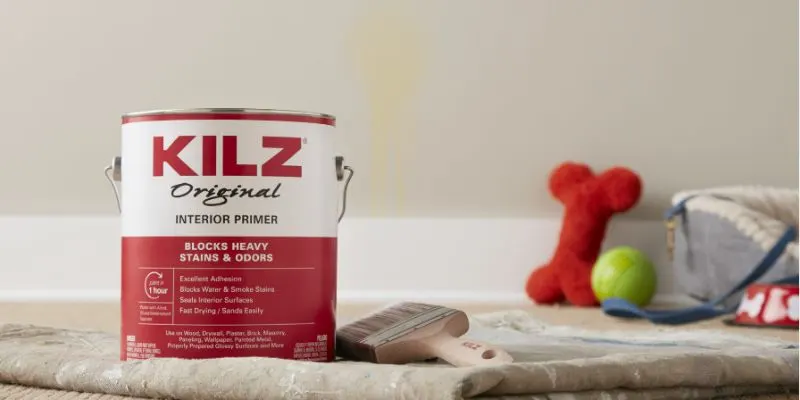
Kilz Original is an oil-based, solvent-carried primer — that solvent base is exactly what gives it strong stain and tannin-blocking power, but it also means it releases far more odor while it dries than a water-based (latex) primer does. Woodworkers reach for it anyway on projects a water-based primer can’t fully handle: raw pine, cedar, and redwood with knots that bleed a yellow-amber stain straight through paint if they aren’t sealed first.
How Long Kilz Smell Actually Lasts (Timeline)
The odor doesn’t just switch off — it follows a predictable curve as the solvents evaporate. Here’s the realistic timeline for an oil-based Kilz Original application, based on how solvent-based primers off-gas:
| Stage | Timeframe | What’s Happening |
|---|---|---|
| Peak odor | 0–48 hours | Solvents flashing off fastest; smell is strongest right after application |
| Noticeable fade | 3–7 days (ventilated) | With open windows and airflow, odor drops to faint or unnoticeable |
| Lingering | 2–3 weeks | In a closed room, cabinet, or drawer with little air exchange |
Enclosed wood pieces — a primed cabinet with the doors shut, a drawer box, a chest — trap solvent vapor worse than an open wall does, since there’s far less air exchange inside a cavity. Leave doors and drawers propped open while the primer cures, not just the room’s windows.
Oil-Based vs Water-Based Kilz: Odor and Tannin-Blocking Compared
Kilz sells several formulas, and picking the right one for a wood project is a real trade-off between odor and stain-blocking strength:
| Formula | Base | Odor Level | Tannin-Blocking on Wood |
|---|---|---|---|
| KILZ Original | Oil-based | Strong | Excellent — the benchmark for bad knots |
| KILZ Original Low Odor | Oil-based, low-odor formula | Reduced, faster to dissipate | Same stain-blocking as Original |
| KILZ Restoration | Water-based | Mild | Good, but oil/shellac still wins on the worst bleeding knots |
| KILZ 3 Premium | Water-based | Mild | Moderate — fine for light staining, not heavy tannin |
For a mild-tannin species or a piece you can prime outdoors, a water-based Restoration or Kilz 3 is the easier choice on odor alone. For cedar, redwood, or a pine board with a dark, resinous knot, oil-based Original (or its Low Odor version) is still the more reliable stain-blocker — you’re trading a few extra days of smell for a finish that won’t yellow at the knot six months later.
Best Low-Odor Wood Primer Pick
 |
KILZ Original Low Odor Primer, Interior, 1 Quart ($26.49) Same oil-based stain and tannin-blocking formula as KILZ Original, reformulated for lower solvent odor and faster odor dissipation.
|
As an Amazon Associate we earn from qualifying purchases.
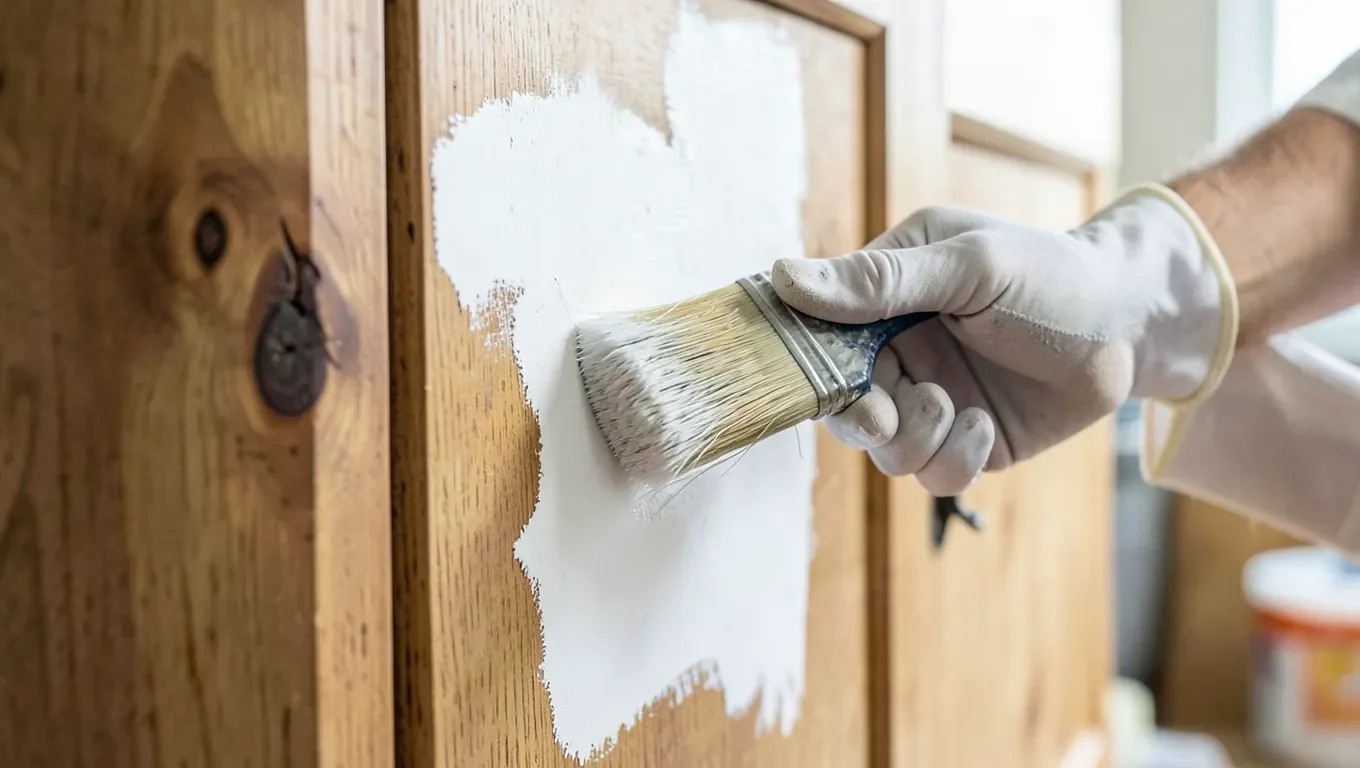
Why Use Kilz on Wood At All? Blocking Tannin Bleed-Through
Tannins are natural compounds in wood that dissolve in moisture and migrate to the surface as the piece dries or as a water-based paint sits on top of it. On species like cedar, redwood, and knotty pine, that shows up as a yellow-brown stain bleeding through white paint within days, usually centered right on a knot. A plain latex primer doesn’t stop this — the stain just bleeds through it too.
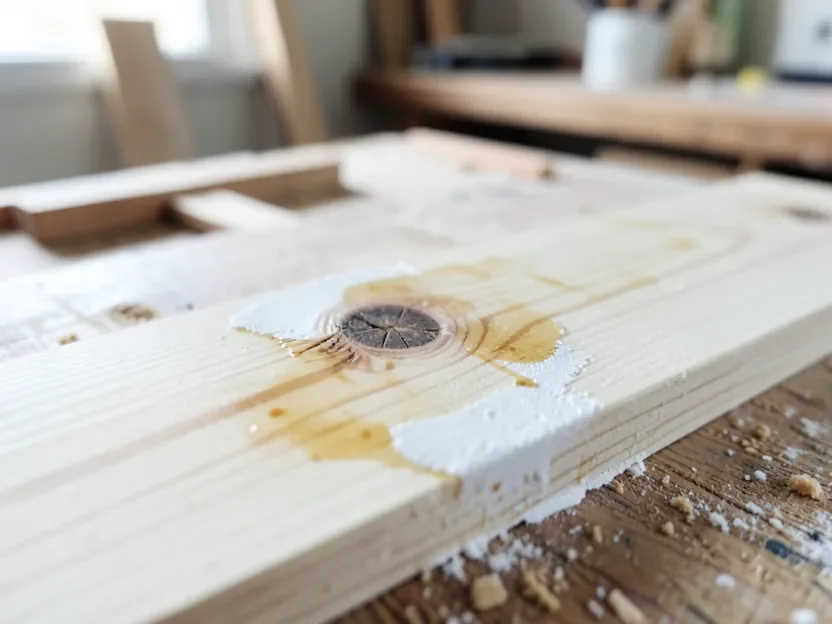
Kilz Original’s shellac-adjacent, oil-based chemistry forms a real vapor and stain barrier over the knot instead of just sitting on top of it. That’s the entire reason the smell is worth tolerating on a wood project: one coat of the right Kilz formula, cured with proper ventilation, prevents a bleed-through stain that would otherwise force you to re-sand, re-seal, and repaint the whole piece months later.
How to Reduce Kilz Smell Faster When Priming Wood Indoors
- Prime outdoors or in a garage first: if the piece is small enough to move, apply Kilz outside or in a garage with the door open before bringing it inside to cure.
- Set up cross-ventilation before you open the can: place one fan blowing in through a window and a second exhausting out a door or opposite window so air actually moves through, not just around, the room.
- Choose Kilz Original Low Odor or Restoration for enclosed rooms: reserve full-strength oil-based Original for pieces you can ventilate aggressively or finish outdoors.
- Leave doors and drawers propped open while curing: a primed cabinet or drawer box needs 48–72 hours of open airflow before it’s closed up, or the trapped solvent smell will transfer to anything stored inside later.
- Set out an odor absorber for the last stretch: open containers of activated charcoal or baking soda placed near the piece help pull down the faint tail-end odor once the bulk of the solvent has already off-gassed.
Common Mistakes When Priming Wood with Kilz
- Closing cabinet doors or drawers right after priming — this traps solvent vapor against the wood and stretches the smell out for weeks instead of days.
- Using a full-strength oil-based Original in a small, sealed room with no cross-ventilation, then being surprised the smell lingers past a week.
- Switching to a water-based primer on a heavily bleeding knot to cut down on smell, then finding the tannin stain bleeds through anyway a few weeks later.
- Painting over Kilz before it’s actually dry to the touch and off-gassed — trapping solvent under a fresh topcoat only slows the smell’s escape further.
Frequently Asked Questions
How Long Does Kilz Smell Last After Painting Wood Trim?
On wood trim, Kilz Original’s odor peaks in the first 24 to 48 hours and fades to faint within 3 to 7 days if the room is ventilated. Trim installed in a hallway or closet with little airflow can hold the smell for 2 weeks or longer, since there’s less air exchange than in an open room.
Is Kilz Odor Harmful to Breathe in a Small Workshop?
Kilz Original’s solvent fumes can cause headaches, dizziness, or throat irritation with prolonged exposure in an unventilated space, which is more likely in a small workshop than a large room. Run active ventilation (open door plus a fan) and wear a solvent-rated respirator, not just a dust mask, while applying it.
Can I Use Kilz Original on Cedar or Redwood Knots?
Yes — cedar and redwood are two of the species most prone to tannin bleed-through, and Kilz Original’s oil-based formula is specifically built to block that stain. Apply a full coat over the knot and surrounding grain, let it fully cure, then check for any bleed before topcoating.
Does Water-Based Kilz Block Tannin as Well as Oil-Based?
Not quite. KILZ Restoration (water-based) handles moderate tannin staining well, but on a heavily bleeding knot in cedar, redwood, or resinous pine, oil-based Original still outperforms it. Use water-based Kilz for light-to-moderate staining and reach for oil-based Original when the knot is dark, sappy, or has bled through paint before.
How Can I Reduce Kilz Smell Quickly on a Wood Project?
Set up cross-ventilation with two fans, prop open any doors or drawers on the piece, and choose Kilz Original Low Odor or Restoration instead of full-strength Original if the space can’t be well-ventilated. Activated charcoal or baking soda placed near the piece helps absorb the faint remaining odor once the bulk of it has already dissipated.
Related Primer Guides
If you’re deciding what to prime a wood project with in the first place, our guide to the best wood primer and undercoat options compares Kilz against shellac- and latex-based alternatives. For a lighter-duty job, see when a white primer for wood is enough versus when you need a dedicated stain-blocker. Kilz also doubles as a finish coat in a pinch — see whether Kilz primer can be used as paint for when that’s a reasonable shortcut. And once primer is on, sanding between primer coats covers the grit and timing for a smooth topcoat.
The smell is the price of the strongest tannin-blocking primer available for knotty wood — but it’s a predictable, manageable price. Expect 3 to 7 days of fading odor with real ventilation on an oil-based Kilz Original, reach for Low Odor or Restoration when the space can’t be well-aired, and always give an enclosed cabinet or drawer extra open-air time before closing it up. Done that way, the smell is gone well before the knot underneath ever has a chance to bleed through.
Sponsored / affiliate links. As an Amazon Associate I earn from qualifying purchases. I may earn additional commission from eligible campaigns.
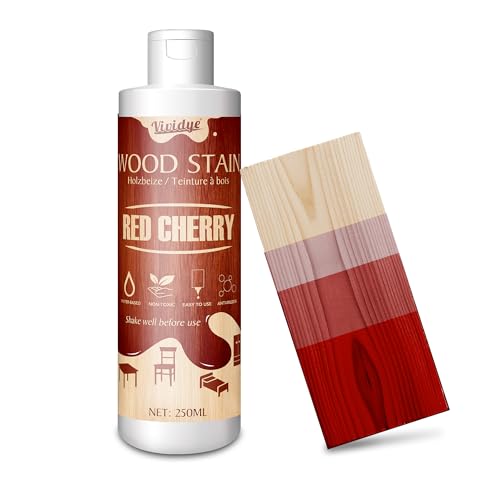 Wood Stain, 8.5oz/250ml Water Based Wood Stain for Indoor and Outdoor Furniture, Cabinet, Door, Trim and More - Fast Drying, Low Odor&Non-Toxic, Easy to Apply, Multiple Finishes (Red Cherry)
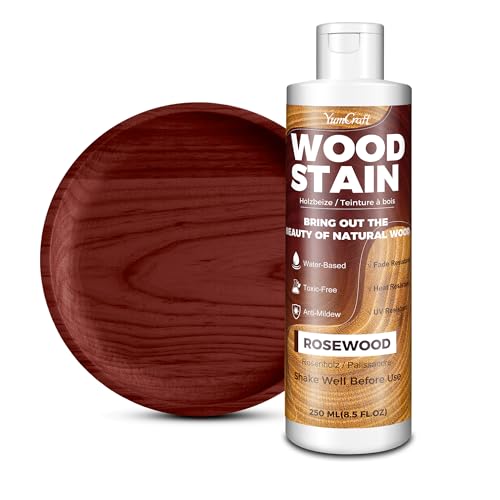 Water Based Wood Stain 8.5oz/250ml, Matte Fast Drying Stain & Varnish, Low Odor Non-Toxic Indoor Outdoor Wood Paint for Furniture, Cabinet, Door, Window, Wardrobe, Paneling, Trim & Multiple Finishes