White Primer for Wood: What It Does and When to Use It
White wood primer is a white-pigmented sealing coat for bare or previously finished wood that blocks stains and tannins, seals porous grain, and gives light-colored topcoats a uniform base — which is why it typically cuts the number of finish coats you need from two or three down to one. It is not the same thing as a tinted paint base, even though the two get confused constantly. This guide covers when white is the right primer color, which chemistry to buy, and how to apply it to bare wood.
Quick Answer
Use white primer when your topcoat is white, light, or pastel. For bare or knotty wood with tannins (cedar, redwood, knotty pine), use a shellac-based white primer like Zinsser BIN — it blocks stain bleed-through better than water- or oil-based options. Sand first, prime, and expect one coat on light raw wood or two on dark, stained, or knotty wood.
What Is White Wood Primer, and Why Use It?
Best Stain-Blocking White Primer Pick
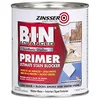
Zinsser B-I-N Shellac-Base White Primer – $24.39
The shellac-based pick this guide recommends for knots and tannin-heavy wood — the same product named in the stain-blocking section above.
- Best for: Knots, tannin-heavy wood (cedar, redwood, pine)
- Why we picked it: Best-in-class stain and tannin blocking, ~45 min recoat time
- Main drawback: Strong odor during application, needs ventilation
Compare more white wood primer options
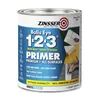 Option 1 Zinsser Bulls Eye 1-2-3 White Primer – $9.55
|
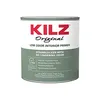 Option 2 KILZ Original Low Odor White Primer – $27.80
|
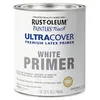 Option 3 Rust-Oleum Painter’s Touch White Primer – $17.99
|
As an Amazon Associate we earn from qualifying purchases.
White wood primer is a white-pigmented sealing coat applied to bare or previously finished wood before painting. It bonds to the wood surface, seals porous grain and knots, blocks stains and tannins from bleeding through, and gives the topcoat a uniform base — which is why a primed board usually needs one fewer finish coat than an unprimed one.
Primer is not the same as a paint base, even though the terms get mixed up often. A paint base is simply the untinted starting point of a color-matched topcoat — it is designed to be tinted and used as the finish coat itself, and paint stores label these bases (Base 1, 2, 3, and so on) by how much white pigment they hold, which is worth understanding before you pick a tint. A primer is a separate product designed to bond, seal, and block, and it is meant to be painted over, not used as the visible finish.
When Should You Use White Primer Instead of Gray or Tinted?
Use white primer when your topcoat is white, light, or a pastel color — the light base means fewer finish coats are needed to reach full, even coverage. Switch to a gray or dark-tinted primer when the topcoat is a saturated dark color; switch to a color-matched tinted primer for a “poor-hiding” paint color like certain bright reds, oranges, or yellows, which struggle to cover a stark white base evenly. According to Lowe’s primer buying guide, gray primer is the standard recommendation specifically for dark topcoats, and tinted primer exists specifically to help poor-hiding colors reach full opacity in fewer coats.
Does White Primer Block Stains and Tannin Bleed-Through?
A shellac-based white primer blocks stains and tannin bleed-through better than any other type — important on tannin-heavy woods like cedar, redwood, and knotty pine, where tannins can bleed through ordinary primer and yellow the topcoat within weeks.
Zinsser BIN, available in white, is the most commonly cited shellac-based primer for this job specifically because shellac forms a harder, more complete seal over tannins and knots than latex or oil formulas manage on their own.
Which Type of White Primer: Oil, Water-Based, or Shellac?
The three primer chemistries trade off dry time against stain-blocking strength and odor — shellac dries fastest and blocks stains best but has the strongest application odor, while water-based is the mildest and slowest to build stain resistance.
| Type | Recoat time | Stain-blocking | Odor | Best for | Example white product |
|---|---|---|---|---|---|
| Oil-based (alkyd) | 6–24 hr | Excellent | High | Trim, doors, high-touch surfaces | KILZ Original White |
| Water-based (latex/acrylic) | 1–2 hr | Moderate | Low | General interior, new bare wood | Zinsser Bulls Eye 1-2-3 White |
| Shellac-based | ~45 min | Best-in-class | Strong (application only) | Knots, stains, tannin-heavy wood | Zinsser BIN White |
What to Look for When Buying a White Wood Primer
Match the product to the job rather than picking the first white primer you see — the named products below cover the three chemistries above. Zinsser BIN White (shellac) is the standard pick for knots and tannin-heavy wood. Zinsser Bulls Eye 1-2-3 White (water-based) suits general bare-wood interior priming with minimal odor. KILZ Original, KILZ 2, and KILZ Premium White span oil-based and water-based formulas depending on the specific product line. Behr Premium Plus and Sherwin-Williams Premium Wall & Wood Primer are broader wall-and-wood formulas worth checking against your specific surface before buying.
A primer labeled specifically for MDF is also worth a look if it’s already on hand — see our breakdown of whether MDF primer works on solid wood before assuming it’s a one-to-one substitute, or our full guide on which paint to use on MDF for the primer-plus-topcoat combination that actually works on that porous fiber surface.
If you’re choosing between KILZ formulas specifically, see our KILZ vs KILZ 2 comparison, or our breakdown of Zinsser’s mold-killing primer versus KILZ if moisture or mold is a factor on the surface you’re priming. For the buying decision across the whole market rather than one colour, we ranked 8 wood primers and undercoats by cost per 100 sq ft of manufacturer-published coverage.
How Many Coats of White Primer Does Bare Wood Need?
One coat covers previously painted surfaces or light raw wood; dark stains, knots, or porous raw pine need two coats to fully block show-through. Skipping the second coat on a knotty board is the most common reason a “primed” board still shows a yellow or brown ghost under the topcoat weeks later. For how thick each of those coats should actually be, see our guide on how thick primer should be.
How Do You Apply White Primer to Bare Wood?
Surface prep matters more than the brand of primer you buy — skipping sanding or spot-priming knots is what causes most primer failures, not the product choice.
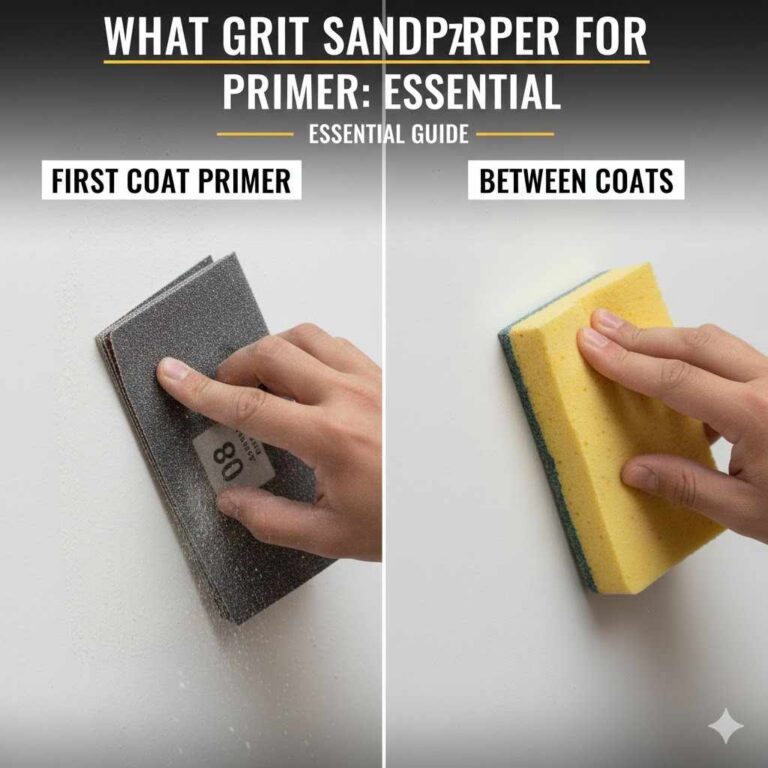
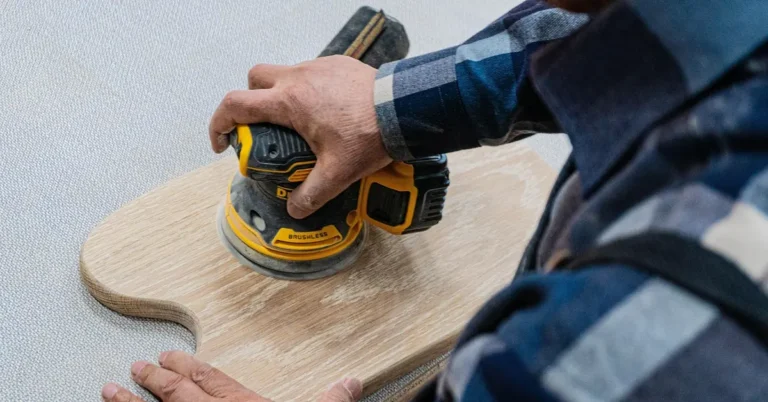
- Sand the surface: use 120–150 grit to open the wood grain so primer can bond, then wipe away dust with a tack cloth.
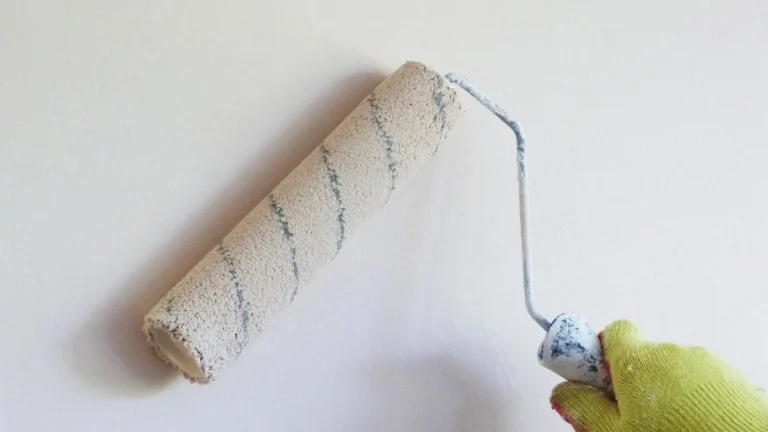
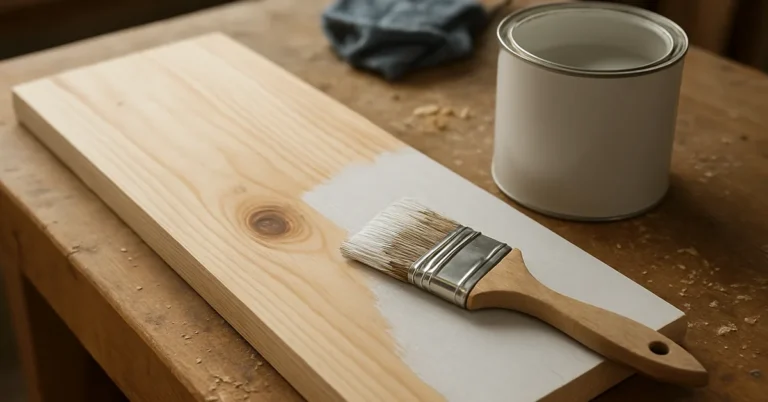
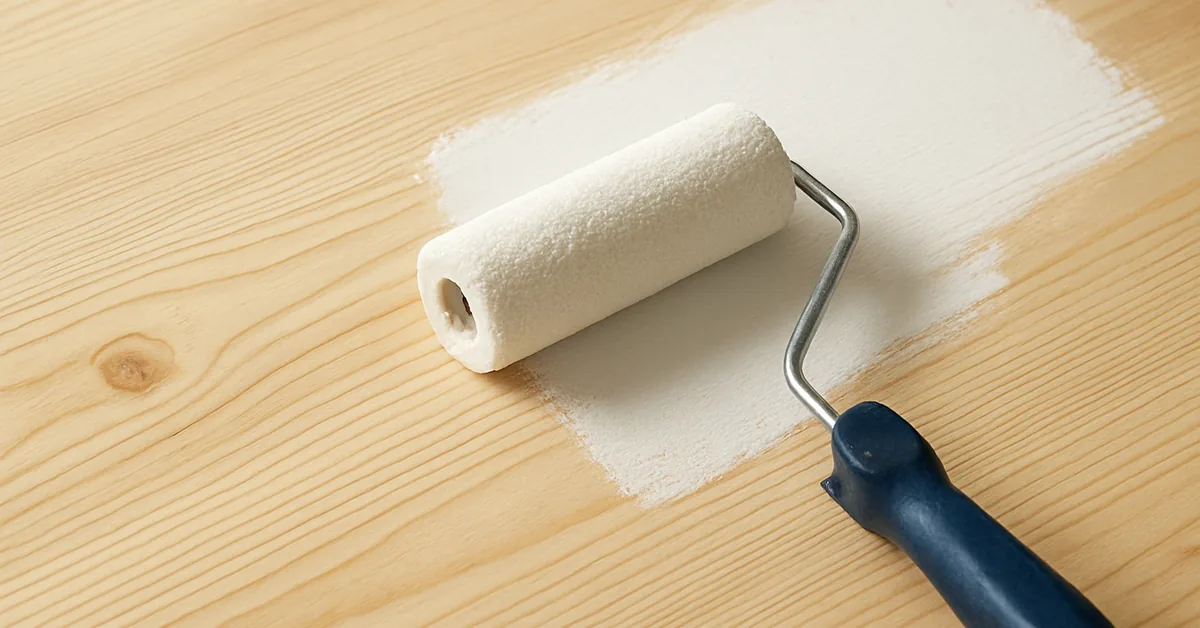
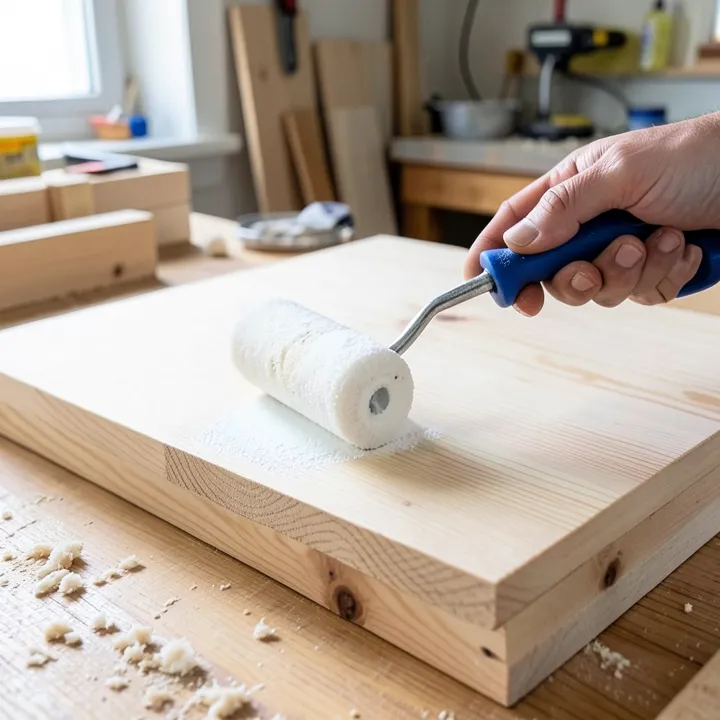
- Apply the first coat: brush, roll, or spray an even coat of white primer over the entire surface.
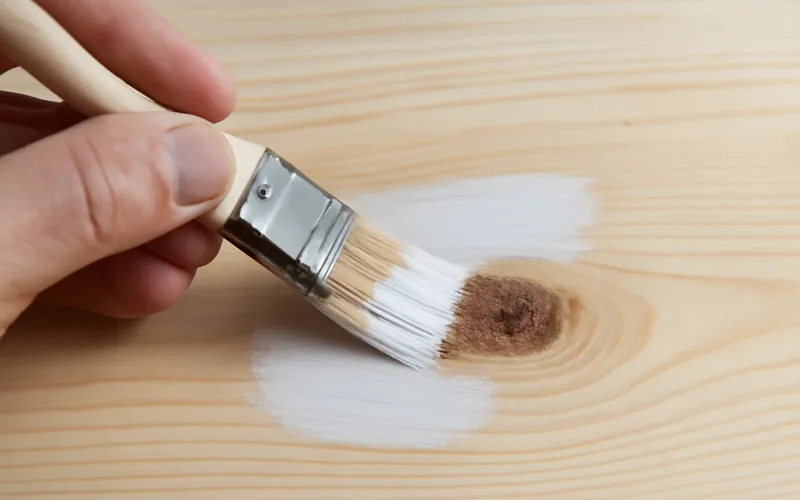
- Spot-prime problem areas: hit knots and tannin-heavy spots with a dab of shellac-based primer even if the rest of the surface is water- or oil-based.
- Let it dry fully: follow the product’s stated recoat time before touching the surface again — shellac around 45 minutes, water-based 1–2 hours, oil-based 6–24 hours.
- Scuff-sand between coats: a light pass with fine-grit sandpaper between primer coats and before the topcoat improves adhesion.
- Apply the topcoat: once the final primer coat is fully cured and scuff-sanded.
Does White Primer Work the Same Outdoors?
No — interior-rated white primer is not built for UV exposure and can chalk or yellow outdoors. Use an exterior-rated primer for any surface exposed to sun and weather. For a full exterior prep sequence, see our wood fence paint prep guide.
Can you use white paint as a primer?
Not effectively — white paint lacks the bonding and stain-blocking additives a real primer has, so it won’t seal knots or block tannins the way a dedicated primer does. Use an actual primer product first, even a fast-drying one, rather than substituting extra coats of paint.
Do you need to sand before priming bare wood?
Yes — sand bare wood with 120–150 grit before priming. Sanding opens the wood grain so the primer can bond properly instead of sitting on top of mill glaze or a smooth factory surface.
What’s the difference between primer and paint base?
Primer is a separate bonding and sealing product meant to be painted over; a paint base is the untinted starting point of a color-matched topcoat, meant to be the visible finish itself. See our guide on using white base paint without tint for when a base paint can substitute.
How long does white primer need to dry before painting?
Recoat time depends on the chemistry: about 45 minutes for shellac-based primer, 1–2 hours for water-based, and 6–24 hours for oil-based. Always check the specific product label, since formulas vary within each category.
Once the topcoat itself goes on over that primer, give it its own drying window too — see our guide on how long paint should dry before putting furniture back for safe wait times by paint type.
Can KILZ primer be used as paint instead of a topcoat?
No — KILZ primer is not durable or washable enough to serve as a finish coat on its own. See our full breakdown of whether KILZ primer can double as paint for the specific limitations. And once the primer coat is down, check whether you actually have to paint over Kilz before it counts as finished.
Pick white primer for light topcoats, reach for shellac specifically when tannins or knots are involved, and always sand and spot-prime before the full coat. For a deeper look at surface prep before any wood paint job, see our guide to what kind of paint to use on wood, or browse every finishing method in our wood finishing guide.
This kind of bonding primer is exactly what you need if you’re trying to paint over stained wood with acrylic paint — it grips glossy, sealed surfaces that raw white primer struggles with.
Sponsored / affiliate links. As an Amazon Associate I earn from qualifying purchases. I may earn additional commission from eligible campaigns.