How Many Amps Does a Table Saw Use? Breaker & Cord Sizing
Most table saws draw 10 to 15 amps on a standard 120-volt household circuit. Benchtop and jobsite saws typically sit in the 13-15A range, contractor saws run similar numbers, and full-size cabinet saws are usually wired for 240 volts instead, where they draw roughly 12 to 20 amps depending on horsepower.
That amp figure is stamped right on the motor’s nameplate, and it matters for more than trivia: it decides whether your garage outlet can run the saw without tripping, what gauge extension cord you need, and whether you’re overloading a circuit you’re sharing with a shop vac or dust collector. Below is the real breakdown by saw type, how amps/volts/watts fit together, what breaker size is actually standard practice, and a cord-gauge chart most saw guides skip entirely.
Table Saw Amp Draw by Type
Best Cord For 15-Amp Table Saw Circuits
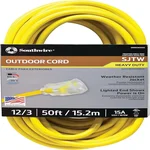 |
Southwire Yellow Jacket 12/3 Extension Cord, 50 ft – $64.98 12-gauge is the correct wire size for a 50-foot run to a 13-15A table saw – matches the cord chart below exactly.
|
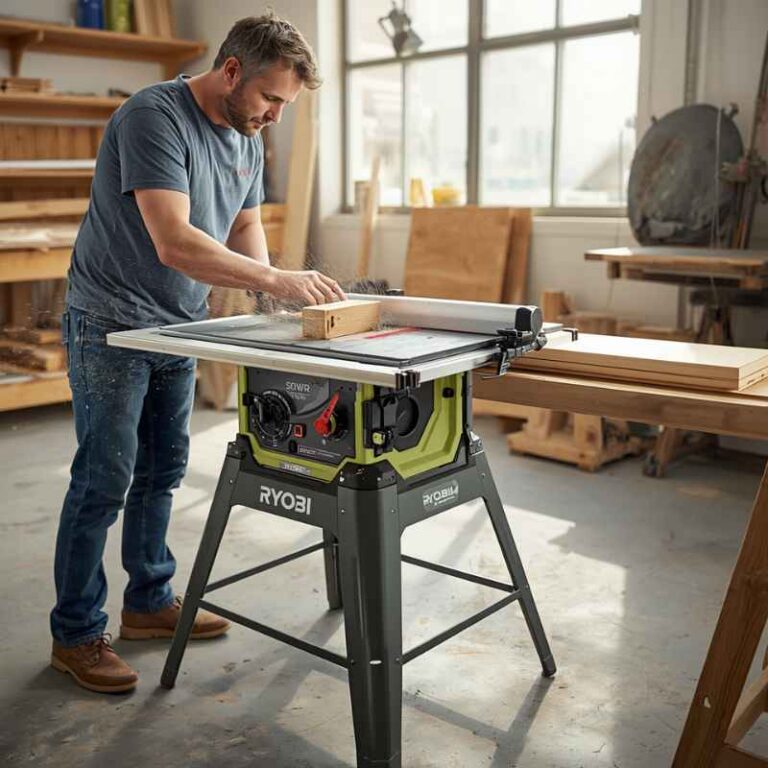
Nameplate amps vary more by saw category than by brand. Here’s what’s typical for each:
| Saw Type | Typical Voltage | Typical Amp Draw |
|---|---|---|
| Benchtop / jobsite saw | 120V | 13-15A |
| Contractor saw | 120V (some switchable to 240V) | 13-16A |
| Hybrid saw | 120V or 240V | 12-15A |
| Cabinet saw (3 HP) | 240V | ~12-14A |
| Cabinet saw (5 HP) | 240V | ~18-20A |
Most portable and benchtop saws are built to stay under 15A specifically so they can run on a normal household outlet without an electrician’s help. Cabinet saws break that pattern on purpose – they’re wired for 240V so the same horsepower draws noticeably fewer amps, which is the next thing worth understanding.
Volts, Amps, and Watts: How They Actually Relate
Amps alone don’t tell you how much power a motor is actually putting out – that’s watts, and watts is volts multiplied by amps. A 120V saw pulling 15A is using about 1,800 watts. A 240V cabinet saw pulling 15A at the higher voltage is using roughly double that, around 3,600 watts, for the identical amp reading. This is the piece a lot of “which saw has more power” comparisons get backwards: a cabinet saw’s lower-looking amp number at 240V doesn’t mean it’s weaker than a 15A benchtop saw at 120V, it means the same wire is carrying twice the power per amp because the voltage is doubled.
That’s also why manufacturers wire big induction motors for 240V whenever they can: pushing more watts through a 120V line means pushing more amps, and amps are what heat up wires and trip breakers. Doubling the voltage lets a 5 HP motor stay under 20A instead of needing 30-40A on a 120V line, which is a genuinely impractical amount of current to run through a standard household circuit.
What Size Breaker Does a Table Saw Need?
For most 120V benchtop, jobsite, and contractor saws pulling 13-15A, standard practice is a dedicated 15-amp or 20-amp circuit – dedicated meaning the saw is the only thing on that breaker, not shared with lights, outlets, or a shop vac. A 240V cabinet saw typically needs a dedicated 20-amp to 30-amp 240V circuit depending on its horsepower and nameplate rating; check the nameplate or owner’s manual for the exact figure rather than guessing from horsepower alone.
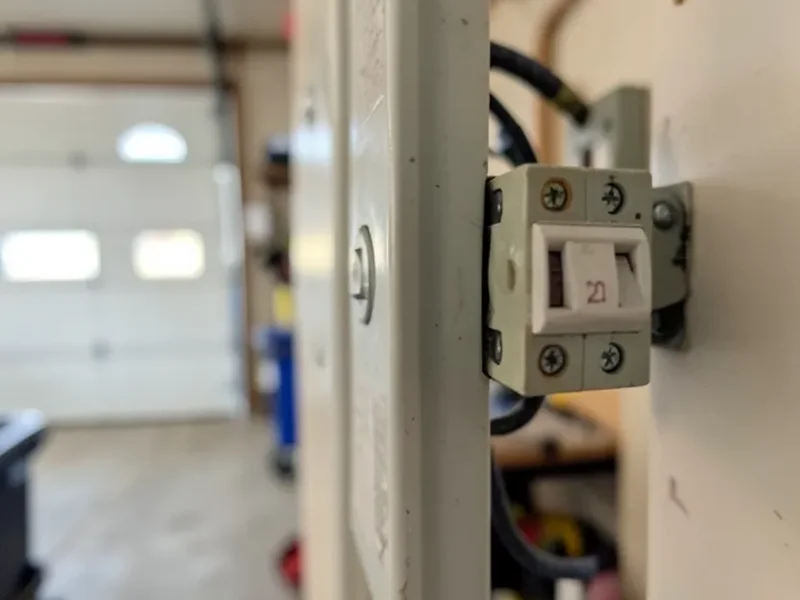
There’s a reason a 15-amp saw often ends up on a 20-amp breaker instead of a 15-amp one: electricians size circuits so a continuous load (anything running steadily for several minutes at a stretch, like ripping long boards) doesn’t sit at 100% of the breaker’s rating. Keeping a continuous load around 80% of the breaker’s capacity is standard electrical practice, which is why a saw rated at 15A is commonly put on a 20-amp circuit (15A is 75% of 20A) rather than run right at the limit of a 15-amp breaker. If your saw is tripping a 15-amp breaker on long cuts but the motor itself is fine, that headroom is usually the missing piece, not a faulty saw.
Extension Cord Gauge Chart for Table Saw Amperage
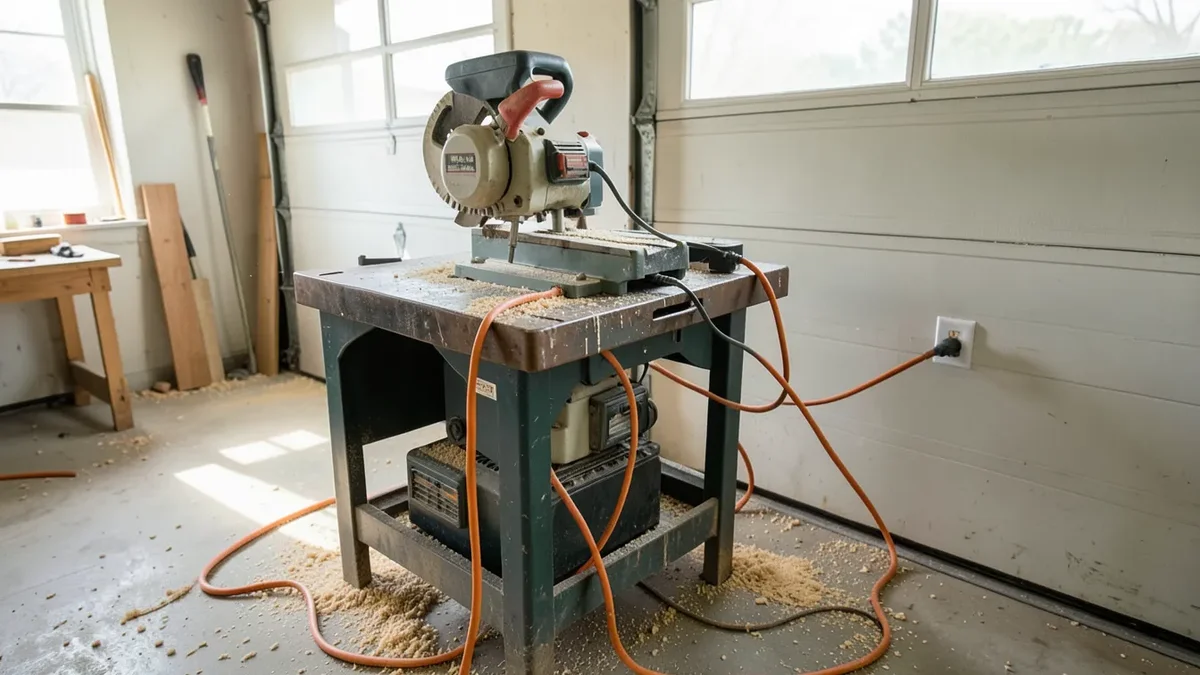
This is the part most “how many amps” guides leave out entirely, and it’s arguably more practical day-to-day than the breaker question – most garage and driveway setups run through a cord, not a wall outlet directly. Using too thin a gauge over too long a run causes voltage drop, which makes the motor run hotter and can shorten its life even if the breaker never trips. Here’s the gauge you actually need by cord length, sized for a 13-15A table saw:
| Cord Length | Minimum Wire Gauge | Notes |
|---|---|---|
| Up to 25 ft | 14 AWG | Fine for short runs to a nearby outlet |
| 25-50 ft | 12 AWG | The safe default for most garage/driveway setups |
| 50-100 ft | 10 AWG | Needed for long runs to avoid voltage drop |
Remember that a lower AWG number means a thicker, more capable wire – 10-gauge carries more current than 14-gauge, not less. When a run is borderline between two lengths, size up rather than down; an oversized cord costs a little more but never causes a problem, while an undersized one can.
Cabinet Saws and 240-Volt Circuits: What’s Different
If you’re moving from a 120V contractor or jobsite saw to a full cabinet saw, the electrical jump is the part people underestimate. A 240V circuit uses a different receptacle (commonly a NEMA 6-15 or 6-20 for smaller cabinet saws, or a locking twist type for larger ones), a different plug on the saw’s cord, and two hot legs instead of one hot and one neutral. You can’t just plug a 240V saw into a regular outlet with an adapter – the circuit itself has to be run by an electrician to the correct amperage and receptacle type. Most cabinet-saw manufacturers list the exact breaker size and wire gauge in the installation manual, and that spec should always win over a general rule of thumb, since a 3 HP and a 5 HP cabinet saw can need meaningfully different circuits.
Electrical Safety Tips for Your Table Saw Circuit
- Give the saw its own dedicated circuit whenever possible – don’t share it with a shop vac, dust collector, or air compressor that also pulls real amperage.
- Match the extension cord gauge to both the amp draw and the run length, not just one or the other.
- Inspect cords and plugs for cracking, fraying, or a hot-to-the-touch plug before every long cutting session.
- If a 20-amp breaker trips repeatedly under normal use (not a stalled cut), treat that as a wiring or motor issue worth having an electrician check, not something to work around with a bigger breaker.
- Never upsize a breaker just to stop it from tripping – the breaker is protecting the wire gauge, not the saw, and an oversized breaker on undersized wire is a fire risk.
Frequently Asked Questions
How many amps does a table saw use?
Most benchtop, jobsite, and contractor table saws draw 13 to 15 amps on a 120-volt circuit. Full-size cabinet saws are usually wired for 240 volts and draw roughly 12 to 20 amps depending on horsepower. Check the motor’s nameplate for the exact figure for your specific saw.
What size breaker do I need for a table saw?
Most 120V table saws pulling 13-15 amps run on a dedicated 15-amp or 20-amp circuit, with 20-amp being common so the continuous load stays around 80% of the breaker’s rating instead of right at its limit. A 240V cabinet saw typically needs a dedicated 20-amp to 30-amp circuit depending on its horsepower; confirm the exact figure on the nameplate or owner’s manual.
Can I run a table saw on a 15-amp circuit?
Yes, if the saw’s nameplate draw is at or under 15 amps and the circuit is dedicated to the saw alone. It’s not ideal for long, continuous cuts since the load sits close to the breaker’s full rating, which is why a 20-amp dedicated circuit is the more common recommendation for headroom, but a properly wired 15-amp circuit will run a 13-15A saw without issue for typical use.
What gauge extension cord should I use with a table saw?
For a 13-15A table saw, use 14 AWG for runs up to 25 feet, 12 AWG for 25-50 feet, and 10 AWG for 50-100 feet. Using too thin a gauge for the run length causes voltage drop, which makes the motor run hotter and can shorten its lifespan even if the breaker never trips.
Conclusion
The amp number on a table saw’s nameplate is the starting point for three real decisions: whether your outlet and breaker can handle it, what gauge extension cord to run, and whether a 120V or 240V circuit is actually required. Most portable saws land in the 13-15A range on a 120V dedicated circuit (commonly a 20-amp breaker for headroom), while cabinet saws move to 240V and draw fewer amps for more horsepower. Match the breaker, the wire, and the cord to the number on the nameplate rather than a rule of thumb, and the saw will run the way it’s supposed to.
Sponsored / affiliate links. As an Amazon Associate I earn from qualifying purchases. I may earn additional commission from eligible campaigns.