Cabinet Saw vs Table Saw: HP, Voltage & What You Need
A cabinet saw runs a 3 to 5 HP motor on a dedicated 220V circuit in a fully enclosed 300+ lb base; most other table saws — contractor, hybrid, benchtop — run 1.5 to 2 HP on a standard 120V outlet. Buy wrong and you either pay an electrician for a circuit you didn’t need, or fight vibration in a shop that’s outgrown a lighter saw. This guide compares motor power, voltage, the trunnion mount behind the difference, dust collection, and cost. For one well-known cabinet saw explained in detail, see our what is a Unisaw guide.
Quick Answer
Choose a cabinet saw for a dedicated shop with 220V wiring and daily hardwood ripping. Choose a standard table saw — contractor, hybrid, or benchtop — if you’re on 120V power, need to move the saw, or cut occasionally. The real difference underneath: a cabinet saw’s trunnion bolts to the cabinet; a table saw’s hangs from the tabletop instead.
Cabinet Saw vs Table Saw: Motor Power and Voltage
Best Portable Table Saw Pick
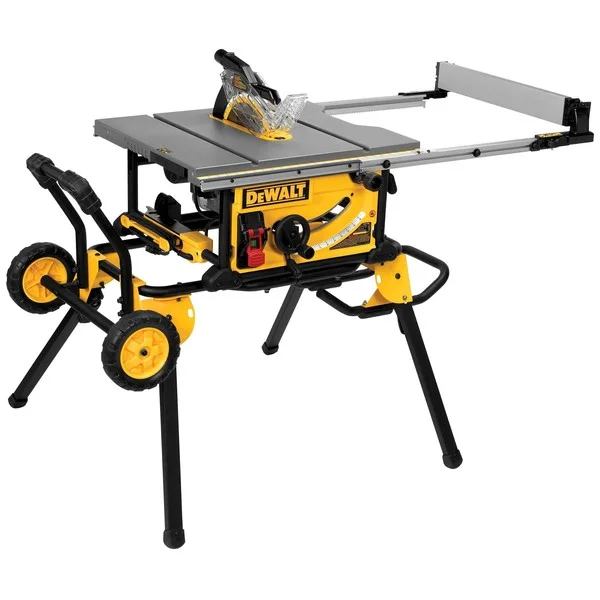 |
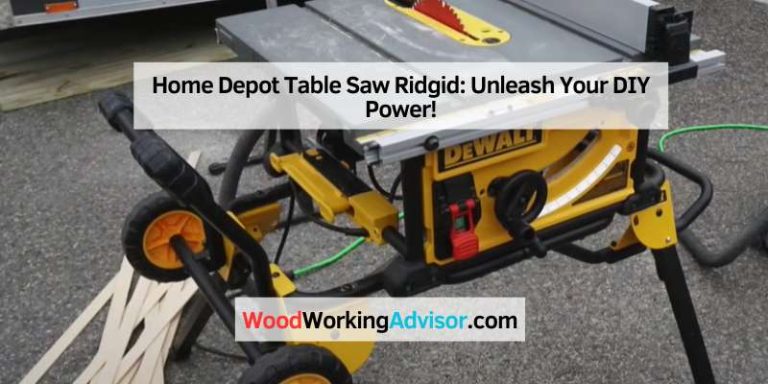
DEWALT 10-Inch Jobsite Table Saw with Rolling Stand (DWE7491RS) – $599.00 Runs on a standard 120V outlet with a 15-amp motor and 32-1/2" rip capacity — no dedicated 220V circuit needed, exactly the trade-off this guide walks through for shops without cabinet-saw wiring.
|
Cabinet saws run 3 to 5 HP motors that require a dedicated 220V (230V/240V) circuit — power most garages and basements don’t already have wired in. Contractor, hybrid, and benchtop table saws run 1.5 to 2 HP on a standard 120V outlet, so they plug into whatever circuit is already in the room. That single wiring difference decides whether you can start cutting today or need an electrician first.
| Property | Cabinet Saw | Table Saw (Contractor/Hybrid/Benchtop) |
|---|---|---|
| Motor | 3–5 HP | 1.5–2 HP |
| Voltage | 220V dedicated circuit | Standard 120V outlet |
| Weight | 300+ lbs | 45–250 lbs |
| Trunnion mount | Bolted to cabinet | Hangs from tabletop |
| Typical price | $1,800–$4,000+ | $300–$900 |
If you’re leaning toward the lighter, 120V side of that table, our saw buying guide covers how a table saw compares to miter saws, circular saws, and the rest of a starter shop lineup.
What’s a Trunnion, and Why Does It Matter?
The trunnion is the bracket that holds the blade arbor and lets you tilt and raise the blade. On a cabinet saw, the trunnion bolts directly to the enclosed steel cabinet — the heaviest, most rigid part of the machine — so vibration gets absorbed before it ever reaches the tabletop. On a contractor or hybrid saw, the trunnion hangs from the underside of the tabletop itself, with the motor bolted on and hanging out the back. That’s structurally weaker, which is why lighter saws vibrate more in thick hardwood and are harder to keep perfectly aligned over years of use.
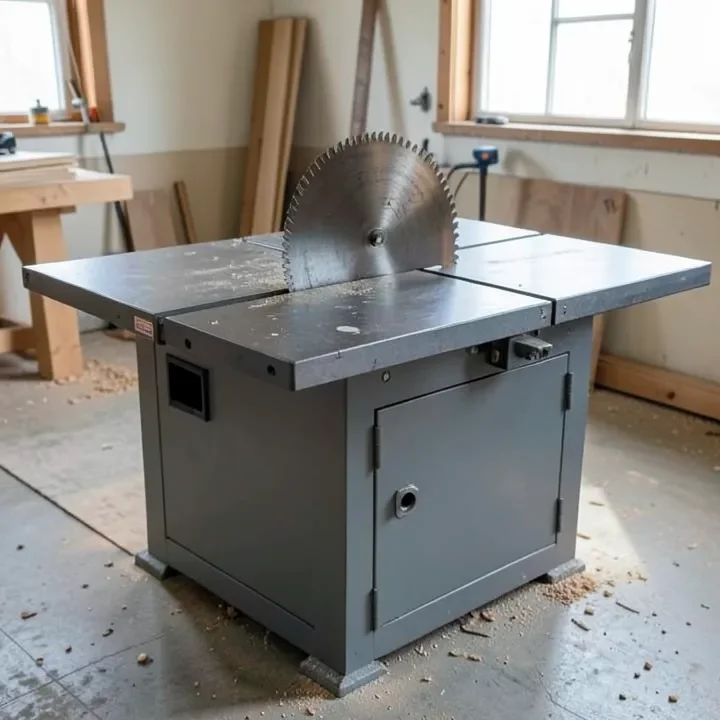
📊 SawStop’s 3 HP cabinet saw requires a 230V circuit, while its 1.75 HP contractor-style model runs on standard 120V. — Source: SawStop.com, Professional Cabinet Saw specifications
Weight, Portability, and Shop Space
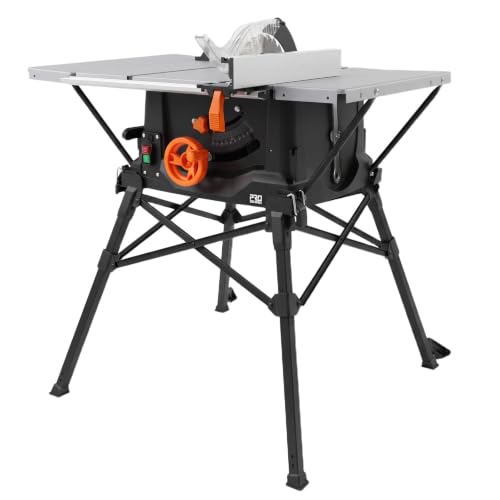
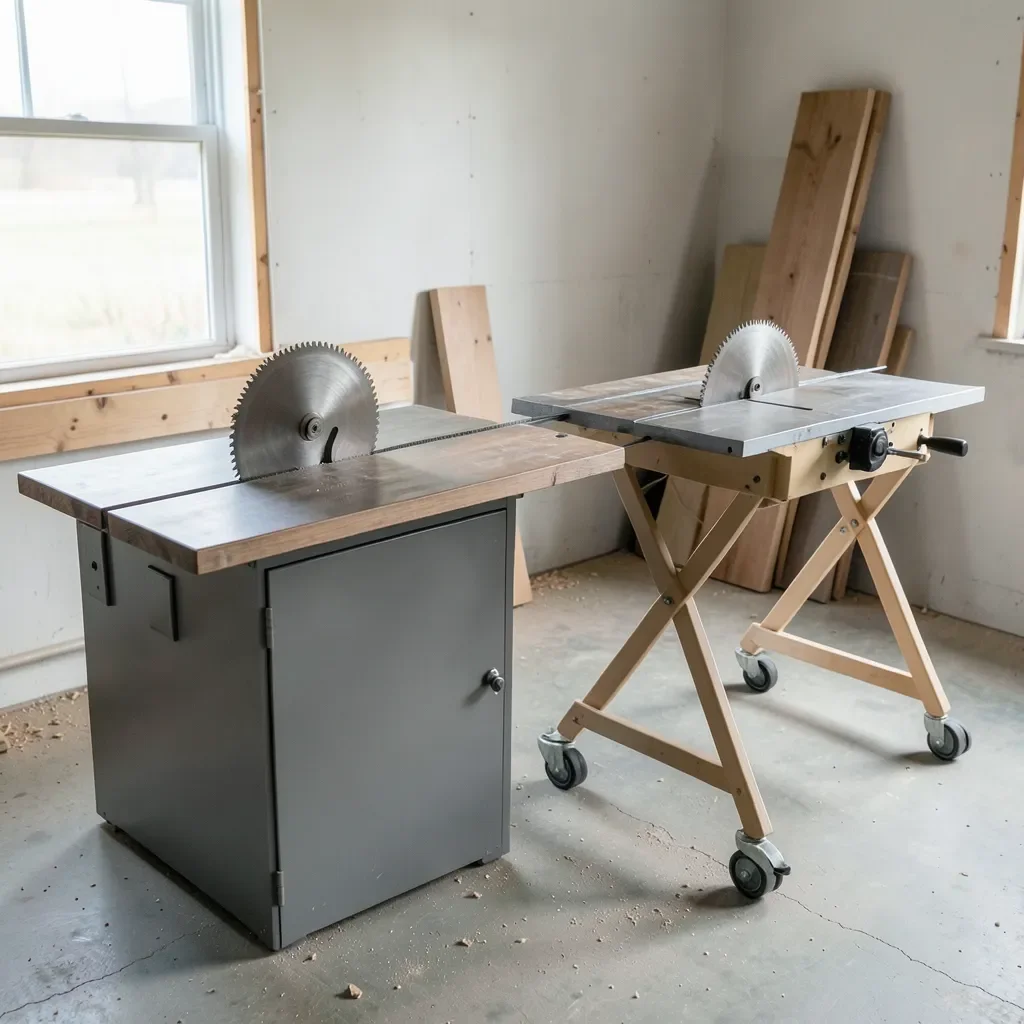
Cabinet saws weigh 300 lbs or more and are built to stay in one spot permanently — moving one takes an appliance dolly and at least two people. Contractor and hybrid saws run 200 to 350 lbs on an open stand, movable with effort but not something you’d relocate daily. Benchtop and jobsite saws, at 45 to 100 lbs on folding wheeled stands, are the only category actually designed to travel — the kind a contractor rolls off a truck each morning.
Dust Collection and Cut Precision
A cabinet saw’s fully enclosed base channels sawdust straight to a single 4-inch dust port, typically capturing 85 to 95% of chips when hooked to a real dust collector — see our dust collector bag guide if you’re sizing a collector to match. Open-base contractor and benchtop saws leak dust out the back and sides, so even a shop vacuum on the port only catches 40 to 60% of the mess. On precision, the extra mass and cabinet-mounted trunnion let a cabinet saw hold a truer 90° and 45° blade angle over years of ripping thick hardwood; a lighter saw can drift out of square faster if it’s bumped or over-tightened.
Cost: Cabinet Saw vs Table Saw
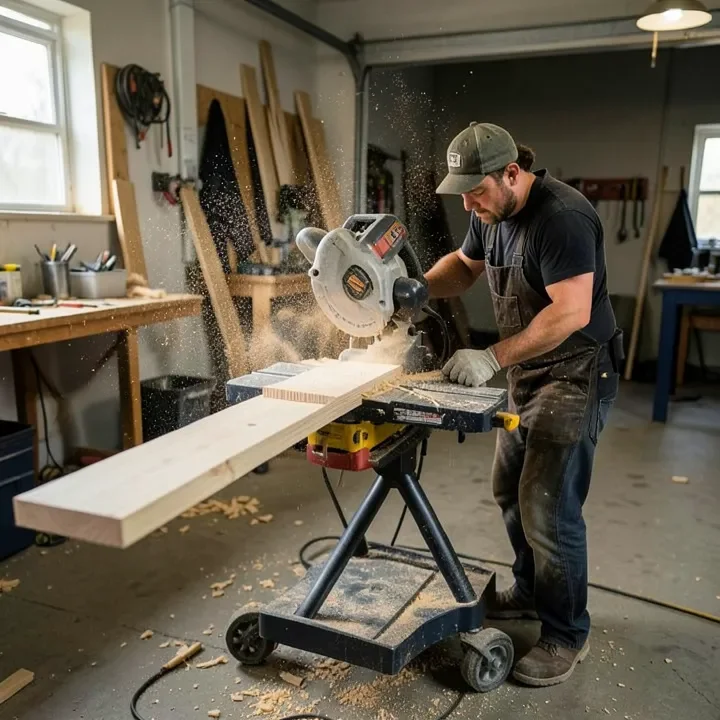
Cabinet saws start around $1,800 for an entry-level model and run past $4,000 for a premium saw with flesh-detection safety and a long fence rail. Contractor and hybrid saws land between $500 and $1,200. Benchtop and jobsite saws run $300 to $700, making them the realistic entry point for most home shops.
Cabinet Saw vs Contractor Saw: The Narrower Comparison
“Table saw” is an umbrella term covering benchtop, jobsite/contractor, hybrid, and cabinet styles — this guide compares cabinet saws against that whole category. If you’ve already ruled out benchtop saws and are choosing specifically between a cabinet saw and a contractor saw, see our cabinet saw vs. contractor saw breakdown for exact HP, weight, and price specifics on that narrower matchup, including SawStop’s own version of each.
Which Should You Buy?
If your shop already has a 220V circuit and you’re ripping hardwood daily, the cabinet saw’s extra mass and dust collection pay for themselves. If you’re working on standard 120V power, cutting occasionally, or need to move the saw between a garage and a jobsite, a contractor, hybrid, or benchtop table saw does the job for a third of the price and none of the wiring hassle.
“The voltage question settles this faster than any spec sheet argument — if a shop doesn’t already have 220V run to it, that’s an electrician’s bill before the saw even ships. For most home shops doing occasional hardwood work, a good 120V contractor saw closes that gap for a fraction of the cost.”
Frequently Asked Questions
Do I Need a 220V Circuit for a Cabinet Saw?
Yes. Virtually every cabinet saw needs a dedicated 220V (230V/240V) circuit because of its 3 to 5 HP motor. Contractor, hybrid, and benchtop table saws run on a standard 120V outlet instead.
For the exact amp draw by saw type, breaker sizing, and an extension cord gauge chart, see our full table saw amp guide.
What Is a Trunnion on a Table Saw?
The trunnion is the bracket holding the blade arbor that lets you raise, lower, and tilt the blade. On a cabinet saw it bolts to the enclosed base; on other table saws it hangs from the tabletop, which is the main reason cabinet saws vibrate less.
Is a Cabinet Saw Worth It for a Hobbyist?
Only if you’re ripping hardwood often enough to need the extra power and precision. Occasional hobbyist work is usually well served by a contractor or hybrid saw at a third of the price, with no 220V wiring required.
Can a Table Saw Cut as Accurately as a Cabinet Saw?
For most cuts, yes. Cabinet saws hold tighter tolerances specifically in thick, dense hardwood over years of use, thanks to their extra mass and cabinet-mounted trunnion — a difference that matters far less for plywood, softwood, or occasional cuts.
What’s the Difference Between a Cabinet Saw and a Contractor Saw?
A contractor saw is one specific type of table saw — lighter, 120V, with the trunnion hung from the tabletop. See our cabinet vs. contractor saw comparison for the full motor, weight, and price breakdown between those two specifically.
Conclusion
The real decision between a cabinet saw and a table saw comes down to power available and how often you’re cutting hardwood: a cabinet saw’s 220V motor and cabinet-mounted trunnion earn their weight and price in a dedicated shop doing daily work, while a 120V contractor, hybrid, or benchtop saw covers occasional and portable cutting for a fraction of the cost and no electrical upgrade. Match the saw to your circuit and your workload, not just your budget.
Sponsored / affiliate links. As an Amazon Associate I earn from qualifying purchases. I may earn additional commission from eligible campaigns.