What Are the Measurements of a Rick of Firewood? (4×8 Ft Face Cord)
A rick of firewood commonly measures 4 feet high by 8 feet long, with a depth equal to the length of the cut logs – usually 16 to 24 inches. That works out to roughly 43-64 cubic feet of stacked wood, or about 1/3 to 1/2 of a standard cord. “Rick” has no single universal legal definition the way a cord does – always confirm the exact depth with your supplier before you buy.
Rick Vs. Cord: What’s Actually Standardized
Best Rack For Stacking A Rick Of Firewood
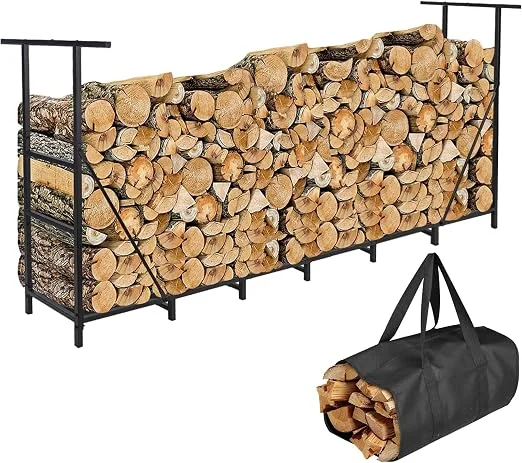 |
HONEST OUTFITTERS 8ft Adjustable Firewood Rack – $49.99 Matches the standard 8ft rick/cord length, keeping wood off the ground and up off damp soil for proper seasoning airflow.
|
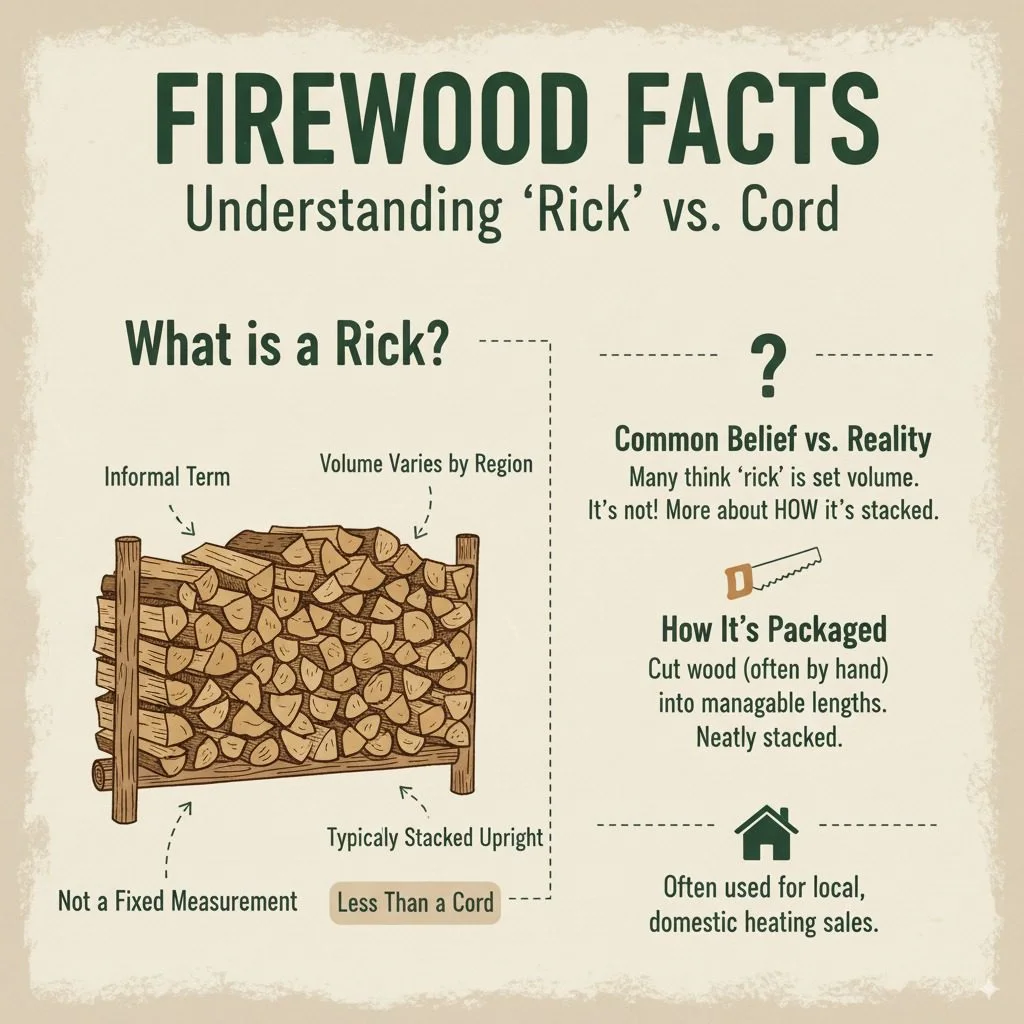
A cord is the one measurement with a genuine legal/industry standard: 128 cubic feet, stacked as 4 feet high, 8 feet long, and 4 feet deep. A rick has no equivalent standard – it’s a regional, informal term describing how wood is stacked (upright, in a frame or against a support) rather than a fixed volume.
The Real Math: How Much Wood Is In A Rick
Both a rick and a cord are stacked at the same 4-foot height and 8-foot length. The difference is entirely in the depth – a full cord stacks 4 feet deep (48 inches); a rick is only as deep as the cut logs, typically 16 to 24 inches.
| Depth | Stacked Volume (4ft x 8ft x depth) | Fraction Of A Full Cord |
|---|---|---|
| 16 inches (1.33 ft) | 42.7 cubic feet | About 1/3 of a cord |
| 20 inches (1.67 ft) | 53.3 cubic feet | About 2/5 of a cord |
| 24 inches (2 ft) | 64 cubic feet | Exactly 1/2 of a cord |
| 48 inches (4 ft) – a full cord | 128 cubic feet | The full standard measure |
These are stacked volume figures, including the air gaps between logs – not solid wood content. Separately, a full cord’s actual solid-wood volume (with air gaps removed) is commonly estimated around 70-90 cubic feet, often cited as roughly 85 cubic feet – a distinct fact from the rick calculation above, and one that’s easy to accidentally conflate with a rick’s size.
Common Fraction Mix-Ups To Avoid
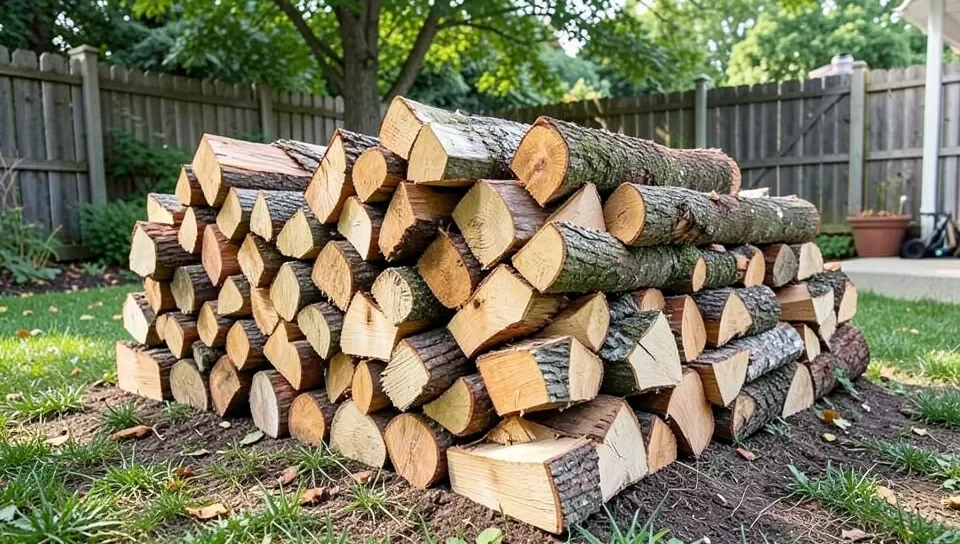
- A 4ft x 2ft x 8ft stack is NOT a quarter cord – that’s 64 cubic feet, which is exactly half a cord (128/2 = 64). A true quarter cord (32 cubic feet) would be roughly 4ft x 1ft x 8ft.
- A full cord is 128 cubic feet, not 450 – the math is simply 4 x 8 x 4 = 128. If you see a much larger number attached to “one cord,” double-check the source.
- When a seller says “rick,” always ask for the specific depth in inches – “rick” alone doesn’t tell you whether you’re getting a third of a cord or half of one, and that’s a real difference in how much wood you take home.
Stacking Your Firewood Correctly
- Choose a level, dry location with good airflow. Keep the stack off bare ground using a rack, pallets, or concrete blocks – ground contact traps moisture and slows seasoning.
- Stack with the bark facing up on the top row (if you’re not covering it) to help shed rain, and orient split faces to maximize airflow through the stack.
- Leave the sides open for airflow – only the top needs covering. Covering the sides can actually trap moisture and slow drying.
- Cover just the top with a tarp or lean-to roof to block rain and snow while leaving the sides free to breathe.
When To Buy Firewood
Buying in late spring through summer generally gets you the best selection and pricing, since demand is lower and suppliers have more current-season stock. Waiting until cold weather hits means competing with everyone else for supply, often at higher prices and with less-seasoned wood available.
Properly seasoned wood (dried at least 6-12 months, moisture content under 20%) burns hotter, cleaner, and with far less creosote buildup than green wood. The EPA’s Burnwise website has real, practical guidance on selecting and burning firewood safely and efficiently.
Frequently Asked Questions
What Is A Standard Rick Of Firewood?
A stack 4 feet high, 8 feet long, and typically 16-24 inches deep – the depth matches the length the logs were cut to. This works out to roughly 1/3 to 1/2 of a standard cord (128 cubic feet), but there’s no single universal legal definition, so confirm the exact depth with your supplier.
What’s The Difference Between A Rick And A Full Cord Of Firewood?
A full cord is a standardized measure: 128 cubic feet, stacked 4ft high x 8ft long x 4ft deep. A rick is an informal, regional term for a shallower stack of the same height and length, typically 16-24 inches deep – about 1/3 to 1/2 of a cord’s volume.
Is A Rick Of Firewood The Same As A Quarter Cord?
Not usually – a rick (16-24in deep) typically works out closer to 1/3 to 1/2 of a cord, not 1/4. A true quarter cord (32 cubic feet) would need a shallower depth, around 1 foot, or a smaller footprint than a standard 4ft x 8ft rick.
Is A Rick Of Firewood Enough For One Winter?
It depends heavily on your climate, how often you burn, and your stove or fireplace’s efficiency. A rick (roughly 1/3 to 1/2 cord) is often enough for occasional or supplemental use, but frequent daily heating in a cold climate usually needs a full cord or more.
Conclusion
A rick of firewood is a real but informal measure – typically 4ft high, 8ft long, and 16-24in deep, which works out to roughly 1/3 to 1/2 of a standard 128-cubic-foot cord. Because it has no fixed legal definition the way a cord does, always confirm the exact depth with your supplier before buying, so you know exactly how much wood you’re actually getting.
Sponsored / affiliate links. As an Amazon Associate I earn from qualifying purchases. I may earn additional commission from eligible campaigns.